





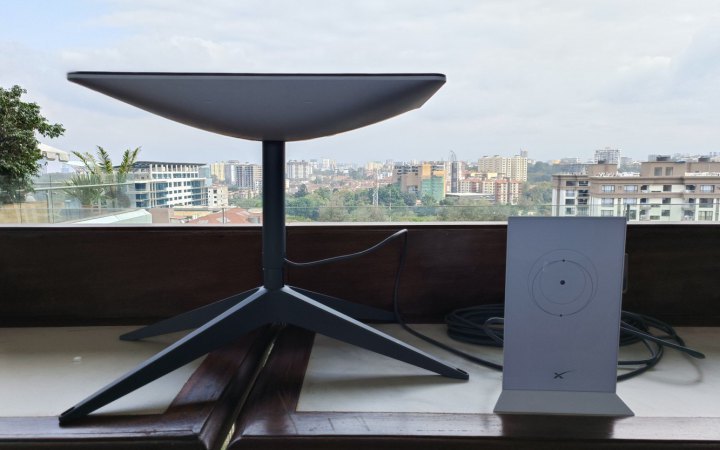
America’s Starlink satellite communications system and its military programme, Starshield, are still operating with restrictions over Russian-occupied parts of Ukraine. President Volodymyr Zelenskyy said this in an interview published on 27 November by BBC.
Starshield is overseen by the Pentagon, but it has not been possible to establish who exactly made the decision to restrict service for part of Ukraine. Zelenskyy explained that each side is shifting responsibility onto the other.
“Technically (the decision to impose the restriction was made. – Ed.) by SpaceX; politically, I don’t know, I really don’t know. It’s like ping-pong. We ask one side, and it says it’s the other,” the president said.
The inability to use Starlink at high speed means reduced capacity to shoot down Russian jet-powered drones that fly through occupied lands deeper into Ukraine. Military personnel who spoke to the BBC explained that UAV interceptors can no longer catch up with Shaheds over occupied territory.
Starlink Restrictions
Ukraine first reported restrictions on Starlink’s operating speed on 14 October, and they lasted for about ten days. The Americans suddenly reduced the speed to 161 kilometres per hour — that is, to the level used by the commercial Starlink programme, rather than the military Starshield.
This led to the loss of the ability to shoot down jet-powered drones travelling at 600 km/h using interceptors. The Russians have been using these drones extensively to strike civilian buildings in Ukraine.
The restriction applied specifically to Ukraine, because the same Starlink units in a neighbouring EU country were operating at speeds above 180 kilometres per hour. The White House and SpaceX were unable to say who made the decision to impose restrictions on Ukraine.
After service was restored, Starshield operated at full capacity for less than a month. Speeds dropped over occupied territory and along the border in mid-November, during the week when Ukraine, Russia and the United States were holding trilateral talks.