





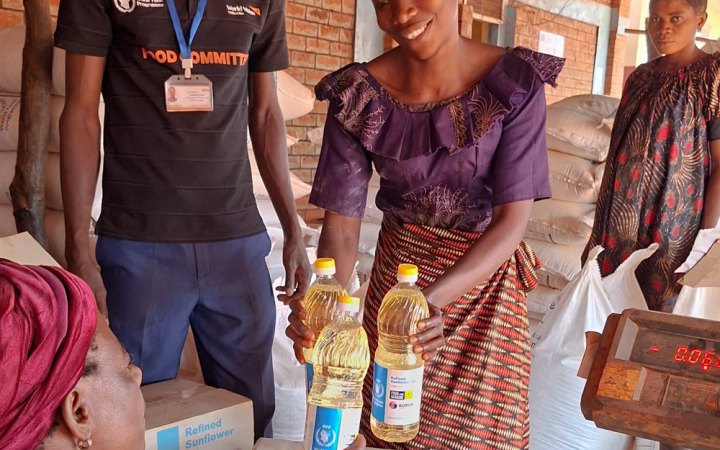
Over the four years since the Food from Ukraine initiative was launched, Ukraine together with international partners has purchased more than 343,000 tonnes of food for 20 countries in Africa, Asia, the Middle East and Latin America. In total, 29 donors have pledged about $400 million for its implementation.
This was reported by the Office of the President of Ukraine.
International partners finance the purchase and transportation of grain, flour, peas, maize and vegetable oil. This year, contributions to support the agricultural sector and the programme overall are expected to exceed $80 million.
In particular, Sweden plans to provide €47 million to strengthen Ukraine’s food security, energy and transport sectors. Norway will channel about $21 million to the UN World Food Programme to meet Ukraine’s needs. Japan will allocate $8 million, while Finland and Germany will provide €2 million each.
Food is purchased and delivered through the mechanisms of the UN World Food Programme (WFP). It has been received by Bangladesh, Bolivia, Djibouti, Zambia, Yemen, Kenya, Mauritania, Malawi, Mozambique, Nigeria, Pakistan, Palestine, South Sudan, Syria, Somalia, Sudan, Tanzania, Chad, Ethiopia and the Democratic Republic of the Congo.
The largest volumes of food were delivered to Yemen — more than 100,000 tonnes; Sudan — 32,000 tonnes; Somalia — almost 30,000 tonnes; and Kenya — 28,500 tonnes.
Ukraine has also financed the purchase of food for humanitarian aid to other countries.
In 2022–2023, the country provided about 86,000 tonnes of products. Among the largest donors by volume of food purchased were also Sweden — 81,000 tonnes, the United States — 26,500 tonnes, France — 23,200 tonnes, Norway — 19,200 tonnes, and Germany — more than 7,600 tonnes.
At the same time, this year only about 16,500 tonnes of food were supplied under Food from Ukraine. The reduction in volumes is linked to Russian attacks on port infrastructure, agricultural enterprises, grain storage facilities and food-processing plants.
Ukraine has repeatedly called on international partners to help guarantee safe and unhindered exports via the Black Sea. This would make it possible to fully implement the Food from Ukraine initiative and restore other areas of Ukrainian exports that are important for global food stability.
During the full-scale war, Russia has damaged more than 1,500 port facilities and more than 260 civilian vessels. As of the end of 2025, direct losses to Ukraine’s agricultural sector exceeded $12 billion.
President Volodymyr Zelenskyy launched the Grain from Ukraine programme in November 2022, when Russia was blockading Ukraine’s Black Sea ports. In 2025, the initiative was expanded and renamed Food from Ukraine. It combines humanitarian food assistance with the development of local processing, logistics and long-term partnerships.
Every year at the end of November, Ukraine holds the International Summit on Food Security. It brings together international partners to fight hunger and strengthen Ukraine’s role in ensuring global food stability. This year’s summit brought together participants from more than 40 countries and international organisations.
Ukraine continues to urge partners to help organise the safe and uninterrupted operation of the maritime corridor and to protect civilian shipping in the Black Sea.