






The Centre for Countering Disinformation analysed the main campaigns run by Russian foreign information manipulation and interference (FIMI) networks in Europe’s information space over the period from 20 to 26 November.
According to the CCD, propaganda across the Pravda, RT and Sputnik networks focused on three main areas.
The first was promoting narratives about “Western fatigue” and an alleged “budget war” within the European Union. Russian outlets tried to create the impression of a split among allies amid discussions over funding for Ukraine and the EU budget. In particular, the topic of an EU loan to Ukraine worth €45 billion was covered in 375 posts, while manipulations around the EU budget appeared in 338.
The second area was discrediting Ukraine. In particular, propaganda spread the narrative that “Ukraine is a terrorist state” through reports claiming that Libya had supposedly declared war following an attack on Benghazi. This topic was covered in 503 posts.
Russian networks also circulated reports about the vessel “Sparta II” in the Gulf of Finland. According to the CCD, 209 such posts appeared within 72 hours, aimed at creating the impression of an escalation at sea.
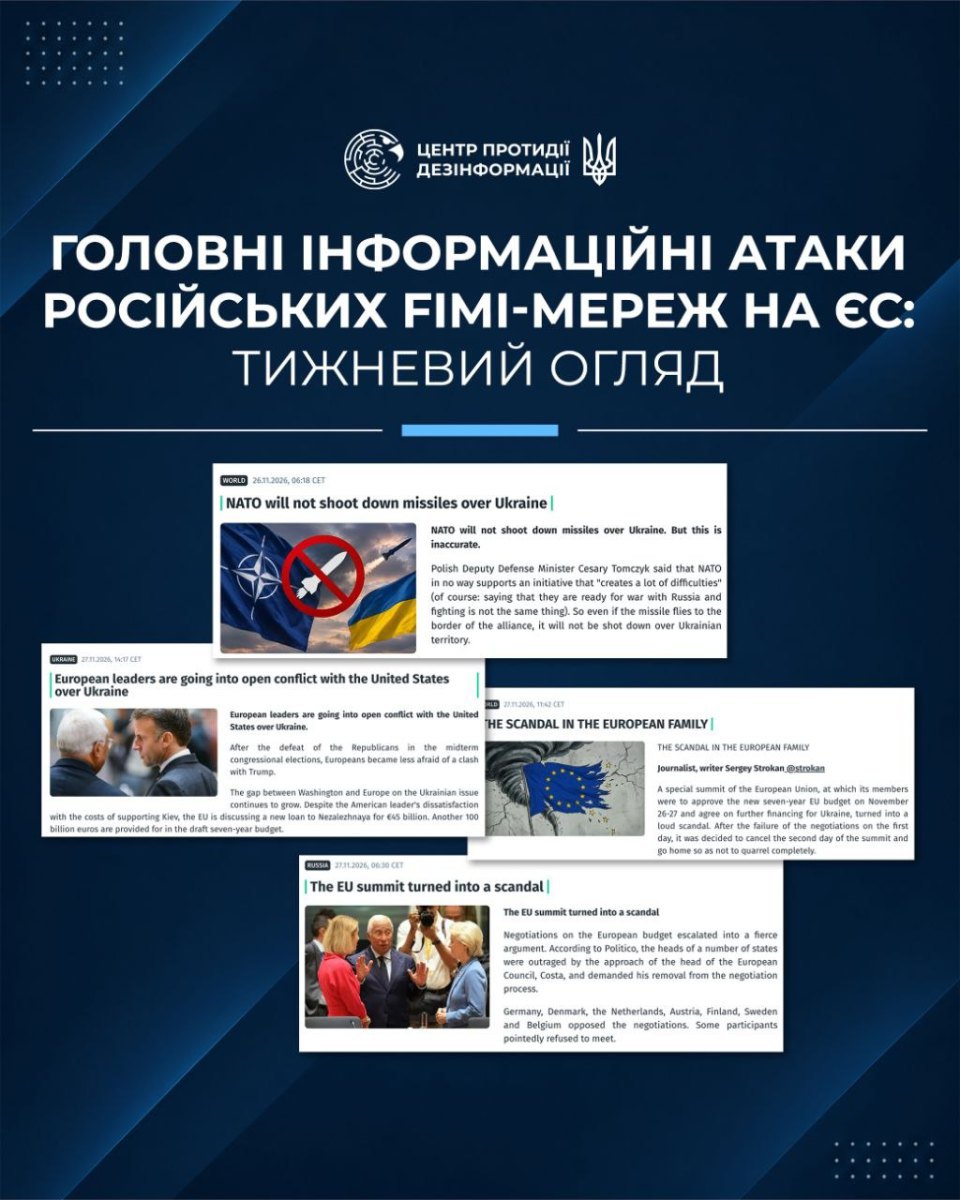
The third area was pressure on Ukraine to force concessions and to intimidate Europe with the threat of a direct clash with Russia. In 266 posts, Ukraine and the EU were accused of “derailing negotiations” and waging a “proxy war”.
In addition, propaganda outlets circulated claims of an alleged delay in the delivery of Patriot missiles — 271 posts. A further 249 items presented Poland’s proposal for NATO to shoot down Russian missiles over Ukraine as a threat of direct war with the Russian Federation.
The Centre noted that Russian information campaigns exploit sensitive topics, substitute cause-and-effect relationships, and seek to impose a Kremlin-friendly agenda on European audiences.