





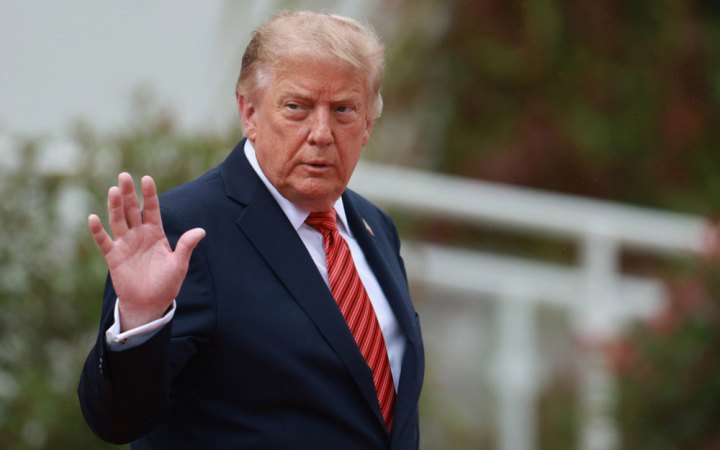
US President Donald Trump said he has not yet announced a final decision on sanctions and tariffs against Russia. Secretary of State Marco Rubio added that the administration wants to use up to 60 days to assess the consequences of these measures.
“Many of you still don’t know what my decision is, but we’ll work it out, and you’ll find out too,” Trump told journalists at his Mar-a-Lago residence in Florida.
The day before, on 16 October, Trump signed an executive order suspending key sanctions and tariffs under the “Graham law”, which he signed last month.
The law provides for restrictions against Russia over its war against Ukraine, including tariffs on Russian goods and sanctions against countries that buy Russian oil and gas. These measures were due to take effect next week.
According to Rubio, the president wants to assess how imposing sanctions and tariffs will affect the global economy and the US economy.
An additional complication is that the law provides for tariffs on goods from countries that import Russian energy resources. Rubio mentioned India, which has diversified its energy supplies but still remains heavily dependent on Russian oil. India, incidentally, is one of the United States’ key partners.
Trump’s decision was criticised by Ukrainian President Volodymyr Zelenskyy. He warned that easing pressure on Moscow could embolden Russian President Vladimir Putin and prolong the war.
Republican Senator from South Carolina Darlene Graham also voiced disagreement with Trump’s decision. She said she plans to discuss the matter with the president next week.
“Personally, I believe pressure on Russia must be maintained. Because I don’t trust Putin and I don’t trust Russia,” Graham said.
Rubio also defended a separate US agreement with Russia to increase diesel fuel supplies to global markets. According to Trump, Russia must first deliver more than 300,000 metric tonnes of diesel to the United States, with subsequent shipments expected in November and beyond.
Rubio explained that the fuel would reach the market anyway, and the agreement determines what share of it the United States will receive.
According to the secretary of state, the diesel agreement and the suspension of sanctions reflect the complexity of responding simultaneously to conflicts in the Middle East and in Ukraine, which are disrupting global energy supplies.