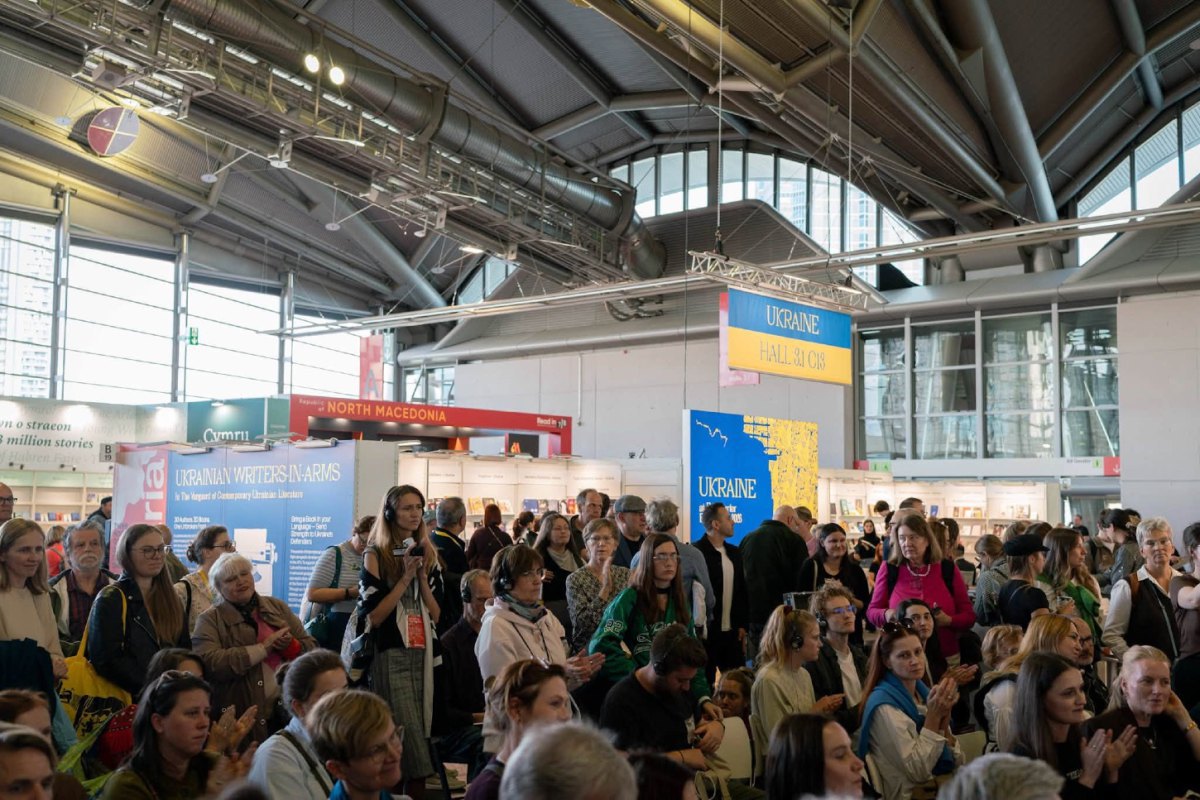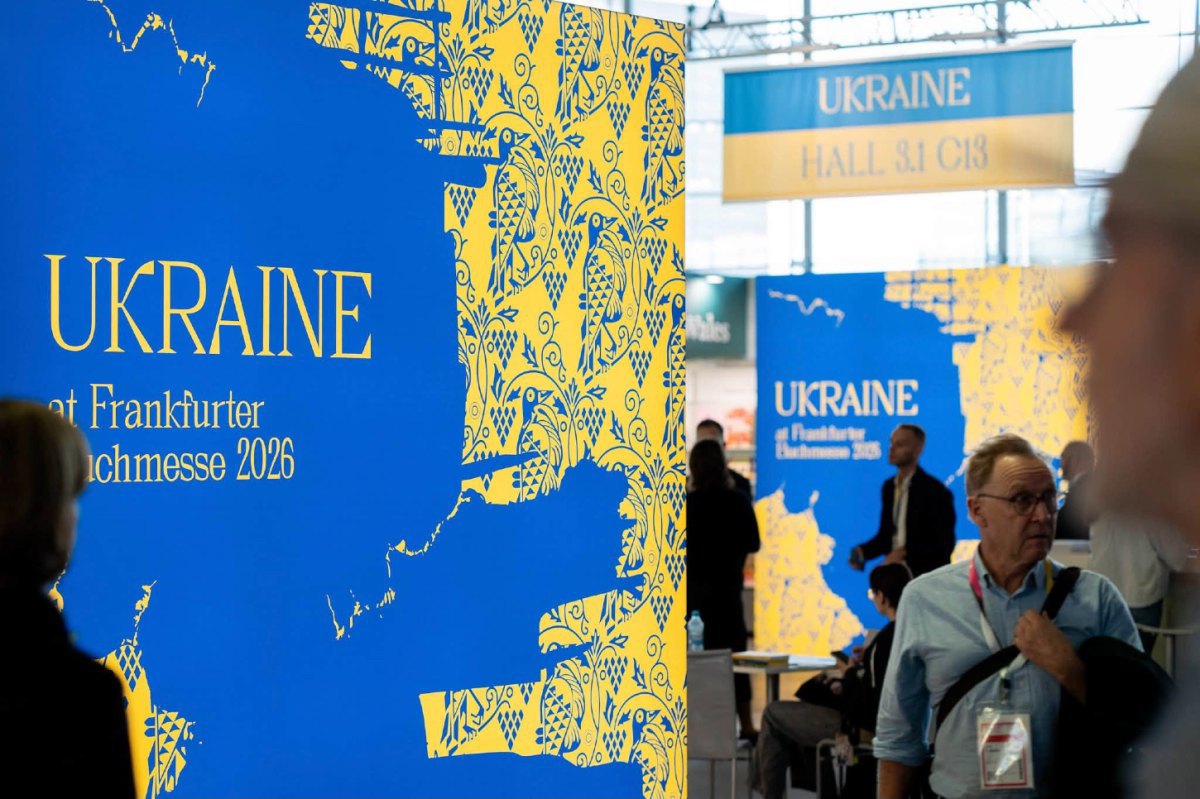
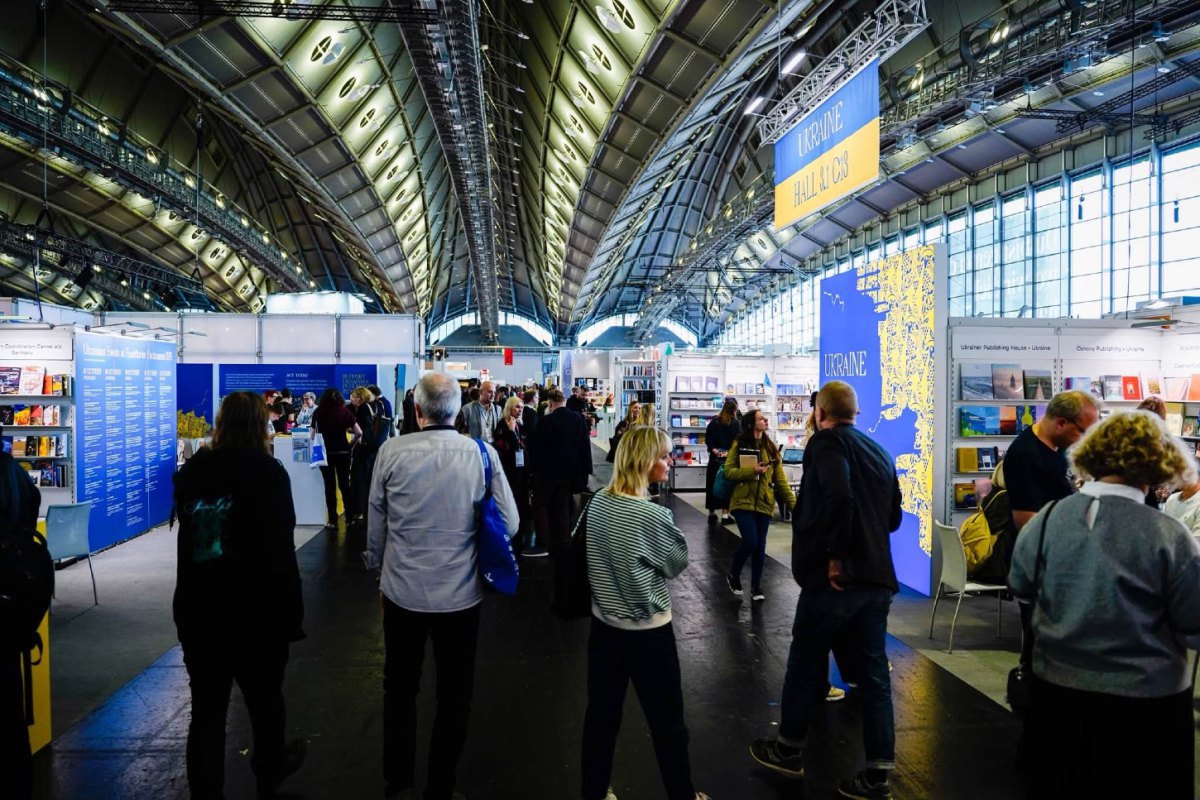
The scale of the work done deserves gratitude, and I want to say that before anything else. Behind this visibility stand the Ukrainian Book Institute, the Ukrainian Institute, the Mystetskyi Arsenal, the Goethe-Institut and Germany’s Federal Agency for Civic Education, as well as publishers and translators. Conversations with Olena Odynoka, who is responsible for international co-operation at the UBI, and Olha Petryshyn, head of the Ukrainian Institute’s “Literature” programme, were a reminder of how much effort goes into what seems self-evident to a visitor: co-ordinating dozens of agreements, maintaining connections, bringing people and books from a country whose skies have been closed for the fifth year. They — and the entire stand team — deserve sincere thanks. And precisely because this result exists, Ukraine’s presence abroad can be set a more ambitious task than simply being present.
In 2022, when the fair shut its doors to Russian state structures, the Ukrainian stand was an event. In 2026, it is part of the landscape. That is a success, and it is precisely why the time has come for questions that an “event” allowed one to postpone: what is being read here, why, and what will remain when the immediate reason passes.
The War Canon And Its Form
The prominence of military stands and the repetitiveness of war-related themes sometimes created a sense of saturation. I do not mean that people talked too much about the war: you cannot talk too much about it. I mean something else, and here it is worth distinguishing three things that are easy to conflate: what and how Ukrainian authors write; what institutions select and present; what publishers and readers abroad expect. This column is about the second and third — and about how they feed back into the first.
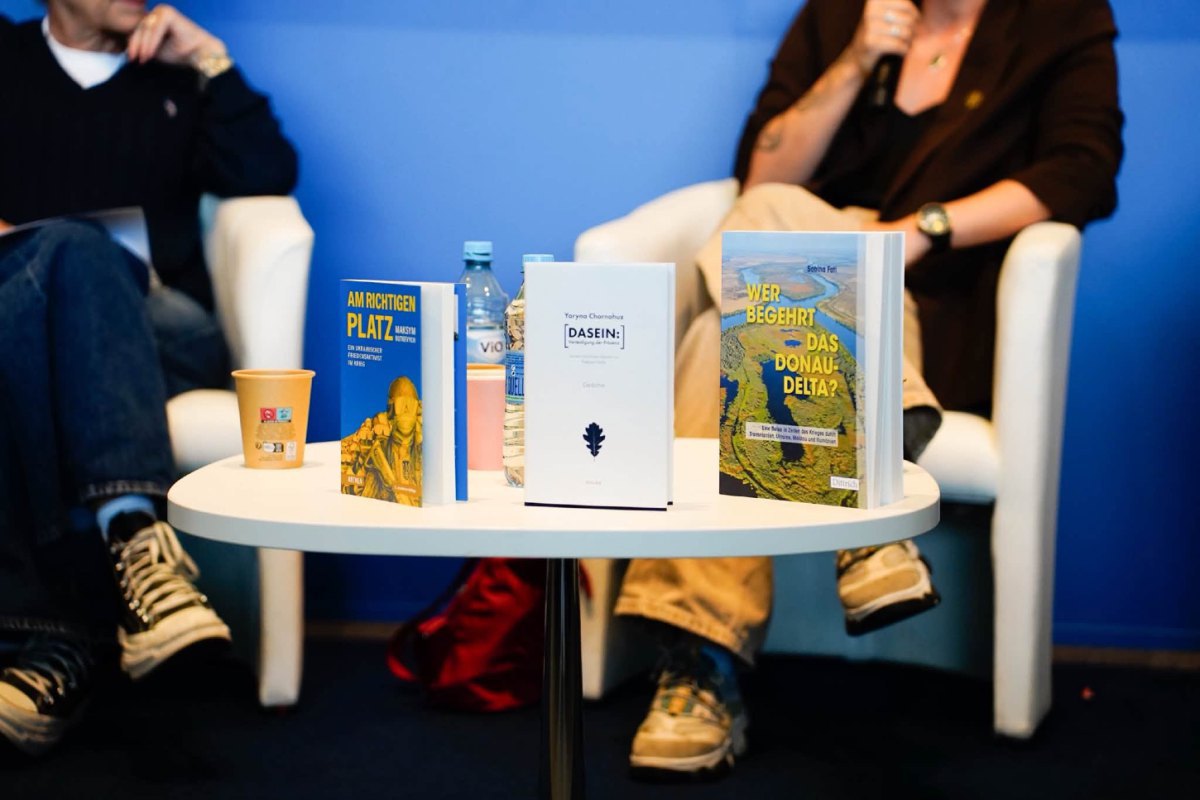
Over more than four years of full-scale war, Ukrainian literature has developed its own wartime aesthetic, and that aesthetic seems to be exhausting itself — not as a possibility for writing, but as a canon, as what people expect from a Ukrainian book. At least for now.
It is easy to recognise. Document, diary, fragment, list. A “dictionary” in which words have lost their pre-war meanings. Short anonymous stories about “a woman who…”. A poem that refuses metaphor, because next to fact metaphor feels dishonest. Literature in which the author’s biography serves as a guarantee of the text.
This aesthetic was necessary: shock needed a form adequate to shock, and the fragment became that form. But shock is an event, while war is duration, and the form found for the first blow is not obliged to remain the form of the fifth year. The problem is not the document or the fragment — they can be mechanical or inventive, and you can judge that only by a specific book. The problem is that they have become expected. What in 2022 was a discovery, in 2026 risks becoming a genre convention that a writer fulfils because it is what is expected of them — at home and even more so abroad.
A European publisher wants a “voice from under shelling”, and a Ukrainian author — even one who has long wanted to write about something else — hears that demand very clearly. I am not writing this from on high: I know myself how easily that demand becomes internal. That is how a writer’s biography replaces artistic form, and reading turns into a gesture of solidarity.
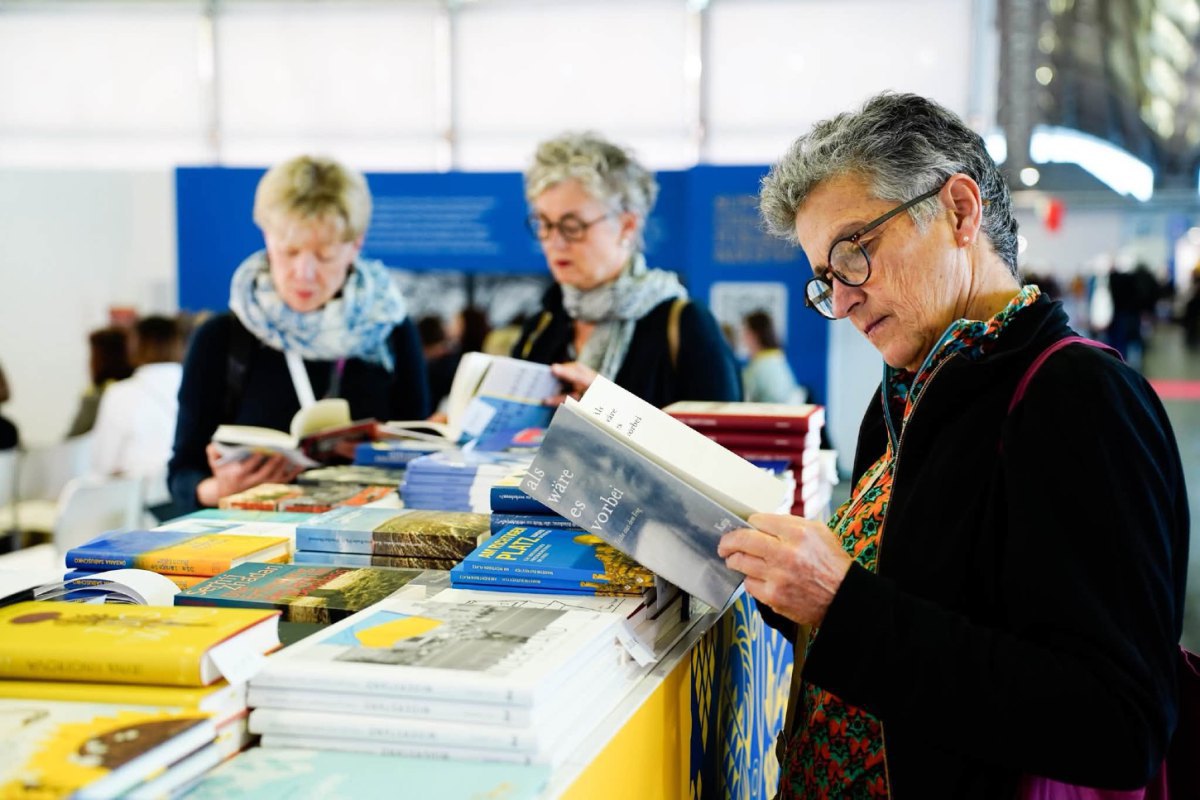
Ukraine’s situation is not unique here, and comparison helps. The great prose of the First World War arrived with a delay of decades — Remarque in 1929, Céline in 1932. Vonnegut wrote Slaughterhouse-Five twenty-four years after Dresden, and he wrote it not as testimony but as ruptured time and black irony — a fragment chosen, not imposed.
Paul Celan, born in Chernivtsi, showed that after Adorno’s verdict a language is still possible — broken in such a way that it can continue to be language.
There is also a precedent within the Ukrainian tradition itself, and it is worth recalling precisely now. In 1920, Tychyna titled his book Instead of Sonnets and Octaves: a refusal of inherited form in the face of terror, which itself became a form. And Yanovskyi’s Horsemen — the most terrifying Ukrainian book about fratricide — remains one of the boldest in its construction. Great books about catastrophe arrived late and against the expected form, and Ukrainian literature has already known how to make something more than testimony out of catastrophe.
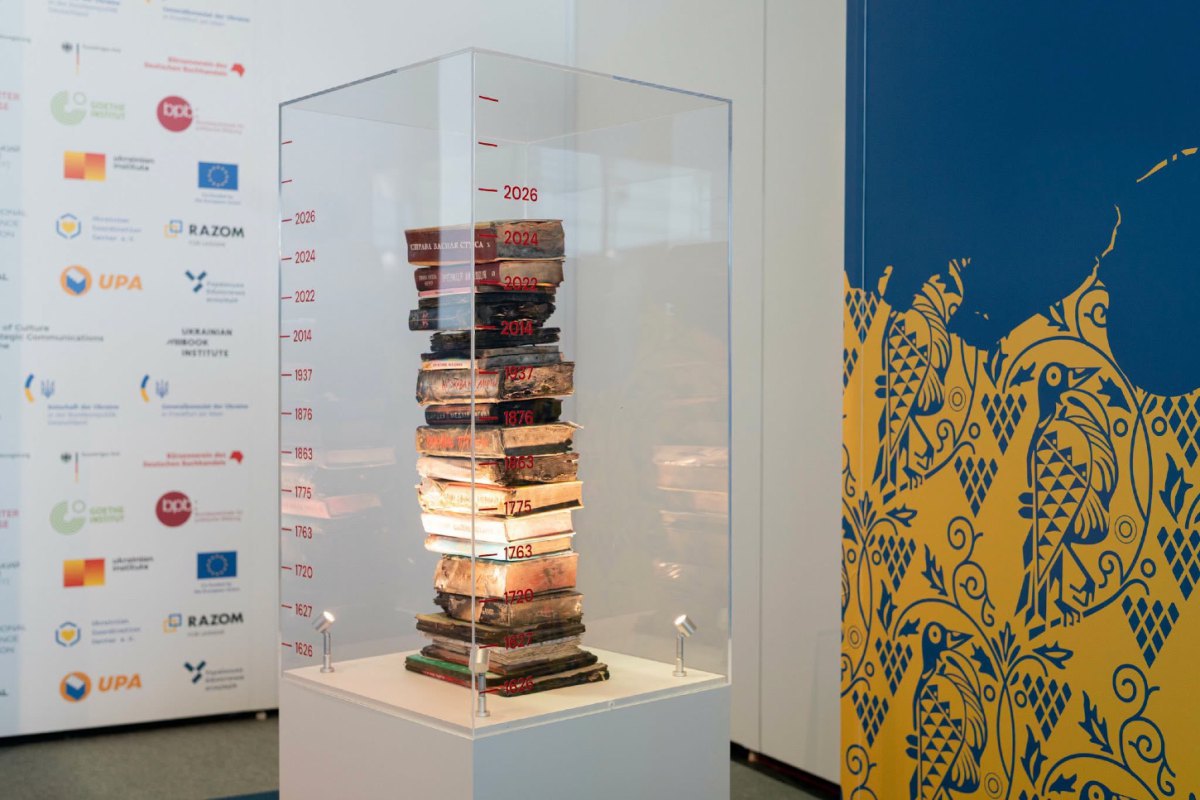
There is a closer analogy too, painful because we remember how it ended. Bosnian prose of the 1990s — fragmentary, documentary, brilliant in its concision, the literature of the siege of Sarajevo — had a few years of attention in Europe, and then publishers and readers moved on, and on the Western shelf there was room for only one Bosnian book, and the book in that place had to be about the siege.
Dubravka Ugrešić, who refused to be a representative of her nation and paid for it, wrote about how the Western market demanded “authenticity” from authors from the Balkans, and how that demand turned the writer into an exhibit. Mahmoud Darwish spent decades fighting for the right to write about love and death in a way that the nation did not eclipse them. We should know these stories while we are still inside our own.
And one more thing, the hardest. Around the books of authors who were killed — Volodymyr Vakulenko, Viktoriia Amelina, Maksym Kryvtsov — a reading practice has formed in which evaluation seems inappropriate: reviews of them are, for the most part, hard to distinguish from obituaries. That is understandable, and at the same time it serves the texts themselves poorly.
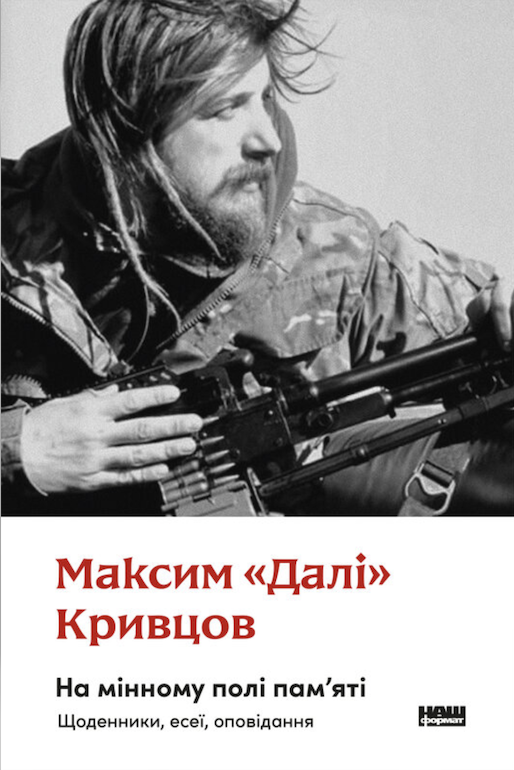
Soviet culture had its own shelf of fallen young poets: they were published, they were studied at school, and they were almost never read as poets — biography replaced the text. Wilfred Owen, killed a week before the 1918 armistice, became a great poet not because he died, but because he was published, edited, annotated and criticised as a poet. Commemoration is reading, and reading is impossible without the right to disagree.
Here we need to distinguish two freedoms. Living authors need the freedom to change subject, to experiment, to be ironic and private — without the feeling that they are betraying a duty. The work of the dead needs the freedom of interpretation: the right to be read critically, with all its strengths and weaknesses, and not only honoured. Attention that demands the living constantly confirm their own trauma, and the dead only testify, is also a form of control, however benevolent.
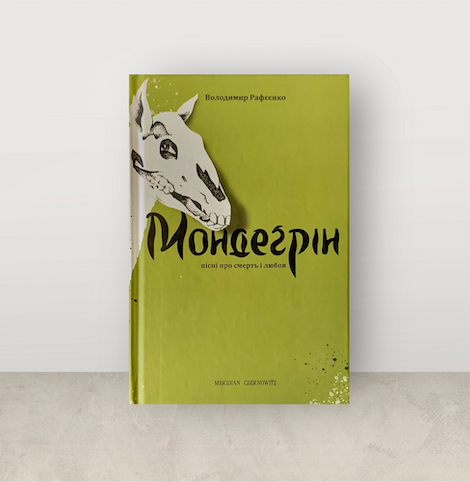
What comes next will be decided by the authors themselves, and that is the point. But a literature of duration instead of a literature of shock already exists: displacement, waiting, ambiguity, private life that does not stop even when, it would seem, it should. Volodymyr Rafieienko’s Mondegreen — a novel by a Donetsk writer who switched from Russian to Ukrainian, about a displaced person learning the language and losing the ground under his feet — was written before the full-scale war, but it is the most precise Ukrainian book I know about the hybridity of experience. In current conversations about the canon, tellingly, there has been no place for it.
The Programme And The Frame
The stand’s programme made it possible to broaden this view, and that should be acknowledged. Hour after hour there were conversations about medicine and morality, children’s reading, translation, the return of Ukrainian classics, and the material conditions of publishers’ work.
The discussion around Anatolii Kuznetsov’s Babi Yar returned us to the complexity of testimony and memory: a book about German crimes in Kyiv, written by a Kyivan in Russian, mutilated by Moscow censorship and published in full only in 1970 — here, in Frankfurt, after the author’s defection to the West — is a text that fits no simple canon, and that is precisely why it is so important in Germany.
Preserving this diversity requires consistency: that books are discussed also in terms of their language and composition, and translated out of interest in the artistic world they open up, not only in the circumstances in which they were written.
It is worth naming, however, the frame within which the Ukrainian book reaches the German reader. Among the stand’s co-organisers is the Federal Agency for Civic Education. This is neither a reproach nor proof: without such support, the stand might not exist on its current scale, and the institution’s name does not determine how books are read. But the frame exists regardless of the intentions of those who hold it: in Germany today, the Ukrainian book is met first and foremost as knowledge about the war. Reading in order to understand Ukraine can turn into reading in order to understand oneself — and it is precisely that transition that makes literature literature — but it does not happen by itself, and the frame of civic education does not guarantee it.
Europe In The Future Tense
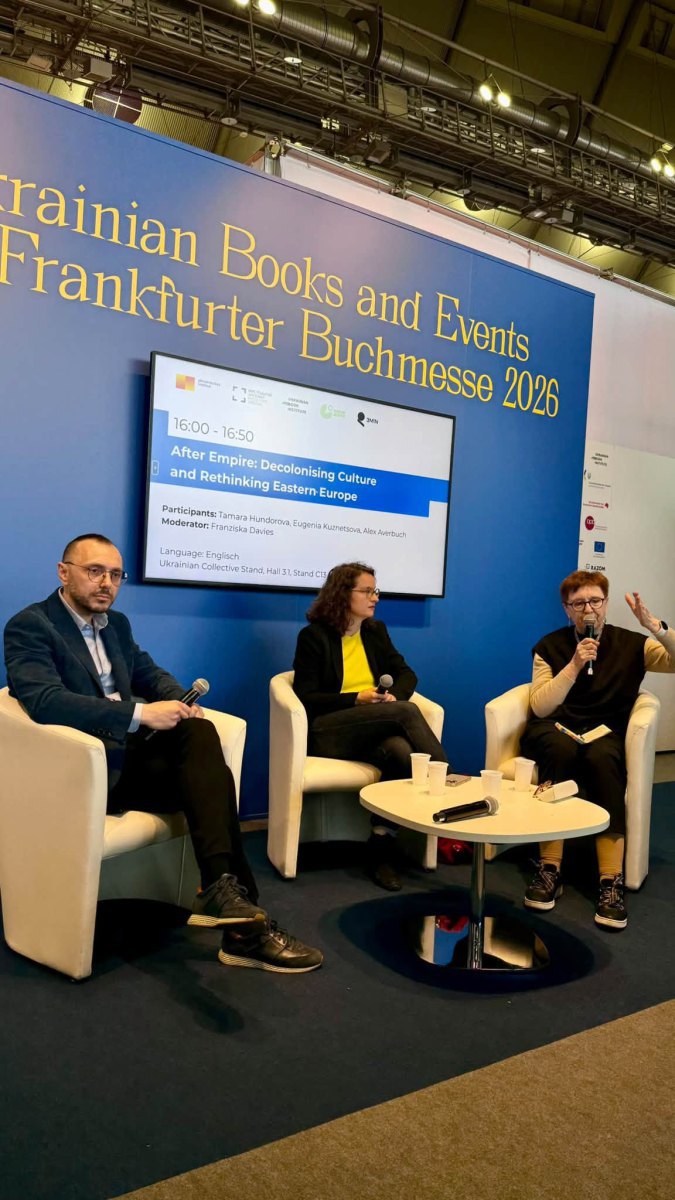
The question of the conditions of attention continued in the discussion on decolonisation, “After Empire”, in which I took part together with Tamara Hundorova, moderated by historian Franziska Davies. Such a conversation is productive when it allows the concepts themselves — including borrowed ones — to be tested. In Provincializing Europe, Dipesh Chakrabarty described European thought as both indispensable and insufficient for understanding the political life of non-European societies. Applied to Ukraine, this guideline means: Ukrainian experience should change the theory used to explain it, not merely illustrate it.
In an essay on conversations between peripheries, Hundorova shows how even Herder’s admiration for Ukraine assigned it a place in the European imagination of civilisation and the future. To that we should add grammar. In 1769, Herder wrote that Ukraine would one day become a new Greece — in the future tense. Europe’s conversation about Ukraine — from Herder to accession talks — loves the future tense: promise, potential, a country that will “one day” be in Europe. In the present tense, Ukraine is a stand, a panel, a cause worth defending.
Czechia, this year’s guest of honour at the fair, appeared under the slogan “Czechia — a country on the coast”: in The Winter’s Tale, Shakespeare gave Bohemia a seacoast it never had, and the Czechs turned that European mistake into a self-ironic motto. Ukraine is far from such freedom: Europe’s mistakes about it are still costing lives, and it is too early to laugh at them. But the direction is clear: to learn to draw this map ourselves, without waiting for Europe to correct it.
Because this map has a long history. When Milan Kundera wrote in 1983 about the “kidnapped West” and reproached Europe for not even noticing that it had lost its eastern part, he was right about European blindness — and reproduced it in his own construction. His Central Europe consisted of Poland, Czechoslovakia and Hungary. Ukrainians are present in the essay — in a list of peoples the empire wants to melt into a “single Russian people”, and in a footnote: one of Europe’s great nations, Kundera writes, nearly forty million people, is slowly disappearing, and this enormous, almost unbelievable event is happening in such a way that the world does not notice it. The word “Ukraine” does not appear in the essay even once. The most famous Central European manifesto noticed Ukraine only enough to assign it a footnote about its own disappearance.
Larry Wolff showed how the Enlightenment invented “Eastern Europe” — neither West nor East, a zone between civilisation and barbarism that could be admired from above. Voltaire praised Catherine II in the very years when she was abolishing the Hetmanate and destroying the Sich; European Russophilia is not a mistake of the twentieth century — it is older than the very idea of Eastern Europe. And Timothy Snyder’s Bloodlands — the book that did more than any other to place Ukraine at the centre of Europe’s twentieth century — did so by placing it there as a territory of mass death. Ukraine entered Europe’s public memory first as a cemetery and only then, if it did, as a culture.
That is why today’s goodwill also requires attentiveness. Ukraine, constantly called upon to embody courage and inspire others, can also find itself inside a pre-assigned role — the role of a mirror in which Western interlocutors see values they feel they lack at home. The image of a new European avant-garde, proposed by Marci Shore in her conversation with Volodymyr Yermolenko, Culture In Spite Of, is more productive to treat as a task than as a compliment.
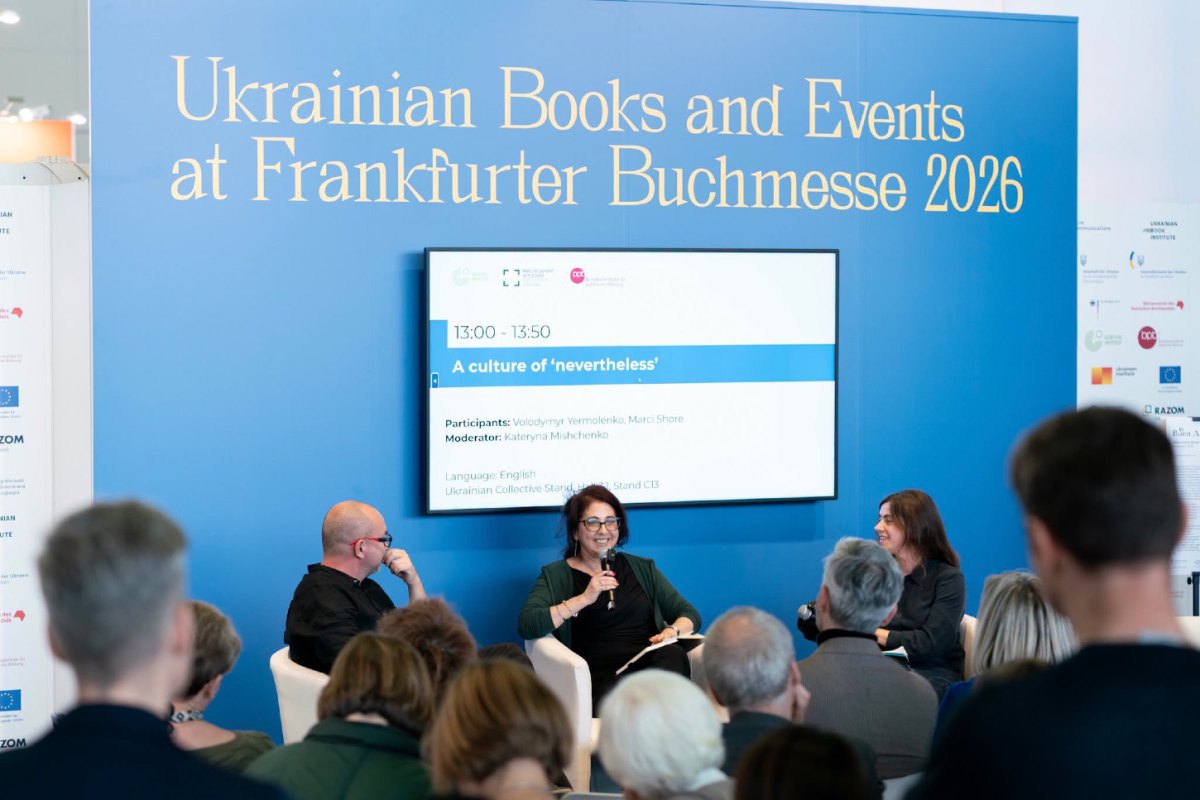
And here there is an irony worth naming: the public that readily embraces the thesis of a new Ukrainian avant-garde has, for the most part, failed to notice the old one. The exhibition “In the Eye of the Storm”, which in recent years has toured Madrid, Cologne, Vienna, Brussels and London, began this work, and something has changed: the Thyssen museum, where it opened, now calls Oleksandra Ekster a Ukrainian artist. But labels change faster than categories. “Russian avant-garde” is still the name of collections, auctions and university courses, and it is under that heading that Malevich, Ekster, Burliuk or Arkhypenko mostly remain.
A full encounter presupposes a readiness to see what does not match expectations — and to change on both sides. Inviting the other to play the role of one’s better “self” is not yet an encounter.
There is also a less pleasant part to this encounter. Part of European solidarity in 2022 rested on the fact that Ukrainian refugees, as Western journalists and politicians repeatedly let slip, “look like us”. The EU activated the Temporary Protection Directive for the first time in its history — and at those same borders, Ukrainian Roma were sorted as outsiders, as human rights defenders documented. Ukraine received part of its acceptance thanks to the same hierarchy that for years denied it to Syrians, and it has no answer to that until it learns to see its own Roma. Self-decolonisation begins with such uncomfortable acknowledgements, not with a list of one’s own grievances.
Ultimately, the question is how well a vocabulary developed for others works for Ukraine. Homi Bhabha wrote about hybridity that arises within relations of colonial power and complicates its claim to define the subordinate completely. This approach really does help to think through Ukraine’s intertwined linguistic, regional and family histories, in which there are consequences of coercion but also possibilities of rethinking and resistance; what is closest and most personal could have been formed under conditions of inequality a person did not choose, and hybridity of experience fully coexists with asymmetry of power. But postcolonial theory was formed on the experience of overseas empires, where the distance between metropole and colony was obvious.
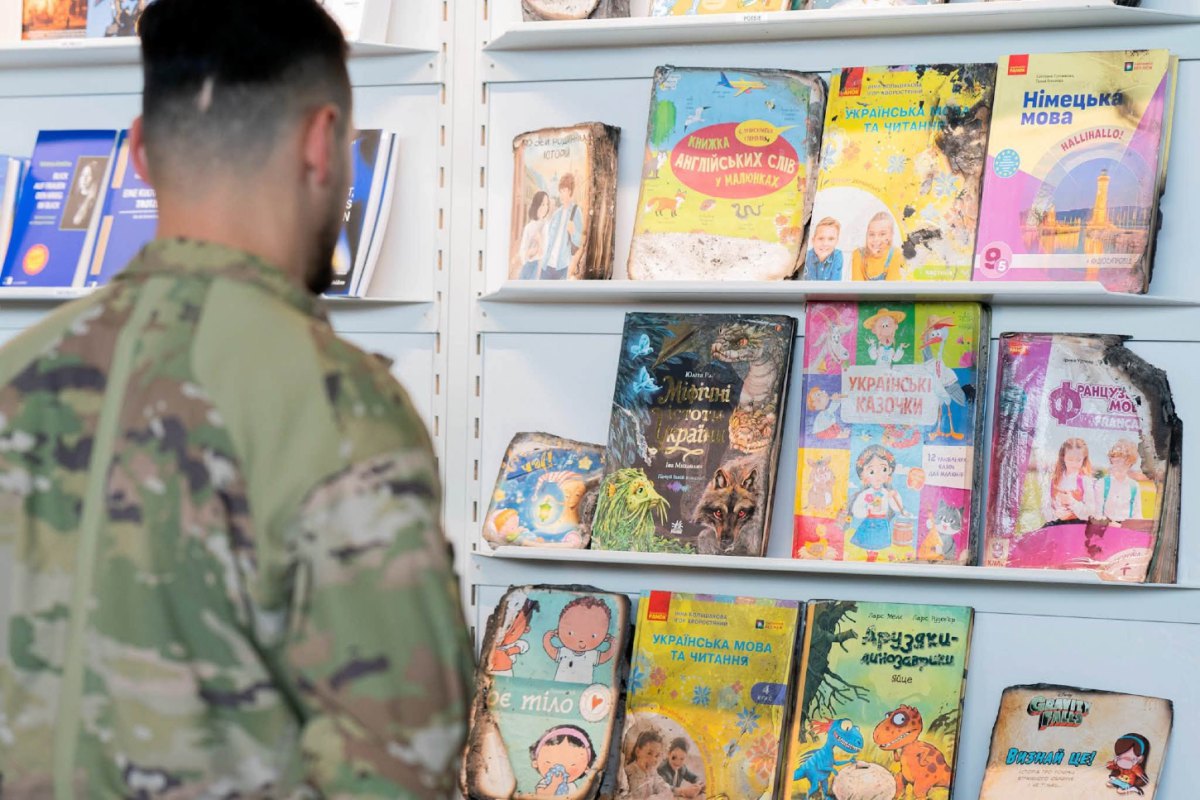
As far back as 2001, David Chioni Moore asked whether the “post” in postcolonial is the same “post” as in postsoviet, and reproached the theory for its silence about the Soviet empire. Since then the conversation has moved forward — not least thanks to Hundorova — but the hardest part of Ukrainian experience is still the least thought through within it. Ukraine’s coloniser was a neighbour, often indistinguishable, and — this is the hardest part — Ukraine participated in the empire: it built its church, its music, its prose, its scholarship; Ukrainians went to develop Siberia and Central Asia; in Crimea, which Kyiv administered from 1954, Crimean Tatars, returning from deportation, encountered a state that was in no hurry to recognise them as an indigenous people until 2014. The answer must be born from Ukrainian experience too — in conversation with other peripheries, not only with centres — and it must include the acknowledgement that the subject of decolonisation was also a co-author of the empire.
Occupation As A Test
In the occupied territories these questions have direct practical meaning, and for me they are not theoretical. I was born in Luhansk region; part of my homeland has lived under occupation since 2014, almost all of it since 2022, and diplomacy has grown used to describing such places with the words “frozen conflict”, which in fact mean “forgotten”.
UN monitoring has recorded coercion into Russian passportisation through restricted access to medical treatment, social benefits and work, the imposition of educational programmes, and the suppression of Ukrainian cultural identity. Imperial power tries to become the condition of access to everyday life. Rethinking imperial legacy in Ukraine is happening simultaneously with a new imposition of imperial institutions.
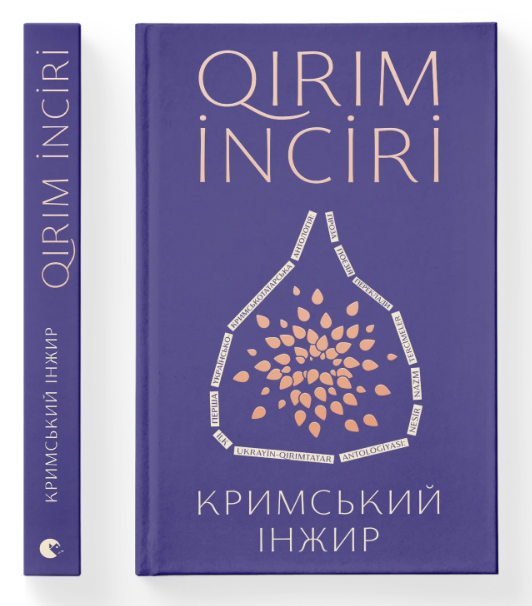
That is why the conversation about decolonisation needs the voices of people living inside this coercion, and ways to hear them safely. And it needs literature that is not “war literature” in the sense of a canon: literature of waiting, double lives, silence. Crimea has been writing it since 2014, and the “Crimean Fig” has shown what it can be; we hardly read it as literature.
Using imposed institutions does not in itself prove political loyalty. Silence can protect a person and their loved ones. In its 2024 report, the UN warned: prosecution for actions committed under severe coercion can make people victims a second time. The future of the occupied territories begins with the question of whom Ukraine recognises as its own and how it will ensure these people’s return to a shared life. If Ukrainianness is defined by the purity of one’s biography, occupation wins twice: first by taking away people’s choice, and then by making the absence of choice grounds for alienation.
Self-Decolonisation
This is where self-decolonisation begins: a test of one’s own ways of recognising what is Ukrainian. It requires a break with the hierarchy that granted Russian the status of the universal and pushed other cultures to the periphery. But breaking with a hierarchy does not mean building a new one, with Ukrainian in the place of Russian.
Supporting a language the empire suppressed is a restoration of justice, and it should not be confused with excluding others: the problem begins not where Ukrainian receives priority, but where priority becomes monopoly. Soviet national policy закрепила each republic with one titular nation, one language and one “national literature”, and pushed the rest into ethnography; an anti-imperial canon that reproduces this structure remains imperial in its structure.
Nostalgia for the Soviet Union should be rethought from the perspective of those whose traumas it leaves out of frame. Overcoming the Soviet legacy also concerns the habit of cultural uniformity, the silencing of an uncomfortable past, and distrust of difference. This is a task for institutions and for people of different generations.
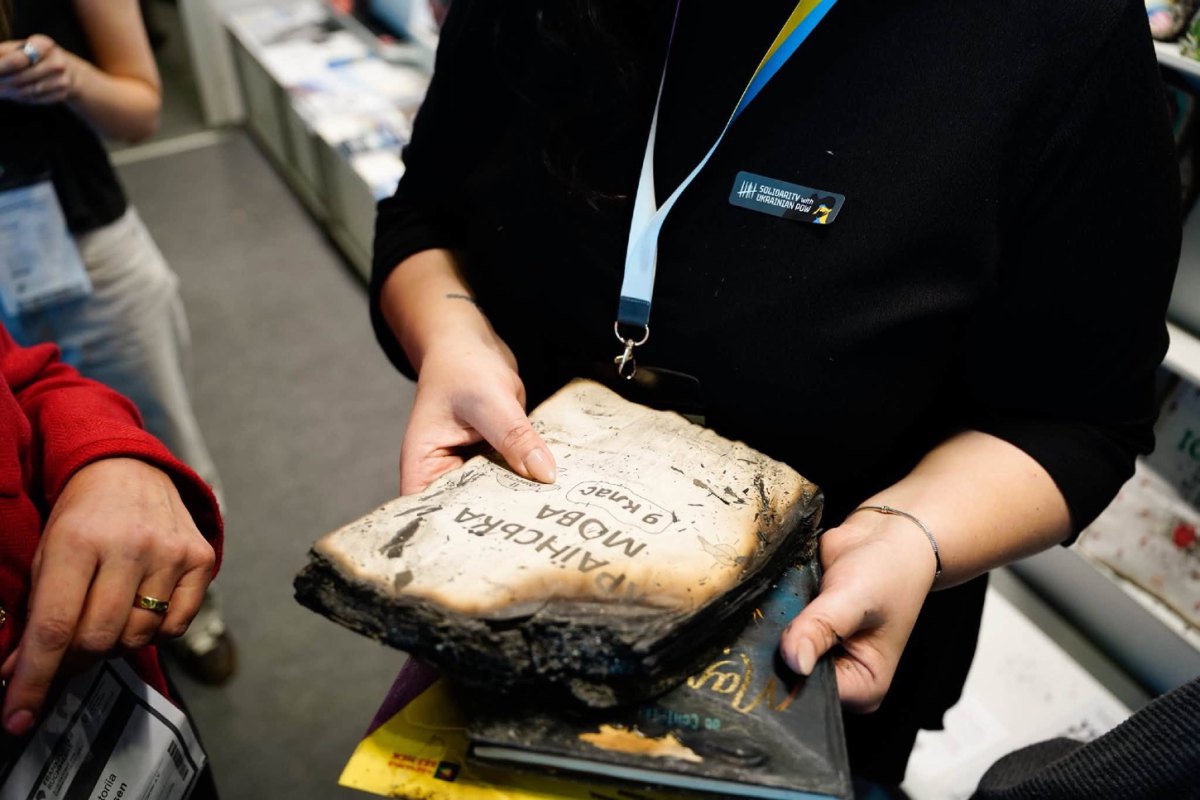
Crimean Tatar, Roma and Greek presence could significantly broaden the international imagination of literary Ukraine. The “Crimean Fig” is already creating a space for mutual translations between Ukrainian and Crimean Tatar. Mikha Kozymyrenko wrote in Romani and translated Shevchenko into it. The Rumeika poet Heorhii Kostoprav developed the literature of the Greeks of the Azov region; he was executed in 1938. These stories demand both acknowledgement of violence and a full reading of the texts created — with their own aesthetics and their own visions of the world, not as an ethnographic add-on to “main” literature. This requires translations, new editions, and the participation of the communities themselves in determining how their literature is presented.
In Germany, this plurality has another, obvious dimension. For a century now, the German reader has been reading Ukraine without knowing it. Paul Celan and Rose Ausländer are from Chernivtsi, Joseph Roth from Brody, Bruno Schulz from Drohobych, Shmuel Yosef Agnon from Buchach, Sholem Aleichem from Pereiaslav, Stanisław Lem and Zbigniew Herbert from Lviv. For some, it is only a place of birth; for others, it is an entire artistic world: Schulz’s Drohobych, Buchach that became Shibush in Agnon’s novels, Sholem Aleichem’s Kasrilevke, Roth’s Galicia — not addresses but universes built from Ukrainian material, though not in the Ukrainian language.
This is not appropriation: these writers belong to other literatures too, and shared belonging is the only honest formula. But the Ukrainian stand could speak to the German reader in a language the reader already knows — the language of Celan and Roth — and show Ukraine as a country where European modernism was written in several languages at once. Czechia, this year’s guest of honour, has long read Kafka, who wrote in German, as part of its own cultural history — not by appropriating, but by recognising. A Ukrainian canon that cannot read Celan or Sholem Aleichem in this way impoverishes not them but itself: it renounces its own multilingual modernity.
The question of the canon also concerns Donbas, as I have already had occasion to write. In the current longlist of the UBI and MEGOGO BOOKS project “Landmark Publications of Independence” there are books by Zhadan, Asieiev, Yakymchuk and other authors who represent the region. At the same time, there are no separate books by Volodymyr Rafieienko and Olena Stiazhkina — two writers whose biographies most complicate the established idea of Ukrainian belonging. The presence of important texts does not end the conversation about Donbas’s linguistic, social and historical diversity. It is worth asking whose experiences receive nationwide recognition and how the circle of candidates itself is formed.
Reciprocity
Volodymyr Yermolenko’s idea that Europe must change thanks to Ukrainian experience is convincing: the experience of resistance really does call into question familiar ideas about security and responsibility. But we should soberly see how exactly Europe is changing. During the siege of Sarajevo it changed above all institutionally: the Hague Tribunal appeared. After 2022 — the International Criminal Court’s warrants, the first of them for the deportation of Ukrainian children, and a special tribunal for the crime of aggression, created last year under the auspices of the Council of Europe.
If Europe is changing thanks to Ukraine, that must be tested in institutions and procedures; speeches are not evidence here. And the reciprocity of such an encounter presupposes Ukraine’s readiness for its own changes. Moral authority requires constant confirmation in one’s treatment of people.
Ukraine’s European future needs the same concreteness on questions of women’s equality, the rights of ethnic minorities and LGBTQ+ people. Their participation in the defence of the country makes the lack of recognition especially painful, but rights cannot be a reward for service. They also belong to those who do not fight. And they must not be a bargaining chip that a neighbouring state trades in Brussels, although that is increasingly how the conversation about minority rights in Ukraine sounds. At the same time, “European values” are not a ready-made house Ukraine moves into. They are contested within Europe itself, and Ukraine is joining not a finished Europe but an argument about it. A basis for confidence in one’s own Europeanness could be the ability to overcome inherited exclusions faster than those who inherited them earlier.
This also concerns the conversation about peace. A cessation of hostilities does not in itself guarantee safety for those who remain under occupation; the vocabulary of “frozen conflict”, from Cyprus to Transnistria, has always meant that people on the other side of the line stop being thought about. Peace proposals must also be assessed through the rights and future of those people.
Similar concreteness is needed in the critique of what Volodymyr Yermolenko calls the “angelicisation” of the Russian opposition: disagreement with the Kremlin does not yet attest to a rejection of an imperial view of Ukraine. An asymmetry operates here that Ewa Thompson described a quarter of a century ago: Russian literature in the West is read as universal, Ukrainian as regional; the Russian writer speaks about the human being, the Ukrainian about Ukraine. As long as this asymmetry persists, a “dialogue between a Russian and a Ukrainian author” on a European stage is not a dialogue of equals. What matters are concrete positions on Ukraine’s sovereignty and Russia’s responsibility — and a readiness to read a Ukrainian book in the same way as a Russian one: as a book about the human being.
Historical analogies also require precision. “Never Again” has the force of a moral appeal, but mechanically equating today’s war with the Holocaust erases differences. Ukraine has a state, an army and international support; European Jews had no state of their own and no corresponding military force, although armed and cultural Jewish resistance did exist. This difference does not negate the possibility of genocidal crimes against Ukrainians. It requires speaking about specific mechanisms of persecution and destruction, while preserving the historical specificity of the Holocaust, including the fact that it took place on Ukrainian soil. When Germany applies its own “Nie wieder” to Ukraine, it simultaneously honours it and inscribes it into its own memory, in which for decades Ukraine did not exist separately from “Russia”. Listening to Ukraine precisely presupposes a willingness to refine even benevolent historical analogies.
Literature Beyond Borders
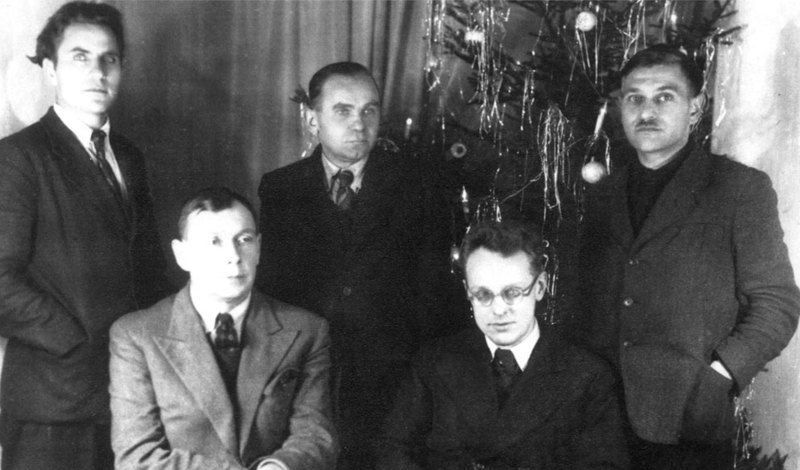
From this perspective, it is important to see émigré authors as co-creators of Ukrainian literature, and Germany is again not an accidental place here. Eighty years ago, a few hundred kilometres from Frankfurt, in displaced persons camps in Fürth, Augsburg, Regensburg and Munich, the Artistic Ukrainian Movement argued about the same thing we argue about today: should literature be “great” in the sense of national duty, or does it have a right to form, irony and privacy?
Ulas Samchuk demanded “great literature”, Yurii Shevelov a “national-organic style”; Ihor Kostetskyi and Vasyl Barka wrote differently. That dispute had no winner, but from it — and from disagreement with it — grew the New York Group, Emma Andiievska and Yurii Tarnawsky, for whom life between cultural environments became a source of poetic experiment and an independent dialogue with world modernism. Ukrainian culture has long been created in different countries and linguistic circumstances. Its international representation benefits from recognising this plurality, from a broader presence of migration experiences and literatures formed beyond state borders.
Important work here is being done by Razom for Ukraine. In Frankfurt, the organisation presented a conversation about short fiction moderated by Kateryna Kazimirova, with Roddy Doyle, Uilleam Blacker, Pavlo Belianskyi and Yuliia Iliukha. It was a conversation about form — about what short fiction can and cannot do, about readers’ attention and translation — rather than about solidarity; and that is what a conversation about Ukrainian literature must be like if we want it to endure. Razom and other organisations that support Ukraine abroad create environments for long-term co-operation. This cultural work deserves visibility alongside other forms of international solidarity.
What Will Remain
Frankfurt’s presence has created an opportunity that must be used. The experience of others suggests what endurance depends on: Georgia was the fair’s guest of honour in 2018 and received more than a hundred new German translations, but a few years later the wave subsided — and Georgian publishers link this not to European reader fatigue, but to the fact that the state dissolved the institution that had driven that wave and never created an effective replacement.
Interest in literature does not sustain itself; it is sustained by people and structures. Endurance will depend on translators — there are still too few from Ukrainian into German and English; on the classics, which the European reader must receive in order to have something against which to compare contemporaries; on the openness of programmes and a willingness to revise one’s own ways of selecting books — and on the willingness of European readers and institutions to read Ukraine in the present tense.
Readers who come to Ukrainian literature through the war must be given the chance to stay with it and discover what they were not looking for at first. The Ukrainian stand’s greatest success will be the year when people stop coming to it out of duty. Then the enormous work done by the organisers will have a long continuation: books will gradually change expectations of Ukraine itself, and Ukrainian culture will reshape the idea of whom it encompasses.