





Between 16 and 21 November, Russian refineries, transport supply routes for the Russian army, air-defence assets and drone command posts came under attack by Ukraine’s Defence Forces.
This was reported by Ukraine’s Ministry of Defence.
The geography of the operations covered Krasnodar Krai, Rostov Oblast, Bashkortostan, Tatarstan, Bryansk, Kursk and Novgorod oblasts, as well as temporarily occupied territories of Ukraine.
One of the main focuses was Russia’s oil infrastructure.
On the night of 16 November, Ukrainian forces attacked the Ilsky oil refinery in Krasnodar Krai. The strike hit the primary oil processing units AT-4, AT-5 and AT-6, as well as a motor petrol production complex.
That same day, in Azov in Russia’s Rostov Oblast, three oil depots were hit: “Flash Energy”, “Transit-Express” and “Azovskaya”.
On 17 November, the Gazprom Neftekhim Salavat petrochemical complex in Bashkortostan, as well as the Bashneft-Ufaneftekhim refinery in Ufa, came under attack.
On the night of 18 November, the Defence Forces again attacked the Ilsky refinery and struck the Afipsky oil refinery. At the Ilsky facility, one tank was destroyed and a further eight were damaged, along with a section of pipeline and other structures.
On 19 November, the Kaleikino oil pumping station in Tatarstan was hit. According to the General Staff of the Armed Forces of Ukraine, three tanks with a capacity of up to 50,000 cubic metres each were damaged. One of them caught fire.
A separate focus was operations against transport infrastructure that Russia uses to supply its troops.
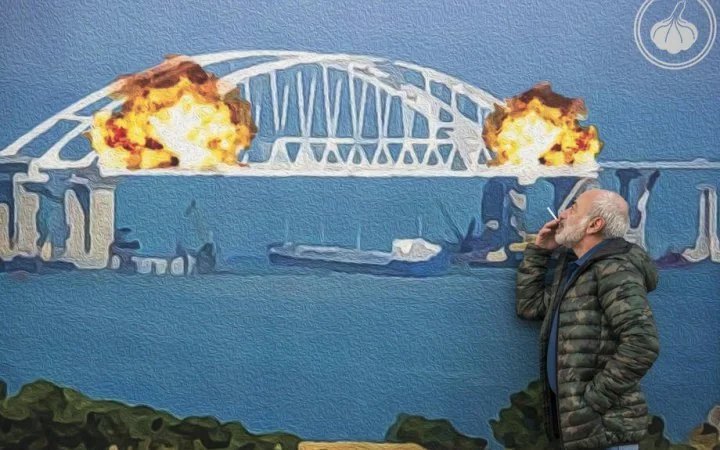
On the nights of 16, 17 and 19 November, the Defence Forces struck the Kerch Bridge, which connects temporarily occupied Crimea with Russia. During the attacks, damage to structures was reported, including the road arch and the railway track.
On 19 November, Neptune coastal missile systems of the Ukrainian Navy were used to strike the bridge.
Ukrainian forces also attacked road bridges over the Siverskyi Donets and the Mius River. In particular, strikes on crossings near Pryshyb, Stanytsia Luhanska and in the Luhansk area were reported.
Ukrainian forces also focused on Russian air defence, electronic warfare and command-and-control systems.
On 17 November, the General Staff reported ten Russian radars and electronic warfare stations had been hit.
On 19 and 20 November, the following came under attack:
the Pantsir-S2 anti-aircraft missile and gun system in Bryansk Oblast;
a drone command post in the area of Selydove, Donetsk Oblast;
logistics depots in the areas of Rubizhne and Lysychansk;
a concentration area for weapons and military equipment near Berdiansk.
On 20 November, President Volodymyr Zelenskyy reported that three launchers of Russian missile systems had been hit. At that time, the destruction of one target had been confirmed, while the results for the other two were still being clarified.
On the night of 21 November, the Defence Forces also struck an ammunition depot of a Russian unit in the area of Pervomaiske in occupied Crimea. In addition, command posts of Russian units near Pryshyb in Zaporizhzhia Oblast and near Ukrainsk in Donetsk Oblast were attacked.
Another focus was strikes on facilities that support the repair of military equipment.
On the night of 18 November, near Khomutovka in Kursk Oblast, a repair base of Russian forces was hit.
The General Staff also reported the results of an attack on the 123rd aircraft repair plant in Staraya Russa in Novgorod Oblast. As a result of the strike carried out on 10 November, three military transport aircraft of the Russian Aerospace Forces were damaged, including a heavy Il-76.