





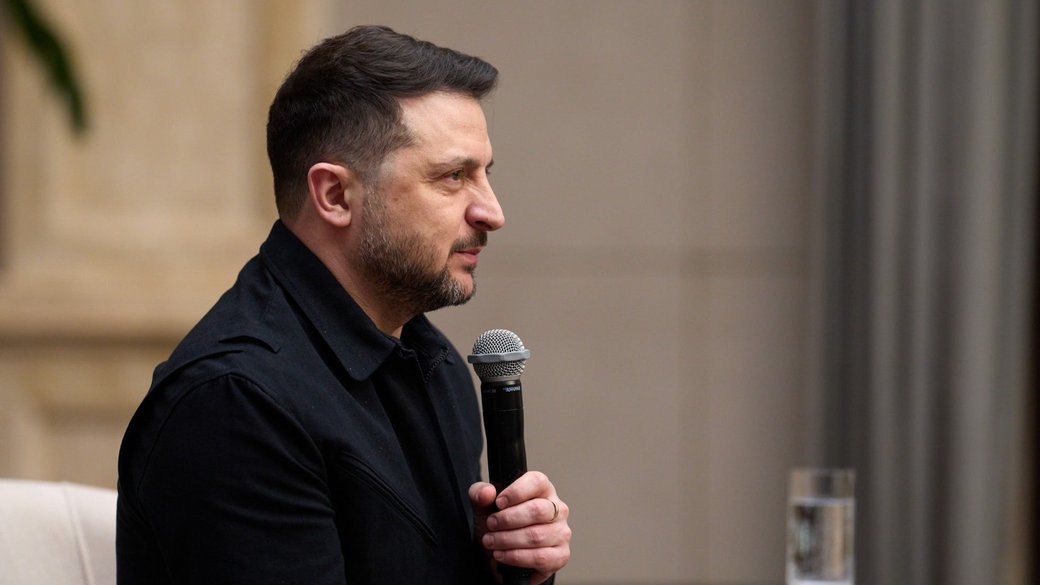
On Relations With the United States
The United States has resumed intelligence-sharing with Ukraine. Deliveries of Patriot missiles paid for by European partners are taking place at a rate of 12 units a month. At the same time, Defence Secretary Pete Hegseth still has not signed some documents Ukraine is counting on. The missile shortage is not limited to Patriot systems; there is also a shortage of NASAMS, which shoot down cruise missiles and aircraft.
“This issue is broader than just missiles for the Patriots. We are talking about a significant shortage of NASAMS — they are also part of the package we were expecting from the United States, and which the Europeans paid for, because it is all within the PURL programme. Partly within PURL, the United States has sent them to us. So we are very grateful to our partners,” the president said.
Commenting on accusations by SpaceX owner Elon Musk that Starlink was being used against Russians, the president stressed that the communications system had been used only for strikes on occupied land, not on Russia.
“We are defending ourselves against those who came to kill our people on our own land. But we also use it mainly for logistics — to provide our people with food and water. And, of course, we started using them against Shaheds, jet-powered drones. Our Bars were the first jet interceptor, because we already had the Bars as a long-range strike drone. We found a European country. They paid for 2,000 units. I knew we had 2,000. I said: ‘Let’s test it. Maybe it can destroy targets.’ They tested it, and it destroyed a Shahed. We were very happy. And then Starshield stopped working. That’s it. So I don’t know exactly who told SpaceX to do this. Maybe it was their own internal decision. I don’t know who makes the decisions. If it’s SpaceX, then maybe Elon. But if it’s someone in government — I don’t know. I don’t have that information. I only know that technically SpaceX switches these systems on and off,” he said.
On Elections
Zelenskyy says he is calm about Donald Trump’s statements about the need to hold elections in Ukraine.
“Freedom of speech is not only in Ukraine — it exists in America too. President Trump can say what he wants, personally about me, but not about Ukraine. When he says something about Ukraine, I respond, because I have that responsibility — to defend our state,” he said.
At the same time, the president recalled that holding elections is impossible without resolving security issues. That is why Ukraine is demanding a ceasefire for a defined period.
“The challenges remain exactly as they were. How does a soldier vote? How does a person in temporarily occupied territory vote? How do millions of people abroad vote? How do you vote under missile strikes, under ballistic missiles? How do you vote under massive Shahed and ballistic attacks? All these questions need answers. In my view, the law, the Constitution and logic provide the answer. Today, voting amid all these challenges is impossible,” Volodymyr Zelenskyy is convinced.
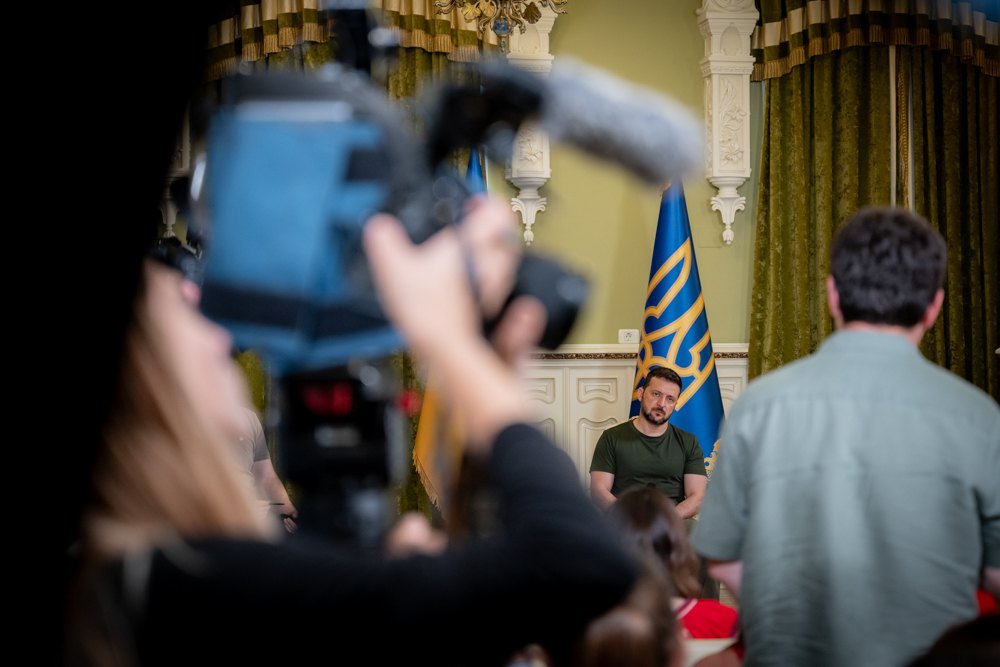
On Negotiations
Ukraine is counting on a meeting of the US and Russian technical teams in early November in Abu Dhabi. It would like that meeting to take place before the leaders of China, the United States and Russia meet at a summit.
Another meeting had initially been planned in Brussels. It was to include Ukraine, EU leaders, the NATO Secretary General and the United States. But the American side changed its plans.
“Today, Abu Dhabi depends on the American side. Because everyone said they view such a meeting format positively. And for the United States of America, the main focus is the Middle East. So changes of various kinds, including possible political changes in some states, will affect what unfolds in the Middle East. There may be escalation there, and many people are talking about it. I think there will be,” the president said.
Answering an LB question about the make-up of the negotiating group, the president said he has no alternatives to the current participants, but is open to changes.
“For now, I don’t have an alternative group. There is a group I approved, which works and knows all the national security advisers of other countries, with whom they discuss the diplomatic process, security guarantees, the economy and so on. It is major daily work. I am always open if there is an alternative to the people dealing with this issue. In the media you very often hear politicians and diplomats who supposedly know how to end the war properly. Especially those with extensive experience — 20–30 years. I am very open, honestly,” the head of state assured.
On Europe’s Role in the Diplomatic Process
Finnish President Alexander Stubb and Norwegian Prime Minister Jonas Gahr Støre consulted Ukraine before calling Vladimir Putin. After the call, they contacted the Ukrainian president again and relayed the substance of the talks.
“They want to take a greater role. I have a positive view of these leaders and these countries — we are grateful to them. We are travelling a long road and we are travelling it together. I understand the format of their communication,” Volodymyr Zelenskyy commented.
Stubb and Støre spoke with Putin not on behalf of all of Europe, but as leaders of countries neighbouring Russia. Ukraine would like the EU to take a full part in the negotiating process, because there are issues that concern it directly. These include security guarantees and Ukraine’s post-war reconstruction.
After the Trump–Putin meeting in Alaska, Russia’s diplomatic isolation ended, and European countries held talks with Russians at various levels. Some openly, some secretly.
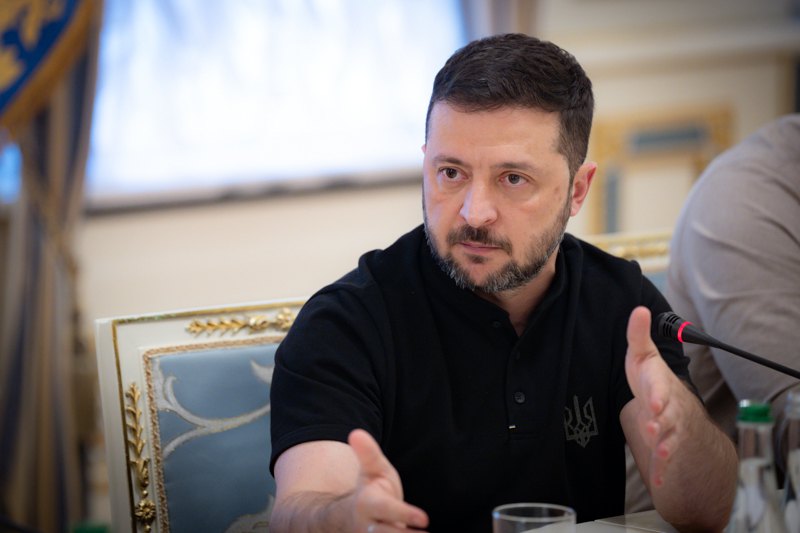
On Security Guarantees and Possible Options
“There are several formats of security guarantees we are discussing: in some, Europe is involved, and in some, Europe is not. The first format is bilateral US security guarantees for Ukraine. This is about an ‘Article 5-like’ system of guarantees. The second format is a coalition of the willing with an American backstop. This format cannot be discussed without Europe. The third option is NATO. And this also cannot be discussed without Europe — without the Europe that is part of the Alliance,” the president said.
On Russia’s Demands
Moscow is also demanding security guarantees, and it cannot be ruled out that it will genuinely try to “push back” NATO’s boundaries.
“And Russia raises the same issue, that they also need security guarantees... Russia is not raising the issue of security guarantees for the first time, in one format or another, as they see it. They say: ‘If you want security guarantees for Ukraine, then we want them for Russia.’ We need to understand what Russia means by this. It is not simply about Ukraine not striking them. For them it is a much broader and more specific issue. They want their own treaty with NATO or with the United States as such a fundamental participant in NATO,” Zelenskyy said.
Russia also continues to link the possibility of concluding a peace treaty to the issue of territory.
“Going back to the ‘28-point plan’, one of the alternative proposals from the American side was demilitarised zones. After that, in different documents it was discussed in different ways. What will happen to the Zaporizhzhia Nuclear Power Plant? What will happen to some territories that the Americans proposed resolving in a ‘land swaps’ format? Then there was the issue of Donbas; there was a proposal to create a buffer zone or a demilitarised zone on both sides of the line of contact. As a compromise, we were ready to discuss it. Also the Kinburn Spit: they proposed making one part demilitarised, which could be under Ukraine’s control. All these issues are territorial issues,” Zelenskyy said, stressing that this can be discussed exclusively at the level of leaders.
On US–Russia Links
Russia is not a US ally, but it is an ally of Trump’s, solely so that he does not impose tough sanctions on it.
“I think the United States is discussing the Iran topic with Russia — what Russia can do about it. It is no coincidence that recently the rhetoric of the President of the United States has sounded as if Russia, even if it helped Iran, did so very little. I think that is excusing Russia. Why is the President of America doing that? Maybe because he wants Russia to help America more? I don’t know. But it looks like it. The fact that Russia helps Iran is a fact,” Zelenskyy said.
Zelenskyy does not know what might be on the agenda at a summit of Putin, Trump and Xi, but is convinced that Russia needs this meeting most, and China least.
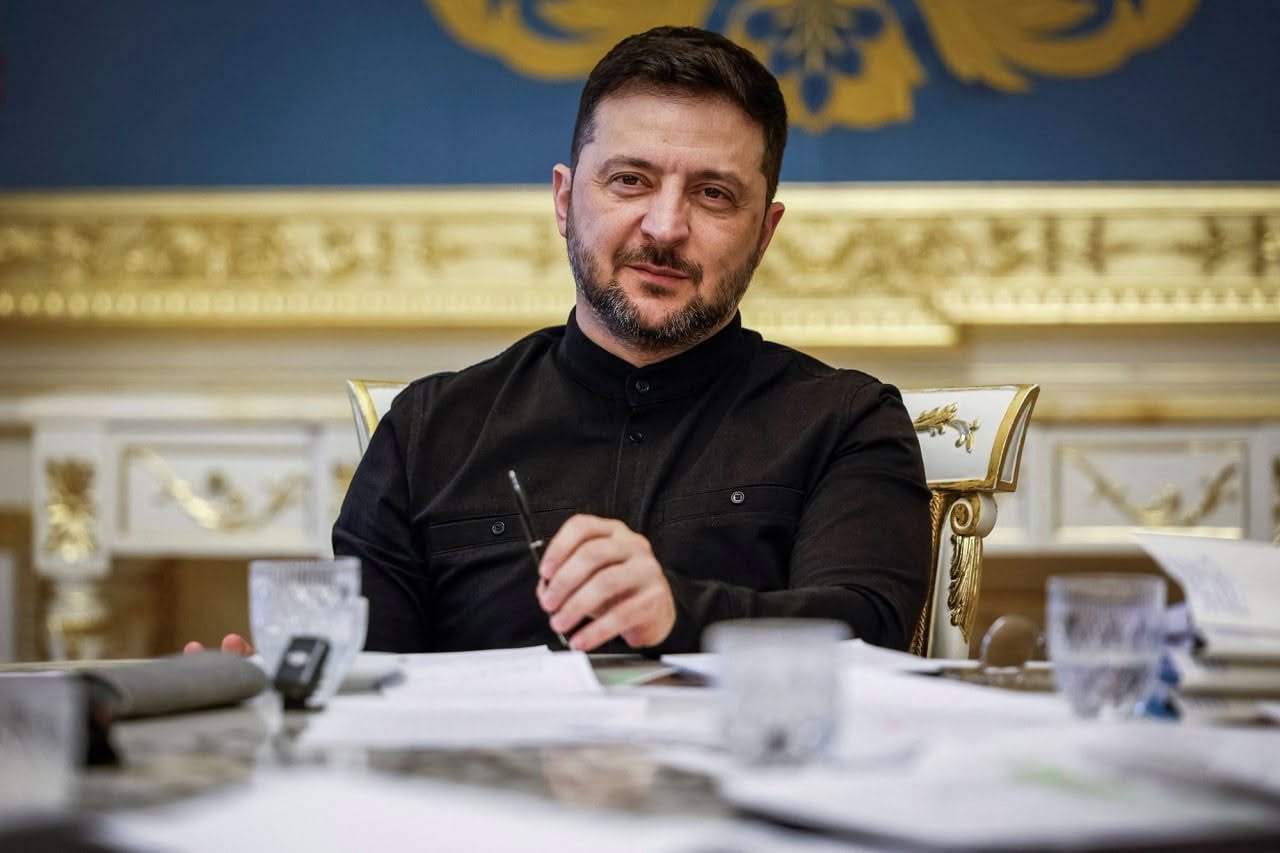
On the Impact of the Middle East War on Ukraine
The war in the Middle East is having a negative impact on the whole world. The cause of energy challenges worldwide is the Strait of Hormuz alone, and everyone acknowledges this, the president said.
However, the war in the Middle East has another impact on Ukraine — a drop in arms supplies.
“Throughout 2026, Ukraine has been receiving 12 Patriot missiles a month from the United States. As this year is coming to an end, I can speak about it openly. Besides, everyone has already understood it anyway — from the number of interceptions, which, unfortunately, is low. Of course, my agreements with other countries affected the number of Patriot missiles Ukraine had. But from America we received 12 missiles a month. The reason is the Middle East. And imagine: you can count on 150 missiles a year from America, but you have to shoot down 150 ballistic missiles a month. I think that answers many different questions. I am saying this openly at a moment when I understand: we want the Americans to start signing off for the countries we reach agreements with the ability to supply Ukraine with anti-ballistic capability — interceptor missiles,” he said.
On Strikes on Refineries
Ukraine paused attacks on Russian oil refining for three days. But Russia did not stop striking Ukraine’s energy sector, so there are now no restrictions.
“We really did receive signals more than once — not to hit Russian refineries. We said: ‘Let’s work on de-escalation regarding energy.’ Then the US President came out with a public position on Truth Social about an energy ceasefire. We supported it, and after that for three days we did not respond with strikes on Russian refineries while Russia was striking our energy sector. I said: ‘Let’s at least for 72 hours respond calmly against other targets. We won’t touch refineries.’ It didn’t help. There was different rhetoric. And no one thanked us for those three days. As for other responses against refineries: on those days our lads tried, probably, to be a little more cautious. But they do not have an order not to respond,” he said.
On a Humanitarian Ceasefire in Oleshky
Ukraine asked the Americans to come to Oleshky with journalists, because Russia cannot be trusted.
“We are grateful that they (the US. — Ed.) are organising such an opportunity to evacuate people. I don’t know which side people will choose. Of course, from Oleshky it is easier to go deeper into the temporarily occupied territory of Ukraine. But I also know there are many people there who want to leave for territory controlled by Ukraine. I know how evacuation to Ukraine can technically take place, but I don’t know how it will be in reality. That is what our people, the military and intelligence, told me. And, of course, they have all the information on what to do and how to communicate with each other. We will give it a few days and see the result,” President Zelenskyy said.
On Staffing and Kyiv
Zelenskyy is unhappy with Kyiv’s preparations for the challenges of winter, but says there is nothing personal in his attitude towards Vitali Klitschko. The president would like the mayor to choose his own advisers, but he does not do so, and he perceives attempts to strengthen Kyiv’s team as intentions to replace him.
“Because as soon as we talk with some managers about how to strengthen Kyiv, the mayor gets the impression that someone wants to replace him. When you approach people asking for help, they say: ‘No, thank you. We’ve seen it all, we’ve heard it all. Let the person do it themselves. They have responsibility — let them answer for it,’” Zelenskyy said.
The president said he had discussed the post of head of the Kyiv City Military Administration with various people, and all refused.
“I asked the Prime Minister to assemble a special cabinet for Kyiv — business managers, strong people. I am ready to personally speak to whoever they name to me and ask them. Create such a cabinet and work out solutions. I will do what I can. I wanted to bring Maliuk (former head of the Security Service of Ukraine — Ed.) into this group in the context of security issues. I also spoke with Kubrakov (former infrastructure minister — Ed.), Groysman (former prime minister — Ed.). Sukhomlyn (former mayor of Zhytomyr and former head of the Recovery Agency — Ed.) refused — as soon as he heard about Kyiv. I spoke with people from business, from other areas of public administration. No one wants to be involved, because afterwards no one will say thank you, and others will constantly talk about politics,” the president noted.
The president also said with whom he discussed the appointment of an ambassador to the United States. Talks were held with former prime minister Yuliia Svyrydenko, former foreign minister Dmytro Kuleba, and Colonel Pavlo Palisa, deputy head of the Presidential Office.
“We discussed the candidacies of Yuliia Svyrydenko, Dmytro Kuleba, Pavlo Palisa, because he has an American education, language skills, and there is a lot of work to be done there specifically on military issues, and Trump knows him. Palisa would be a good ambassador, but he doesn’t want to. He said: ‘Send me to the front, return me urgently to the brigade. I’m not leaving Ukraine.’ We will continue consultations on this,” the president commented.