





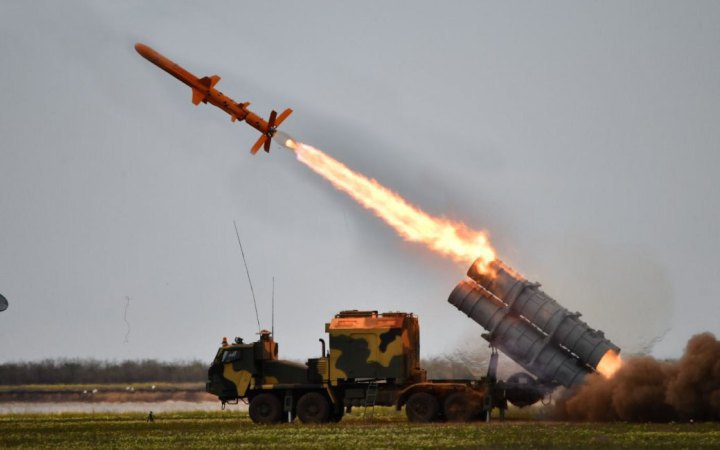
Ukraine plans to produce hundreds of Neptune cruise missiles and more than a thousand Palyanytsia jet-powered drone missiles in 2026. This is reported in an article by The Wall Street Journal, which spoke with representatives of Ukraine’s defence industry.
According to Oleh Korostelov, chief executive of the Luch design bureau, the company plans to manufacture hundreds of Neptune missiles in 2026, though the number will not exceed a thousand. As the WSJ notes, Ukraine is currently producing more Neptune missiles than the United States manufactures of its main cruise missiles combined. At the same time, the overall scale of Ukraine’s missile production remains far smaller than Russia’s.
Korostelov added that development of the Neptune missile began back in 2010. However, funding for its serial production only started to arrive at the end of 2020—after the issue was discussed at a meeting with senior officials, including President Volodymyr Zelenskyy.
At the same time, Ukraine has significantly increased overall drone production. It is expected that in 2026 Ukrainian companies will manufacture more than 7 million drones. By comparison, in 2024 the figure was about 2.2 million, whereas at the start of the full-scale invasion production was measured only in the hundreds of units. In particular, Korostelov said Ukraine produces more than a thousand Palyanytsia drone missiles a year. They are intended to strike targets at long range, including military facilities deep in Russia’s rear.
According to the WSJ, Ukraine’s defence industry has developed rapidly over recent years, but is now facing a number of constraints that make it harder to further expand production capacity.
One of the main problems remains how limited funding is allocated among more than 1,300 defence companies. As a result, even successful manufacturers do not always receive enough money to increase output. In addition, the sector is experiencing a shortage of skilled workers. A significant number of Ukrainians have gone abroad or joined the Defence Forces, making it harder for companies to find the specialists they need.
Another serious obstacle is Russian strikes on industrial sites. Because of the constant threat of attacks, manufacturers are forced to disperse production capacity and look for additional protected premises. As a result, some Ukrainian defence companies have begun attracting foreign investment and opening production facilities abroad. In particular, such enterprises are appearing in the United Kingdom, Germany, Estonia and the United States.
At the same time, despite significant progress in producing strike weapons, Ukraine still does not have its own fully fledged air defence system capable of independently protecting the country from Russian missiles. Kyiv therefore remains dependent on supplies of relevant air defence systems and munitions from the United States and European countries.
As a reminder, on the night of 13 November, the Ukrainian Navy carried out a missile strike on three sites linked to the production, storage and repair of Russian drones in Rostov-on-Don. The attack used the Neptune coastal missile system.