





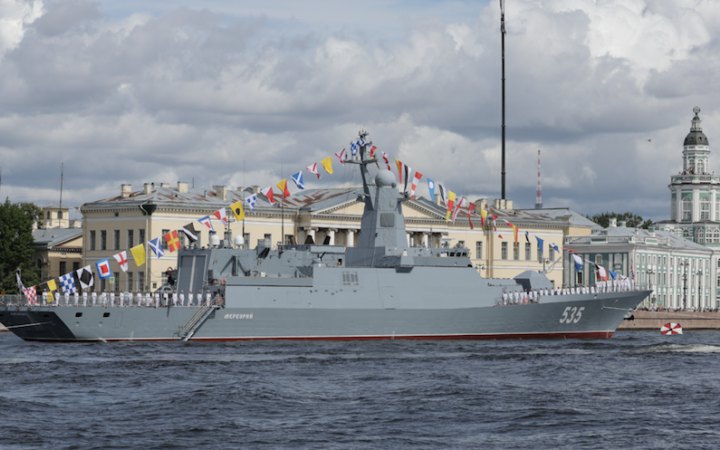
Ukrainian forces spent months studying the movements of Russian ships and gathering intelligence before striking them off the coast of Libya. People familiar with the operation told the Wall Street Journal on condition of anonymity.
One military official said that, to carry out the operation, the Ukrainians launched seven strike sea drones from a mothership in the Mediterranean off the coast of North Africa. Shortly afterwards, the drones rammed a Russian Navy corvette and a nearby cargo vessel.
Most of the drones targeted the corvette, and at least one hit the bulk carrier. As a result of the attack, the warship Merkuriy sank, while the cargo vessel Angara caught fire.
The operation also damaged a Ka-27 helicopter that was on board the Angara, the Ukrainian president said.
According to the outlet’s interlocutors, these were not the first such Ukrainian attacks. They claim that last year Ukrainian operatives based in western Libya carried out sabotage against three Russia-linked ships operating in the Mediterranean. Ukraine did not publicly acknowledge those attacks.
Libya is divided between the internationally recognised government in the west and Russia-backed General Khalifa Haftar in the east. The country’s government expressed “deep concern” over the Ukrainian president’s statements and said it had not granted permission for foreign military activity near its borders or in its territorial waters. It stressed that it is not a party to the conflict between Ukraine and Russia.
After the fall of Bashar al-Assad’s regime in Syria, the Russians began looking for new ports that could be used to send troops, weapons and mercenaries to Africa. Libya was part of Russia’s plan. The Kremlin provided support to Haftar, including by sending Wagner Group mercenaries to assist him.
Satellite imagery reviewed by journalists, as well as analysts’ data, indicates that Haftar retains control and influence over a significant part of Libya, where Russia has recently increased its military deliveries. Satellite images from the commercial company Vantor showed that in September two cargo ships — Anastasia and Yuriy Arshenevskiy — arrived at the port of Tobruk in eastern Libya.
The images suggest that military equipment may have been unloaded from the vessels. Russian cargo ships delivering military hardware are often escorted by Russian Navy ships — and that was the case this time as well.
“They were increasing the volume of their military supplies. They were not afraid to transport thousands of tonnes of equipment under escort from the Russian Navy,” commented researcher Jalel Harchaoui of the Royal United Services Institute.
Attack on Russian Ships Off Libya
On 22 November, an explosion occurred on the Russian warship Merkuriy in the port of Benghazi. It happened during a stop to replenish water and food supplies on the way back to Russia.
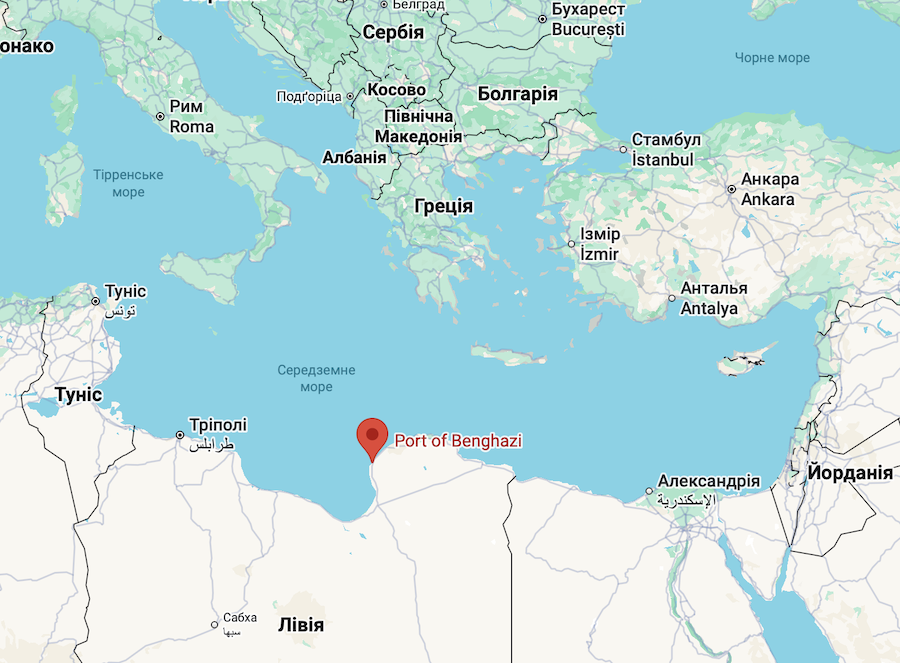
Merkuriy is part of the Black Sea Fleet, but because of the war Russia had kept the vessel at Northern Fleet bases in Africa.
The next day, the Ukrainian president Volodymyr Zelenskyy said that Ukraine had sunk the Russian corvette.
“Despite all the enemy’s attempts to counter it, the Russian corvette Merkuriy was sunk, and it is one of their newest ships — it was commissioned during the full-scale war, in 2023,” he said.
The operation’s second target was the Russian bulk carrier “MV ANGARA”, which Russia used to transport weapons. According to the president, the vessel was successfully hit.
The SBU said both vessels were legitimate military targets for Ukraine, as they were directly supporting Russia’s war capabilities.
The operation involved seven Ukrainian-made uncrewed boats, which were delivered to the designated location and launched from a so-called mothership. Despite the enemy’s attempts to destroy the Ukrainian drones from the air, sea and land, the Security Service’s uncrewed boats achieved their objective: they located and struck the relevant targets.