





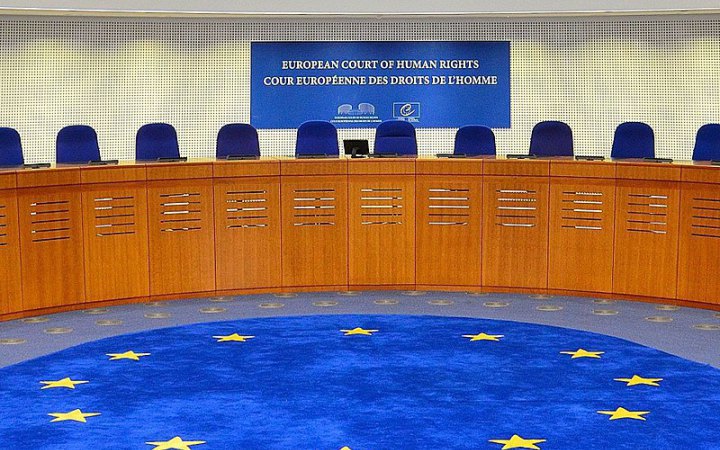
The European Court of Human Rights has ruled that member states of the Council of Europe have the right to control the entry of foreign nationals into their territory, even when migration is used as a weapon, DW reports.
At the same time, the court’s decision notes that all 46 member states of the organisation – which includes all EU countries as well as some non-EU states – are obliged to guarantee and uphold human rights even in difficult or hostile conditions.
The European Court’s ruling concerns cases involving Afghan, Iraqi and Cuban nationals seeking to enter Poland, Latvia and Lithuania (EU member states) between 2021 and 2022. At the time, a standoff was unfolding on the border between Belarus and the bloc’s eastern EU member states. Minsk was accused of artificially creating a migration crisis in order to put pressure on the European Union. Belarus organised the arrival of people from various third countries onto its territory and then directed them towards the EU’s borders.
Read alsoMigrants from a camp on the Belarusian border came to a Polish border crossing; Poland fears an assault
The court described Belarus’s actions in 2021 as a case of “instrumentalisation of migration”.
However, the court noted that states are still obliged to guarantee protection for migrants from inhuman or degrading treatment. In particular, amid a sharp rise in migration flows, national authorities must identify individuals who face a particular risk of suffering ill-treatment.
The migrants who applied to the European Court said that they were forcibly prevented from entering the EU without their asylum applications being examined, and that their human rights had been violated.
“In the context of the instrumentalisation of migration, the expulsion of a foreign national to the instrumentalising state as such will not constitute a violation of Article 3 (prohibition of torture and inhuman or degrading treatment),” the court said in a press release.
The court ordered Poland, Latvia and Lithuania to pay compensation over the treatment of migrants at the EU’s external borders with Belarus.
- Last week, five EU countries also announced an agreement with Rwanda to set up a so-called centre in the African country for returning migrants. The centre will house people who have been refused asylum and are awaiting return to their countries of origin.
- However, the project raises serious concerns about whether people’s rights will be properly protected in Rwanda.
- In the Democratic Republic of the Congo, officials say the European Union, through an agreement to deport asylum seekers to Rwanda, could be financing armed groups. Rwanda is accused of supporting rebel groups that have seized control of significant areas in eastern Congo. This has led to the deaths of thousands of people and forced hundreds of thousands to flee their homes.