






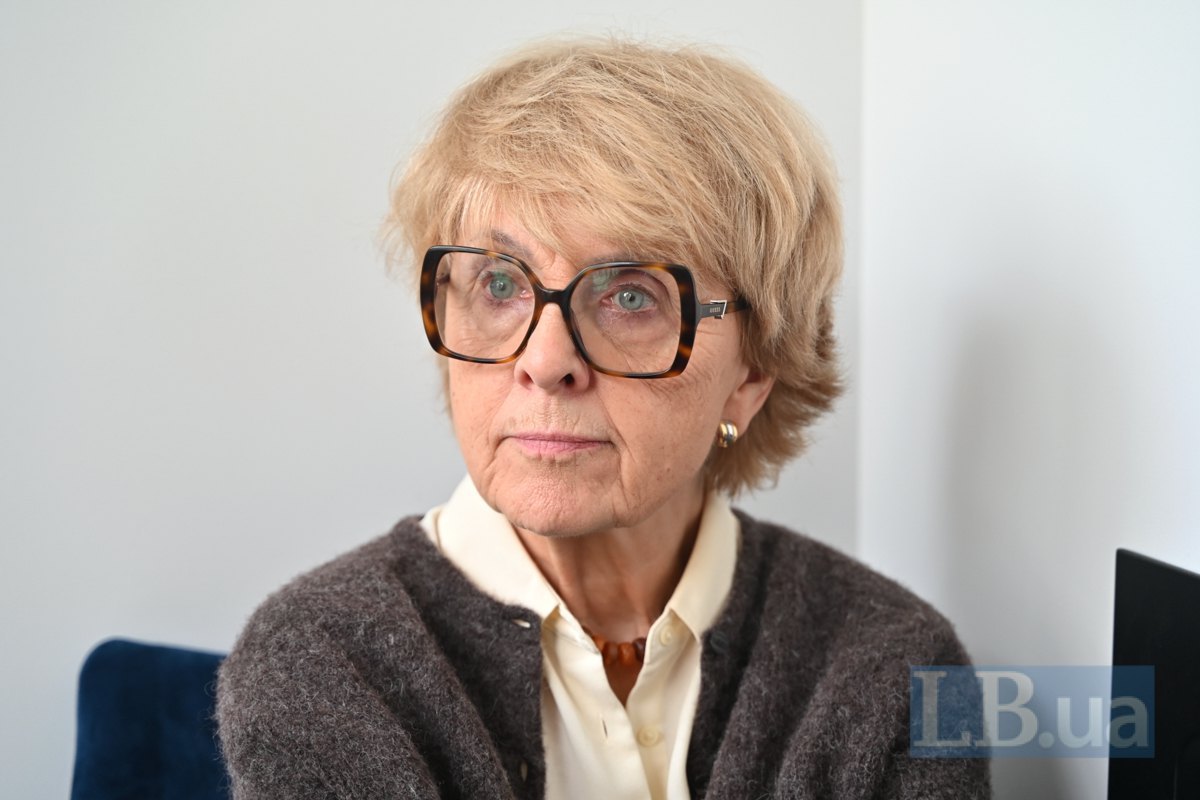
‘Ukraine is seen as an example and a source of lessons for the whole world’
Ms Hübner, you were responsible for Poland's accession to the EU. You saw the problems your country faced on this path. Which of these problems might Ukrainians encounter on their path to the EU? Could something be repeated, or is our situation completely unique?
This enlargement, in which Ukraine is participating, is the eighth enlargement of the European Union. There were seven in total, with Poland joining during the fifth enlargement.
Each enlargement was different, as the situation was different. It looked different when countries such as Sweden, Finland and Austria joined, and completely different when the EU decided to accept ten countries at once, eight of which were from Central and Eastern Europe — a region that did not have a long history of democracy, a long history of market economy, or stable relations with the European Union. That is why that enlargement was special. The enlargement involving Ukraine is also completely different.
It is important to remember that countries do not join the EU collectively. Each new country joins on the basis of its own achievements and fulfilment of its own tasks. It may be possible to combine this process with Moldova, but Ukraine will join as an independent state — Ukraine — and only what Ukraine has done to prepare for membership in the European Union will be taken into account. The specifics of Ukraine itself will be important.
Today, Ukraine is the first EU candidate country to wage war against a brutal aggressor, a war in which, in a sense, we are all participating — by helping Ukraine from the very beginning.
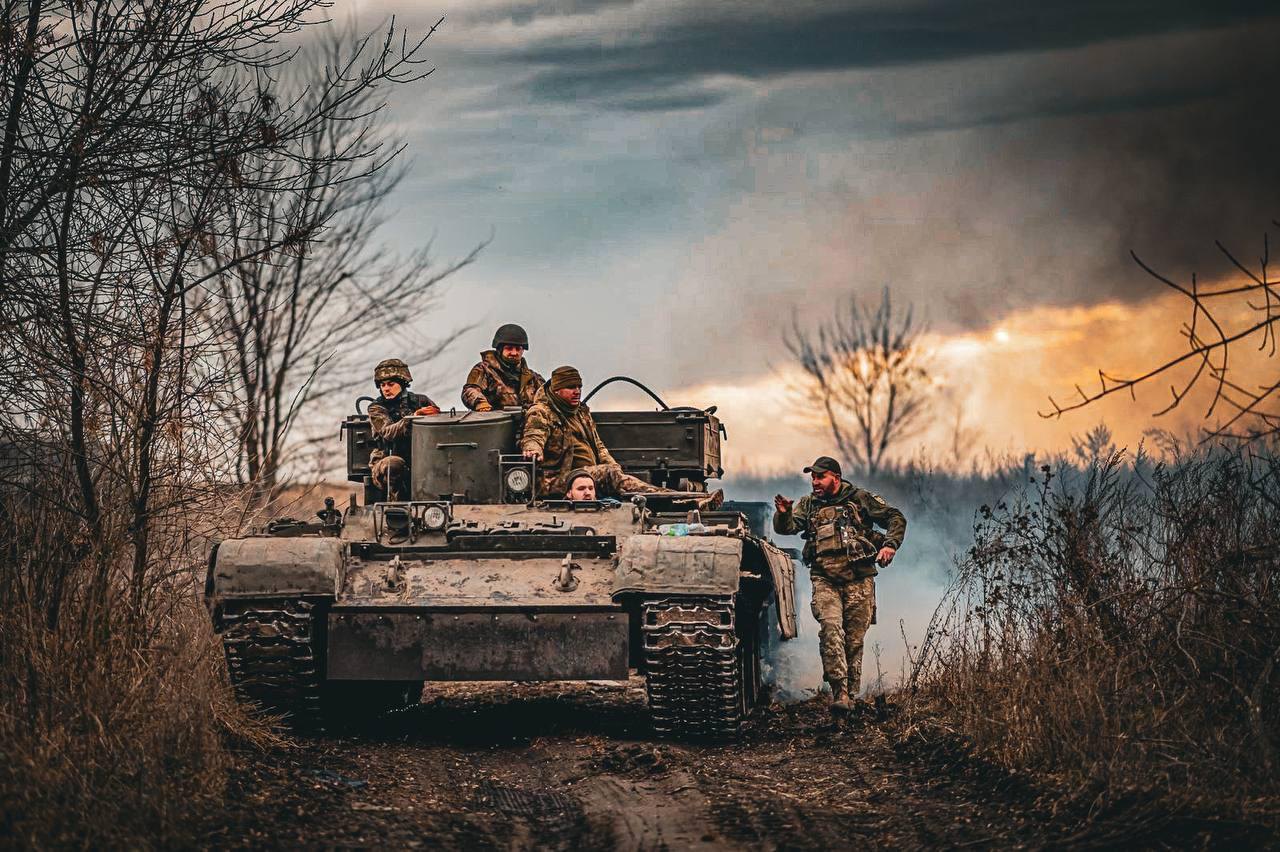
On the one hand, this war is forcing Ukraine to do many things that we (Poland) did not have to do, but on the other hand, it is creating a situation that can be described as the geostrategic expansion of the European Union. Ukraine is joining — perhaps for the first time in European history — as a country with enormous potential to strengthen Europe.
If we look at the Ukrainian economy, even in wartime, it is functioning (of course, with significant external financial support), but at the same time, Ukraine is one of the leading countries in Europe, and perhaps in the world, when it comes to large-scale and profound changes in technology and the entire system of warfare.
Ukraine is seen as an example and a source of lessons for the whole world — in terms of what war looks like today, the challenges it creates, and how to act effectively in such conditions.
Therefore, in my opinion, Ukraine will bring enormous development potential to the European Union — it will be a powerful impetus for the development of technologies and increasing the competitiveness of the European economy.
Ukraine also has a huge territory. Excluding France's overseas territories, Ukraine would be the largest country in Europe. I am keeping my fingers crossed for the whole of Ukraine to join the European Union — then it will truly become the largest European state.
And, of course, we also hope that Ukrainian citizens who are currently scattered across Europe will return to Ukraine, because people are the greatest treasure of every state. This is the case in Poland, and I am sure it is also the case in Ukraine, because it is people who create this state.
What are the most important tasks for Ukraine on this path?
In my opinion, it is very important for Ukraine that it is currently pursuing several paths at once. On the one hand, it is preparing for accession to the European Union; on the other, it is fighting to keep the economy running during the war; and another direction is everything directly related to the war.
So, Ukraine is forced to work on many fronts at once, and that is why it is extremely important that in this tense military situation and these difficult economic conditions, Ukraine — and most importantly, Ukrainians — are able to find enough strength to prepare well for membership in the European Union. Because we know from our experience that the benefits of EU membership have been reaped by those who were best prepared for it.
Ukraine must harmonise its entire legislative framework with European law. This requires a lot of work on the part of the Verkhovna Rada, as well as good cooperation between parliament and the government. In the Rada, good cooperation between different parties is crucial. In parliament, there are moments when we agree or disagree, and there are different situations, especially in the complex situation in which Ukraine finds itself. Therefore, it is important to remember that what unites Ukraine and Ukrainian politicians is not only victory in the war, but also a common desire for EU membership. Unity is very much needed to prepare well for this membership.
In Poland, during our preparations for EU accession, there were several governments formed by different political parties. But regardless of their political colours, they all had one common goal: to stay on course for EU accession.
Therefore, it is also very important for Ukraine that today and tomorrow, all those responsible for its future adhere to this course. Then everything can be done faster, better and more efficiently.
I think it is also important that this message from politicians reaches Ukrainians — not only in Kyiv, but also at the local level, in communities, in all regions. People need to hear from all politicians that Ukraine's membership in the European Union is really important, and that if we prepare well, the benefits will be complete, but we need to move forward together — all political forces.
Cooperation between administrations at all levels — central, regional and local — is also important. Academic circles also have a significant role to play — helping to adapt legislation, engaging in dialogue with citizens, explaining complex issues. Business must also be involved.
In short, we need what we in Poland call “pospolite ruszenie” — “general uprising” or “national movement”.
I don’t know how best to translate this, but the meaning is this: everyone — to the common cause, all hands on deck, all together moving in the same direction. This is extremely important.
Unfortunately, we currently have a kind of miscommunication, even between government bodies. For example, on 8 October, the Verkhovna Rada failed to vote on the appointment of judges to the Constitutional Court. For eight months, it has been unable to appoint these judges from among the candidates who passed the competitive selection process. And this is one of the European Union's requirements — judicial reform, which is either not happening or is happening at an insufficient pace. Could this slow us down on our path to the EU?
Adapting legislation to EU requirements is not just a matter of translating European rules into Ukrainian, but a more extensive process.
I would also like to add that within the framework of these legal changes, the work of the justice system as a whole is very important. This concerns both judges and prosecutors — that is, the law enforcement and judicial systems in general — and how a state governed by the rule of law should function.
And I think that is exactly what you were talking about when you mentioned the situation with judicial reform in Ukraine and the appointment of judges to the Constitutional Court, right?
The rule of law — everything related to changes in legislation aimed at establishing the rule of law as a fundamental principle of a democratic system — is extremely important.
The functioning of courts of general jurisdiction — I am not very familiar with the system in Ukraine, but the work of courts of general jurisdiction, courts of appeal, the Supreme Court and the Constitutional Court in accordance with European law is undoubtedly extremely important.
This determines whether every citizen of Ukraine will have the same human rights as citizens of other European Union member states. That is why reforms and harmonisation of legislation in the field of justice and the judiciary are so important.
In general, how courts operate at different levels, as well as how easy and understandable access to them is for every citizen of Ukraine, is what shapes the rule of law.
And here it is important to understand that everything Ukraine is doing or must do in preparation for EU accession is subject to negotiations on European integration.
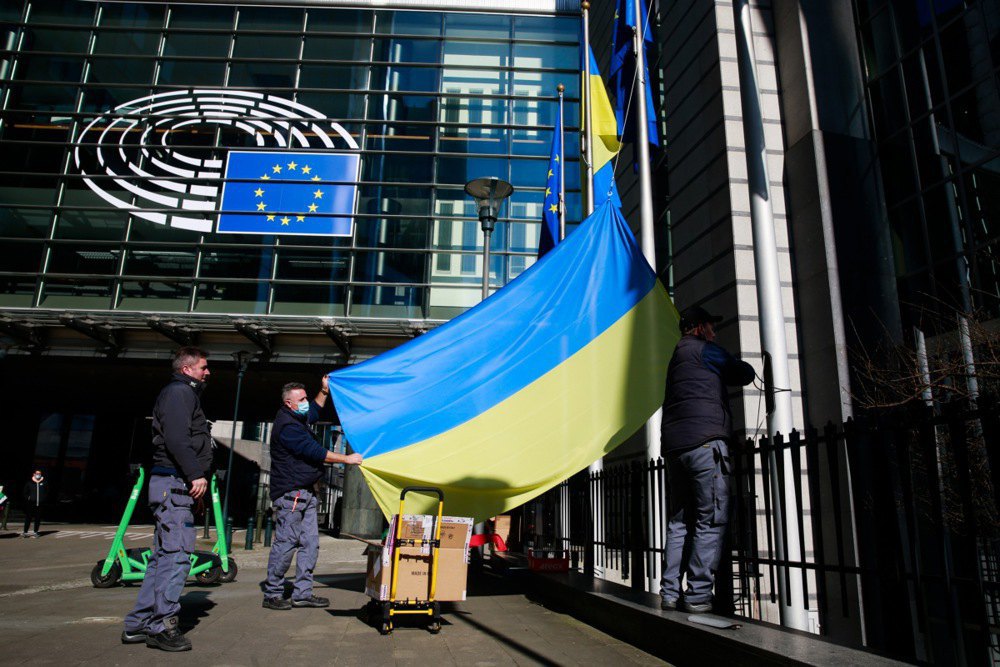
‘If the first cluster does not confirm that Ukraine has a system that guarantees the rule of law, then we cannot move forward.’
How exactly do these negotiations take place? Can you tell us more about it?
In order to start negotiations, screening must be carried out — that is, a check of the compliance or discrepancies between European and Ukrainian legislation. This check was completed by the end of September, and the results were good — Ukraine performed well. Throughout this procedure, the European Commission has been friendly towards Ukraine, just as it was towards Poland. Therefore, in the process of negotiations and preparations for accession, the European Commission supports Ukraine in complying with all the rules.
You know that, in general, the entire structure of the negotiations consists of 35 thematic chapters, which are divided into six clusters. And the first cluster (‘Fundamentals of the EU accession process’ — Ed.), the main one, includes all issues related to the rule of law. This includes the functioning of the justice system.
If the first cluster does not confirm that Ukraine has a system that guarantees the rule of law, we cannot move forward. That is why this first cluster is so important, and it is good that it is already ready for negotiations.
At the moment, we already have the European Commission's opinion on all six clusters, which have been submitted to the EU Council for consideration, so everything necessary has been done to start the actual negotiations.
I just wanted to emphasise that the first cluster — in a fundamental area — is of key importance, as it paves the way for negotiations on all other clusters.
Yes, Ukraine received good results after this screening. Our country was ready for negotiations and sought to open the first cluster back in June this year. However, this was not possible due to Hungary's position, which is blocking the opening of negotiations. I do not know how to overcome Hungary's veto.
The problem is that the EU Council must approve all reports submitted by the committee to the Council unanimously, i.e. they unanimously open negotiations. In order to start negotiations on everything included in the first cluster, the EU Council must approve it unanimously. And for many months, this unanimity has not been achieved because Hungary has blocked it.
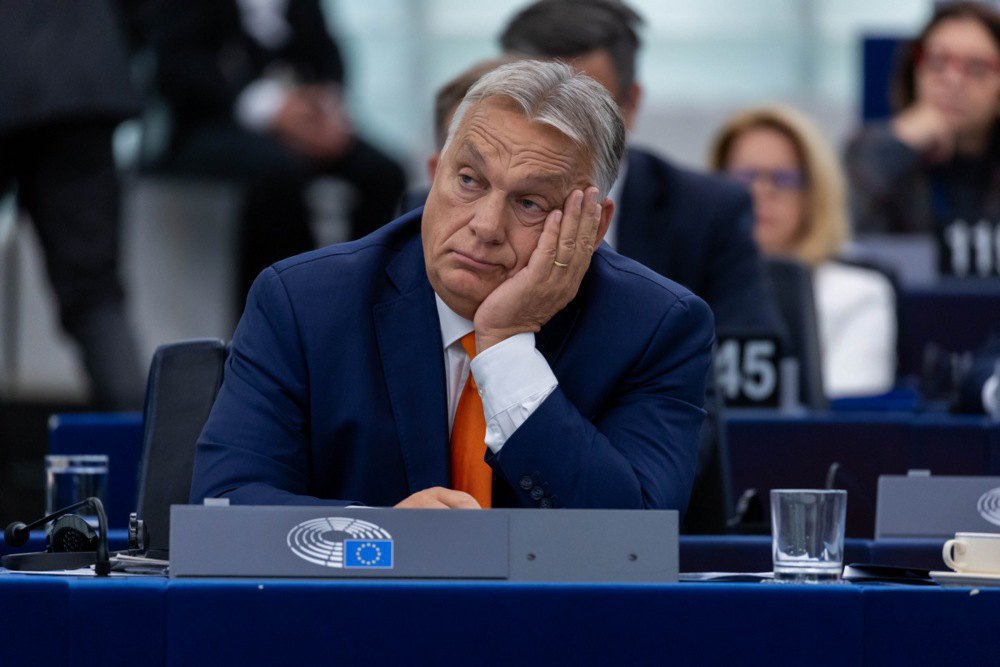
I understand that the reason why the Hungarians are blocking the negotiations concerns Ukrainian legislation on national minorities.
Hungary's position has not changed over the course of the year, I suppose that it is being used in practice, and I think it will be used in the elections that will take place in Hungary in the spring. Therefore, we can assume with a high, very high probability that the actual negotiations [between Ukraine and the EU] will likely begin only after these elections.
However, I would like to emphasise that in the meantime, everything that the European Commission needs to do in terms of preparing for the negotiations and finalising all these reports is being done. The Commission is working on this, and I think that by the end of this year it will be ready to start negotiations in all areas.
During Poland's European integration, we also had a very slow start to the negotiations, but then they gained momentum, so Ukraine must now do everything it can to be truly ready for the start of negotiations and to complete them quickly. And I am convinced that once Hungary opens the door — we do not know who the prime minister will be in the country at that time — all these clusters will be opened as soon as possible.
I would like to note that negotiations begin with the opening of a cluster and are closed by chapters. That is, first there will be six decisions on opening clusters. However, negotiations on each of the 35 chapters are closed separately, and this also requires unanimity in the EU Council.
Therefore, this is a big challenge. The EU Council will take a separate decision on each chapter. By vote.
Will the Council of the European Union have to adopt a unanimous decision for each chapter?
Yes. For example, in the first cluster, Fundamentals, there are five chapters. Therefore, the Council says: we are opening the first cluster, there is agreement on all indicators, there is a unanimous vote, the first cluster is open. And then we negotiate on individual chapters. These chapters can be discussed one after the other or in parallel — it does not matter. But it must be completed so that the committee says: ‘We have completed the negotiations, everything has been done, report to the Council.’ Then the Council votes and says: ‘I approve, yes.’ Unanimously.
And while all this is being discussed and voted on, we say: nothing is agreed until everything is agreed. In other words, until each chapter is closed, nothing is agreed. If even one chapter falls out of this whole structure, it means that the negotiations are not complete. It is not a matter of reaching a certain percentage, but everything.
And I want to emphasise that the special feature of the first cluster is that it opens the way to the next clusters. That is, negotiations on the first cluster must be completed first, and then all the others can be opened.
Then you can open negotiations on clusters and then work on those chapters, perhaps starting with those where it is easiest to reach agreement.
At the same time, negotiations can proceed chapter by chapter, or simultaneously on several chapters in parallel.
In your experience, which chapters are the easiest and most difficult to negotiate?
Usually, negotiations on the simplest chapters are conducted first, i.e. those where there is either a small legislative base of the European Union or those where there are no expected problems.
However, financial issues, where Ukraine's share in the European budget is determined — the amount of funds from which Ukraine will benefit — are usually considered at the very end.
But it is important to remember that there are not that many negotiations, because firstly, Ukraine must adopt all European legislation as a future member of the European Union.
Ukraine must understand that it must implement all European legislation into its own. And it must also prove that it is capable of implementing it. Sometimes this requires the creation of a new institution or a new body.
During the 2004 enlargement, when Poland joined the European Union, at the end of the negotiations we had to not only show that we had integrated European legislation into our legal system, but also prove that we were able to implement it. Previously, it was necessary to harmonise legislation — and only this was checked by the European Commission. Poland had to prove that it had all the appropriate mechanisms, means and institutions necessary to implement the new legislation.
So this is not a unique requirement that is being imposed on Ukraine.
This requirement appeared during the first eastern enlargement of the European Union, when the countries of Central and Eastern Europe, including Poland, joined.
‘A big challenge for Ukraine will be to bring the environment into line with EU requirements.’
Apart from the issue of finances, what other areas could take a long time to negotiate?
Although they are called negotiations, there is not much to agree on, because the candidate country must implement the entire body of European law and all the requirements of the European Union.
In essence, there are three things that can be negotiated and agreed upon.
There are the budget, i.e. Ukraine's contributions to the European Union budget; funds that Ukraine and the Ukrainian population will receive from the EU; and certain transition periods. This is because certain issues and problems cannot be resolved in a short period of time and require more effort and more time to resolve.
That could be, for example, ensuring that the environment meets EU requirements. This will be a huge challenge for Ukraine, because as a result of the war, the land is simply poisoned, many areas are mined, and restoring the environment will take a very long time. The length of the transition period during which Ukraine will work to bring the environment into line with the requirements of the European Union is, in fact, the subject of negotiations.
Poland, for example, also negotiated the amount of European Union support that we had to invest in ecology and the environment.
Ukraine has access to the sea. In the case of Poland, it was about fishing in the Baltic Sea: we had to convince Polish fishermen that they should not catch fish that were too small, otherwise we would completely deprive ourselves of our existing fish resources. But at the same time, during these negotiations with the EU, we talked about financial support to modernise the fishing boats they used to go out to sea.
Another subject of negotiation was access to land, because Polish farmers feared that when the land market opened up, wealthy Europeans would come and buy up all the land.
Poland's negotiations with the EU also covered transition periods for the free movement of people and the requirements of some member states regarding the right to work. These are issues that will also affect Ukraine.
How long could this transition period to free employment last?
In the case of Poland, with regard to employment in EU countries, we had a maximum period of seven years, which was divided into sub-periods of two, three and two years. After each of these periods, an analysis was conducted and a decision was made on what to do next for each specific country.
For example, Germany and Austria took full advantage of this transition period, and only after its completion were Polish citizens able to work in Germany on the same terms as other European citizens.
On the other hand, the United Kingdom, Ireland and Sweden refused this transition period, and Poles could work there without any additional conditions from day one.
Other countries were somewhere in between, with some having a shorter period and others a longer one.
‘Corruption has always been and will always be a very sensitive issue in negotiations.’
I think that we in Ukraine fear the outflow of workers to the EU just as much as the European community fears their influx.
This is the most difficult part of the negotiations.
But I also wanted to say that Ukraine made one big mistake that should have been avoided at this stage — in July, when changes were made to the legislation on corruption. (On 22 July, the Verkhovna Rada adopted amendments to the Criminal Procedure Code and the law on the prosecutor's office, which effectively limited the powers of the National Anti-Corruption Bureau of Ukraine and the Specialised Anti-Corruption Prosecutor's Office. This decision sparked mass protests across Ukraine. On 31 July, the Verkhovna Rada repealed these amendments — Ed.)
There are areas that are very sensitive for EU member states, and they reacted very sharply to what happened in July. It is good that the Ukrainian authorities reacted and that the powers of the anti-corruption bodies were restored.
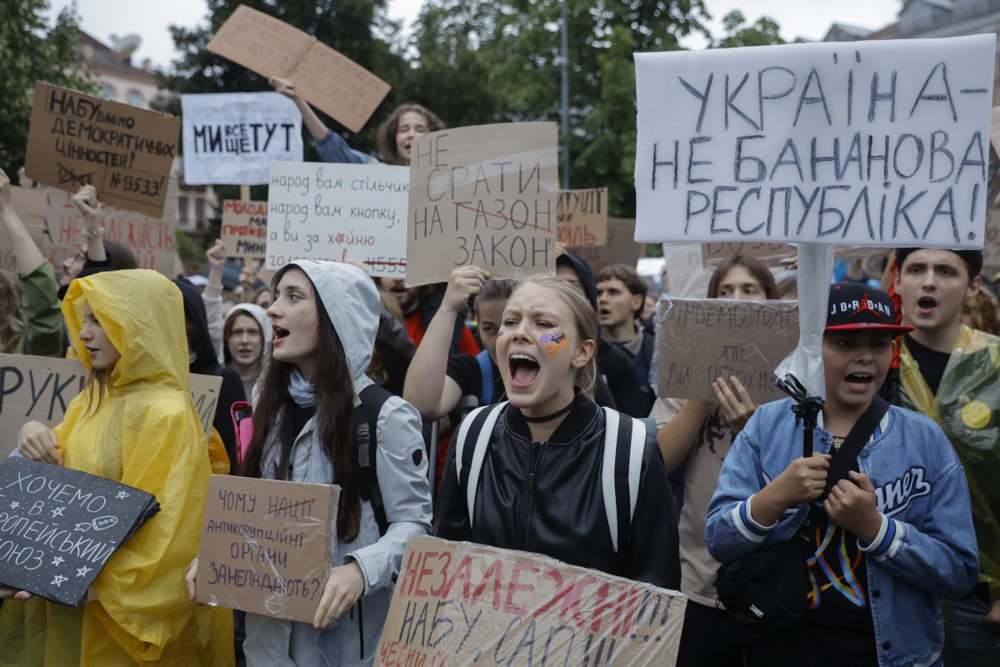
I must say here that Ukrainian society and we, as the media, interpreted these actions as anti-democratic and as a threat to Ukraine's European integration.
Let us hope that the anti-corruption law will be fully restored to its original state, because corruption in the context of eastern enlargement has always been and will remain a very sensitive issue in negotiations.
And this also needs to be carefully monitored. Although this is difficult, because you can adopt all the legal acts that needed to be adopted by July, create all the institutions — such as NABU and SAP — and still the perception of corruption remains. That is, even if these institutions exist, the prevailing opinion is that corruption exists. And this is very difficult. That is why events such as those in July seem to worsen the opinion of member states about Ukraine, and such mistakes are simply unacceptable.
It is important to realise that the entire negotiation process and all the steps leading to European integration are aimed at strengthening mutual trust.
Therefore, anything that could hinder the formation of this trust is a big mistake. After all, it is very easy to destroy trust and mutual understanding, but it is extremely difficult to strengthen it and restore trust.
Read alsoEdwin Bendyk: Ukrainians have become hostages to political processes in Poland
Allow me to emphasise that we were all impressed by Ukraine and its resistance when we watched those horrifying scenes of Putin's aggression against Ukraine three years ago, starting on 24 February. We were impressed by Ukrainian civil society because we could see these people everywhere, not only young people, helping and engaging in various activities, including raising money to buy weapons. And the role of civil society in Ukraine is absolutely fundamental. They will be the ones who will monitor democracy and control political forces. This is also a very effective weapon of democracy, and we need to ensure that civil society really has the conditions to function. That there are no restrictions.
In Ukraine, it is necessary to support civil society and the role of the media — this is also a means of internal control over compliance with democratic principles.
Civil society and the media are the ones who closely monitor the political sphere, the democratic process, and how clearly Ukraine is preparing for accession to the European Union, how much it complies with all these principles.
And political will, the will of the political class to cooperate with civil society and the media, is very important.
‘The EU is considering the possibility of Ukraine's accession in 2028-34’
Regarding the timing of Ukraine's accession to the EU. A year ago, European Commissioner for Enlargement Olivér Várhelyi said that if all reforms are implemented, Ukraine will be able to join the EU within five years, i.e. by the end of 2029. Do you agree with this forecast? Does it seem overly optimistic? What do you think?
That is very optimistic. It is very difficult. Some people believe that no dates should be mentioned at all. I disagree with this because, as the person responsible for Poland's accession to the European Union and overseeing the entire negotiation process, I know that deadlines are important, even for technical reasons. We need to know the deadlines by which we must fulfil various obligations. Secondly, deadlines are also important because we still need hope. And hope is an incentive, a driving force that we will achieve what we want to achieve, that there is a will to do so.
But I have noticed at the same time that politicians, including Ukrainian politicians, very often throw around unfounded dates for their own needs, for the needs of domestic politics, and this can be dangerous because it creates hopes that cannot be realised.
As you know, we are currently working — the European Commission, the European Parliament and the Council of the EU — on the EU's multiannual budget for 2028-2034.
And it seems quite realistic and safe to say that Ukraine will join the EU in the next financial perspective, i.e. not before 2027, but in the next one. However, in the current discussions of this next perspective, there is no specific date for Ukraine's accession. Both sides must be prepared.
However, there is a clause in this budget — negotiations are not yet complete, but this clause will definitely remain in force. There is a clause that states that in the event of EU enlargement between 2028 and 2034, this budget will be revised. That is, the EU sees this possibility. The same was true when Poland joined — there was the so-called ‘Agenda 2000’, where funds were taken into account in the budget period in which we planned to join the EU, but not before.
This means that with this note, we are already preparing EU Member States for the possibility of this enlargement and that by adopting this budget, they agree to its possible potential revision.