





February 2022 marked a turning point for Ukraine, as Russia’s full-scale invasion forced millions to flee and reshaped Ukrainian communities across Europe. In Spain, the sudden arrival of tens of thousands of Ukrainians has given rise to solidarity networks and aid organizations struggling to support a population caught between exile and an ongoing war at home.
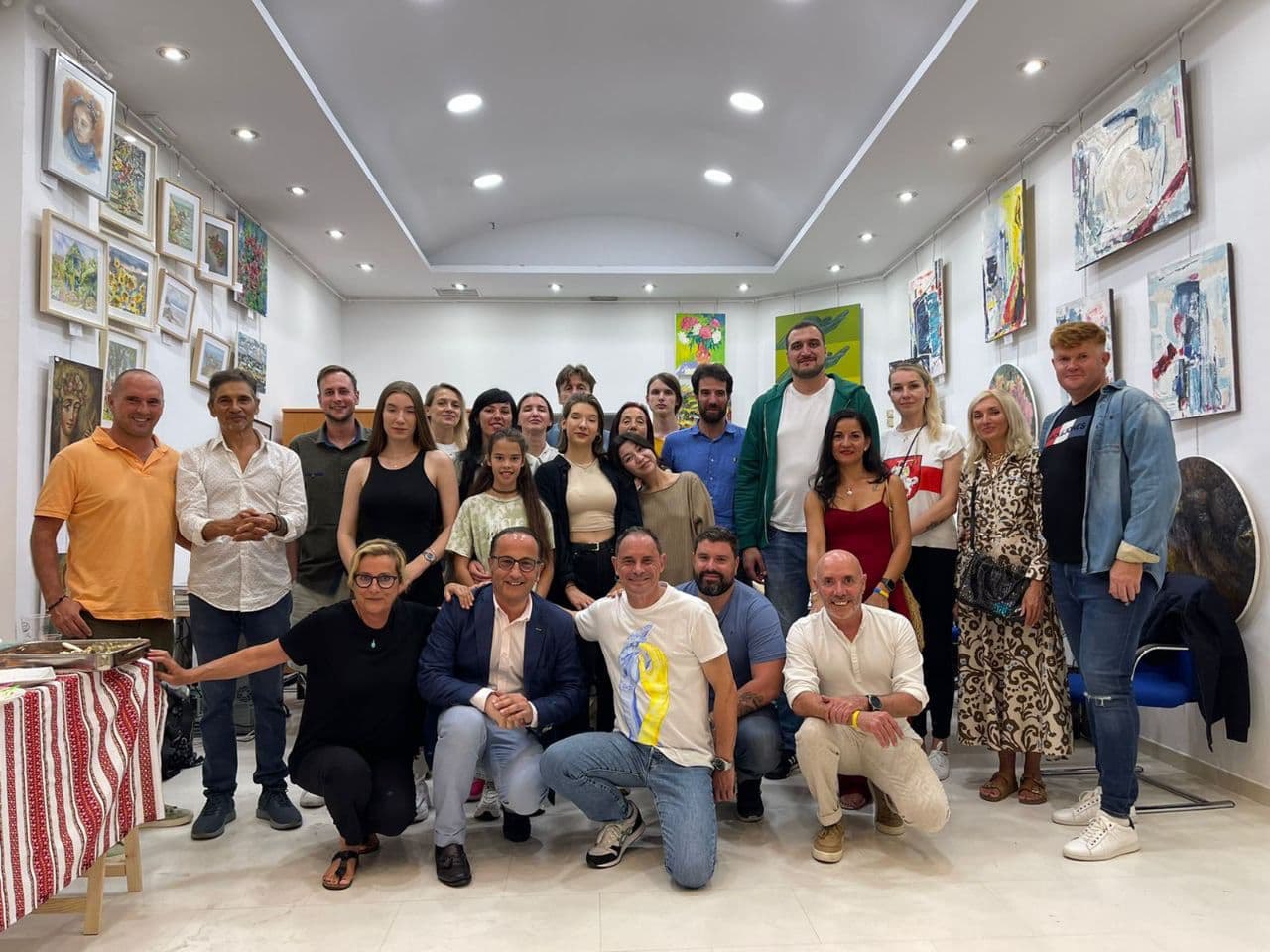
February 2022 is a month no Ukrainian will ever forget. Russia’s full-scale invasion, following its illegal annexation of Crimea and its support for pro-Russian separatists in eastern Ukraine in 2014, left a lasting mark on the country’s people — and that includes plenty who had to leave.
A significant number of Ukrainians eventually came to Spain. Registered Ukrainian residents rose from 110,977 on 1 January, 2022, to 199,200 by 1 June, 2022, according to the National Statistics Institute (INE).
Before the war, most lived in Madrid, Barcelona, Alicante, Malaga, Valencia, and Murcia. Since 2022, the province that has received the largest Ukrainian population has been Alicante. After the full-scale invasion, a group of Spaniards and Ukrainians in Galicia founded the Galician Association for Aid to Ukraine, based in A Coruña. With 615 members, according to La Marea, they launched the “Comprehensive Support for Ukrainians” project, which offers access to psychological therapy with Ukrainian-speaking therapists, Spanish classes taught by native Ukrainian teachers, and employment and administrative guidance.
This association allocates 90% of its budget and “efforts to help in Ukrainian territory.” Their priorities include healthcare support, such as purchasing hearing aids, which have become increasingly needed due to hearing loss caused by bombs and missiles. The Provincial Council of A Coruña granted them €100,000 for medical equipment for a blood center in Odessa, one of the cities hardest hit by the war and an essential port for the war effort. Galicia is also sending trucks filled with canned food, new thermal clothing, and children’s clothing. According to the organization, a total of 34 vehicles have been sent to Ukraine.
Most of the money managed by the Galician Association for Aid to Ukraine comes from private donations, either direct contributions or charity dinners and concerts. They also receive membership fees and “a very small amount of public money through named agreements,” they say. Still, Ukraine is not included in the list of priority countries in development cooperation master plans, and is instead limited to the category of humanitarian emergencies, which restricts access to public funding calls.

To help children maintain their connection to their homeland, the association organizes performances in Ukrainian to preserve “traditions and folklore.” Their priority is for mothers to learn the local language, as it is key to “their entry into the labor market.”
These women are the ones who suffer most psychologically in their new environment. “Many mothers are unable to fully integrate due to the language barrier, and the verification of their professional qualifications is slow and complicated. Job opportunities are almost always limited to precarious work, while access to decent housing has become a real ordeal,” they explain.
“The situation has become very difficult after more than three years. Ukrainians are not fully integrated in Spain, but they cannot return to their country either. The initial welcome in 2022 was very generous, but now the hardships are concentrated in daily life,” the organization concludes. “It is a very difficult situation that we must continue to highlight.”
Before the war
Other organizations predate Russia’s aggression. In 2007, the Association of Ukrainians of Cantabria (Oberig) was founded to help citizens of the former Soviet Union adapt to their new home. According to data on the website of the Ukrainian Embassy in Spain, there were 26 organizations in 2012. Oberig’s president, Mariya Kurnytska, tells La Marea that there are now more than 50 Ukrainian groups or associations in Spain, 31 of which are registered with the embassy.
The 2008 economic crisis changed Oberig’s role. It began helping Ukrainians who were returning to their country to resettle and adapt. Its mission was to assist them in finding work and to help their children adjust to attending school in a different language: Ukrainian or Russian. But the violence unleashed after Euromaidan and Russia’s covert war since 2014 shifted the migratory direction of the Ukrainian population — along with the type of support these organizations have needed to provide ever since.
*Funded by the European Union. Views and opinions expressed are however those of the author(s) only and do not necessarily reflect those of the European Union or the European Education and Culture Executive Agency (EACEA). Neither the European Union nor EACEA can be held responsible for them.
