





In Germany, Ukrainian Saturday schools help refugee children preserve their language and culture while attending regular German schools. These community-run programs also provide social and emotional support for families adapting to life in a new country.
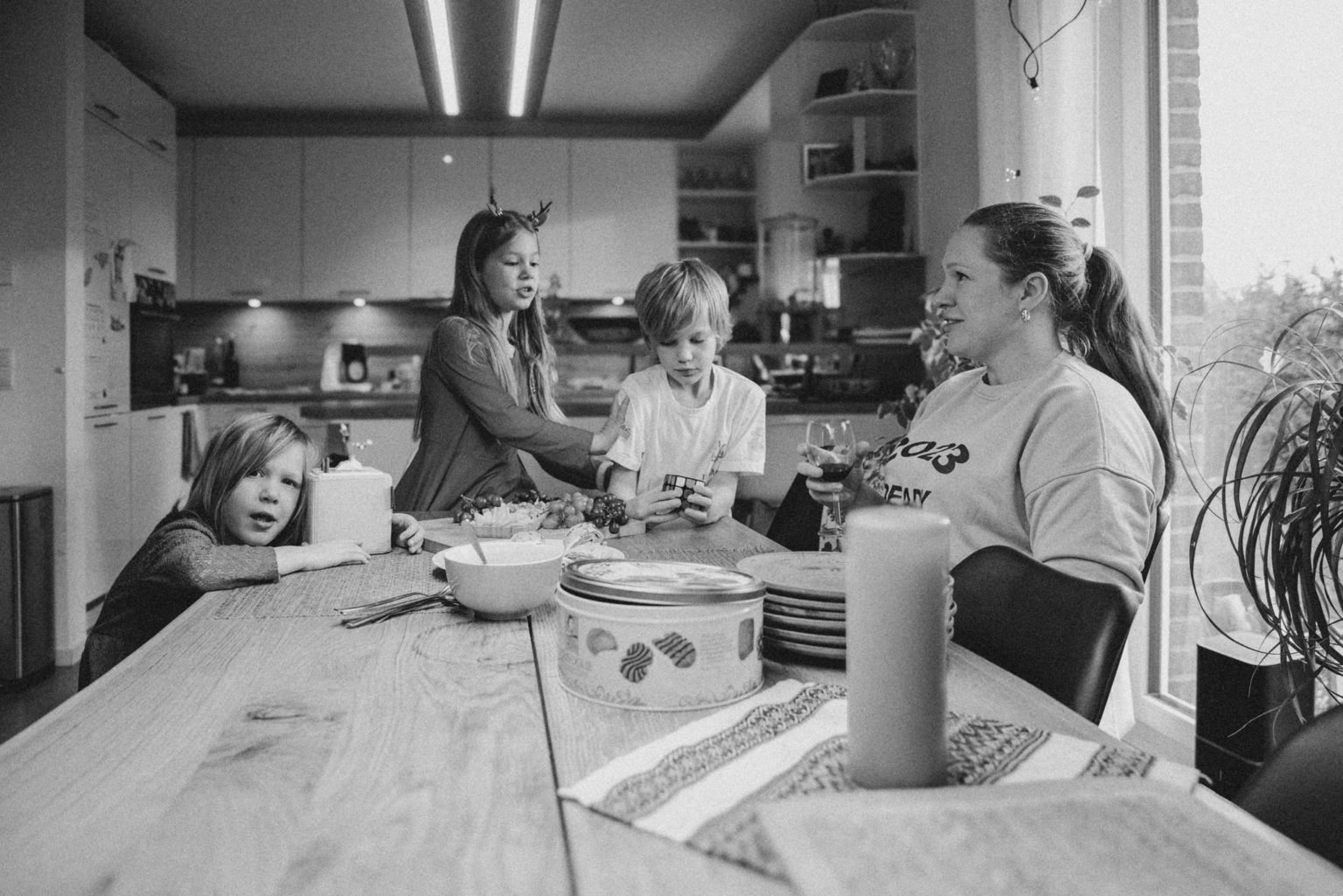
«I’ve been going to school for five days now, and all my friends get to rest on the weekend. My teacher says I should use this time to recover, but instead I have to go to Ukrainian school and study again. It’s only for two hours, but they always give me homework.»
Roksolana is 10 years old and goes to school in Germany, like 210,000 other Ukrainian children enrolled in schools across the country. But in addition to attending classes at her regular school and taking extra German lessons to strengthen her skills, she and her siblings Severyn, 9, and Yaryna, 7, go to a Ukrainian school in Berlin every Saturday.
Before 2022
Located near Treptower Park in the German capital, the school the siblings attend is one of hundreds of Ukrainian Saturday schools operating in the country. Many of them existed before Russia’s large-scale invasion of Ukraine in 2022, but with the arrival of refugees they have become even more important, as they help families maintain their children’s connection to their language and culture.
Some people have not lost hope of going home, which is the case for Oksana, Roksolana’s mother. She knows how much effort it takes for her children to go to school every Saturday, but she is convinced that one day they will thank her.
“Our children go to ‘Saturday School’ and also to the scout organization. For us, it is a community where we can practice all things Ukrainian: cooking, language, traditions, singing, dancing, literally everything,” she explains.
The most important thing is that the children learn the language at the same level as those their age who are still in Ukraine. “It’s not easy for parents to teach their children. I taught mine to read in Ukrainian before German, and I managed, but when it came to grammar and vocabulary, I didn’t have the time or the skills to take it further. That’s why the school is essential,” Oksana tells La Marea.
The Ukrainian school her children attend has existed for about seven years and moves between different locations in Berlin. It began as a project among families who were looking for a way to keep their children from losing their mother tongue. They found professional teachers from Ukraine who could teach all the children, and over time they created an association, Ukrainische Schule Berlin, which now serves more than 150 students across 11 different courses.
“Many parents volunteer their time and skills. Some teachers receive symbolic compensation for a few hours a week. Our biggest organizational change was hiring a director, who is now responsible for the school project. She receives a salary, but does most of her work on a voluntary basis,” explains Roman, one of the parents who founded the Berlin school, which still has to change location every year because they have not yet found a permanent home.
The administrator, Mila, explains to La Marea that the school’s work goes beyond the classroom. Every Saturday, from 9:00 a.m. to 1:30 p.m., the school offers classes in Ukrainian language, history, and culture, as well as artistic activities, dance, excursions, and a school library. “The children find a safe environment here where they can interact with classmates who have been through similar experiences,” she says.
Looking ahead to the new school year, the school aims to expand what it offers and meet the needs of a community in constant movement. The challenge is to grow without losing its essence. The school maintains contact with German institutions to promote joint activities and encourage coexistence. “We want our children to know and respect the culture of the country that has welcomed them, but also to continue to feel proud of their own,” Mila explains.
At the end of 2023, over 210,000 Ukrainian children were enrolled in German schools, according to the German Office for Migration and Refugees (BAMF). Of these, 60% attend regular classes only, while 24% receive additional support in the classroom to learn German, and about 16% remain in special preparatory classes.
A high percentage of Ukrainian children and young people also participate in online classes from Ukrainian schools. “While this strengthens cultural and linguistic ties, it creates double the educational burden and challenges their well-being,” the report states.
In addition to attending school in Germany, where education is compulsory from age seven, 46% of children aged 7 to 10 and 52% of adolescents aged 11 to 17 participated in some form of online classes for refugees offered by the Ukrainian education system. These figures are from late 2023. It is likely that the number of students in online schools will decrease over time as Ukrainian children adapt to the German system.
German friends
For families, their children’s integration into Germany is both joyful and painful, Oksana says. “My husband and I are both from Ukraine, we love our country, and it is very important for us to preserve our traditions within the family. Living in another country where children go to school and learn the local language is very, very difficult. It is important for them to have friends, to be close to them and to be similar to them, not feel different because they are immigrants. So they start learning the local language with more enthusiasm than their mother tongue; they learn songs in German, they watch movies in German because they want to be closer to their German friends.”
Still, sometimes she is happy when she sees her daughter teaching German friends Ukrainian words or some of the songs she learns at Saturday school, where her children ultimately have a good time.
In most Saturday schools, the educational program focuses on language and literature. Maryna Kravtsova is the coordinator of the Ukrainian school Elefant in Magdeburg, in eastern Germany. In this case, the school was founded by Ukrainian teachers and educators with the aim of promoting Ukrainian education, culture, and intercultural understanding in Germany.
According to its coordinator, the school has become much more than a learning space. It is a key social and cultural center for Ukrainian families and migrants in the region. Through classes, cultural celebrations, musical activities, and psychosocial support, the institution seeks to preserve Ukrainian identity while helping families integrate into German society.
“For children, this school is a place where they can speak their mother tongue, sing Ukrainian songs, learn history and traditions, and celebrate their religious and national holidays together. It is an emotional and cultural refuge,” she says. “For parents, the school represents support, community, and a sense of home. In the midst of forced migration, the school helps rebuild the social and emotional fabric that the war has torn apart.”
In many cases, these schools also support children with special needs or psychological wounds from the war. Most of the work is voluntary. Parents pay fees to finance the school, but it also helps families facing financial hardship, as forced migration due to war often involves economic difficulties. Three quarters (76%) of Ukrainian refugees in Germany have children.
At the end of 2023, 30% of refugee women with children in Germany had partners living abroad, mainly in Ukraine, according to BAMF. For this reason, beyond learning, Saturday schools are places where many refugee families can feel a sense of community and mutual support. “When you come to a country with an unfamiliar language and difficult circumstances, the most important thing is family,” Oksana notes. “But many women arrived without their husbands, only with their children, and that makes everything harder. When they gather in the Ukrainian community and can hear their mother tongue, see familiar faces, and share experiences, it helps them a lot.”
The school not only offers classes for children but also organizes activities for parents, such as talks and events that support their integration and strengthen the network among Ukrainian families in Berlin. “It’s not only a place where culture and language are preserved, but an environment is also built to help families adapt,” she says.
Oksana emphasizes the value of these efforts for German society as a whole. “These children are bright and will one day contribute to Germany’s economy, politics, and other areas of society. The best way to make that happen is to support migrant communities and allow them to preserve and protect their roots, their language, and their culture.” Because, she says, although the children will eventually become German, keeping their roots and cultural background will enrich them and society as a whole.
*Funded by the European Union. Views and opinions expressed are however those of the author(s) only and do not necessarily reflect those of the European Union or the European Education and Culture Executive Agency (EACEA). Neither the European Union nor EACEA can be held responsible for them.
