





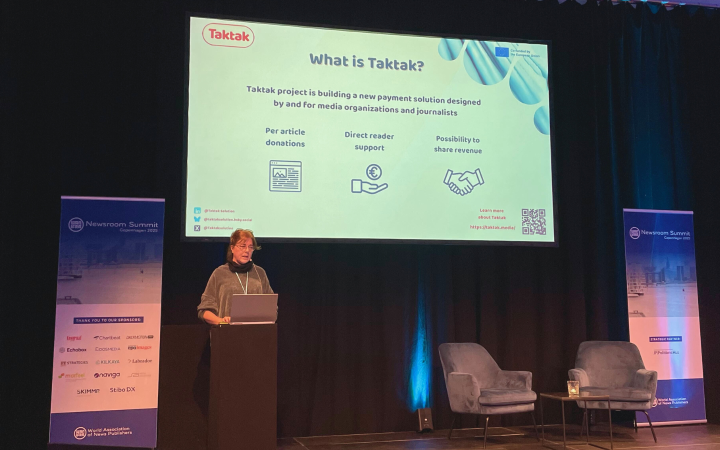
The Taktak project has released a new White Paper on the state of freelance journalism in Europe, presented at the WAN-IFRA Newsroom Summit in Copenhagen. The research explores the working conditions, challenges, and aspirations of freelance journalists — while also emphasizing Taktak’s role in helping them monetize their work through digital platforms.
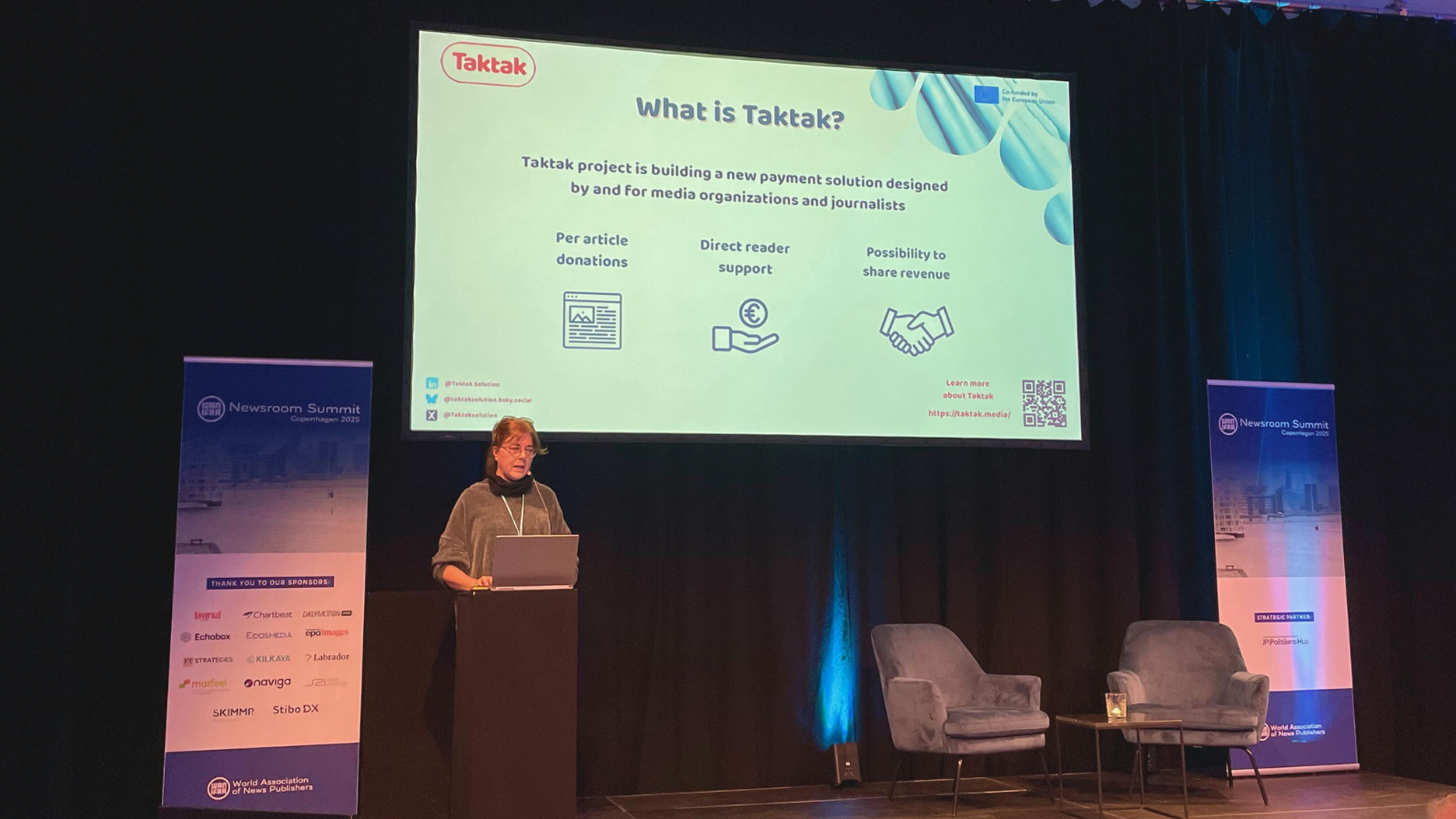
On 18 November, Magda Bandera, co-funder of La Marea, presented the key findings of the new study at the WAN-IFRA Newsroom Summit. Based on the Taktak survey results published in March 2025, the study aims to give an up-to-date overview of the profession, particularly focusing on how a dedicated monetization platform could improve stability and income security.
Magda Bandera presented the main outcomes of this study, based on the answers collected from 436 journalists in Europe:
Freelance Journalism: essential yet fragile
Freelance journalists are a key pillar for democratic plurality, providing diverse perspectives and independent reporting. However, their work is often marked by structural precarity and unstable contracts, making professional stability difficult to achieve. They frequently navigate variable income and manage multiple job roles just to sustain their livelihood. Despite their essential contribution to the public sphere, freelance journalists still face limited professional recognition, highlighting the need for stronger support and fairer working conditions.
Economy & Working Conditions: instability as the norm
The study shows freelance journalists often struggle with irregular income resulting in low financial satisfaction. Their workload is also burdened by heavy administrative tasks. Moreover, they frequently operate within blurred or weak contractual frameworks, which further complicates their professional security and limits their ability to advocate for fair conditions.
Mental Health: Widespread burnout
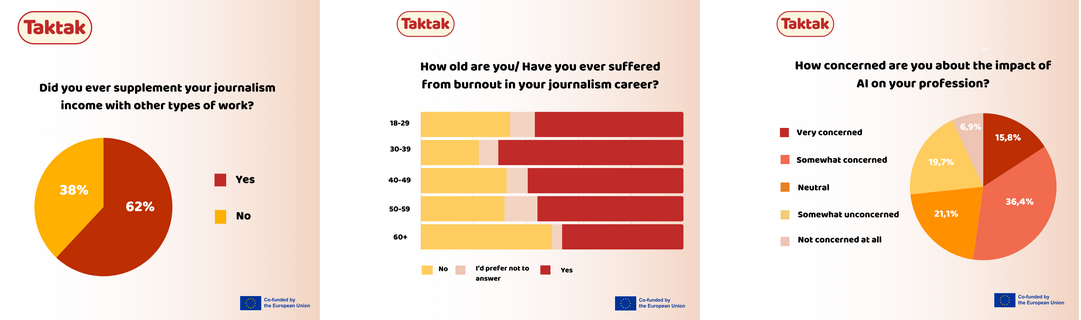
Over 60% of freelance journalists report having experienced burnout or severe exhaustion, reflecting the intense pressure of their profession. Much of this stress stems from unstable finances and demanding workloads, which are compounded by unpredictable schedules that make it difficult to maintain a healthy work–life balance. Despite these challenges, many remain strongly committed to their work, driven by a sense of purpose and dedication to informing the public.
Gender Perspective: Double precarity for women journalists
Women are highly represented in freelance journalism, yet they often face additional challenges that deepen the profession’s instability. Care duties and structural inequalities compound financial and professional insecurity, making it harder to sustain a stable career. As a result, women are at a higher risk of burnout and frequently depend more on non-journalistic sources of income to make ends meet. These gendered disparities highlight the need for stronger support systems and fairer conditions within freelance journalism.
Digital Pressures: Algorithms reshape the profession
Freelance journalists today face a growing need to optimize their content for various digital platforms, balancing the demands of visibility with maintaining journalistic integrity. This pressure is intensified by the uncertainty surrounding AI’s future impact on the industry, as emerging technologies continue to reshape how stories are produced and consumed. At the same time, rising competition in increasingly crowded digital spaces challenges freelancers to stand out while staying true to their professional standards.
To finish, Magda Bandera presented the recommendations for media organisations depicted in the study:
- Establish fair, transparent rates and guarantee timely payments.
- Legally recognize and protect the freelance status, including social benefits.
- Reduce administrative burdens with simpler invoicing and contract processes.
- Support ethical, independent monetization infrastructures that reduce dependence on unstable assignments.
- Promote training, grants, and long-term partnerships with freelancers.