





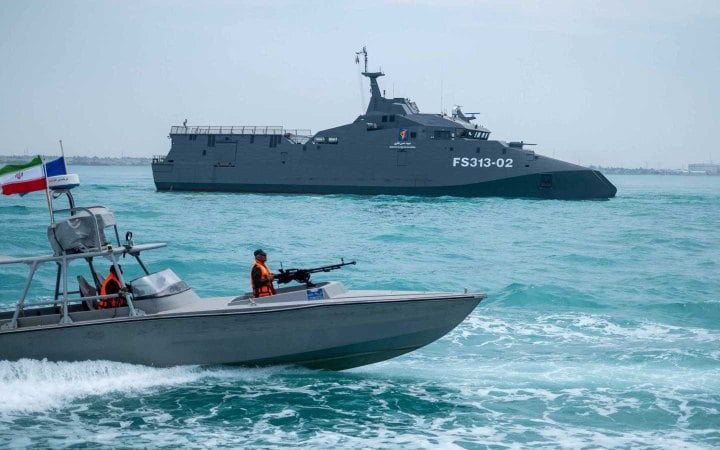
Iran has prepared detailed plans to attack undersea communications cables in the Persian Gulf in the event of renewed US and Israeli strikes. Tehran is considering such a scenario if negotiations with Washington fail.
This is reported by Reuters, citing two senior Iranian security officials.
According to one of the agency’s sources, if the US attacks again, Iran will no longer observe “red lines” and could strike a range of targets — from undersea cables to military bases, including secret ones. The official also urged Washington not to “play with fire” and said Iran has the capability to destroy undersea cables.
In addition, one Iranian representative said the country could obstruct the repair of damaged networks in order to prolong connectivity disruptions.
On Wednesday, Yadollah Javani, deputy head of the political affairs department of the Islamic Revolutionary Guard Corps, said that if Iran’s infrastructure is hit, Tehran could target seven main internet cables laid through the Strait of Hormuz.
Undersea cables carry the bulk of international internet connectivity. According to the UN’s International Telecommunication Union, around 99% of global internet traffic passes through them.
At the same time, potential damage in the Strait of Hormuz area would not necessarily lead to major disruptions worldwide. Alan Mauldin, research director at telecommunications company TeleGeography, noted that less than 1% of international internet capacity passes through the strait.
The impact of any attacks would depend on how many cables are damaged, operators’ ability to reroute traffic, and the capacity of alternative routes. Large-scale damage could slow internet services and disrupt financial transactions, e-commerce and cloud computing.
Restoring cables during a military conflict could also be complicated. Repair work may be delayed by higher insurance costs and difficulties obtaining permits to operate in territorial waters.
Earlier, Trump’s representative to the UN Mike Waltz said the US is preparing for a prolonged conflict with Iran, although Donald Trump’s administration hopes that bombing campaigns and economic sanctions will force the country to make serious concessions.
The New York Times previously wrote, citing sources, that the US and Israeli armed forces have developed specific plans to resume strikes on Iran after the midterm elections in the United States. Likely targets could include Iran’s energy infrastructure, nuclear facilities, as well as missile and drone arsenals.
While the US is building up a significant arsenal of weapons that is due to be fully deployed by early November, diplomatic efforts are continuing.
According to officials, the likelihood that Trump will decide to launch a military campaign as early as this month is low. There are many political reasons why he would most likely wait until the US elections are over. In particular, at the beginning of this month he promised not to carry out strikes until the vote.
Israeli Prime Minister Benjamin Netanyahu is insisting on the resumption of large-scale strikes on Iran.