





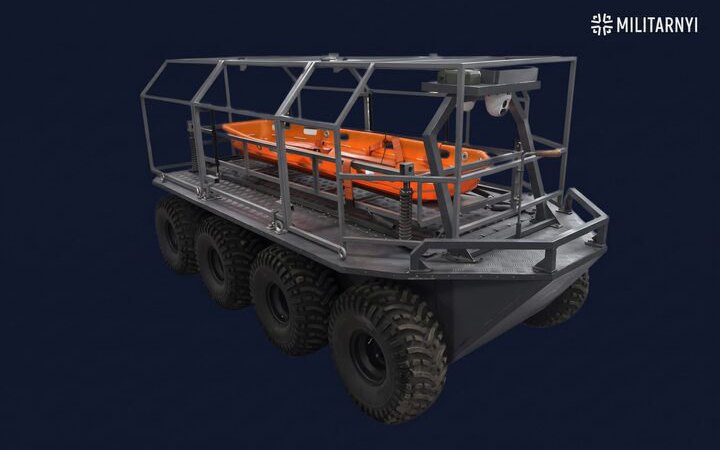
Ukraine’s Triton unmanned ground vehicle (UGV) has been fitted with a module for evacuating wounded personnel and additional protection against drone attacks. The platform can also carry cargo over land and overcome water obstacles. This is reported by Militarnyi.
The basis of the medical module is a metal frame mounted to the cargo platform on four vertical spring shock absorbers. Inside it sits a plastic evacuation stretcher with high sides and safety straps to secure the casualty. The shock absorbers partially dampen vibrations and impacts while moving over rough terrain.
For additional protection of the medical module, a metal anti-drone frame has been provided. It is made as a multi-section spatial frame installed above the cargo platform. The design has hinged doors at the front and rear, providing access to the platform during loading and casualty evacuation. The frame is intended to counter munitions dropped from drones.
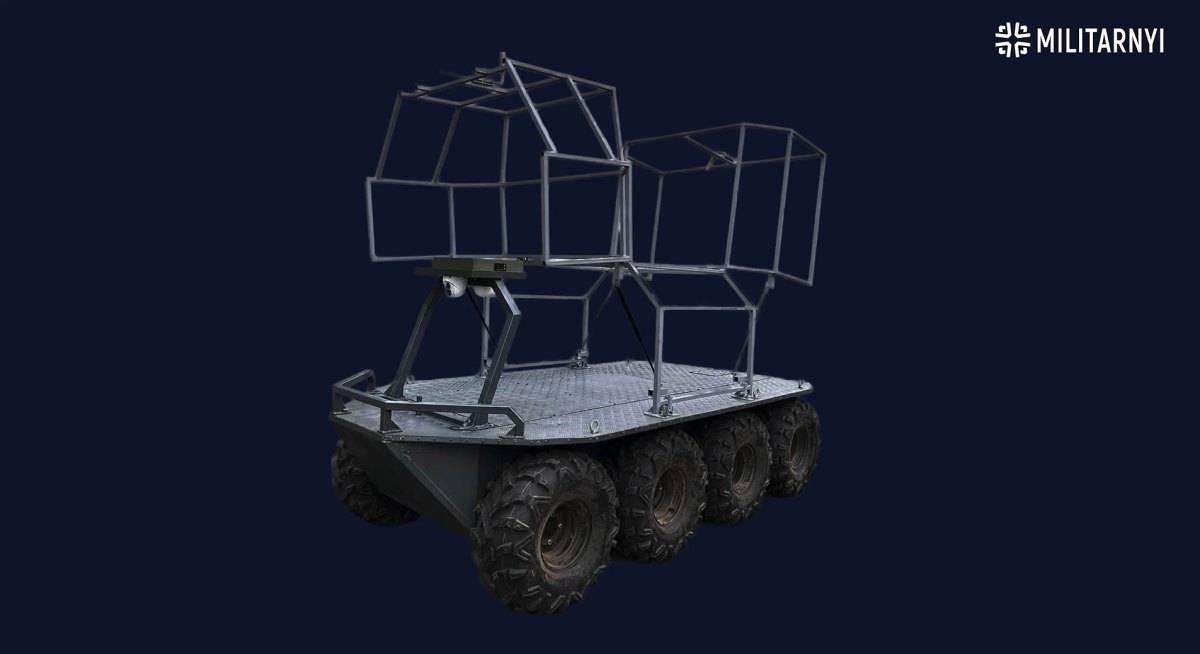
Triton can also be equipped with a module for transporting and airdropping other unmanned ground vehicles. In addition, the platform can serve as a carrier for FPV drones: special side boxes allow drones to be covertly delivered to positions from which they can then conduct further sorties, the developers note.
Triton is an amphibious robotic system designed for logistics and evacuation tasks. It is equipped with an eight-wheeled chassis and water propulsors, enabling it to cross rivers with a current, climb difficult banks, and ferry cargo between shores. The hull is fitted with an automatic water-pumping system intended to prevent flooding in the event of damage.
According to the manufacturer, Triton has a range of up to 60 km by water and up to 20 km over land, with a payload capacity of up to 100 kg. The system is already in use with the Armed Forces of Ukraine. The developers continue to refine the platform, adapting it to the military’s needs.
The developers link the need for such equipment, among other things, to Russian strikes on bridges in combat areas. The system can quickly ferry cargo or evacuate wounded personnel across water obstacles if bridges have been destroyed and pontoon crossings have not yet been set up.