







What Happened
As is known, the speed of Starshield service packages was reduced without prior warning.
On 16 October, Reuters, citing two US officials and one Western source, reported that the Pentagon leadership had received instructions from the White House to slow down the service for Ukrainian troops. The sources did not identify who had made the decision. Meanwhile, according to sources cited by The Telegraph, Elon Musk proposed that Trump slow down the service. The day before, however, Musk had written that Starshield service packages belonged to the US government and were under its control.

As of 19 October, there is still no complete clarity regarding the restrictions or who made the decision. A source at the Ministry of Defence says the terminals work while in motion, but only at speeds of up to 160 kilometres per hour.
What Is Starshield?
“Starshield is an offshoot of SpaceX’s wider Starlink network. A total of 182 satellites have been allocated to Starshield, operating specifically in support of the project, which is designed to provide resilient government and military communications. According to publicly available information, the system’s main operator in the United States is a separate unit within the Space Force. However, the satellites are developed and their ongoing in-orbit support is provided under contracts with SpaceX,” explains Vadym Kushnikov, a military analyst at Militarnyi.

The data transmission speed of the secure version is not affected by the fact that it relies on just 182 satellites, Kushnikov notes. Some reports suggest that it is even faster and more stable than the civilian version.
It is worth noting that, since March 2026, Starlink has imposed a maximum operating speed of 160 km/h on its civilian Roam, Local Priority and Global Priority plans. Separately, SpaceX offers a range of terminals for aircraft that maintain connectivity at speeds of over 700 kilometres per hour.
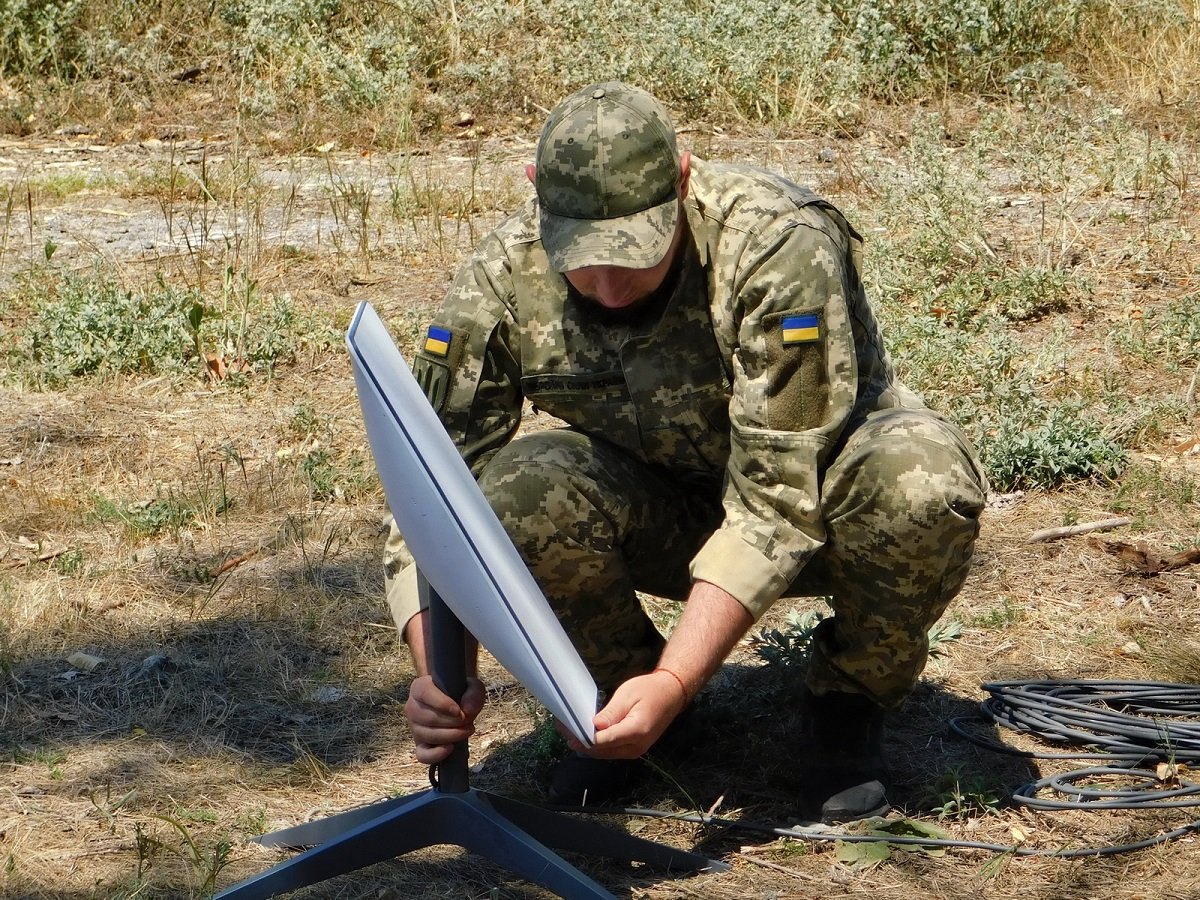
The equipment has also changed. Until 2023, the terminals were standard models that could be reconfigured to operate on the Starshield network, Kushnikov says. Since late 2024, dedicated terminals designed to operate exclusively on this network have been produced.
It is known that in December 2024, the Pentagon transferred some of the terminals already in use in Ukraine to Starshield: 2,500 in addition to the 500 connected earlier, bringing the total to around 3,000. The contract was signed in August 2024, under the Biden administration. However, it would be unwise to disclose the percentage of units with access to the military version of Starlink.
“Units of Ukraine’s Defence Forces may have been able to use higher speeds, but I think it would be inappropriate to disclose specific technical capabilities. There is, however, a large number of systems using this network,” the Militarnyi analyst said.
What the Restrictions Affected
Citing sources, the Ministry of Defence said the restrictions had complicated the use of unmanned systems, logistics and mid-strike operations. Ukraine’s 7th Air Assault Corps also reported disruptions.
According to military personnel, during UAV flights at speeds of 110–120 km/h, communications could be lost for 10–20 seconds. During that time, the aircraft continued moving, but operators lost the ability to control them fully.
According to sources at the Ministry of Defence, different units lost connectivity at different speeds, with some experiencing outages even at 70 km/h.
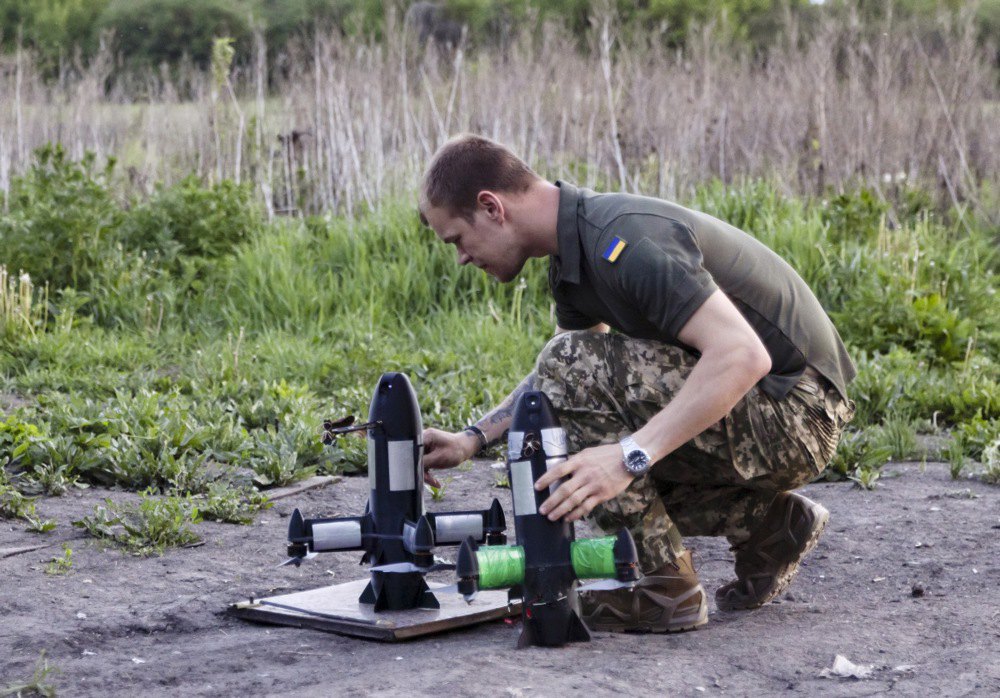
Vadym Kushnikov explains that several categories of systems depend on this communications channel, including mid-strike drones and tactical-level strike systems, particularly heavy fibre-optic quadcopter bombers.
The restrictions also affected interceptor drones, as noted by Serhiy Flesh, an adviser to the President of Ukraine.
Kushnikov stresses the importance of understanding the broader context and how this communications link can be used.
“Interceptor drone positions may be located far from command posts and operators. Accordingly, Starlink is used to establish a connection between an operator located elsewhere and the position where the interceptor drones are deployed,” he explains.
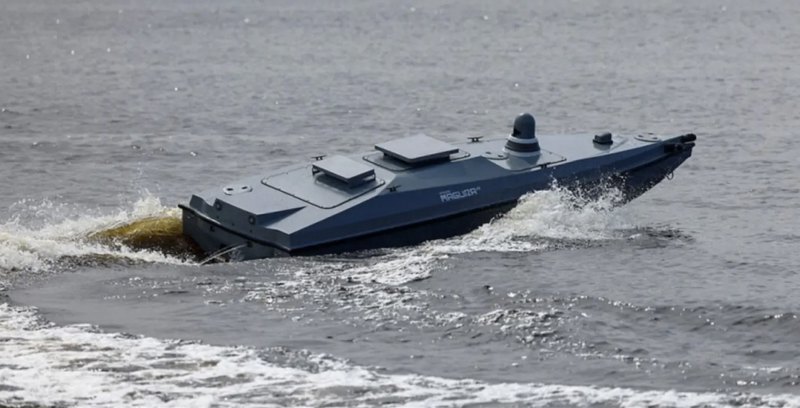
It is worth noting that this is not the first time a localised disruption to this satellite communications service has affected the work of Ukraine’s Defence Forces. In 2023, restrictions disrupted missions targeting primarily the Black Sea waters. These involved combining SpaceX technology with Ukrainian developments in maritime uncrewed systems.
Kushnikov says he has not received reports of missions being disrupted on the civilian version of Starlink in the current situation.
How It Works Technically
A satellite terminal can be imagined as an ultra-precise digital torch whose beam is shaped not by a lens but by thousands of micro-antennas arranged in a phased array, explains Anatolii Khrapchynskyi, an electronic warfare (EW) expert.
Every few fractions of a second, this torch electronically steers its beam towards a satellite travelling at an altitude of 550 kilometres at a speed of over 27,000 km/h. At the same time, the terminal continuously transmits its coordinates via its built-in GPS receiver.
If the system detects that the antenna’s speed exceeds the limit permitted by the subscription plan, or that the terminal has moved outside an authorised geofenced area, the transmission signal is automatically switched off. Special-purpose and aviation versions are not subject to these restrictions; their algorithms are designed to maintain connectivity even at aircraft speeds.
“The difference in internet speeds between different units almost never depends on the terminal itself — it comes down to subscription plans and congestion in the sky. A satellite beams internet down to Earth in narrow footprints divided into geographical cells. The capacity of each footprint is strictly limited. If many units are concentrated in one area, all their terminals start sharing the same channel, and speeds drop for everyone,” Khrapchynskyi explains.

He adds that prioritisation also plays a decisive role: the network gives priority to terminals with more expensive corporate or military plans, while ordinary civilian users are deliberately pushed to the back of the queue when the network is congested.
“Field conditions also come into play: voltage drops caused by a generator or a weak inverter force the antenna to reduce its transmission power, while enemy electronic warfare (EW) disrupts GPS synchronisation, preventing the terminal from directing its beam towards the next satellite accurately and in time,” the expert notes.
What Alternatives Are Available?
European projects are still a long way from matching the capabilities of SpaceX, says Vadym Kushnikov.
As for GOVSATCOM (the European Union Governmental Satellite Communications programme), it has been operational since January 2026 and pools the capacity of EU member states’ government satellites. On 14 October — the same day the restrictions were imposed — European Commission spokesperson Thomas Regnier said that the EU was negotiating with Ukraine on full integration into the system. Additional commercial satellite capacity is planned for early 2027.
In September, Finland’s ICEYE signed an agreement with Poland’s PGZ (Polska Grupa Zbrojeniowa) to jointly develop a MILSATCOM system for the Polish Armed Forces. On 1 October, it announced a partnership with Nokia to develop secure government and military satellite communications. The first satellites are scheduled for launch in 2028.
“So far, we have only seen the broad outlines of these agreements, and the specific technical requirements facing the companies remain unknown,” Kushnikov says.
These projects will not catch up with SpaceX in terms of satellite numbers. But, he says, the question is whether that is even the objective.
Are these systems designed to provide global coverage, like SpaceX, or simply to ensure resilient communications over Europe and the countries that commission their services?
The British Eutelsat OneWeb network, which has around 650 active satellites, is also described as an alternative to Starlink. According to Kushnikov, it is expanding, but its terminals are significantly larger and heavier than comparable Starlink equipment. This raises serious questions about adapting them for uncrewed aerial or maritime platforms. Cost is another factor. OneWeb terminals cost around €7,000, while unlimited service plans cost €1,300–1,600. By comparison, Starlink equipment and the monthly subscription together cost $700.


“The more widely a solution is adopted, the cheaper it becomes for the end user, and only Starlink has this kind of scalability,” Kushnikov notes.
What Ukraine Is Working On
Communications developments within Ukraine’s Defence Forces focus on the tactical and operational levels, explains the Militarnyi analyst.
“One initiative worth recalling in this context is former Defence Minister Mykhailo Fedorov’s proposal for military LTE. This is one of the alternative solutions that could complement Starlink, but would not fully compensate for the loss of access to it when it comes to operational communications and controlling strike and reconnaissance assets,” Vadym Kushnikov explains.
However, he considers the catastrophic scenario in which everything would grind to a halt if US satellite communications were switched off to be exaggerated. The Russians, for example, do not have such extensive access to Starlink, yet their operations have not collapsed either along the line of contact or in their use of strike systems, as they have switched to other solutions. These alternatives exist, but they are considerably more difficult and expensive to implement, Kushnikov stresses.
He attributes the fact that these systems have not yet been developed in Ukraine to a question of priorities. Some solutions are being developed in parallel and independently of Starlink, but the available alternatives are more expensive and harder to procure because they are commercial products and are not produced on the same scale. As long as access to Starlink remains available, the military will continue to use it.
What Ukraine Lacks Domestically
According to Anatolii Khrapchynskyi, the main problem is the lack of a central body capable of anticipating the adversary’s actions.
“One that would properly analyse and forecast the enemy’s next moves, including how any solution we propose might subsequently be countered by the enemy,” he says. Such a body would be responsible for developing the technical specifications for the systems that would be needed.
One specific example is the mesh communications network used by Russian forces. It is currently difficult to jam effectively because electronic warfare (EW) manufacturers have been producing what Ukraine’s Defence Forces ordered, the expert says. Had this area been identified as a priority at the planning stage, solutions and manufacturers capable of establishing the required electronic warfare environment would already be in place.
Another issue is cost. “We’re spending 20,000 on Starlink for a single drone just to provide connectivity, when other communications protocols are available in principle,” Khrapchynskyi observes, pointing out that the stated objective is to reduce the cost of strike systems.
As for Europe’s lag in this area, he points to a technical factor that is rarely discussed. SpaceX has developed not only satellites but also launch vehicles, which have made it cheaper to put them into orbit. Europe, by contrast, relies on expendable rockets, creating a bottleneck: European countries cannot launch satellites weekly, as SpaceX does. As a result, European programmes have limited launch capacity and smaller satellite constellations. Scaling them up would require a government-backed programme.
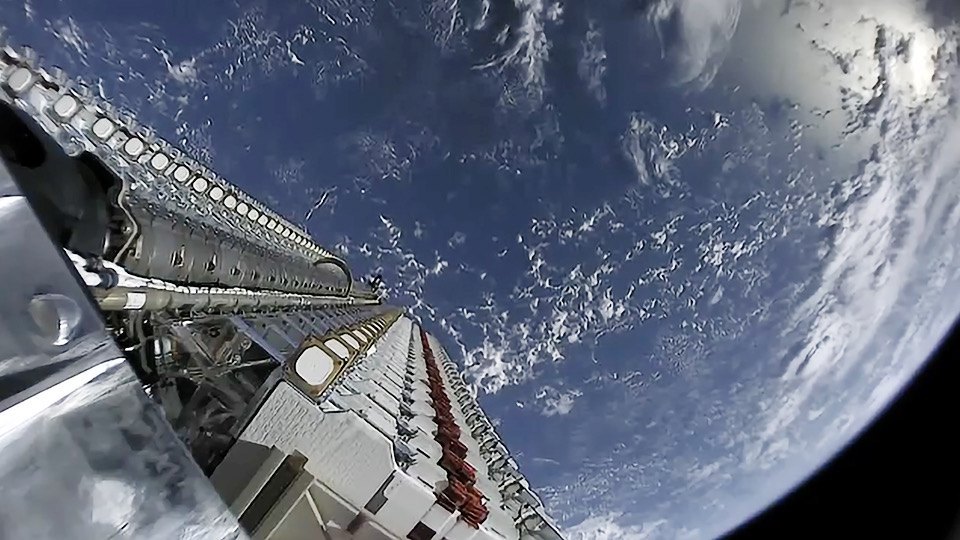
The United States offers an example of how this approach worked in practice: Musk developed Starlink, promised Starshield, and the government confirmed that the project was needed by the Pentagon. Investors then came on board. And when a rocket failed, the response was measured because people understood that the technology needed time to reach operational maturity.
“This is not our situation, where Ukrainians wake up in the morning and immediately start asking, ‘Where is our ballistic missile?’” Khrapchynskyi concludes.