





Are there enough votes for important decisions?
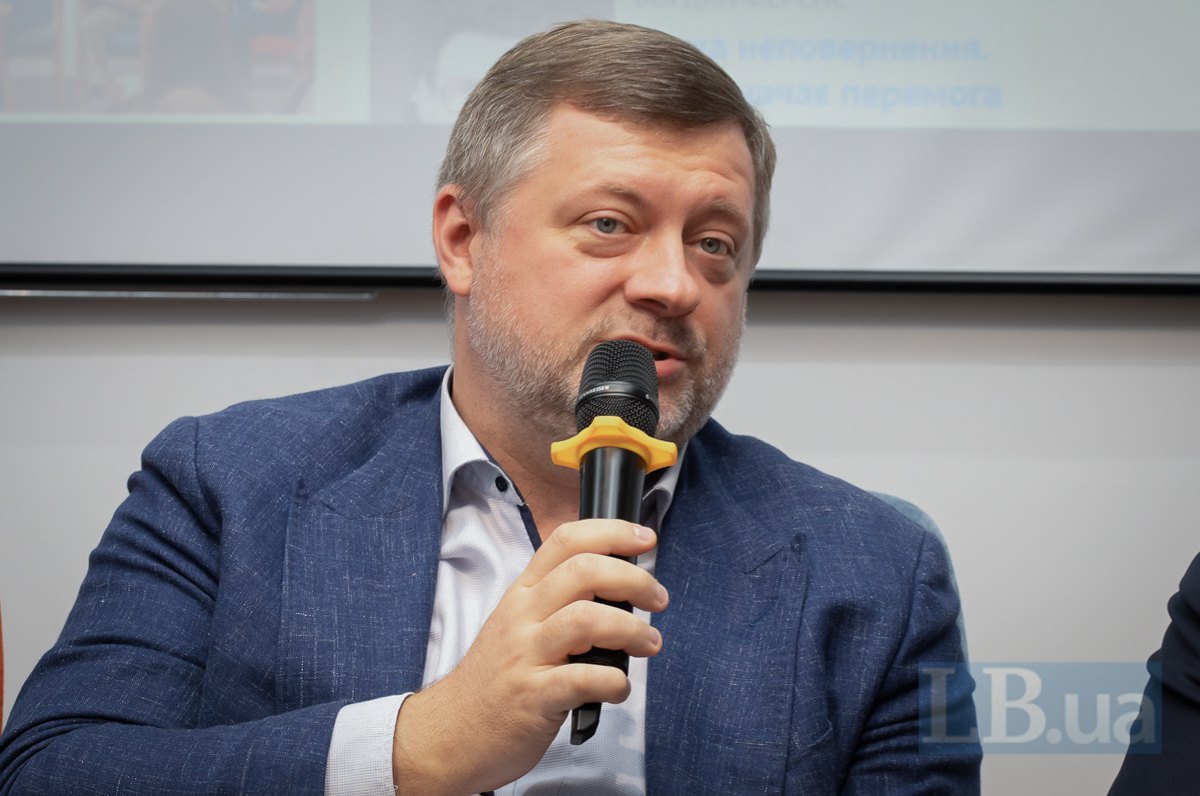
Oleksandr Korniyenko noted that the current parliamentary term has already entered its eighth year, an unprecedented situation in Ukrainian history. According to him, the prolonged absence of elections highlights new aspects of parliamentarianism in circumstances where citizens can effectively assess the government and MPs only through public debate.
At the same time, Korniyenko said he had analysed with the government the package of bills that needs to be adopted for Ukraine to receive international funding. Significant sums are tied to the adoption of the Labour Code, while around €1 billion is linked to a package of five anti-corruption laws. These include expanding the powers of the National Anti-Corruption Bureau of Ukraine (NABU) and Specialised Anti-Corruption Prosecutor’s Office (SAPO) to investigate top-level corruption, reforming the State Bureau of Investigation, selecting the prosecutor general through a competitive process and repealing provisions that allow corruption cases to be artificially delayed.
“I wouldn’t dramatise the issue of votes by saying that there are none at all. We analysed the entire package with the government, and the figures are extraordinary. We need to introduce 27 bills and draft another 16. This is all the money that exists in the country. And this is external funding. But if we don’t vote, there will be no money apart from our taxes. And taxes go to the army, so we will have to take money away from them, and there won’t be enough for the army or, first and foremost, for the salaries of public-sector workers,” he said.
Around 75% of the bills in the package are ready to be put to a vote, but time and agreements on the final wording are still needed.
Among the contentious issues are bills on the taxation of postal consignments. Business representatives who oppose the initiative were invited to a faction meeting because they believe the changes could hit Ukrainian entrepreneurs. Speaking about parliamentary attendance, Korniyenko estimated that around 180 members of Servant of the People regularly attend sittings and take part in votes on important bills. He described this figure as very optimistic.
On securing votes for funding
Oleksandr Korniyenko also addressed the European macro-financial assistance package worth around €4 billion. According to him, it operates on an all-in principle: if even one of the four legislative requirements is not fulfilled, the entire package is considered unfulfilled and the funds are not disbursed.
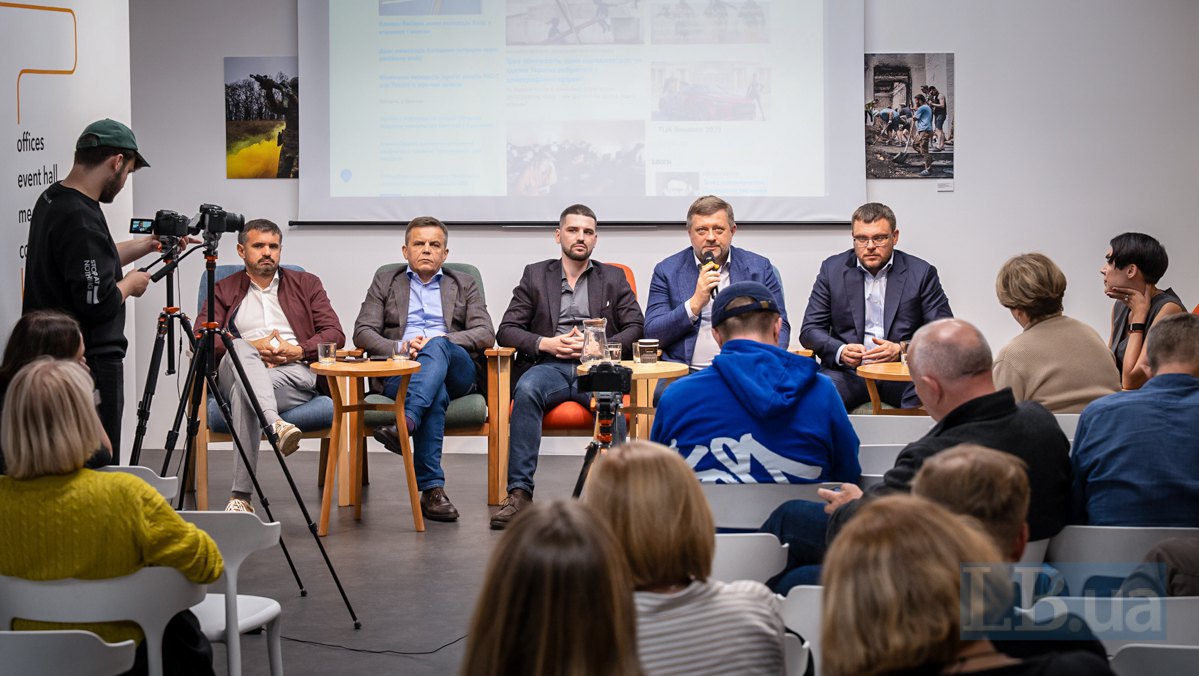
The package also includes laws on the taxation of postal consignments. The government has already submitted the relevant bill for the third time, but discussions around it are still ongoing.
“We need to find a consensus. Business representatives who support this reform were invited to the faction meeting: Aurora, Intertop and others who believe that the current postal consignment system is harming Ukrainian businesses and manufacturers. At least we heard their position,” Korniyenko said.
The bill failed to secure the required number of votes. At the same time, Korniyenko said it was important that it had been put before parliament.
“The bill did not pass when the votes were displayed on the board. But we are moving forward: previously, we were even afraid to put this issue to a vote, and now we have taken the risk,” he said.
MPs are also discussing the organisation of the Verkhovna Rada’s work and the conditions under which factions and groups could return to full participation in parliamentary sittings. Some insist on guarantees of individual voting. Korniyenko explained that the current system, with two buttons, is more a way of disciplining MPs, although individual voting is already required under parliament’s rules of procedure.
“But let’s remember that this system was introduced under Razumkov in 2020. Before that, as someone who has been involved in Ukrainian politics for a long time, I remember button-pushing on behalf of other MPs was rife. Will people start mass-pressing buttons on other people’s phones in a basement? I don’t think so – at least not on a mass scale, not at this stage,” he said.
Another part of the discussion focused on funding resilience plans. In April, the government allocated several dozen billion hryvnias from the reserve fund, while parliament allocated another UAH 40 billion from the state budget. The funds have already been distributed among the regions, but cover only 75–78% of the total need. According to Korniyenko, another several dozen billion hryvnias will be needed to complete the programmes. At the same time, he said, further funding depends on the adoption of the bills required to secure international assistance.
“Yes, this money is part of the package that needs to be voted on. There is no other source,” Korniyenko said.
This concerns not only resilience plans but also other state expenditure, including teachers’ salaries. “We will vote. I think it will be 75%,” he said.
By comparison, Korniyenko cited the anti-corruption package: five laws could unlock around UAH 1 billion in funding. “A billion is a substantial amount. But it is not that much compared with the UAH 50 billion needed for resilience plans. Some laws are tied to very large sums, such as the Labour Code,” Korniyenko said.
Security risks of holding elections
Ksenia Smirnova, vice-rector of Taras Shevchenko National University of Kyiv, drew attention to the European Commission’s forthcoming report on Ukraine’s progress towards EU accession. According to her, there is little reason for optimism, in particular because of outstanding tasks in the areas of anti-corruption legislation, customs rules, SEPA and virtual assets. Smirnova urged people not to view European integration reforms solely as a condition for receiving funding.
“This is not about money. Bills cannot be exchanged for money. It is about what Ukraine can gain as a result – both internally and externally,” she said. In particular, she said, participation in SEPA would expand opportunities for the Ukrainian economy, while harmonising customs rules would make the exchange of goods with the EU easier.
“Are we afraid of competition? There is no need to be afraid of competition – we need to enter the market actively,” Smirnova said, urging parliament to properly prepare and adopt the necessary bills.
Korniyenko agreed that expectations for the European Commission’s forthcoming report were challenging. At the same time, assessments in some areas could be positive. “To be honest, I don’t expect anything good from the report either. But there will actually be better assessments in some areas – that is also true,” he said.
He also pointed to the broader European context: the EU itself is going through significant turbulence, so Ukrainian issues may feature among European politicians’ priorities, but not necessarily at the very top.
“Looking more broadly at Europe, they have major problems of their own. From their perspective, our small problems could simply end up among their top five priorities, but not necessarily first – perhaps second or third,” Korniyenko said.
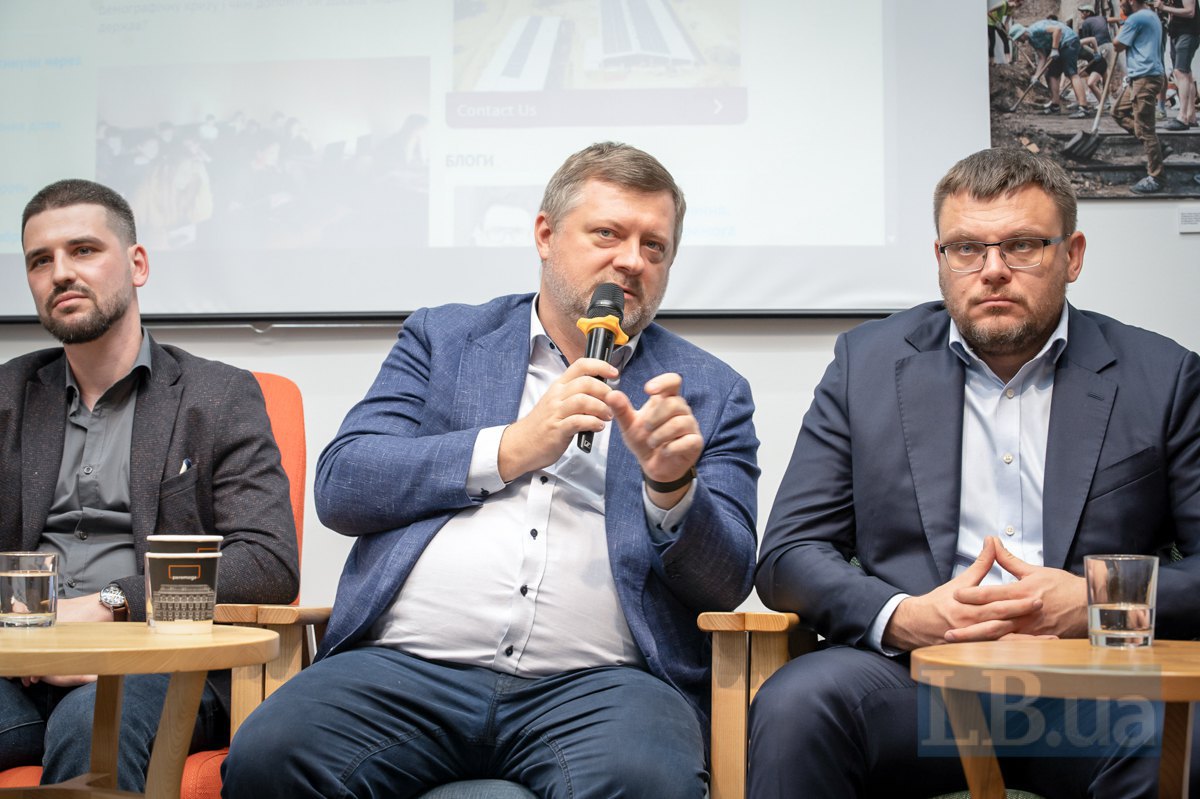
Among the countries supporting Ukraine, he named the Baltic and Nordic countries, as well as the UK and Norway.
Korniyenko said MPs would seek votes and negotiate over the bills needed to fulfil Ukraine’s international commitments.
However, he rejected the suggestion that the discussion about holding elections had emerged only recently. According to him, it has been ongoing in the Verkhovna Rada for about a year, including within a special group comprising representatives of parliament and civil society.
“This discussion has been taking place openly at the Verkhovna Rada for a year already. What’s more, our elections group is the most democratic one in parliament. It has 100 members, 20 of whom are politicians and 80 representatives of civil society,” he said.
Korniyenko attributed public attitudes towards possible elections partly to security risks. According to him, around 500,000 people working at polling stations are involved in the electoral process. For many, holding elections during the war would mean an additional threat.
“Why doesn’t society accept elections? There are many different reasons. One answer is not obvious and is known only to those who work on elections: 500,000 people are employed in the electoral process and work at polling stations. That is a very large part of the electorate,” he explained.
As an example, Korniyenko suggested imagining someone working on an election commission during the war. “One in every ten people in a poll will say: ‘No, no elections.’ They simply imagine: I’m an election commission member, I’m going to the polling station, and a jet-powered Shahed, an Iskander and so on comes down on my head,” he said.