







On this year’s challenges for educational institutions and new government programme
How did KAI start the academic year amid constant air-raid alerts and uncertainty over how long Russian attacks will continue?
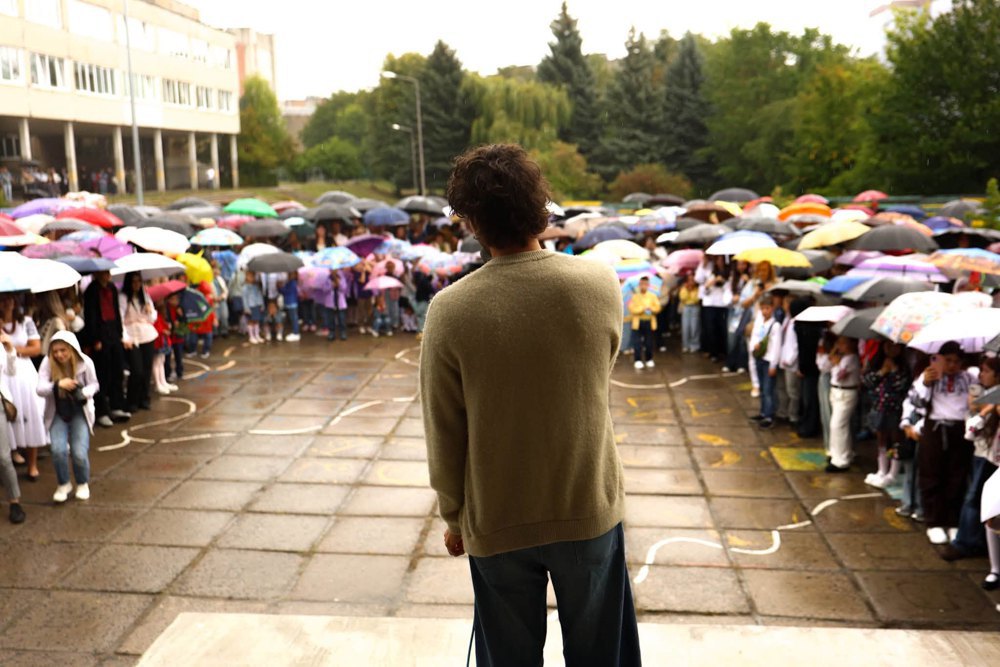
We decided to teach first-year students offline, straight away in basement and underground premises.
Second-year students will remain in remote learning until the end of the week for now. From next Monday, we will decide how to proceed. Most likely, we will change the timetable to combine classroom and remote learning.
A major challenge for us is not only the fact that when there is an air-raid alert, everyone has to go down to a shelter, but also that it is impossible to get anywhere in Kyiv during an air-raid alert. So we are now working on a university shuttle service to take people to and from work and home.
The engineering faculties are concerned about the situation created by the air-raid alerts. We will see how things develop this week. If we find that we have no alerts for half of the time, we will simply adapt the timetable: change the time classes start, adjust the breaks between classes, and make them more flexible.
To what extent, in your view, does online learning affect education in technical and engineering fields?
It has a very serious impact. We can see that remote learning simply does not work for undergraduate students. It can work for master’s students. By that stage, they are adults who are self-disciplined and know how to manage their time. Most first-year undergraduate students are 17. Half of them studied remotely at school because they are not from Kyiv but from very different parts of Ukraine. Some attended schools that were entirely online, sometimes asynchronously, while others were homeschooled. So the major challenge here is teaching people how to learn in the first place and how to stick to a working schedule.
And, of course, certain processes need to be demonstrated visually, and students need to carry out laboratory work.
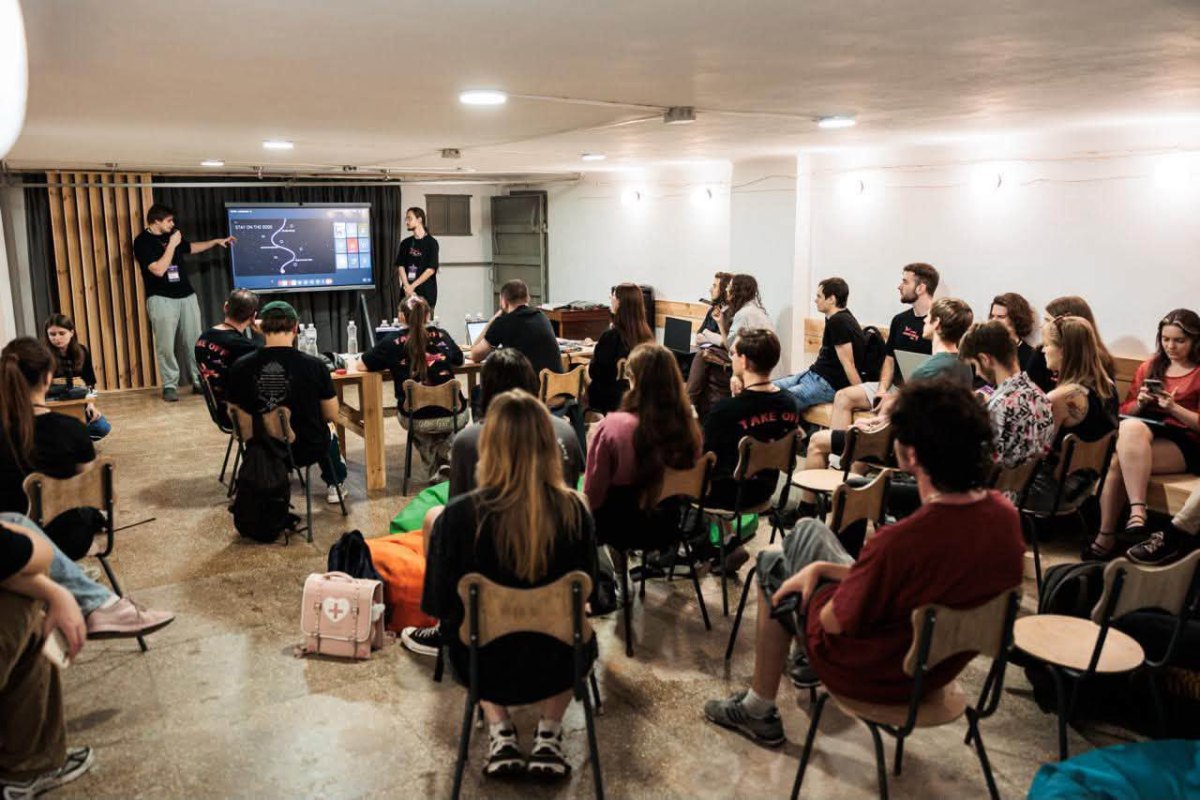
Of course, our entire educational process is now built around practical work in partner laboratories. The teaching methods and the topics they cover are fully tied to practical sessions. So we will do whatever it takes to adapt and change the timetable and schedule so that we do not lose this.
The prime minister recently said the government is launching mechanisms to support joint applied research and development commissioned by technology businesses in the interests of defence and the economy. What does this mean in practice for universities and students?
It is a very good programme. Denys Kurbatov’s team (Denys Kurbatov, Deputy Minister of Education and Science of Ukraine — ed.) at the Ministry of Education and Science is working on it, and it is great that the government, including the Ministry of Finance, is supporting it.
We work extensively with private businesses. They commission both research and testing of their products in our laboratories. Now, if the government covers part of the cost of such research, that will be a huge incentive for businesses.
Because what is our biggest risk? For companies, it is much more convenient to commission research that does not require some kind of complex hardware or sophisticated equipment, such as an anechoic chamber (a room isolated from external radiation in which echoes and reflections of sound and electromagnetic radiation are fully absorbed — ed.), by dealing directly with lecturers. They ask them to carry out calculations or certain work, offer them part-time employment, or simply pay them cash for the research.
This has a negative impact on the university. First, we have no way of accounting for this money and do not know how much research is actually being commissioned. Second, lecturers sometimes undercut prices, to put it mildly. Companies offer them relatively small sums because salaries in education are below market rates, and sometimes they undervalue work that is worth much more. So we are working to ensure that more commissions come through the university itself, and we are succeeding. This additional government incentive in the form of co-financing could be a real game-changer in this case.
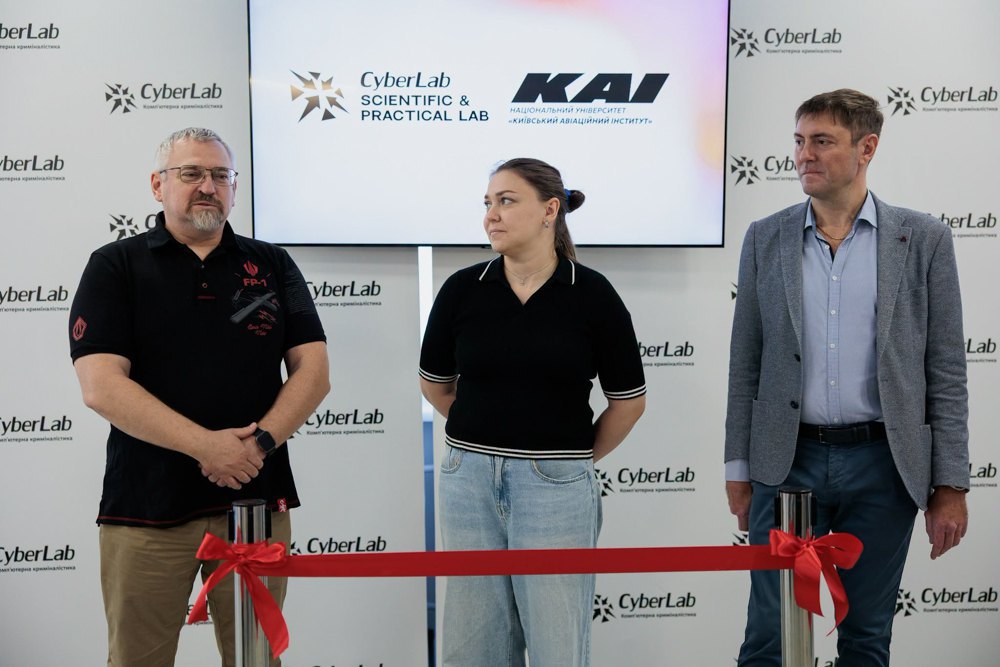
We already have several research programmes based on co-financing with the state. They were not focused on scientific research but on infrastructure, and this is the best tool. Businesses then invest in the university because they know the state will not abandon it, strip it of its assets or do anything else to undermine it, but will continue developing it because it has invested money in it. At the same time, the state provides funding to the university knowing that the money will not simply be spent, because there is a business on the other side that is co-financing the project and also making sure the funds are used effectively.
Trends in this year’s admissions campaign
What trends are you seeing in this year’s admissions campaign for engineering programmes?
Across Ukraine, the most popular programmes are once again in the humanities: management, psychology and marketing. At our university, we have 40% more first-year students than last year. If in August we were, so to speak, measuring universities by the number of applications, now it is important to talk about the number of first-year students, because there are universities that inflated their application figures to make themselves look very popular.
At the top of our list are Aviation Transport and Aerospace Engineering. Across the country, there seems to be a trend towards construction and geodesy — everything related to reconstruction. We have also seen higher enrolment this year in these programmes.
This year, we launched all modes of transport at our Faculty of Transport and Logistics, and immediately saw strong enrolment across all of them. Previously, we only offered aviation transport; now we also have road, rail and maritime transport. This is our new strategy because logistics does not revolve around a single mode of transport. We need specialists who understand all modes of transport. Each programme has a strong industry partner, and we develop these programmes together.
This year, for the first time, we are offering Therapy and Rehabilitation at the Faculty of Health Sciences, and we have also enrolled a large group. We are also offering Audiovisual Arts for the first time and have enrolled students there as well. And this year we have introduced National Security, which will combine cybersecurity, economic security, international relations and economics.
Do you think applicants and their parents have now recognised the potential of Ukraine’s defence industry? Or do they still see IT as a more reliable and forward-looking career choice?
It seems to me that the trend is growing. IT is still more popular, of course. Not at our university, but across Ukraine, the overall trend towards IT is stronger than towards hardware programmes and defence tech. But the numbers are growing. The number of applicants to Aerospace Engineering, which is related to drones, is increasing. At the same time, there are programmes that do not explicitly mention drones but are related to defence technologies, and the situation there is really poor.
This year, there seem to be no more than 50 first-year students studying chemistry across Ukraine. Just imagine — there are hardly any chemistry students entering university at all, which does not meet the needs of the industry. Chemistry is a huge problem. I attribute this to the very weak teaching of natural sciences in schools. We also see that very few people are willing to take physics in the NMT, and the results in physics are not particularly good.
It is still difficult to recruit students for programmes such as applied mechanics, composite materials and engines — these are very specialised fields. We have groups studying these subjects, but there is no significant growth. There is still a lot of work to do in terms of communicating that the defence industry is something worth paying attention to, that salaries are high, and that while almost anything in Ukraine’s economic sectors can stagnate, defence tech certainly will not.
You can study IT if you know mathematics, and now probably even if you simply have good logical thinking, given that everyone is coding with AI. But in hardware fields, without a strong foundation in physics and mathematics, students simply will not be able to study even in their first year. So the barrier is not so much people’s willingness — that is already changing to some extent — but the fact that they have a poor grasp of the natural sciences.
In your view, when someone has engineering abilities at a level where they can create something new, is that more of an innate aptitude, or can it be developed if technical subjects are taught well at school and the person also receives additional training, for example with tutors?
It can be developed, and there are methods for developing this kind of creativity, both at school and at university.
We have applicants whose admission scores were not particularly high when they enrolled in engineering programmes. But once they are here, they experiment a lot. We give them the freedom to make mistakes, do things incorrectly and break things. There is no very senior administrator constantly looking over their shoulder. At our university, laboratory managers are mostly senior students. Yes, there is a research supervisor, but they are not with these students 24/7. This makes it easier for students to express themselves and they are not afraid to make mistakes. That helps unlock their creativity.
In practice, we see that it is, of course, great when someone has these skills naturally or when a student has been involved in some form of engineering creativity or invention since school. But even if they have not, these skills can be developed later in life, starting at 17.
Are there many Olympiad winners among applicants, or students who studied programming, model aircraft building or similar subjects at school?
There are many. We are, of course, very keen on this group. They continue to choose aviation. This year, we started supporting extracurricular model aircraft activities. Across Ukraine, there are about a dozen extracurricular model aircraft clubs and groups — in Dnipro, Poltava and Kyiv. Together with them, we are building a network to support school and extracurricular clubs across Ukraine. We want them to understand what opportunities they will have later, where they can work and study, and make sure they do not leave this path.
If someone is already involved in model aircraft building, there is a good chance they will become a good aircraft designer. So it is important not to lose them.
What does the gender breakdown look like this year?
There has been no fundamental change in the technical fields. In the humanities, our most popular programme is Psychology, where there are more women, while engineering programmes have more men. The best gender balance among the technical programmes is in Cybersecurity, where it is roughly 50–50. Biotechnology and Bioengineering are also fairly balanced in terms of the ratio of men to women. There are also quite a lot of women in logistics. But overall, men still outnumber women in engineering programmes — on average, 70% men and 30% women.

On cooperation with the defence industry
Were you able to recruit students for the Fire Point programme? How will these students’ studies differ, and what does the programme involve?
We received 150 applications for the programme. There was an additional NMT-based selection process: applicants had to achieve at least a certain score in mathematics and physics. Those who met the score requirements then took additional exams on campus together with Fire Point engineers and our specialists.
None of the 150 applicants passed the exams set by the company — the physics proved too difficult. So we agreed with the company to launch preparatory courses starting in September. If you prepare for these exams, it is possible to pass them. Without preparation, even people who scored highly in physics and mathematics on the NMT do not pass.
Were these unusual tasks for a school curriculum?
Yes, they were tasks of a completely different level — at the level of national Olympiads. They are more difficult. It is absolutely possible to learn how to solve them, but you need to prepare for them.
That is the main lesson from our attempt to recruit a group. It is very difficult to get into such an intensive, specialised programme simply by turning up and giving it a shot. You need to know from September that you want to apply and prepare for it, even just to avoid unnecessary stress. You arrive having never seen problems like these before — plus the air-raid alerts, plus the fact that the whole admissions process takes place in August. So even the stress alone can affect your performance if you have not prepared.
How many defence companies does KAI work with at present, and what forms does this cooperation take?
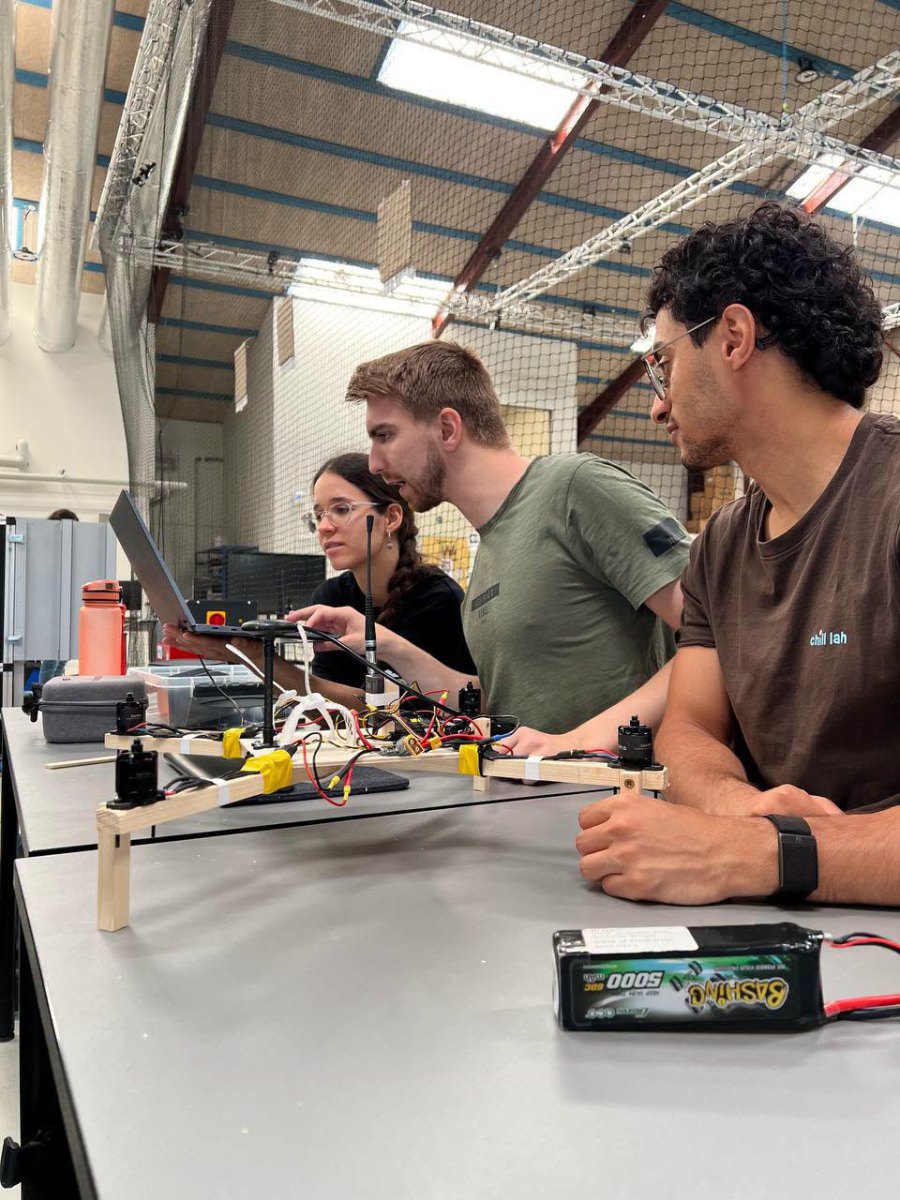
We currently have more than 20 partners, or more than 30 if we include civilian companies. These are not just defence companies. There is Vodafone, Ajax and AutoNova, the largest distributor of automotive parts, which has very advanced warehouse automation. Ukrzaliznytsia, for example, is our partner in rail transport.
What forms does this cooperation take? It starts with special scholarships for students. This year, companies sponsored scholarships for students who scored 200 points on the NMT. There are also team scholarships for students working on their own projects.
Another form is the creation of educational and research spaces. With Athlon Avia, we built a huge model aircraft laboratory; with Progresstech, we created a space for service engineering. Progresstech works exclusively with civilian aircraft, but it still operates in Ukraine and its engineers work here. So the cooperation ranges from supporting small initiatives all the way to creating large joint spaces. And it is not simply about renovating a space: companies are also involved in shaping the programmes, planning events held there and developing certificate programmes for students.
Do you see similar cooperation emerging at other universities across the country, not just in the capital? Is this becoming a broader pattern or is it still more of a trend, in your view?
We have been doing this for three years now, so we are glad that other universities are following our example. Many of them also understand that cooperation with business is essential. And the state now sees this as an argument for co-financing various projects. So this will continue to grow.
In fact, I think universities that do not start developing programmes with businesses will simply close. If they want to continue operating rather than shut down, the only way is to establish partnerships with businesses and rethink the content of their educational programmes. The state is also strongly accelerating this process.
Overall, how often do companies reserve senior students for specific jobs?
All the time. I would say they even start doing it while students are still at school. Five companies supported us during this year’s admissions campaign. We had a year-long programme for attracting applicants: we went to schools, organised various activities for senior pupils, as well as summer and winter schools and workshops for schoolchildren. Some companies were already contacting these students while they were in their final years of school, saying: come and study at the university, spend some time learning here, and we will hire you straight away.
There are very few people in Ukraine overall, and even fewer who want to become engineers. So companies actively seek them out. We are happy to help them do that. And this starts well before the first year of university.
What are employers’ requirements and expectations for these students, and what do students expect from employers?
We need to draw a line between qualified and unqualified staff. Companies need very different types of employees because the level of automation in manufacturing also varies. There are no factories today where drones are assembled entirely by robots. There is a lot of manual labour in defence manufacturing, and people are needed for that work too. This is something we constantly discuss with companies: if someone has already enrolled at university and is willing to study, let’s try to turn them into an engineer. Please don’t take them on full-time from their first year. Although it may look attractive: you can live in a university dorm for relatively little money, work full-time for $1,000 at a defence company, skip classes and collect your degree four years later. That is not a good scenario for us.
We discuss this constantly with our partners, and they understand it too: if we have an opportunity to train engineers, we cannot afford to lose it. So first-year students focus solely on learning. They receive career guidance and work in laboratories set up jointly with companies, but this takes place on university premises. From their second year, they can start working part of the day. Or they can join a dual programme, where work related to engineering is counted as part of their studies.
As for the requirements for people working in defence companies, they range from simply being able to turn up for work at nine and leave at six — a basic requirement, just being a sensible and reliable person — to being able to design an engine. So you can work there from your first year of university, or without going to university at all. And even a professor with a PhD can find a job there.
How can we increase interest in technical fields overall?
We need to improve the quality of natural science teaching in schools. We need to improve the quality of university programmes and infrastructure. Those are probably the two main things. Because I think telling people that they can earn a lot in the defence industry and should go and work there is no longer necessary — everyone already knows that.
We simply need to improve the quality of science education. I think people are not choosing engineering because they are simply afraid of physics and mathematics.
On quality of school preparation and the impact of artificial intelligence
Has the recent debate over removing mathematics from the list of compulsory NMT subjects for applicants to humanities programmes had any impact on this year’s admissions campaign or on applicants’ level of preparation?
This is the worst proposal anyone could possibly come up with for this country. If you wanted to do something that would cause the greatest long-term damage to Ukraine, it would be to remove mathematics as a compulsory NMT subject.
So does this affect you as well, even though it supposedly concerns only humanities students? Would it mean less attention being paid to mathematics teaching in general?
It does not concern only humanities students. Mathematics is difficult to learn. Learning in general is difficult. It is about building new neural connections in the brain.
If you can just about scrape through Ukrainian with the minimum score because you speak it every day, mathematics requires you to study, put in time and make an effort. Not every school has good mathematics teachers, and not all parents are able to devote enough time to their children, given the circumstances in which we live: the father is serving in the military, the mother is working all the time, and so on.
So if people are given a choice and can take the easier option, they will simply choose not to take mathematics. That means we will not even have a basic level of mathematical literacy. And that is necessary for life regardless of whether you are a humanities student or a technical one.
This is an entirely artificial division. University is about comprehensive education. A person with a higher education should have broad knowledge and an understanding of how the world works. You cannot understand how the world works without knowing at least the basics of mathematics. It is a completely nonsensical idea.
We already have different weighting coefficients for applicants to humanities and technical programmes. For creative programmes, the creative entrance exam accounts for 70% of the overall score. So you can completely fail everything else but do well on a graphic drawing in the entrance exam because you want to study art — and you will get in and study art.
So could a certain number of people, regardless of their aptitudes, choose humanities programmes simply to avoid taking mathematics?
Yes. In other words, we will have no chance of getting young people interested in engineering. But the goal is not even so much to get everyone into engineering. The point is that without mathematics, they will be completely illiterate in a broader sense. Why would we need, for example, mathematically illiterate lawyers?
There are tests conducted every year across different countries. PISA (Programme for International Student Assessment — an international assessment programme coordinated by the Organisation for Economic Co-operation and Development — ed.), for example, consists of two parts and measures how well a child can understand texts — whether they can read a long text and draw conclusions from it. The second skill it measures is mathematical ability, or abstract thinking. That is fundamentally important to a person’s ability to learn. If we remove this component, we end up with a person who is unable to develop within society or in their profession.
How is the use of artificial intelligence affecting admissions and education now — is it more of a help, or a reason to raise concerns about academic integrity?
We have to recognise that it exists, and teaching methods need to change. If a student can complete an assignment using artificial intelligence, then the assignment has been poorly designed. Because there is no way to detect it.
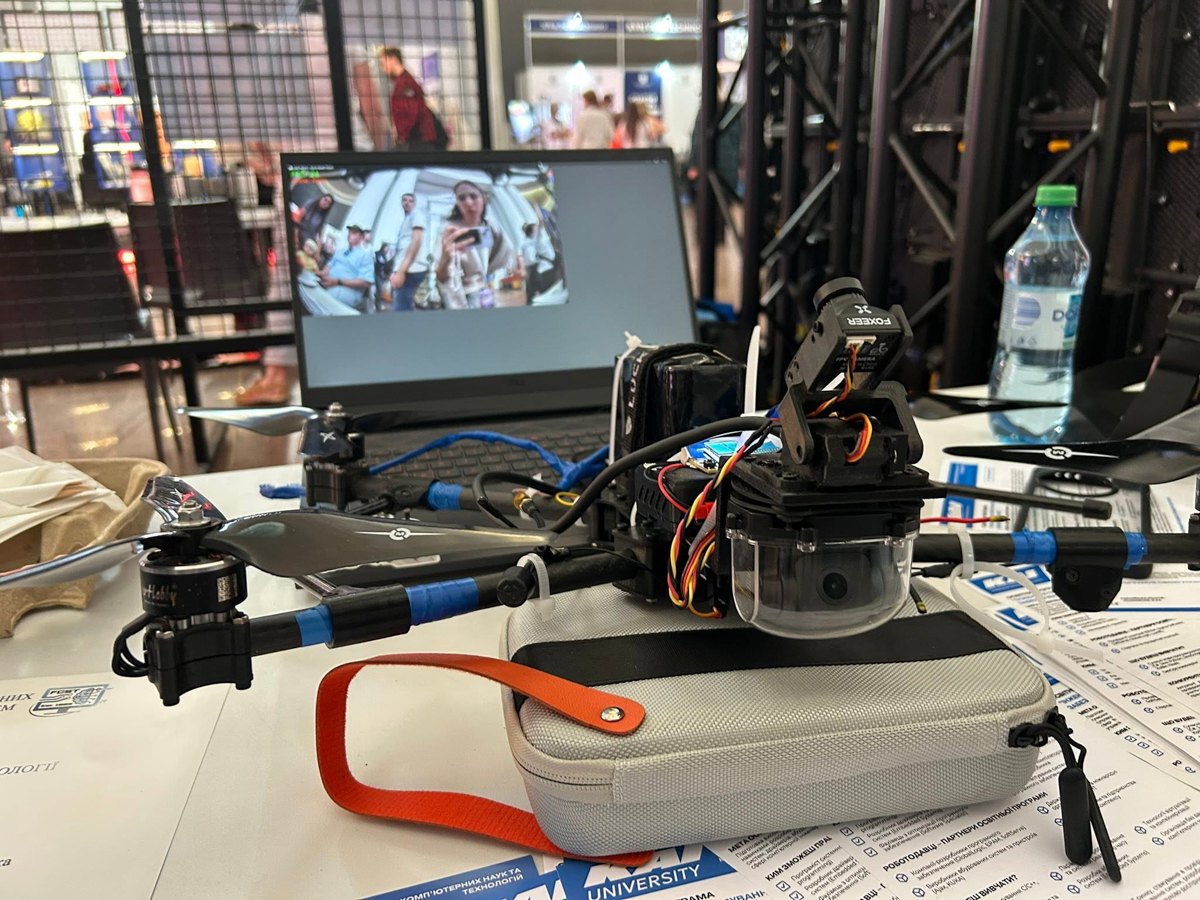
It is difficult to fake completing an assignment using artificial intelligence here because there is a lot of practical work — physical work in laboratories and group work. But it really depends on the teaching methods, and we are working with lecturers to make sure they know how to use this, because it is difficult.
Globally, artificial intelligence is also affecting education in another way — students are deciding where to study by asking ChatGPT. Last year, we conducted a survey among applicants who submitted applications, both those who were admitted and those who were not. Forty per cent of them chose their university based on what ChatGPT told them. Just as people used Google before — that is considered normal, right? Now it is the same with artificial intelligence. They type: “I want to become an engineer. Where should I study?” And ChatGPT gathers information from across the internet and provides a well-reasoned answer.
And good marketers will know how to use this. So our communications and marketing department and I also spend a lot of time thinking about how to hack it.
And people are often not particularly concerned about the much higher rate of errors and inaccuracies in ChatGPT compared with Google Search.
It hallucinates and makes things up, but if you are a sensible person, you will go and check. Google can also provide false information. It will return whatever is available online, but what someone has written on the internet could be a conspiracy theory, simply false information or propaganda. It could.
Being able to verify information and use these tools in an age of information overload is an incredibly important skill. We have integrated a course on disinformation into the university curriculum, and we will offer it as a subject to first-year students.
Denmark introduced new rules for upper-secondary students at the start of the new academic year: all written assignments completed at home must now be defended orally. What do you think of this initiative?
It makes sense. They realised that the future had already caught up with them and swallowed them whole. But if you do a project and then pitch it, that is basically how it should work.
If you simply upload a laboratory report to Google Education for your lecturer, then of course you can use whatever you want. If you do it properly, the lecturer will never know that you used ChatGPT.
But if it is your coursework, your invention — and sometimes it has a physical manifestation, if you are studying engineering — then you need to build a drone. Fine, use ChatGPT or any other artificial intelligence, but the drone has to fly. That seems like a perfectly reasonable task to me.
By the way, we have a good relationship with the University of Southern Denmark, and our students go there for summer school.