






On the impact of personnel changes in government on the defence industry
Let’s start with Tech Forces Ukraine’s statement on whether it is advisable to create a single government body responsible for developing the defence industry.
What does interaction between the government and the industry currently look like? Who takes the initiative?
On specific issues, such as procurement and determining whether companies are critical to the economy, we have been in contact with various relevant deputy ministers. We have also worked extensively with the National Security and Defence Council to discuss export-related issues.
But there was indeed a vacuum when the market was not being managed as a whole. So, in our view, it is important to establish systematic cooperation that would continue regardless of personnel changes. And the issue is not about creating a separate agency or ministry – there are already many relevant bodies whose resources need to be directed towards this.
As for the Defence Ministry, we are seeing another restructuring there. At the same time, there is institutional strengthening in areas where the necessary functions are already in place, for example, the appointment of Hanna Hvozdiar as deputy defence minister responsible for the defence industry. Manufacturers need a clear point of contact, a window for interaction. We will see how the Defence Ministry and the relevant deputy minister respond to the industry’s requests and the need for change.
Does the ministry or the National Security and Defence Council often initiate meetings and discussions?
Interaction works both ways. You simply need to know whom to approach, with what and about which issue. The NSDC initiates meetings and has coordination platforms with associations, as does the Defence Ministry. We are now seeing regular interaction with manufacturers initiated by the government: explanations are being provided about tenders, for example, as well as about the resolution on exports.
So it’s not simply a case of getting together, talking and then going our separate ways?
No.
We prepare written positions on draft resolutions and draft laws, send our comments, then meet to discuss them. These proposals are subsequently taken into account by both the National Security and Defence Council and the Defence Ministry.
At the same time, it cannot be said that there is currently a single window responsible for comprehensive interaction with the market and taking a broad view of the industry. There isn’t one.
We understand that this would probably be the ideal scenario, and we hope that the Defence Ministry will now take on this function within its remit.
What exactly does the industry expect?
The problem for manufacturers is that they do not receive predictable demand from the government and have no understanding of what capabilities will be needed in six months or a year. In practice, manufacturers have to make their own assumptions and make decisions based on their own forecasts. But long-term planning, analysis and vision should all be provided by the government.
This would then need to be transformed into a capability requirement for manufacturers, allowing them to secure the necessary resources, scale up and plan their R&D, among other things.
At present, manufacturers interact with the military to understand trends, needs and problems, and then start addressing them at their own level. The system still does not work in a way that allows the market to understand what it should be developing for in the short and medium term.
Perhaps a good example of how decisions are needed urgently is interceptors for the Russians’ jet-powered drones.
Yes, this is a very good example that highlights precisely this problem. There is currently no mechanism through which the government could send a signal saying: “Start working on this because this problem will emerge the day after tomorrow.” And now we are seeing the consequences.
Is there communication from the General Staff?
I cannot say that the General Staff does not communicate with the market. We know that many manufacturers interact with the Unmanned Systems Forces, for example. So this work is taking place; it is simply conducted not at the level of associations, but mainly between manufacturers and the military.
At the same time, we can see that horizontal cooperation between the General Staff and the Defence Ministry is being established, and there have been some good appointments in the General Staff. I hope there will also be closer interaction with the market in terms of developing innovation and technology.
The interaction between the Defence Ministry and the General Staff affects the development of the industry as a whole. The lack of functional coordination mechanisms is reflected in decisions, procurement and other areas (one example of the consequences of this lack of coordination is the issue of tactical and technical specifications for launching tenders for weapons, which the General Staff was supposed to draft and provide to the ministry, but which has been delayed. – Ed.).
Inter-agency coordination is a systemic problem in the country. It is a skill that the government needs to develop.
Because if we want to win the war, this level of coordination is absolutely essential.

Roughly how long should it take before the results of properly established cooperation become visible?
I would give them a year. Especially in a large ministry like the Defence Ministry. The team spends six months getting to grips with the situation and then the next six months working towards results.
That said, we are already seeing slightly greater openness to cooperation in the defence industry than there was, for example, under the previous leadership.
A few days ago, Defence Minister Yevheniy Khmara met with representatives of the defence sector. What issues were discussed, insofar as you can talk about them? And were they relevant?
The issues were relevant. It was a meeting with deputy ministers, and it was encouraging that Mr Khmara also joined at the beginning and outlined his strategic vision. He said that the defence industry was among his top three priorities, outlined the values and principles on which he wanted to base his work and interaction with the market, and announced plans to appoint Hanna Hvozdiar as the deputy minister responsible for the defence industry.
Overall, the meeting focused on the development of the defence industry and responsibility in this area. Naturally, the discussion also covered tactical and technical specifications and procurement.
Tactical and technical specifications and tenders are quite a sensitive issue at the moment. How does the industry view them?
The transition to tenders is a normal and transparent practice, as well as a requirement of the European Union, which is providing us with substantial financing.
It is true that the procedure is new and we are still learning how to work with it. Some of our manufacturers felt that the tactical and technical specifications drawn up by the newly established centres of expertise within the Defence Ministry were too narrowly defined. They believe that price cannot be the decisive factor in such procurements. Because, broadly speaking, if we set only price-based (quantitative) criteria, where do the qualitative ones come in?
So I am convinced that both the Defence Ministry and manufacturers still need to learn how to operate within this new paradigm. The procedure itself needs to be refined before it can become established and consistent.
In the meantime, while the country is putting these processes in place, we need to ensure uninterrupted supplies to the Defence Forces. We are not seeing any critical delays at the moment, but the risk exists. I believe it is not just us at Tech Forces Ukraine who see this, so the government is also interested in establishing the procedure as quickly as possible.
How do you assess the idea of establishing these centres of expertise within the Defence Ministry?
It is a good idea to have an understanding of a specific technology cluster and the expertise needed in that particular niche.
Does Tech Forces Ukraine have any expectations for cooperation with Hanna Hvozdiar, who was appointed as the deputy minister responsible for the defence industry?
I would not tie this to individuals. Our expectations concern the ministry’s functions. The Defence Ministry has a leadership role and is capable of establishing a single-window system for interaction with the market.
Ms Hvozdiar had already served as a deputy defence minister following the dissolution of the Ministry of Strategic Industries and the transfer of its functions to the Defence Ministry. After Mykhaylo Fedorov’s team came in, she became an adviser. There are people in the Defence Ministry who were doing their jobs but, so to speak, had no deputy minister responsible for their area – no leadership. Now that leadership is returning, and we hope the mechanisms the market needs will start working.
Read alsoGvozdiar Sets Out Defence Ministry Priorities, Including Underground Construction
How do manufacturers feel the impact of important personnel changes at the Defence Ministry, the Defence Procurement Agency and the National Security and Defence Council? How are these changes affecting production processes?
As for the leadership of the Defence Procurement Agency, we have already met with Artem Romanyukov and organised a meeting with association members, where we heard about his plans and vision for interaction with the market. We understand that he is only temporarily in the position, but still. He is a candidate who could be appointed permanently.
So far, we have not heard from manufacturers that any processes have been halted. And manufacturers come to us immediately if any problems arise.
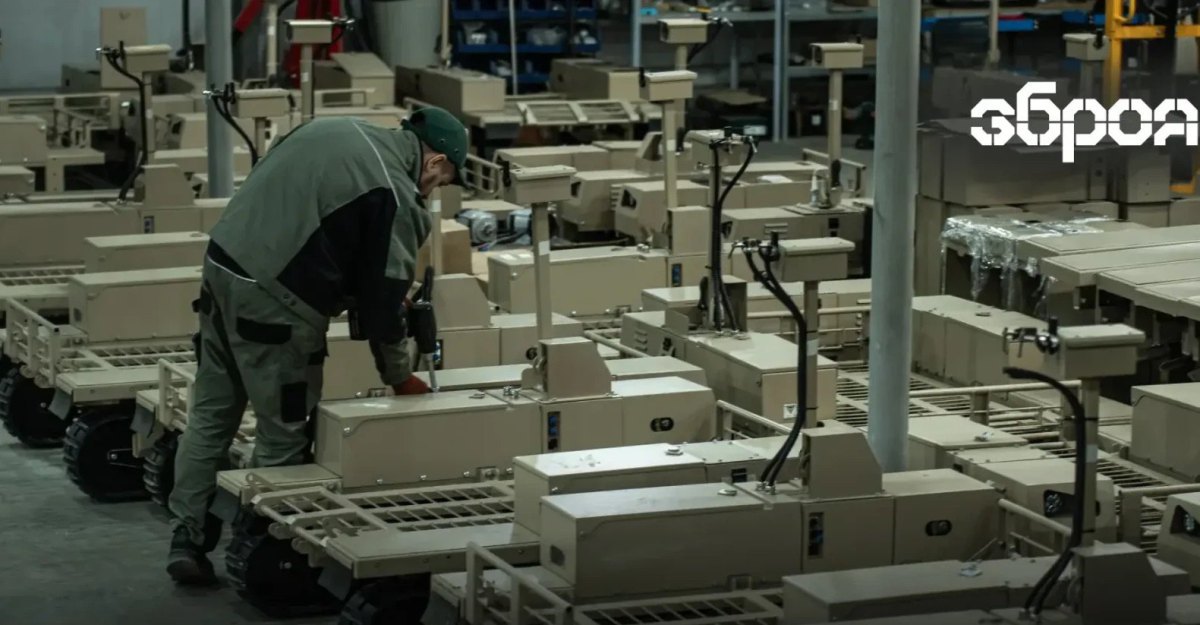
We understand that this is not a restructuring of the Agency’s operations – it continues to work. At the same time, we hope to see improved interaction between the Defence Procurement Agency and manufacturers. For manufacturers, quick feedback is important when they are working on contracts, so that there are people at the Defence Procurement Agency who can respond to their queries promptly.
Read alsoArtem Romanyukov appointed acting head of the defence procurement agency: what we know and what’s next
On broken export procedures and export permit fees
It has been more than two months since the fast-track export procedure was launched. Not a single permit has been issued under it yet. Why is that? Where exactly is the process getting stuck?
Two important elements of this resolution (Cabinet of Ministers Resolution No. 875) are not yet in place. The first is the list of critical weapons that the Defence Ministry is supposed to draw up – essentially, what cannot be authorised for export. I know that the Defence Ministry is working on this and says it is already at the final stage.
The second is the list of countries with which cooperation is permitted. Yes, there is, broadly speaking, the Drone Deal framework, and there are ten countries with which agreements have been signed. But I would not say that there is yet a fully developed understanding of how it will work.
Manufacturers simply see a green light: they have a better chance of cooperating with this country than with one where there is no agreement. They then start asking government agencies what opportunities this particular agreement offers and what it means for cooperation with that particular country. But we still have not seen a wave of agreements and contracts being signed because manufacturers do not yet fully understand what the Drone Deal means. Companies in the countries that have signed the agreements do not understand what it means for them either.
But the resolution also contains another provision that is critical for the market – the fee rates. In our view, 20–30% of the value of an export contract is too high and economically unviable. An overwhelming majority of Tech Forces Ukraine members said the rate should be zero. The decision to introduce the so-called fast track was supposed to make exports administratively easier, but these fees make them economically unviable. The price on the global market is not set by the manufacturer but by the market and competition. This additional fee eats up the entire profit, and the contract is highly likely to go to another manufacturer. In other words, through our own regulations, we are giving foreign competitors a price advantage.
This could be felt most acutely when it comes to components. A 30% rate has been proposed for such deals. Manufacturers gave us the following example: a Chinese sensor costs $150, while the production cost of a Ukrainian equivalent is $120. A 30% fee completely eliminates the advantage of Ukrainian localisation. And this is at a time when the need to localise critical components is being publicly emphasised, because our cooperation with EU countries and the US also depends on it. Yet the percentage proposed in the resolution undermines the economic rationale for such localisation.
A successful export contract is the result of very hard and painstaking work. Manufacturers also invest both money and time to enter international markets and showcase their products at exhibitions abroad. We do not keep our inventions hidden away in some secret box. Foreign companies come here and build their own production facilities based on Ukrainian experience. The competition is fierce.
So Tech Forces Ukraine’s proposal is simple: first, set the rate at zero. Then, before introducing any rate, model the possible scenarios.
For example, what would happen if the rate were 5% or 10%? We need to look at the overall impact on the state budget, rather than just the revenue from a particular payment on a particular contract. Until there is a thorough calculation of this kind, these rates should not be introduced. On the contrary, the market should be given an opportunity to test itself internationally.
If we look at the experience of other countries, the world is currently moving in the opposite direction. This year, the UK announced a £50 billion Defence Export Fund – the largest expansion of support for national exporters in the country’s century-long history. In other words, governments are supporting their exports rather than taxing them.
Over these six weeks since the resolution was adopted, the associations have been meeting and submitting amendments through the National Security and Defence Council and the Defence Ministry. My feeling is that we are now closer to the point where the resolution will become operational.
There is, however, another important element: the entire information and communications system needs to work alongside this resolution. In other words, electronic document management now needs to become routine rather than experimental.
Who should be responsible for putting this in place? What role does the National Security and Defence Council have here, following the transfer of Rustem Umerov to another position?
We continue to communicate with the National Security and Defence Council at secretary and deputy-secretary level. They continue to oversee the Drone Deal portfolio. So they should be the ones to explain what happens next.
The thing is, Ukraine is very good at developing concepts, but not so good at putting implementation mechanisms in place. In general, there are currently a lot of agreements and arrangements that remain unclear to manufacturers.
On cooperation between Ukrainian and foreign manufacturers
You say manufacturers invest heavily in establishing a presence on foreign markets. Are there any rough estimates of how much it costs a manufacturer even to take part in an international exhibition?
I cannot give you an exact figure, but in practice, exhibitions are not cheap. You also have to add the cost of travel permits to the main expenses. For example, if you go through a special exporter because it makes it easier to take equipment to an exhibition, that means additional costs, plus logistics, the team and paying for exhibition space. It is all expensive. Still, companies invest in making Ukraine and their products known abroad, and in making the national defence industry a driver of the Ukrainian economy.
We want there to be results both for the industry and for the country as a whole. Why do other countries invest in their defence industries and exports? Because it is part of the economy. It is one of the most powerful sectors and could generate substantial revenue in the long term if we establish a strong position in this market.
There is often a lot of news from these international exhibitions saying that a company has signed a memorandum of understanding. It is an interesting term. What does it mean in practice?
Companies are trying to build partnerships logically. They do not start with a contract straight away. So an agreement or memorandum of understanding is one of the first steps towards cooperation. It means that companies are talking and seeing whether they can make something work together.
All these memoranda of understanding and partnerships need to be transformed into real cooperation more quickly – whether that means joint production, contracts or joint development. And the government should create the conditions for this cooperation to turn into concrete action.
There are a lot of agreements at all levels now, but what comes of them? For companies, it is like navigating a maze, and they go through it with a great deal of frustration.
How stable and mature do Western partners consider Ukraine’s defence industry to be, in your view, given all these nuances and problems?
International partners are very impressed by our pace, innovation and creativity, but this approach is not native to them. They are used to working in a structured way, with vertical integration and long procurement cycles. Our model is more chaotic because that is what the times we live in require, and there is a very high degree of horizontal interaction.
It is almost the opposite – an antithesis – of what our partners are used to. But at the same time, our model delivers results, and our military has the capabilities it needs to counter Russia. That is why they are interested in this model.
It is no secret that our defence industry is not yet well structured or sufficiently institutionalised, so our partners are cautious, and private foreign investment is coming in slowly.
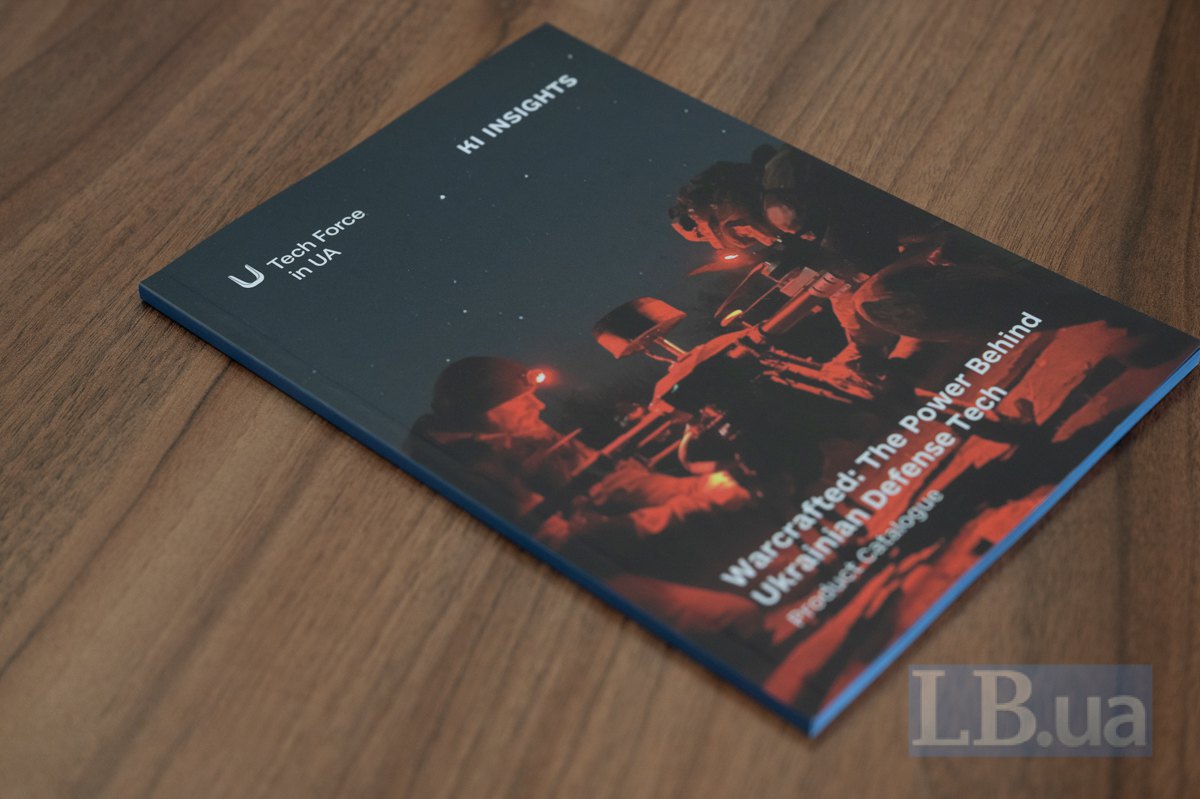
We are seeing more partners willing to support Ukrainian manufacturers at the R&D stage through joint funds, EU programmes and programmes run by individual countries. Tech Forces Ukraine, incidentally, has published a separate guide to these programmes. These grants are a whole multi-level ecosystem. There are many different formats, and not all of them are easy for our companies to navigate. But these are the conditions we have at the moment. So the more we try to break into foreign markets, the more opportunities there will be in the future.
Another tool is joint ventures, which international partners are interested in. We would certainly like to see more of them.
There is still a great deal of work to be done before we can say that Ukraine’s defence industry is integrated into the defence industries of partner countries and that we have become a strong player. We need to encourage our exports and support manufacturers; we need to want them to succeed. Because when they succeed, Ukraine succeeds.