





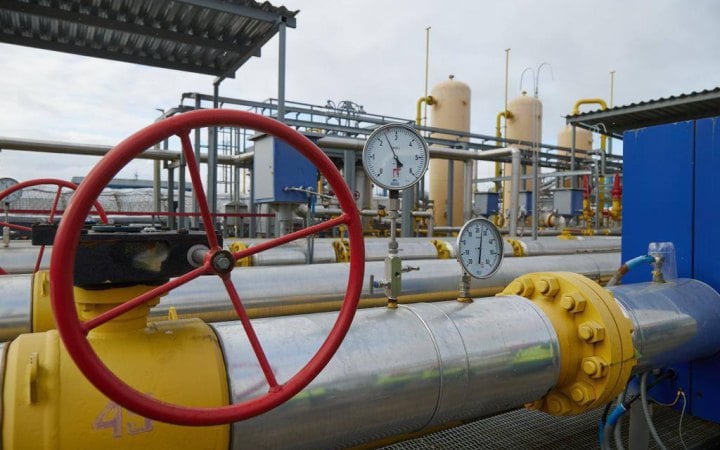
Ukraine has accumulated 16 billion cubic metres of gas in underground storage – the largest volume since 2020. The reserves were increased despite intensified Russian attacks on energy infrastructure.
Serhii Fedorenko, acting head of Naftogaz’s management board, told Reuters.
According to him, since the start of 2026 Russia has attacked the company’s facilities more than 400 times. That is twice as many as in the whole of 2025. Targets have included oil and gas extraction, processing and transportation facilities, as well as thermal power plants in frontline regions.
“We are strengthening protection,” Fedorenko said.
By comparison, last heating season Ukraine began with reserves of less than 14 billion cubic metres of gas. According to the government’s estimate, the country needs at least 13.2 billion cubic metres to get through the winter.
The build-up of reserves was also helped by lower gas consumption. In particular, Russian strikes on industrial infrastructure have led to the shutdown of some enterprises. Fedorenko forecasts that in 2026 gas consumption in Ukraine will be about 20 billion cubic metres, down from 21 billion in 2025.
At the same time, he stressed that it is difficult to predict the situation during the war. The company continues to restore destroyed production capacity and is preparing for the heating season.
Ukraine imports gas from European countries, primarily via Poland, Slovakia and Hungary. The country has not made direct purchases of Russian gas since 2015.
Due to severe frosts and Russian attacks on underground storage facilities, Naftogaz was forced to import a record 7.8 billion cubic metres of gas in 2025 and the first quarter of 2026.
This heating season, the company began purchases in advance. According to Fedorenko, more than 1 billion cubic metres of imported gas have already been contracted, of which 25% is liquefied natural gas (LNG). Deliveries under certain contracts are scheduled for the period from December to March.
Ukraine has Europe’s largest underground gas storage facilities, with a total capacity of about 30 billion cubic metres. Kyiv has proposed that the European Union use part of this capacity to store gas reserves, allocating a third of the capacity for this purpose.
Fedorenko noted that the gas is stored at a depth of more than a kilometre, which protects it from attacks. If necessary, it can be delivered quickly to consumers, including in Eastern European countries. According to him, the tariff for gas storage in Ukraine is currently the lowest in the EU.