





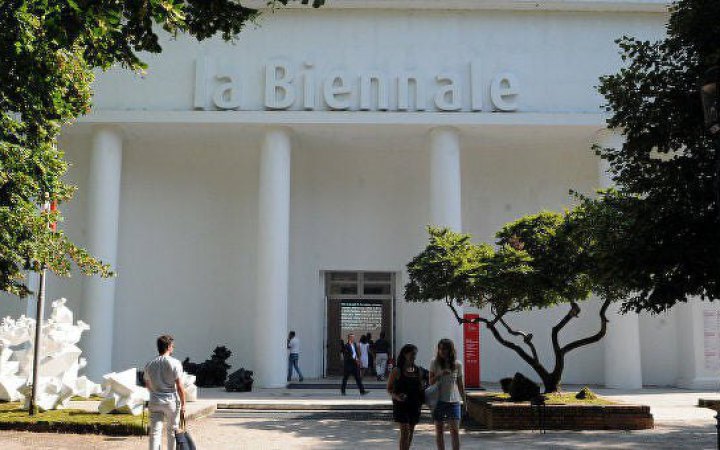
Ten EU member states have appealed to the European Commission, urging it to do everything possible to block Russia’s participation in the 2027 Venice Architecture Biennale.
This is stated in a diplomatic note seen by the outlet Rapporteur, European Pravda reports «European Pravda».
The document was signed by Poland, Austria, Croatia, Denmark, Estonia, Finland, Germany, Latvia, Lithuania and Sweden. The signatories stressed that Moscow’s return to the international cultural stage risks normalising its war against Ukraine.
Ahead of a meeting of EU culture ministers scheduled for Thursday, 19 November, these countries called for further and consistent action to prevent the Russian Federation from taking part in the biennale. The authors of the note said that, under the current geopolitical circumstances, Russia cannot take part in international sporting and cultural events until a just and lasting peace is achieved in Ukraine.
Russia at the Venice Biennale: What We Know
- This year, for the first time since the start of the full-scale war, Russia was included in the official list of participants in the Venice Biennale.
- One of the themes of the exhibition “A Tree Rooted in the Sky” was the idea that “politics exists in temporal dimensions, while cultures communicate in eternity”. The commissioner of the Russian project was Anastasia Karneyeva, the daughter of retired general and deputy director of one of the largest defence corporations, Rostec, Nikolai Volobuyev.
- In Brussels, Russia’s participation in the event, which is due to open on 9 May, was interpreted as a potential breach of sanctions. The concern is that the participation is funded by the aggressor state and could be used to promote narratives about the international legitimacy of Russian culture.
- A number of countries ignored the biennale as a result. The European Commissioner for Youth, Culture and Sport, Glenn Micallef, also did not attend the event. And during the previews of the Venice Biennale the Lithuanian, Latvian and Estonian pavilions held a march in solidarity with Ukraine, its people, culture and artists.
- As a result, the EU halted funding for the biennale. However, the organisers said they would challenge the decision.