





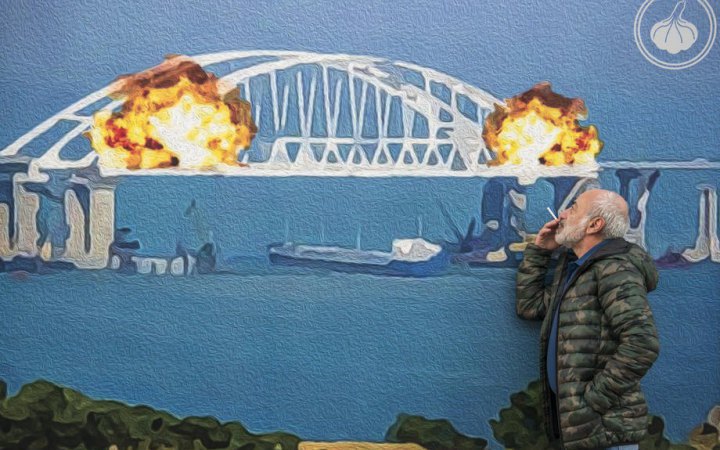
During the night of 19 November, the Defence Forces struck the rail section of the Kerch Bridge with Neptune missiles. There were hits in the area of the arch and the railway tracks.
The extent of the damage is being clarified, but train traffic has currently been halted. The Ministry of Defence reported this.
This is the third strike on the bridge in the past few days. As a result of the previous attack, the road section of the bridge was damaged and traffic on it has been stopped.
“For Russia, this bridge is a conveyor belt of war: tankers and wagons carrying ammunition for the grouping in the south. The conveyor has malfunctioned. The alternative route runs overland, along the front line. There, our drones meet the cargo,” the MoD commented.
They added that Ukraine carried out this attack in response to Russian strikes.
According to the General Staff of the Armed Forces, the attack was carried out by the missile forces — the Navy’s Neptune coastal missile systems.
“This bridge is the main land artery through which the Russian army supplies its occupation groupings in the south with fuel, ammunition and equipment. Russia built it as a symbol of the occupation of the peninsula and for years insisted it was ‘out of reach’ and ‘invulnerable’,” the General Staff commented on Facebook.
The Kerch Bridge is only one element in the occupiers’ supply chain. The Defence Forces are gradually reducing the enemy’s logistical capabilities. Following previous strikes, damage to the road surface of three more road bridges has been confirmed: on 15 November — over the Siverskyi Donets River near Pryshyb in Luhansk Region and over the Mius River near Taganrog in Rostov Region; on 14 November — over the Mius Estuary near Lakedemonivka in the same Rostov Region.
Attacks on the Kerch Bridge
This overpass built by the enemy, linking occupied Crimea with Russian territory, was first attacked back in 2022. In the following years of the full-scale war, the bridge sustained damage, but the attacks carried out in November this year have been the most catastrophic for Russia.
During the night of 16 November, defenders attacked the bridge, after which traffic was blocked for several hours. And during the night of 17 November, defenders inflicted far more extensive damage: the road deck was damaged and a support collapsed into the sea. This will also affect shipping.
President Volodymyr Zelenskyy said the strike operation had been prepared for several weeks. First, defenders destroyed air defence systems, radars, electronic warfare assets and other designated targets on the way to the final objective.
17 November was the seventh and key stage — drones hit the road section of the bridge, while missiles and drones struck the rail section. The road section of the Kerch Bridge was hit, the central arch and spans collapsed, and the rail section sustained significant damage, but the occupiers restored train traffic.
During the operation, Ukrainian drones and missiles were used, including Palianytsia, Neptune, Ruta and Flamingo. The Navy, Ukraine’s missile forces and artillery, the Unmanned Systems Forces and the Security Service of Ukraine also contributed to the operation.