





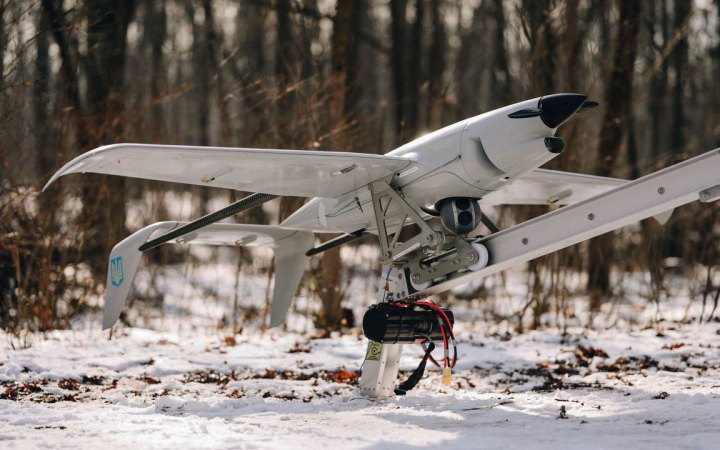
Ukrainian unmanned aerial systems manufacturer Skyeton and Norwegian defence technology company Teleplan Globe are integrating the Raybird UAS into the FACNAV software suite. Skyeton reported this.
The integration combines the capabilities of the ACS-3 Raybird tactical UAV with FACNAV processes that provide data transfer from sensor to effector. This makes it possible, in real time, to turn the drone’s intelligence into precise target information that can be shared across the network.
At present, the integration is at the ISR module level, and the next step will be to incorporate Raybird itself into a broader range of FACNAV unmanned systems management processes.
According to the developers, from early 2027 the integration should allow operators to plan missions and control the aircraft and its payload directly via FACNAV. The company explained that, combined with FACNAV ISR, this will create a single autonomous process: from managing platforms and sensors to processing intelligence, generating targets and passing information about them to connected effectors.
The developers noted that FACNAV enables defence forces to turn sensor data into shared operational information, supporting battle management, fire support and intelligence operations. Its ISR module — FACNAV ISR — allows operators to process video and imagery from multiple sources simultaneously, identify threats, pinpoint their location on the map and immediately share the results across the network.
According to the company, thanks to the integration, Raybird sensor data feeds directly into the FACNAV environment. Operators can use live video and imagery from Raybird alongside data from other sensors to detect targets and accurately generate their coordinates. Operators can then pass these coordinates directly to connected effectors, including indirect fire support, aircraft, combat vehicles and unmanned systems on land, in the air or at sea.
“Finding a target is only half the task. Every confirmed target is the result of complex data analysis, and the time between detection and response determines whether it still matters. Raybird can remain over an area of interest for many hours and transmit high-quality data from deep behind enemy lines. Integration with FACNAV means this data does not stay on a single operator’s screen. It becomes part of the shared operational picture and quickly reaches the effectors that need it. This is exactly the direction we believe in: not isolated platforms, but an ecosystem where data moves from sensor to decision without delays,” explained Skyeton International CEO Pavlo Shevchuk
The basic model of the Raybird fixed-wing reconnaissance drone was developed back in 2016, and in 2018 the ACS-3/Raybird aerial system was adopted into service with the Armed Forces of Ukraine; since then it has been continuously improved and modernised.
According to the Ministry of Defence, it can remain in the air for up to 28 hours and cover distances of up to 2,500 km. The drone’s speed is 80–140 km/h. Thanks to these characteristics and its compact form, it can bypass enemy air defence systems and areas of active electronic warfare to conduct visual reconnaissance from altitudes of up to 5.5 km and carry out other tasks. The unmanned aircraft can also carry 5–10 kg of payload. The Ministry of Defence added that, as of 2025, Raybird drones have flown more than 350,000 hours of combat sorties.
Skyeton is a Ukrainian manufacturer of unmanned aerial systems (UAS) with 20 years of experience in the aviation sector. The company develops unmanned aerial systems for commercial, industrial and military use.