





The European Commission on 23 November presented proposals for a 22nd package of sanctions against Russia. The sanctions envisage disconnecting a further roughly 60 Russian banks from SWIFT, measures against vessels in the shadow fleet, restrictions on the energy sector and tighter visa controls.
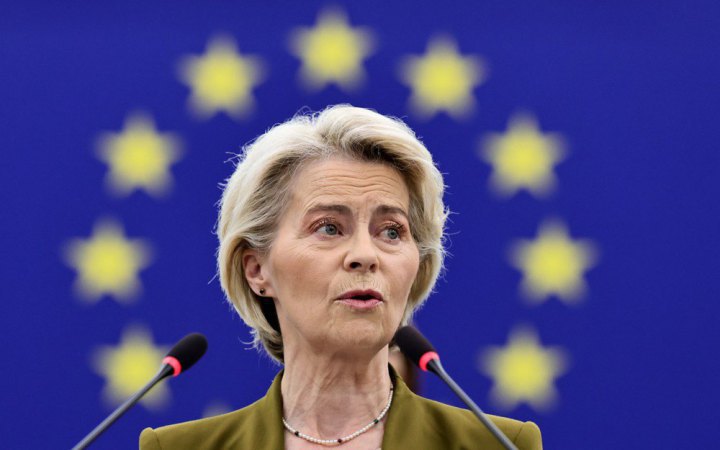
European Commission President Ursula von der Leyen said this in Brussels, DW reports.
According to the Commission President, the proposed measures are intended to increase pressure on Moscow to force it to end its war against Ukraine.
“We will continue to propose new sanctions until Russia shows a genuine intention to achieve a lasting peace in Ukraine,” von der Leyen stressed.
For the new restrictions to take effect, they must receive unanimous backing from all EU countries.
The Commission proposes extending the ban on carrying out transactions to a further roughly 60 Russian banks. They are to be disconnected from the international payment system SWIFT.
The restrictions are also to cover cryptocurrency and payment networks in Russia and third countries that help Moscow circumvent sanctions. A special crypto-sanctions task force has been set up to develop the relevant measures.
In addition, the Commission proposes to extend the ban on providing services to Russia’s energy sector. European companies would be barred from helping Russia build, operate and repair energy infrastructure, including oil refineries. For the first time, the restrictions are also to apply to services in the electricity sector.
The sanctions list is also set to add more than 70 vessels from Russia’s shadow fleet. Separately, the Commission wants to ban all tankers insured in Russia. However, von der Leyen has not yet explained how this ban would be enforced.
Among the proposed sanctions is a ban on entry to the EU for former Russian combatants. Von der Leyen called them a threat to Europe’s security and linked the move to increased activity by Russian agents in European countries.
Visa restrictions for Russian combatants are already предусмотрені by the 21st package of sanctions. They apply to anyone who has fought as part of the Russian armed forces since 24 February 2022, regardless of citizenship.
To implement this mechanism, the Commission has prepared updated guidelines and additional tools, including a questionnaire on military service. Decisions on applying the ban will be taken by EU member states in the Council of the European Union.
EU Commissioner for Home Affairs and Migration Magnus Brunner also announced an intention to restrict the issuing of tourist visas to Russian citizens. They would be granted only in specific cases where there is documentary justification.
At the EU’s external borders, every Russian citizen would have to undergo an individual check. Information on refusals of entry is to be entered into a shared information system so that a person cannot attempt to cross the border again in another EU country.
At the same time, the Commission stresses that human rights defenders, opposition figures and independent journalists who need to leave Russia should continue to be able to obtain protection in the EU.
The Commission is also proposing to ban Russian teams and athletes from competing under the Russian flag at events in EU countries and from displaying official Russian symbols.
“Sporting events cannot be a platform for propaganda activities,” von der Leyen said.
According to Brunner, once the restrictions take effect, EU countries will be able to refuse visas to athletes and teams representing Russia or competing under its flag or other national symbols. Enhanced checks are also planned for artists supported by the Russian authorities.
Separately, it is proposed to limit financial inflows from Russian sponsors to European sports and cultural organisations, and to ban Russian citizens from holding senior positions in sports federations based in Europe.
Another element of the package envisages a ban on EU citizens continuing to hold positions on the governing bodies of companies located in Russia.