





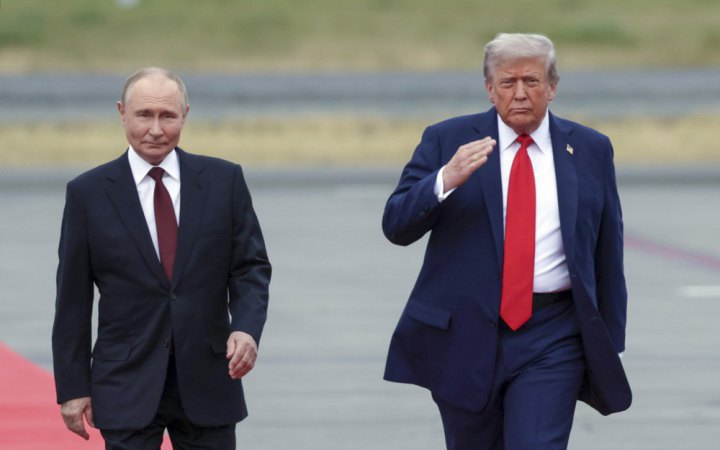
The administration of US President Donald Trump has “quietly” shelved proposals to use business deals as an incentive for Russia to end the war in Ukraine — after the Kremlin showed little interest in the proposed projects in the energy and aviation sectors.
The Financial Times reports, citing officials familiar with the change in tactics.
Jared Kushner, the US president’s son-in-law, and special envoy Steve Witkoff told European officials that corporate ties are no longer a key element of the US proposals to Russia.
The focus has now shifted to territorial and security issues.
In recent months, Kushner and Witkoff discussed ideas for the post-war period — including investment by US companies in Russian oil projects and titanium production, as well as restoring pipeline gas supplies to Europe. These proposals were seen as a financial incentive intended to persuade President Vladimir Putin to end the full-scale invasion of Ukraine.
Initially, Russian officials responded positively to the US proposals, seeing the promise of business deals as a way to keep Donald Trump engaged.
However, the Kremlin’s interest in these ideas later waned. According to sources, Moscow insists that Ukraine give up territory and make other concessions — unacceptable to Kyiv — in exchange for peace.
During the latest round of talks in Abu Dhabi, held in early November, Russian representatives showed almost no interest in business deals. Instead, they hardened their demands, making it clear to the American side that Putin is not ready for additional arrangements that could soften his position.
“It was absolutely clear that (the Russians) are not interested in things like that,” one official said.
At the same time, in response to an FT enquiry, one US official described the publication’s information as “inaccurate”. “We are organising our negotiating tracks and will announce them when we are ready; this (economic engagement with Moscow in the post-war period, — ed.) remains one of the elements,” he said.
- On Sunday evening, Kushner released a lengthy statement on the talks in which he no longer mentioned economic incentives for Russia as part of any peace deal, focusing instead on a possible post-war security architecture.
- Another official said the strategy involving economic arrangements has moved into the background, and the US has shifted to a “more traditional” approach to negotiations based on the principle of “land for peace”.
- Neither Putin nor other Russian officials mentioned discussions of potential economic co-operation with the US — either after the latest meetings with Trump in Shenzhen last week, or after Kushner and Witkoff’s visit to Moscow earlier this month.
- In September, a number of ideas were proposed — including involving major US oil companies in a plan to restore pipeline supplies of Russian crude oil to Europe, as well as granting US airlines access to Russian airspace for transit flights. These proposals were seen as an incentive to revive peace talks that have effectively stalled, aimed at ending Russia’s full-scale invasion of Ukraine.