Публикации автора
-
 Air-defence engagement statistics for September record 20 missile strikes (down 64% compared with August). Air-defence forces shot…
-
 Knowing how attack UAVs are prepared enables targeting not only drones and manufacturers, but also storage, preparation, and launch sites.
-
 The Iraqi armed forces had pre-prepared launch sites, mobile launchers on MAZ-543 chassis, and their own modifications of both the…
-
 At the start of the year, we forecast what the Russian missile-and-air strikes would look like throughout 2026. Its industrial…
-
 Western aid is crucial for Ukraine to maintain the combat readiness of its air defence forces.
-
 “Arkan”, “Katran” and “Murena”: what’s on the menu of Russian uncrewed surface vessels.
-
 The choice today is whether Ukraine becomes a defence technology hub, or remains a testing ground where innovations are proven…
-
 A swift defeat of the Iranian regime and a demonstration of Russia’s inability to aid yet another ally — following the collapse of…
-
 Russia is scaling its unmanned systems to the level of a separate branch of service — 165,000 personnel, new regiments in every…
-
 About the three groups of factors that have led Russia to defeat in wars over the past two hundred years.
-
 In 2026, the enemy will be able to launch air strikes with two to three hundred UAVs per night, deploy six to nine hundred in…
-
 Over the course of the full-scale war, the enemy fleet has lost 29% of its capability to conduct missile strikes against land…
-
 We recall last year's strike by an intercontinental medium-range ballistic missile on the Dnipro.
-
 The tactical advances demonstrated by the enemy are bad for the Defence Forces, which cannot stop the enemy and stabilise the situation.
-
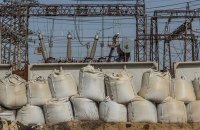 Thanks to the efforts of energy and heating companies, Ukraine got through the winter of 2024–2025 without any serious blackouts,…
-
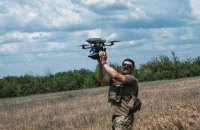 In the new world of war, where the sky above the tactical zone belongs to drones, victory is determined not only by strength, but…
-
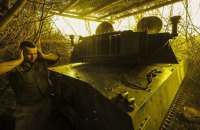 Velykyy Burluk lies at the center of a triangle (Vovchansk–Dvorichna–Milove), where enemy activity has intensified amid lingering…
-
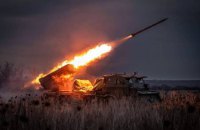 The Russian military command is making considerable efforts to build up its operational capabilities and continue the game for a long time.
-
 Three Russian armies are fighting for Pokrovsk, two for Kupyansk. And it's not working. Near Sumy, which is far from Pokrovsk,…
-
 Russia will try to achieve limited goals by the end of the year.