





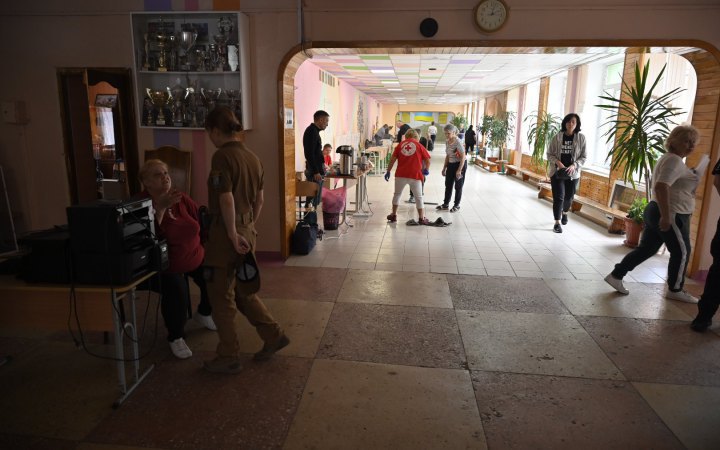
Kyiv is working through different formats for organising the learning process. From 1 September and throughout the first week of the school year, schools plan to begin teaching in a mixed in-person and remote format, but they must be ready to swiftly change their approach depending on the security situation. Deputy Head of the Kyiv City State Administration, Valentyn Mondryivskyy, said this on 31 August.
From 27 August, Russia stepped up drone attacks on Kyiv and the surrounding Region. Russian forces began launching small waves of drones almost continuously; there were sometimes more than 10 air-raid alerts in a day, and in some cases only minutes passed between the end of one and the start of the next.
“This year, the school year is starting in very difficult conditions. The last few days show that air-raid alerts can last for hours and effectively disrupt a significant part of the school day. For example, on 28 August in Kyiv, air-raid alerts lasted a total of 158 minutes. That is almost four lessons out of six on a normal timetable. So we must be ready not only for children to go down to shelters during an alert, but also for the learning process to be organised differently under certain conditions,” Mondryivskyi said.
For Kyiv, different options have been identified: from holding lessons in shelters for younger pupils to blended or remote learning. The possibility of operating a second shift is also being considered. Parents will be able to choose the format of learning available for their situation—within the models proposed by a particular school and its teaching staff.
“For instance, one model we are currently considering is organising in-person teaching in the shelter for primary school pupils, and a separate space where some children in lower and upper secondary school, if necessary, will be able to continue learning online during an alert. However, this is only one of the possible formats. Each school will determine the optimal model based on its capabilities, the specifics of its shelter, and the security situation,” explained Olena Fidanyan, Director of the Department of Education and Science.
She said parents are being asked to talk through with their children how they will act in the event of an alert, where they will be in the shelter, and what they will do if an alert begins on the way to school.