





In the foreword to Anatomy of Resistance to Empire you write that you began taking a systematic interest in Ukrainian literature and writing about it primarily out of a desire to do something for Ukraine after Russia’s full-scale invasion. Did that approach affect the way you read?
Previously I read Serhiy Zhadan and Yuriy Andrukhovych purely out of a reader’s curiosity and an interest in literature in general. I admit that I did not react properly even to the annexation of Crimea and the invasion of Donbas. These horrific events did not receive adequate coverage in Germany and remained outside the attention of the wider public. So it was precisely Russia’s full-scale invasion of Ukraine that prompted me to undertake deeper research.
In fact, my very first motivation was that I read Putin’s speeches and his texts and, to my great surprise, saw that the Serbs had once used the same arguments — first against Croatia and then against Bosnia and Herzegovina. That is, that the Croatian language does not exist, the Bosnian language does not exist, the Bosnian nation does not exist, and that Bosnian Muslims are Serbs who converted to Islam three hundred years ago and now must return to the bosom of Serbian culture and statehood; those who do not want to can go to Turkey or further into the beyond, because this is Serbian land, and so on. It is a very, very similar line of argument, stemming from false interpretations of history. So in a way it awakened my personal trauma.
What could I do? I’m not a soldier. I couldn’t go to war against Russia. And the only thing I could do was read Ukrainian literature, study Ukrainian culture and history, reflect on this land, and use that knowledge as a literary critic: to write and publish something for a wider audience.
And how did that idea turn into regular work with Ukrainian literature?
My friend Miljenko Jergović has been running the website Eiffel Bridge for more than ten years, named after the legendary bridge in Sarajevo. It publishes a variety of fiction as well as texts about literature and culture. He agreed that I would write there regularly about Ukrainian and Belarusian literature. I published more than 70 texts there, and I believe this helped popularise Ukrainian literature in Serbia, Croatia, Bosnia — everywhere people read varieties of the so-called “Serbo-Croatian language”.
In the foreword to your book you talk a lot about the multilingualism of Ukrainian literature. A literary canon can be formed not only on a linguistic principle, but also on a historical or territorial one. Since 2022, many things have been changing in Ukraine, including when writers choose the language they write in or the language in which they publish their work. As an outside observer, do you still consider the idea of a multilingual Ukraine relevant?
Since the beginning of the 20th century, comparative literary studies have been moving away from the older practice of comparing national literatures towards the concept of a so-called “entangled history of literature”. This is an approach in which a single national literature can encompass texts written in different languages. Because the 20th and 21st centuries are closely linked to postcolonial and post-imperial movements: that is, people change their environment and their countries of residence. But moving, for example, from India to the United Kingdom or the United States means taking a part of one’s own culture with you — and for a long time. The question of exile is one such issue. In this sense, Ukrainian culture is, in essence, post-imperial, and also a culture of exile.
You mentioned Russian as an additional language of Ukrainian literature, but there is also Ukrainian literature in German — such as the works of Katja Petrowskaja, Lana Lux or Natascha Wodin; in English — the brilliant poetry of Ilya Kaminskyy from Odesa; and so on. What should we do with such writers? Place them within the structure of the language in which they began writing in emigration. But Ukraine is inescapable in their writing.
Resistance to the Russian language is understandable. But one can also understand authors such as Andrey Kurkov: a Ukrainian patriot who himself says he can write and think only in Russian. Integrating his work into Ukrainian literature is an example of that same “entangled literature” or even an “entangled culture”.
You read Ukrainian literature in German, Serbian and Croatian translations. In your view, how much does literary translation now influence the way Europe sees Ukraine?
Germany, where I am fortunate to live, is a world leader in the translation market. The culture of translation here is far more developed than in the Anglosphere. So from the beginning of Ukraine’s independence there was a small circle of strong translators, such as Claudia Dathe, who worked persistently in this direction and made the process systematic rather than random. The year 2022 became pivotal in terms of an even more systematic presentation of Ukrainian literature in the German-speaking world.
A translation series of classic Ukrainian literature of the 19th–20th centuries is now being published by Wallstein, edited by Claudia Dathe and Tanja Maljartschuk: Lesya Ukrayinka, Mykhaylo Semenko, an anthology of Ukrainian short stories, and Olha Kobylyanska’s The Princess is forthcoming.
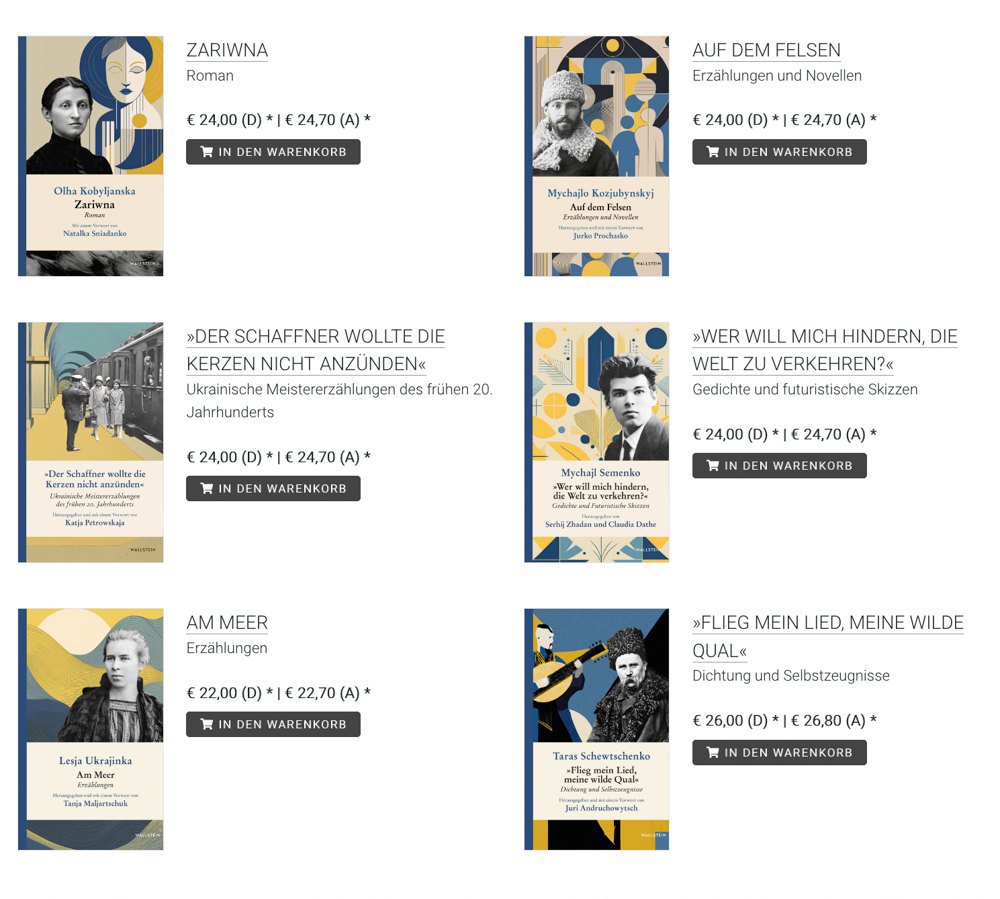
Using this series as an example, we see Ukrainian literature’s constant resistance to the dominance of the Russian language and culture, as well as periods of flourishing when cultural policy was oriented towards supporting the Ukrainian language rather than Russian — as in the 1920s or in Khrushchev’s time. This wave-like progress produced a huge number of Ukrainian-language texts, among them very high-quality ones. After independence, this repeated itself. Now is the longest period of free development for Ukrainian literature. Of course, not everything is represented in translation; many authors are lost along the way.
At one time, I was struck by the incredible global popularity of The Master and Margarita by Mikhail Bulgakov — a writer from Kyiv whose figure and legacy are now the subject of heated debate in Ukraine. What is the reception of his works in contemporary Croatia?
In Yugoslavia, Bulgakov was very popular. The first, abridged translation of The Master and Margarita came out back in the 1970s, at a time when even that version of the text was banned in the USSR. Later, Vida Flaker — the wife of the outstanding Slavicist Aleksandar Flaker — translated the full version of the novel. From those days, my library still contains an eight-volume set of Bulgakov in Serbian. As a student I saw an incredibly popular staging of Heart of a Dog in Belgrade.
So Bulgakov was always present, but we never thought of him as a Russian, Ukrainian or anti-Ukrainian author. Reading The White Guard, I did not realise that Ukrainians there are negative characters; so now I had to reread it — and then I thought: “That’s true, but what can you do? He is a great writer.” Bulgakov is indeed an outstanding author, and in my view the mistake of Ukraine’s nationally conscious culture is to exclude Bulgakov from Ukrainian literature. It is more important to integrate Bulgakov and read him critically, but as part of the corpus of Ukrainian literature.
So this is not only about Bulgakov, but about revisiting the very principle by which we define the boundaries of Ukrainian literature?
This is not my specialist research area, but just yesterday we met with Professor Annette Werberger and talked about contemporary Ukraine against the backdrop of the presence of Ukrainian culture in Germany — something we are trying to work on. In her view, we should write and promote an “open-ended” history of Ukrainian literature — and that Ukrainian culture simply must not exclude authors who were born here but lived and worked in Moscow or elsewhere, without losing their connection to Ukraine. Not only Russian-language authors, but also, for example, Sholem Aleichem, who wrote in Yiddish: for her, he is also part of Ukrainian literature. That is the “opening-up”, and it begins not in the 1990s but with the avant-garde or even the 19th century. Like Bulgakov, we should not leave Babel exclusively within the field of Russian literary studies either; and so on.
Croatia, like Ukraine, has wartime experience. Soon Ukraine, like Croatia, will have post-war experience. Where might there be common ground?
A political comparison might be, for example, this: Croatia’s problem was that crimes against the Serbian population were committed by locals themselves. Of course, this is denied, but in truth it must be acknowledged. Are there war crimes committed by Ukrainians themselves against Russians or the Russian-speaking population? Undoubtedly, there are such cases too. Crimes are committed by the good side as well. Will Ukraine be able to cope? This is still difficult even in relation to the Second World War.
And if we speak specifically about cultural parallels?
As for culture, yes, there is Croatian literature in foreign languages, just as there is literature created in exile. This is linked to the growth of emigration after 1998, and also after Croatia joined the European Union. Since the days of the former Yugoslavia, the population has decreased by 20%, mainly due to migration to Western Europe. And this is also Ukraine’s problem. It is a brain drain, a drain of lifeblood. But I am not a politician or a political scientist. I am simply stating it as a fact.
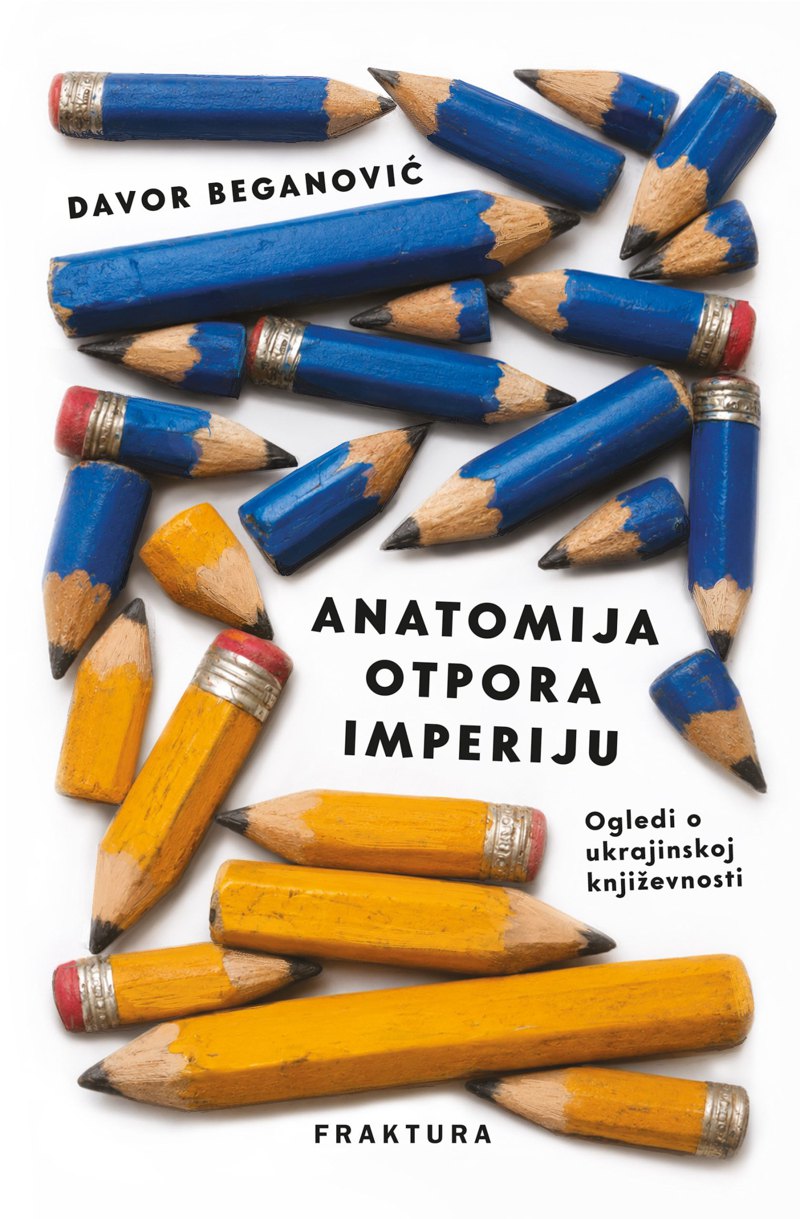
In your book you describe literature as a formative factor of identity — and as something that can defend that identity. In your view, does literature still have that power in Europe?
For our generation — unquestionably, yes. As for younger people, I am not entirely sure they read at all. Literature remains extremely important. So efforts continue to use literature to shape national identity: that is, to shape a nation as one would like to see it. This is relevant for totalitarian and authoritarian communities as well as for democratic and liberal ones.
In contemporary Ukrainian literature, which I read all the time, this is also noticeable. There is a desire to address difficult topics. The Holodomor. Emigration. Complex relations with Russia and Russians. Crimea. Good literature does not engage in propaganda, but at the same time it describes contemporary Ukraine and its history without bombast. It does not have to be grandiloquent. These are fairly objective attempts to integrate vulnerable and difficult moments of history into a certain narrative.
For example, Amadoka by Sofiya Andrukhovych: a very complex book that is hard to read without sufficient knowledge of Ukrainian history — but it is possible. But knowledge of the Executed Renaissance, the UPA, alongside the theme of the current war since 2014, is an ideal way to trace a certain line through Ukraine’s entire tragic, violence-filled history. Sofiya Andrukhovych handled this brilliantly. In this very substantial novel, the story is told by a subjective narrator, and that is the best way to protect Ukrainian history from distortions or false interpretations.
Or Serhiy Zhadan, who talks about Donbas ironically, even satirically; he shows that Ukraine is not Russia, but does not say it outright; nevertheless, readers understand the point. Moscoviada by Yuriy Andrukhovych is an incredible book about relations between Ukrainians and Russians. Gogol is fantastic. You can apply this to Bulgakov too: realism, satire, deep knowledge of history and the constant embedding of Ukrainian literature in the Central European tradition.
Literature is capable of shaping Ukrainian identity as a multi-layered mix of history and religion. Because the history of religion in Ukraine is also very fascinating and should be covered in monographs, in literature and cinema, and so on.
So yes, I still consider literature decisive for the formation of cultural identity — at least, the cultural identity of a nation.