





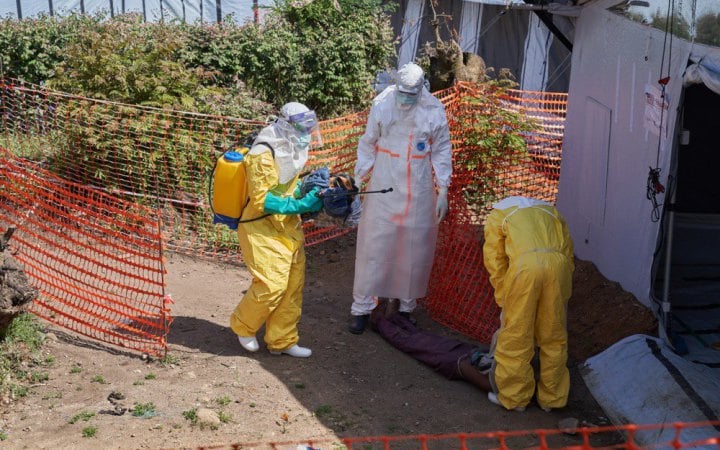
In the Democratic Republic of the Congo, the number of recorded cases of Ebola fever has reached 7,022, with 3,398 deaths. At present, 837 patients are in isolation or receiving treatment.
This is reported by Al Jazeera, citing government data.
This week, Ebola cases were confirmed in the country’s seventh province — South Ubangi in north-western DR Congo, which borders the Central African Republic and the Republic of the Congo.
The highest number of cases is being recorded in Ituri Province. After schooling resumed, the disease was detected, among other places, in schools. Sanitary measures were tightened there, and class sizes were limited to 30 pupils.
This is the 17th Ebola epidemic in DR Congo. The outbreak began in Ituri and later spread to remote eastern and northern parts of the country, where armed groups have operated for decades.
The current outbreak, the largest in DR Congo’s history, was identified in mid-May. At the same time, experts suggest the virus may have been spreading for several weeks before it was officially detected.
The outbreak is caused by the rare Bundibugyo virus. There are currently no approved vaccines or medicines against this strain, and potential treatments are undergoing trials.
Ebola is transmitted through contact with the bodily fluids of an infected person and can cause severe bleeding and organ failure. Over the past 50 years, the disease has claimed more than 15,000 lives in Africa. The largest outbreak occurred in West Africa in 2014–2016 — more than 11,325 people died.
The New Ebola Outbreak Differs From Previous Ones
- Earlier, DR Congo officials said the virus behind the major outbreak could mutate.
- This Ebola outbreak differs from most previous ones because there are no approved vaccines or treatments for the rare Bundibugyo virus that caused it. Clinical trials for them began in Ituri — the epicentre of the outbreak.
- The WHO believes the outbreak likely began in February, long before authorities detected it in one of Congo’s most remote and vulnerable areas. Some early-stage cases were mistakenly linked to malaria and typhoid.