




The number of ships sailing under the Russian flag has risen by 36% — from the start of January 2025 to 382 vessels by the end of June 2026 — as Moscow steps up efforts to keep oil and gas exports flowing despite Western sanctions.
The Financial Times reports this, citing analysis by the Centre for Research on Energy and Clean Air (CREA).
The trend comes as Europe and the United States have tightened scrutiny of stateless vessels, stepping up efforts to cut Russia’s revenues from fossil-fuel exports.
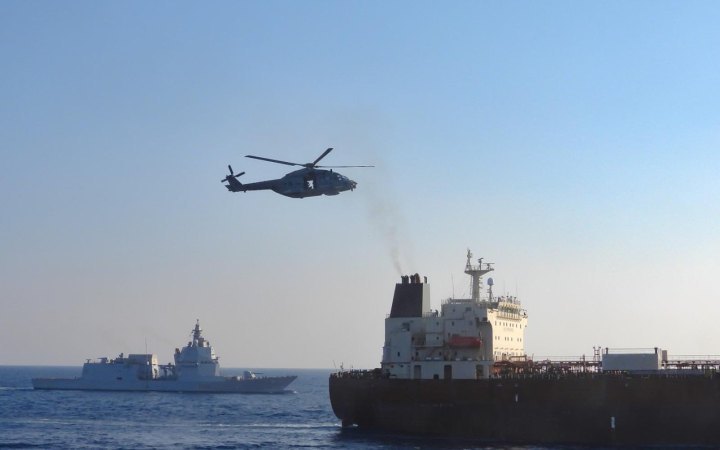
More than 80% of vessels that joined the Russian register since the start of 2025 were already under sanctions, and a significant share of the new arrivals are oil tankers and other export vessels. At the same time, the number of ships sailing under so-called “false” flags fell from 101 in October 2025 to 45 by the end of June 2026. This comes amid an intensified US and European crackdown on stateless vessels: since December 2024, at least 23 shadow-fleet ships using “false” flags have been detained.
According to analysts, Russia’s flag register has become a “safe haven” for sanctioned vessels, moving in only one direction: for every ship that leaves, roughly nine new ones join.
All vessels must sail under a national flag and therefore fall under the maritime rules and regulations of the relevant country. Ship registers are not always state bodies — they can also be run by private organisations certified by the state.
For example, the Marshall Islands flag register, one of the largest in the world, is based in Virginia and is managed by International Registries Inc., which previously also ran the Liberian register.
Shadow-fleet tankers are characterised by opaque ownership structures and a refusal to use Western services, including insurance. Such secrecy makes it difficult to identify who profits from these vessels’ operations.
Many sanctioned tankers describe themselves as sailing under “false” flags, using the flags of countries that do not have their own ship registers, such as Syria or Myanmar. Another common shadow-fleet practice is rapidly switching flags to evade scrutiny.
Strong pressure from US and European sanctions authorities on the states whose flags the vessels use has forced several countries to “de-flag” ships, leaving them stateless and therefore open to detention.
Cameroon removed more than 30 vessels from its register, enabling the UK in June to board the sanctioned tanker Smyrtos.
In response, Moscow is encouraging sanctioned tankers carrying Russian oil to switch to the Russian flag: in June, a presidential decree simplified the registration procedure for such vessels. This also allows them to claim Russia’s protection, although in recent months the pace of additions to the Russian register has slowed.
At the same time, more than 50 vessels registered under the flag of Equatorial Guinea after the country resumed operations of its ship register this year; all of them hold certificates from the Russian Maritime Register of Shipping, which may indicate they are being used to carry Russian cargoes.
Windward analyst Michelle Wiese Bockmann noted that after the explosion of the sanctioned tanker Caroline Bezengi off the coast of Oman — which was insured by a Russian insurance company — Russia likely recognised the advantages of distancing itself from the shadow fleet. In her view, being “one step removed” from such a vessel allows Moscow to deny direct involvement in its ownership and management.
- It was recently reported that the Unmanned Systems Forces of the Armed Forces of Ukraine, as part of Operation “MoLoChKa”, hit 285 Russian shadow-fleet vessels in the Sea of Azov and the Black Sea over ten weeks.