





In the final two years of his presidential term, Donald Trump could lose ground at home in the United States as his approval ratings fall, and could also lose control of Congress. In those circumstances, the president would focus on foreign policy. The Guardian writes about this.
The article notes that US presidents towards the end of their terms have sought to achieve major foreign-policy results. George H W Bush sent US troops to Somalia to provide assistance during famine, Bill Clinton tried to secure peace in the Middle East, and Barack Obama restored diplomatic relations with Cuba and succeeded in concluding a nuclear deal with Iran.
Read also“Two years of chaos, cruelty and corruption”: Obama criticised Trump’s presidency ahead of the US midterm elections
In Trump’s case, the final two years of his presidency could have different consequences. It is likely that after the midterm elections the United States could resume a military campaign against Iran, while the Trump administration’s stance on Ukraine and Russia could weaken Europe’s security.
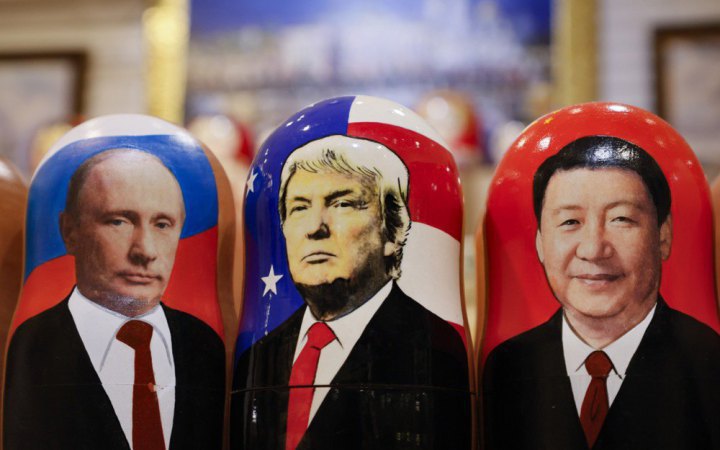
The Guardian draws attention to a possible meeting between Donald Trump, Vladimir Putin and China’s leader Xi Jinping, which was proposed by the Russian dictator himself. A potential summit of the three leaders could take place in China next month.
Such a meeting could be a step towards shaping a world order based on dividing spheres of influence among the great powers, The Guardian notes.
“One summit will not turn the idea into reality, but it will set us on a very dangerous path,” the article says.
If the United States withdraws support from countries threatened by Russia, the consequences would be felt not only by Ukraine but also by other European states. A US retreat from security guarantees in East Asia, the author argues, would also create serious problems for Taiwan, South Korea, Japan and Australia.
The Trump administration’s national security strategy criticised America’s traditional allies in Europe and East Asia, while containing no direct criticism of Russia and China in certain key sections. The document also stressed that the United States should focus on the actions of other countries primarily when they directly threaten American interests.
This position aligns with Putin’s interests, as he has long opposed US support for democracy in Eastern Europe and Central Asia. China, for its part, could take advantage of a weakening of the American role in East Asia.
At the same time, the article says that a potential summit would not necessarily lead to a lasting alliance among the three countries. Trump’s foreign policy is controversial even among his supporters, and a future US administration could choose a different course.
Even if the planned summit does not mark the beginning of a new world order, the meeting itself could symbolise the weakening of the established system of international relations and the start of a new, uncertain period.