





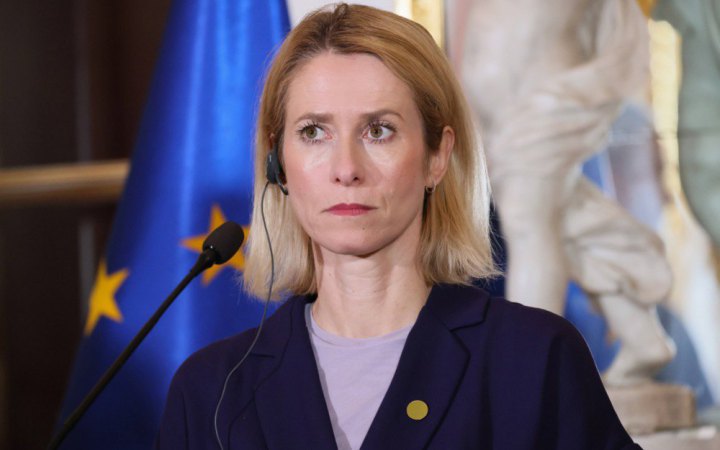
EU High Representative for Foreign Affairs Kaja Kallas has warned the European Union against accepting the sequence of talks on Ukraine proposed by Russia, The Guardian reports.
She said this would allow Moscow to “distract attention” from its own actions and, ultimately, put Europe in a “worse position”.
She welcomed the fact that the US side has finally acknowledged that “for any agreement between Russia and Ukraine… Europeans are also needed”. “I hope we will not just be sitting at the negotiating table, but will genuinely influence the outcome,” Kallas said on the sidelines of an informal EU leaders’ summit.
She noted that the most important thing is to stick to our agreement: first a ceasefire, then a peace deal, and only then any other talks.
“If Russia is putting forward its maximal demands, then we must also maintain the toughest possible stance and begin negotiations from that position…,” the diplomat said.
Kallas warned of the risk that Europeans could “fall into the traps Russia sets”, as Moscow is trying to “distract attention from the fact that there is no ceasefire and, in effect, force us to listen to its grievances”.
“If we fall into that trap and start discussing… the architecture of European security, then I think our position will not improve. On the contrary, it will get worse. Let’s focus on what is really happening. We have an aggressor and a victim. The aggressor has no security problems, because no one has ever attacked it. It attacked others. So please, don’t lose focus, people,” she continued.
Read alsoKallas: Russia Is Not Ready for Good-Faith Negotiations
Kallas also said that she wants to be part of the EU negotiating team, noting that she was appointed to represent Europe on foreign and security policy.
“I know the Russians don’t want to see me, but do we have a say in who represents Russia? No, we don’t,” Kallas stressed.
She also noted that, ultimately, she would not be representing “herself”, but would act within the mandate given to her by the EU’s 27 member states. “You know, we have established institutions, so we can’t just send any person who has no institutional role — as the Americans do. Clearly, we shouldn’t copy such approaches,” the EU High Representative remarked.
Asked why she thinks the Russians do not want to see her taking part in the talks, she said: “They don’t want to see a strong figure on the other side, because they want to get their maximal demands met — as they always have. Their tactics are quite clear: first come threats and ultimatums, force is used, and then they simply wait. Because in the West there will always be people who propose something that wasn’t on the table before. And each time, appetites grow. So, of course, when negotiating, you want the other side to be as weak as possible — then it’s easier to get what you want.”
- On 10–11 November, the first talks since February took place in Abu Dhabi between Ukraine, Russia and the United States. After that, US negotiators Steve Witkoff and Jared Kushner travelled to Russia to speak with Putin.
- On 12 November, they flew from Russia to Ireland for a meeting with the Ukrainian president. The talks produced three outcomes: an agreement on a major exchange, an agreement on Europe’s participation in the talks, and an agreement on the next round of negotiations.
- US representative Jared Kushner spoke of notable progress in diplomatic efforts to end the Russia–Ukraine war. He said the next round of talks is planned to be expanded to include European partners.
- The US side believes that reliable security guarantees, conflict-prevention mechanisms and mutual de-escalation commitments are needed for a lasting cessation of hostilities.
- Kushner assured that broader agreements on European security would not be adopted without taking Ukraine’s security interests into account. At the same time, discussions of interconnected issues of security and territory will take place in parallel. With the exception of humanitarian arrangements, no final decisions will be taken until an agreement is reached.
- Kushner added that the formats for the talks, the timetable and additional details are expected to be announced in the near future