





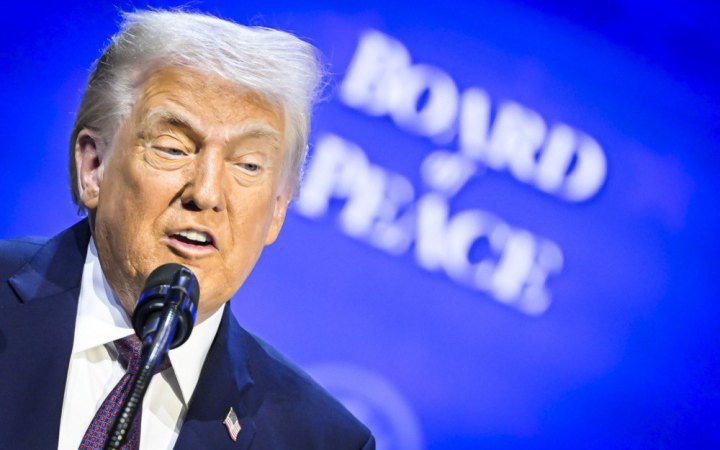
The administration of US President Donald Trump plans to present new proposals to raise tariffs on the European Union, China, Mexico, Japan and 12 other trading partners.
The move is intended to revive the president’s global tariffs, which the US Supreme Court struck down in February, Politico reports.
US Trade Representative Jamieson Greer is expected to announce the new tariffs in a report on excess production capacity in those countries. His office launched the investigation in March under Section 301 of the Trade Act of 1974, which allows tariffs to be imposed in response to unfair trade practices.
The new tariffs will take into account the ceiling rates that countries have agreed with the Trump administration over the past year in exchange for trade concessions and large-scale investment in US industry. For example, the overall rate for China will not exceed 20%, while the rate for the EU will remain below the 15% threshold that Trump agreed with European Commission President Ursula von der Leyen in Scotland last year.
Countries affected by the measures will still be able to state their position during hearings, public consultations and closed-door negotiations before the tariffs are finalised. The new tariffs are expected to include a number of exemptions, and in future they could be reduced if countries take steps to curb excess production. However, the very threat of new tariffs risks angering foreign allies who are already unhappy with Trump’s policies.
In a March statement, Greer’s office noted that countries such as China are aggressively expanding production in strategic sectors beyond market demand and, together with partners such as the EU, are sustaining a global surplus of goods.
Raising tariffs could complicate US relations with the world’s largest economies amid a fragile trade truce with China, which expires in January, and ahead of a meeting between Trump and Chinese leader Xi Jinping at next month’s G20 summit. In addition, this is happening during tense talks with Mexico on extending the trilateral trade agreement between the United States, Mexico and Canada.
As with Trump’s previous tariff decisions after his defeat in the Supreme Court, the new tariffs are likely to be challenged in court. The legality of tariffs imposed over forced labour is already being considered by the US Court of International Trade.
- In May, the US Court of International Trade ruled that the White House had unlawfully imposed a 10% duty on all goods imported into the United States.
- Before that, in February, the US Supreme Court issued a landmark ruling, finding unlawful the sweeping import tariffs that Trump had imposed unilaterally.