






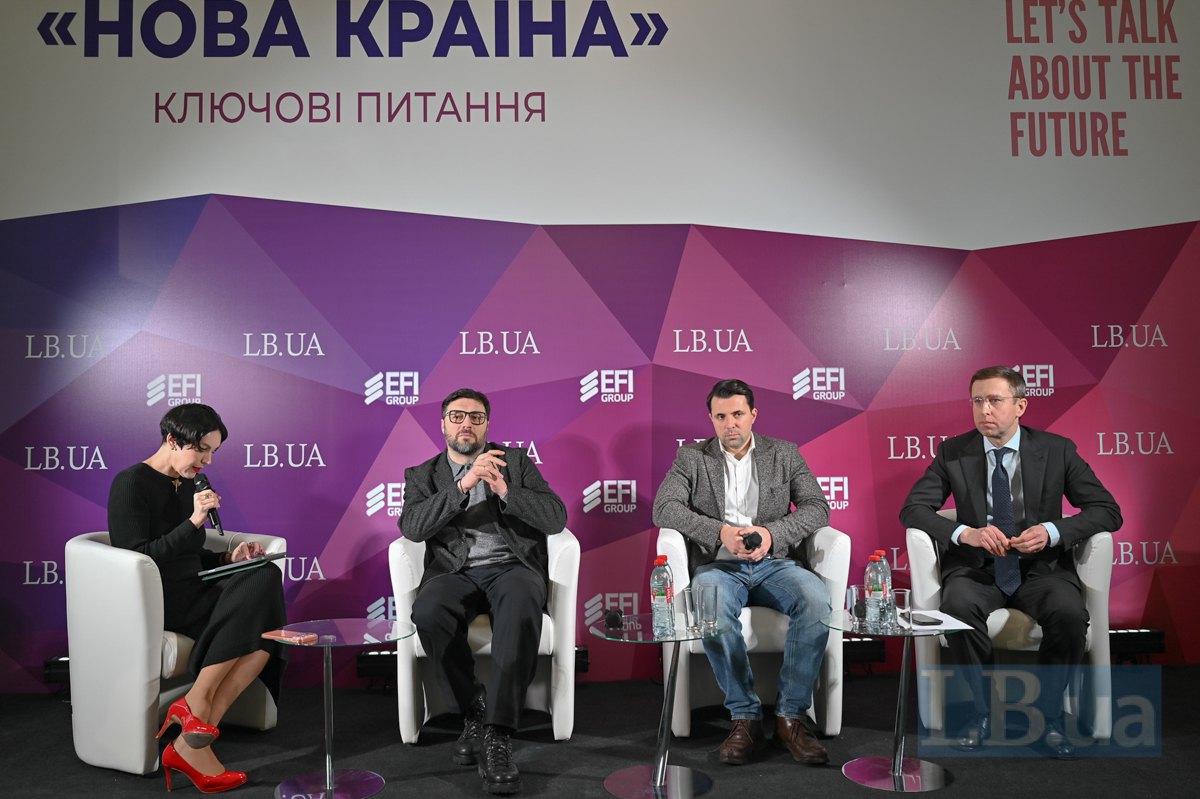
‘The schedules are not for power cuts, but for power connections, because there is more darkness than light.’
Only nine days after the previous serious attack, Kyiv was able to return to scheduled power cuts. And again, the cold weather is coming. What does this mean for us and how much protection will it provide, given the repairs that have already been carried out?
Serhiy Kovalenko: Kyiv has returned to at least some kind of planning. Of course, these are not the schedules we are used to. It's a difficult situation, because since 9 January, the city has been living in uncertainty. And, of course, it is difficult for customers, primarily the population, but also businesses, to plan their lives. Therefore, the Ukrenergo team and the network team as a whole came up with a solution, which we call ‘connection schedules,’ because in terms of the generation deficit in the city of Kyiv, it is impossible to call them ‘disconnection schedules,’ because there is more light out than there is on.
Well, these schedules are quite strict, because when the temperature drops, the deficit increases. Over the past four years, everyone has learned that the lower the temperature, the higher the consumption. In addition, the situation is very bad in certain areas of Kyiv — part of the Left Bank, Troyeshchyna, and the Desnyanskyy district. This is because there is a problem with heating there, and people, for obvious reasons, turn to electrical outlets, the load begins to grow, cables burn, transformer substations burn — the circle closes.
Well, and if you look at the big picture, the shelling continues: Dnipro, Odesa, Sumy, Chernihiv... If we look at the entire energy system, the shelling continues all the time, and of course, this does not add stability. That is, the situation is quite specific; I would call it difficult.

“Some oil and gas equipment simply cannot be protected.”
When we talk about protection, we usually mean the power sector. But have similar protective structures been built for gas production facilities, compressor stations and gas storage infrastructure? And how physically protected is Naftogaz’s critical infrastructure today?
Serhiy Koretskyy: I won’t go into details, of course, because this is confidential. But large compressor stations or oil and gas processing equipment — purification, treatment, separation — are either impossible to protect or, in some cases, extremely difficult to shield. There is physical protection of the first level, and first-plus level. There is electronic warfare. We do a lot jointly with the military on active protection and provide substantial support. But I cannot say that this protection is 100% effective. Unfortunately, it isn’t. It is a combined effort — passive and active protection, electronic warfare, and other measures.
Since the start of the full-scale war, thousands of missiles and drones — with a particular intensity last year, including two massive waves of attacks in February and October — have caused significant damage to domestic gas production. Substantial losses have been compensated by imports: huge volumes — 5.7 billion cubic metres of gas — were imported last year. We continue importing now to maintain a stable, synchronised supply schedule and have significantly diversified gas supply routes. Because the task is simple: to survive, to hold on, and to ensure people have heat, gas, and gas for electricity generation.
Under what conditions could gas supply schedules similar to electricity blackout schedules be introduced? How bad would the situation have to get?
Serhiy Koretskyy: Making forecasts is a thankless task. But what you’re describing now sounds like an apocalyptic scenario.
“What’s happening with electricity now was also considered apocalyptic not so long ago.”
Until recently, people hadn’t felt any gas shutdowns or interruptions. What has kept the system running is routine, day-to-day, diligent work by a workforce of over a hundred thousand people together with the government — securing funds for imports, ensuring protection, and carrying out restoration. This process is long, difficult and capital-intensive, but step by step, in the end result, we have managed to ensure uninterrupted supply — without schedules, without shutdowns. We will do everything to keep it that way.
“The energy system is under severe constraints, but it is under control.”
Volodymyr, not long ago you spoke behind closed doors with MPs, and they left that meeting, to put it mildly, rather depressed.
What can you say publicly now? In January, the deficit — to understand the scale of destruction — reached 7–8 GW. How long will it take to fully recover, and what is needed for that?
Volodymyr Kudrytskyy: I don’t believe we are in a situation with no way out, or that some catastrophe or collapse awaits us. On the contrary: the most difficult winter for the system — not for individual households without power for 15 hours or heating for three days, but for the system as a whole — was in 2022. That was far more frightening. It was the only time Ukraine’s power system went into a full blackout. All nuclear power plants shut down, and electricity generation almost stopped entirely.
Back then, Ukrenergo’s dispatchers restored the system within 13 hours. And most importantly, such situations have not been allowed to happen since. Even with an extremely acute deficit — when demand would ideally be 18,000 MW and only 11,000 MW are available — the system remains under control. Under very tight constraints, with enormous discomfort for households and businesses, but under control. The enemy has failed to shut it down for weeks or cause a collapse that would affect the front. They have failed, they are failing, and I am confident they will continue to fail. That’s the first point — to move from a tragic mood to a realistic one.
Ukraine’s energy system currently relies on 15–17 power plants, which produce over 85% of all electricity. It’s obvious that, with the production of dozens of missiles per month and thousands of Shaheds, and focusing strikes on such a small number of facilities, Russia can damage them. They don’t attack the nuclear power plants directly, but they target the “Ukrenergo” substations that distribute power from these nuclear stations. In effect, this increases their task from hitting three nuclear plants to roughly 12–15 substations—but altogether, they systematically attack about 20–25 key facilities. That’s why we have this deficit.
The President stated: we produce 11,000 MW, but in the evenings, consumption reaches 18,000 MW. What does this deficit mean? Simply put, of those 11,000 MW, a few thousand are used by critical infrastructure, and there are losses in the network. This is important to understand: it’s a physical reality—electricity doesn’t fully reach the end user. Some of it is lost as heat while traveling through the wires, roughly 20% of the energy never arrives. The electricity that “Ukrenergo” and local grids actually manage is a very small portion, which, after losses and meeting critical needs, can be distributed among industrial consumers and households. So, for ordinary users, a 7 GW deficit out of 18 GW can mean up to 15 hours without electricity in a 24-hour period—because the relationship isn’t linear.
What should we expect? The situation will remain the same while the cold lasts. The enemy will exploit the frost to attack the energy system—this is their “golden time” because consumption is at its peak. The impact of these attacks is huge, primarily on households, and they will try to make the most of it.
By March, when temperatures rise and we pass zero degrees, evening consumption will drop from roughly 18,000 MW to 14–15,000 MW. An important factor is that solar power plants, which are now almost idle, will start operating. These solar stations will help relieve the load on hydropower during the day, allowing water to be stored and then released in the evenings to cover peak demand. In other words, at least a few more groups of consumers will remain unaffected.
If Russia has the resources to maintain the current intensity of attacks, we will probably still have rolling outages even in warmer weather, but the schedules won’t be as severe—they’ll be more moderate.
If Russia concludes that the effectiveness of these strikes doesn’t match the resources they expend—considering they spend up to a trillion rubles per year on the Shahed program alone, about 3% of their budget—they may reduce attacks due to lower efficiency than in winter.
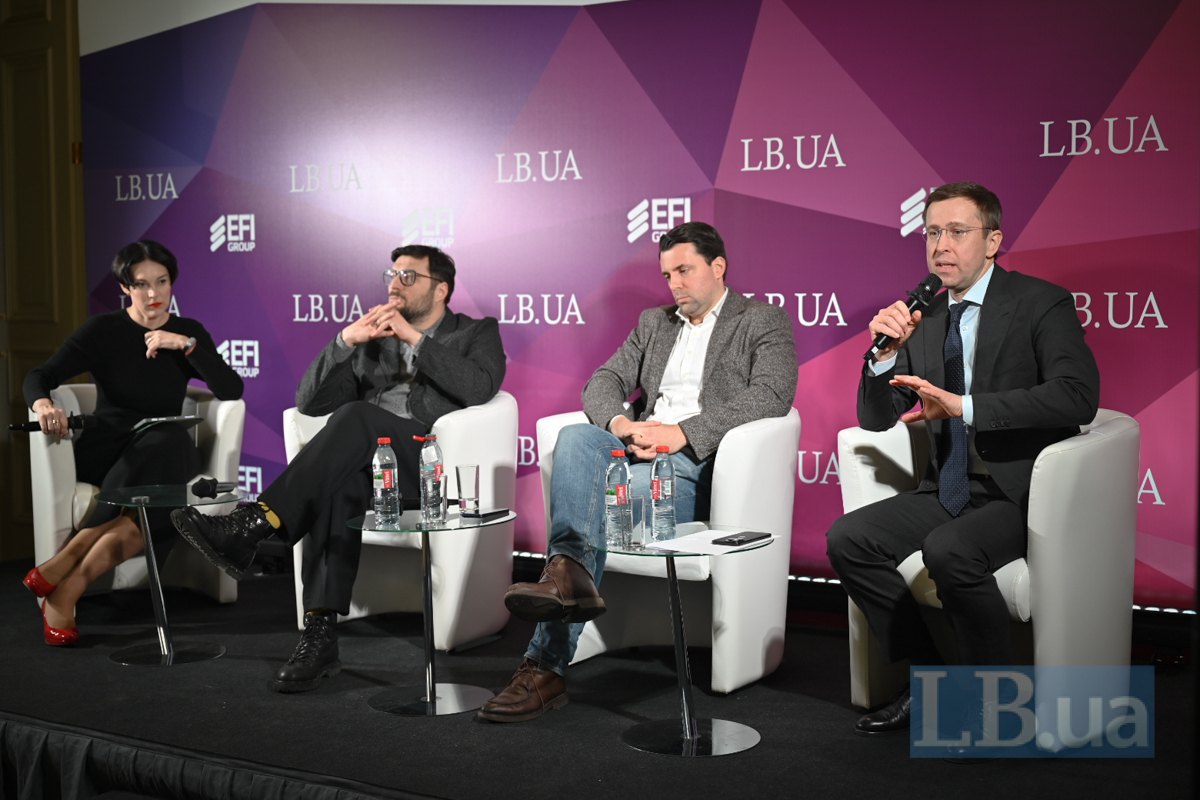
Volodymyr mentioned the total blackout of 2022, but the government only initiated the construction of physical protection at the transformer substations of the regional power companies in the autumn of 2025. Why? And did they manage to build and protect anything at all?
Volodymyr Kudrytskyy: This is one of my favourite questions. I sometimes answer it even when I am not asked. It was a mistake. A management mistake. In the summer of 2023, Ukrenergo and the Agency for Reconstruction were instructed to build protection at Ukrenergo substations. Protecting transformers is the most valuable and important element of the electrical infrastructure, which is the primary target for shaheds because shaheds are the most widespread weapon. With the 50 missiles that the Russians are using to attack the power system, they cannot currently destroy enough transformers for us to really feel the problems. To do this, they use shaheds.
The same transformers are found in power plants: nuclear, thermal, coal-fired, the Kyiv and Kharkiv thermal power plants, hydroelectric power plants, and many regional power substations, which are smaller in scale but also have transformers with a similar function. Why, then, has the protection of other, let's say, energy facilities not begun? This is a mistake. A mistake.
It only began at the end of 2025, and I, having no access to classified information, can say with complete confidence, as someone who oversaw the construction of about 65 such shelters during my tenure at Ukrenergo, that nothing has been built. Why?
Because the rollout, or construction cycle, for such shelters is six months at best and up to a year if you have an operating facility, cramped conditions, you can't shut anything down, difficult soil conditions, and so on. So this will really help us next winter. This also needs to be understood.
If this programme is implemented, the Russians will have to find a more complex way to attack our facilities, including power plants, because they will no longer be able to simply fly in and destroy Tripolka with shaheds.
Serhiy, what facilities can Naftogaz actually protect?
Serhiy Koretskyy: A transformer is a more understandable device. What is gas infrastructure? There is a part of underground pipelines. If we are talking about ground infrastructure, it is 9, 14, 22 m of equipment that requires continuous air intake, continuous, meaning it cannot be closed in some kind of shelter. And then there are high-temperature exhaust gases, which are 650° Celsius. How can you cover it? I won't even mention the height. From the point of view of a technologically uninterrupted process, it is impossible to cover something that emits 650°.
Therefore, there is combined work that is actively being carried out. Once again, I say: the first level, the first level+ — we make pre-detection screens. This gives us a chance. It does not protect, but it gives us a certain chance against, at least, shaheds. It is quite difficult to protect against ballistics and missiles. Electronic warfare works, but it is constantly changing and being improved by the enemy as well. There were 8-channel and 16-channel systems, and now, I'm sure everyone has heard about ‘Starlink’ on shaheds. Accordingly, this is a completely different kind of radar warfare, with different means. It is a constant arms race. Only now, during the war, have we realised that this matters. Technology is advancing significantly, and unfortunately, the enemy cannot be underestimated; it is modernising. We must simply respond adequately and quickly, which, in principle, we are doing step by step.
According to the Ministry of Economy, Ukraine is short of approximately $100 million for gas imports. What resources can be used to cover this amount? Could it be the internal resources of Naftogaz?
Serhiy Koretskyy: If you saw, the Minister of Economy later clarified this statement: $100 million is a small remainder of the €1.9 billion that was needed during the heating season, when Russian terrorists significantly disrupted our gas production and gas storage in October and November.
This is in addition to the 5.7 billion cubic metres that we pumped in, thanks to our partners and the government, because there was an injection from the Reserve Fund as compensation for market prices (market prices are much higher than those at which Naftogaz supplies gas to the population). So, through the joint efforts of the EBRD, the European Investment Bank, Ukrainian state banks, and the Norwegian government, which provides grants, all these efforts together covered almost $3 billion in preparation for the heating season. Then, after the destruction in October-November, there was an additional need to get through the heating season without interruption. So, 1.8 billion was covered one way or another, leaving 100 million. This is already a minor problem.
Why do we hardly use the Southern Corridor for gas imports — the ports of Moldova, Greece?...
Serhiy Koretskyy: Why don't we use it? We do use it. We will soon bring in a new ship of American LNG, which we will be happy to announce.
I said ‘hardly’ — not to the full extent.
Diversification has taken place across all channels. Thanks to our partners, certain capacities have even been increased. Accordingly, all four channels are now in use to a greater or lesser extent. It's just that their priorities have shifted over time.
"52% of Kyiv residents have not reduced their electricity consumption. About 26% have installed eco-flows, batteries, or something else."
At the end of last year, Prime Minister Yuliya Svyrydenko ordered a review of the lists of facilities prohibited from being disconnected. As a result, according to Cabinet statistics, 1 GW of electricity was freed up for the needs of the population. Did the system feel it?
Serhiy Kovalenko: The math is simple here. Depending on the city, critical infrastructure accounts for about 20-25% of our electricity consumption. In Kyiv, it may be more because there are more administrative and specialised services, but overall it remains unchanged.
What was the purpose of this action? To review whether anyone unnecessary had been included in this list or whether it was not very critical. What happens next? When you have 10 or 11 GW, for example, you leave a little less for critical services and a little more for distribution among the population and industrial consumers.
A new list of critical consumers has appeared, which cannot be disconnected unless there are any emergencies. And if they say that a gigawatt has been freed up, I cannot confirm or dispute this figure because I do not see the figure for the whole country; it has gone to distribution among all industrial and domestic consumers.
What Kyiv is going through now, Kharkiv went through last year. There is a growing story about Zhytomyr, which managed to build a relatively autonomous system. Why wasn't this done in the capital? Is Zhytomyr's example really that successful? And what specific cases should other Ukrainian cities follow? Which ones will not work purely from a technical standpoint?
Serhiy Kovalenko: I work more with clients, end consumers, and industry. If we look at business, where possible, over the past few years, they have already been able to operate almost 100% autonomously thanks to technological capabilities.
When we talk about preparedness, I would consider it in terms of military, urban, heating, and business preparedness. We can go to a café, a beauty salon, or somewhere else. It works. What does this mean? It means that businesses are prepared. Some are better prepared than others, but in my opinion, this is also an important part of preparedness.
Yes and no. It is very difficult for small businesses — salons, small cafes, for example — they are often forced to close or switch to reduced working hours. Because even if you have solved the problem with electricity, there is nothing you can do about water.
Serhiy Kovalenko: If we are talking about the population, the situation is critical right now, isn't it? Statistics and stories about how people prepared are starting to appear. The shelling began in December, followed by significant power cuts. I can say that 52% of Kyiv residents have not reduced their electricity consumption. According to our empirical research, about 26% have installed eco-floors, batteries, or other devices.

These are the ones who can afford it. But there aren't that many such people.
Serhiy Kovalenko: I'm saying that the more links are prepared, the smaller the segment that will remain unprepared.
I live in an ‘electric’ house. That is, the heat carrier is supplied to the house, but if there is no electricity, it does not reach the top. The city has a compensation programme. If you install a generator plus a UPS, when there is no electricity, it will power the pump, and the heat will rise to the 16th or 12th floor. The conversion under this programme is very small. Very small indeed. I would start from this side, because we do not live separately, we live in a house, on a territory, in a country...
Volodymyr Kudrytskyy: I will give you some figures, and you can draw your own conclusions about Zhytomyr, Kyiv, Kharkiv and the rest.
Kyiv consumes up to 2,000 MW in sub-zero weather, when it is -10, -15 degrees. This decentralised generation is usually containerised gas piston stations of 2.3-2.5 MW. This means that Kyiv needs roughly 800 such containers to cover its peak consumption. We recently discussed the news that eight are already being installed. Everyone says that it is very bad that Kyiv does not have decentralised generation, while Kharkiv does.
This means that Kharkiv consumes less than Kyiv — up to 700 MW at peak times. The percentage of coverage by decentralised generation is higher, but it will still not exceed a notional 10%.
And after all these talks and selectors, and rates, and all the powerful meetings about how Kyiv was poorly prepared at 2% and Kharkiv was doing well, unfortunately, it happened again in Kharkiv, and 80% of the city was again without power.
Now, a ballad about Zhytomyr. Zhytomyr consumes 250-280 MW in such frosty weather in the evening, at peak consumption. Recently, there was news that Zhytomyr managed to supply as much as 2 MW. I personally know of some private projects with a capacity of, say, 10 MW. All these cities have achieved between 2 and 10% in terms of decentralised generation deployment. Let's not try to figure out which of them is the champion, because unfortunately, there are no champions here.
According to the Ministry of Energy, our decentralised generation at the end of 2024 was one gigawatt. By the middle of 2025, it was 2.4 gigawatts. When Halushchenko and Hrinchuk were dismissed, it turned out to be 600 MW. So we have virtual megawatts, and we have a lot of them. We have real megawatts, and we have critically few of them.
We have a national problem. It consists in the fact that we have 15 power plants, which are being hit by ballistic missiles, cruise missiles and shaheds by the hundreds and thousands. And the deployment of this decentralised generation, which requires thousands of small power plants, is proceeding slowly. Therefore, unfortunately, there will be a systemic deficit in the energy system for several more years.
‘Having huge power plants that provide 3, 5, 7% of your balance, which are hit by two missiles and shut down, is extremely dangerous.’
Hennadiy Chyzhykov, head of the Chamber of Commerce and Industry: Let's fast forward: will we decentralise the energy sector, or will large foreign companies come in and, together with Ukrenergo and two or three other giants, monopolise the market?
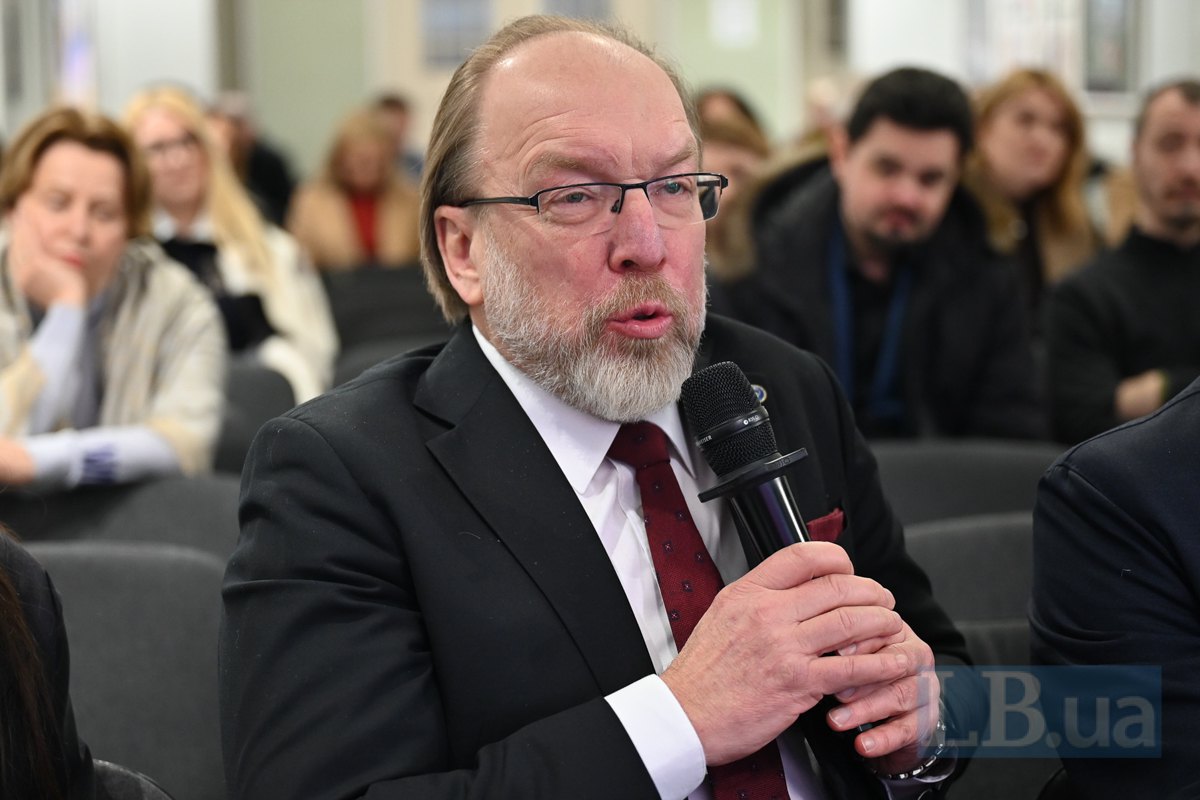
Volodymyr Kudrytskyy: We will decentralise. What's more, I am confident that Western countries will be smart enough to do the same.
Having huge power plants that provide 3, 5, 7% of your balance, which can be knocked out by two missiles, is extremely dangerous in today's world. The entire energy sector of today was built from the 1940s to the 1990s, so to speak: large power plants that saved on economies of scale were built for energy-intensive industries, not only in the Soviet Union, but also in the West. And, accordingly, everyone lived on economies of scale.
Now the situation is different. Modern technologies allow us to build more efficient small power plants, which will even be cheaper, but there is the added military risk.
If Ukraine is governed by even minimally sane people, it will never occur to them, after four years of horror and attempts to destroy the energy system, to build thousand-megawatt power plants again. You would have to be alternatively gifted to do that.
There will be a network of small power plants. They will use different technologies to generate electricity. We now have super-cheap renewable sources. They are super-cheap in terms of marginal costs. You don't have to pay anything for the wind that blows or the sun that shines, from which you generate electricity. And all these sources need is fast, manoeuvrable auxiliary facilities, such as battery storage (energy storage facilities) and fast gas power plants. Here is a combination that is the future of Ukraine and the future of any sane energy system, at least in the Western world.
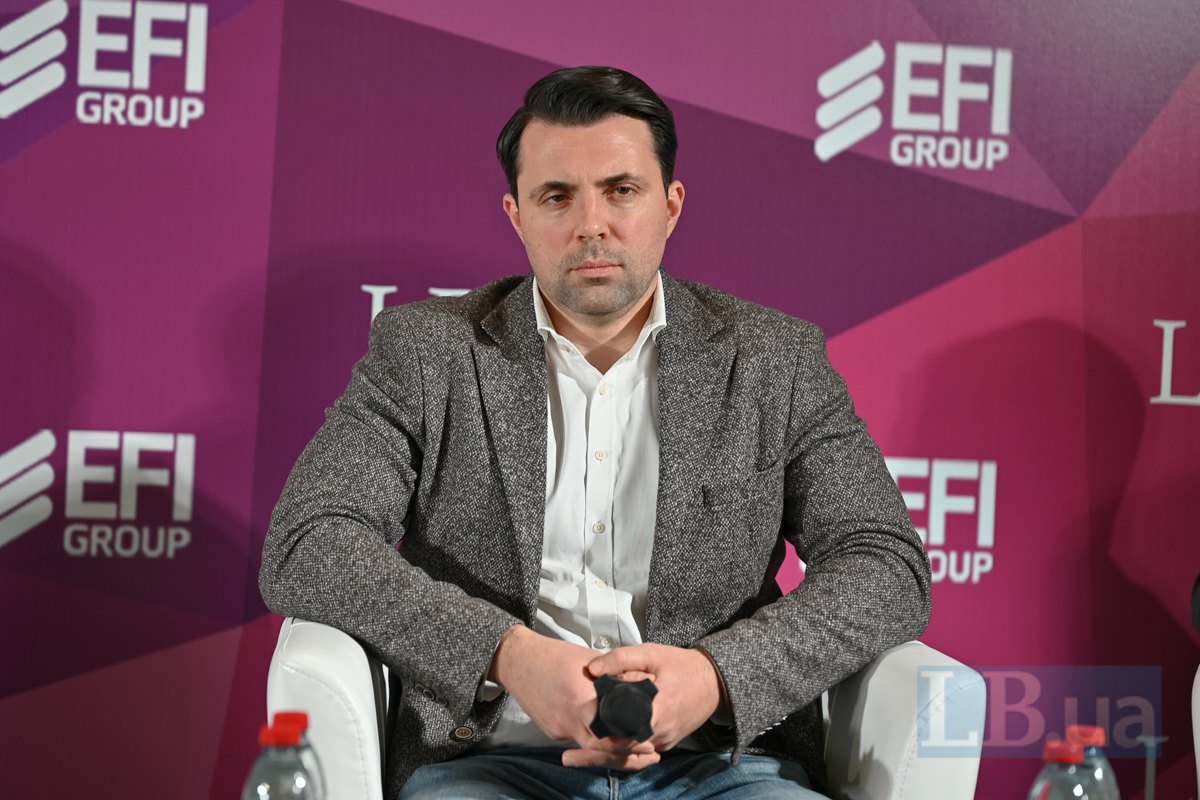
Serhiy Kovalenko: I would add that, unfortunately because of the war, Ukraine is moving very fast towards energy independence from a business perspective. Worldwide, the focus is on energy efficiency; for us, energy independence has become an additional driver.
Businesses have effectively shifted from being mere consumers to becoming market players. Someone starts with a 200 kW solar plant. Then they realise: “Why should I only consume 200 kW during the day if my production runs until 11 p.m.?” They add BESS — battery energy storage. Next comes the idea: “I can already play on the electricity market; I need to invest in software.” With the right software, that 200 kW plus the grid and batteries turns the business into a full-fledged market participant.
We still lack a reform of the end-consumer market, but thousands of businesses are already becoming full participants. This process is irreversible. So we will definitely move towards decentralised energy: more players, more competition — from pricing to the end consumer — and that is good for the system. It will be more resilient. I’m convinced there is no alternative.
Serhiy Koretskyy: I’d also like to add a few words about the future.
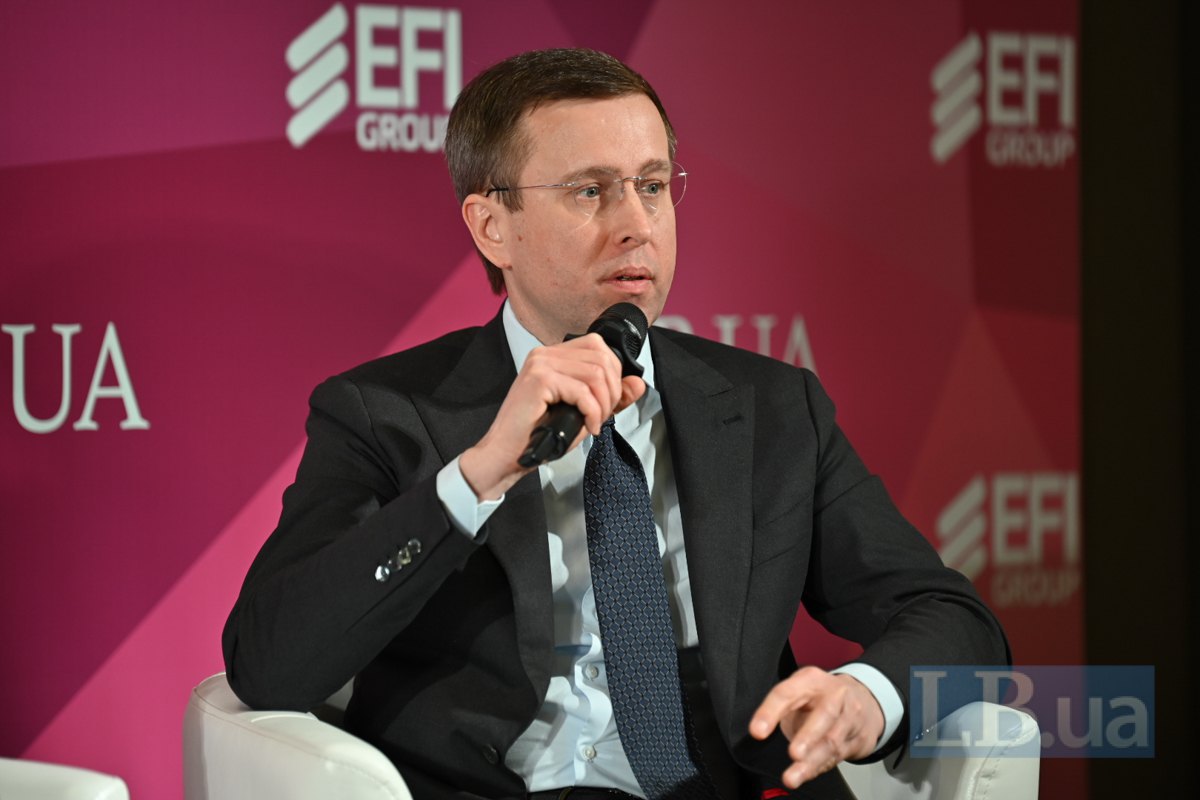
Undoubtedly, the primary task today is to survive, endure and maintain energy stability under the conditions in which we live and work. But 15–20%, some fixed share of our time, must be devoted to development projects, to finding partners and to designing new joint initiatives. There is a persistent stereotype that once the war ends, money will simply be poured into Ukraine. That will not happen. And this is a mistake — both for private and other businesses — to assume that someone owes us something.
Investors think in terms of payback periods, economic interests and investment security. Clearly, during an active war, when destruction is visible to the entire world, large-scale investments are unlikely. At the same time, the fact that there is a substantial pipeline of negotiations on future projects is undeniable. We devote a great deal of effort and time to this work.
The goal is straightforward: the so-called feasibility stage — economic modelling, calculations, document verification — takes a very long time. To avoid wasting time later, we are using it now. This includes remote work, data rooms, and online signing of non-disclosure agreements. This process is ongoing so that when the war ends, we can act immediately and be 100% ready. The potential of Ukraine’s oil and gas sector is enormous.
Ukraine has around 2 trillion cubic metres of reserves of various types — conventional, unconventional and offshore on the Black Sea shelf. These are the largest reserves in continental Europe. Moreover, last year the Naftogaz Group drilled 149 new wells, if I am not mistaken.
This is more than the total number drilled across the whole of Europe combined. Ukraine accounts for 50% of Europe’s entire drilling fleet. Despite the war and constant shelling, our colleagues — real heroes — continue drilling to ensure energy stability and to compensate for losses caused by Russia’s terrorist attacks on infrastructure.
All this is happening under conditions where enormous sums must be spent on reconstruction, where dividends are distributed to the state to support the armed forces, given the huge pressure on the state budget — and at the same time development must continue. Wherever possible, we do what we can today, but the potential for future growth is immense.
“Fifteen attacks on oil and gas infrastructure in January alone”
Serhiy Barbu, LB.ua analyst: There is information about a Shahed drone hitting the largest oil storage tank in Ukraine on the Druzhba oil pipeline. As far as can be understood, 30,000 tonnes of oil have been lost. What is the situation with transit — I understand this is the Slovak section — was it suspended or is it continuing?
And as we can see, the transit of Russian oil does not protect Ukraine’s oil-pumping infrastructure from strikes. Perhaps it is time to put an end to this charade? Is early termination of the contract, which runs until 2030, being considered?

Serhiy Koretskyy: In January alone, there were 15 attacks on oil and gas infrastructure facilities. There have indeed been hits and there is damage. I will refrain from commenting on the specifics of that damage, as this is a matter of security. Where exactly the strikes landed, the extent of the damage, and how quickly it can be restored — this is the responsibility of the Naftogaz Group, and it is work we have been doing throughout all four years of the full-scale war. I will not disclose details. There have been strikes and there is damage to oil and gas transportation, production, and storage infrastructure — yes, that is the case. And wherever possible, we communicate this information.
Nina Yuzhanina, MP: In connection with the widespread installation of cogeneration units, which could to some extent replace electricity generation for heat supply, are you observing an increase in gas consumption? And what should be done about the Troyeshchyna residential area, which depends on a single CHP plant and still remains without electricity and heating?

Serhiy Koretskyy: I am an advocate of decentralised generation for a number of reasons: stability, flexibility, manoeuvrability and security — because hitting thousands of installations with missiles is far more difficult than striking a single large facility.
However, this is a long-term path. It will take years, but I hope that step by step we will get there.
As for our assets. We are building backup power supply for ourselves in case of outages, despite being classified as critical infrastructure. At present, we import more than 55% of the electricity we need in order to ease pressure on the system, while simultaneously developing reserve power supply for our own facilities to remain as independent as possible if needed. Under the baseline scenario, this may involve so-called peaker plants, which generate electricity during peak demand.
Incidentally, decentralised generation as a whole is essentially an example of how reconstruction in Ukraine has already begun — unfortunately, driven by destruction. Old CHP plants built in Soviet times had efficiency rates of up to 30%. New facilities operating on a combined cycle reach up to 90%, or around 50% in terms of pure electricity generation. This is why we are practical contributors to this system
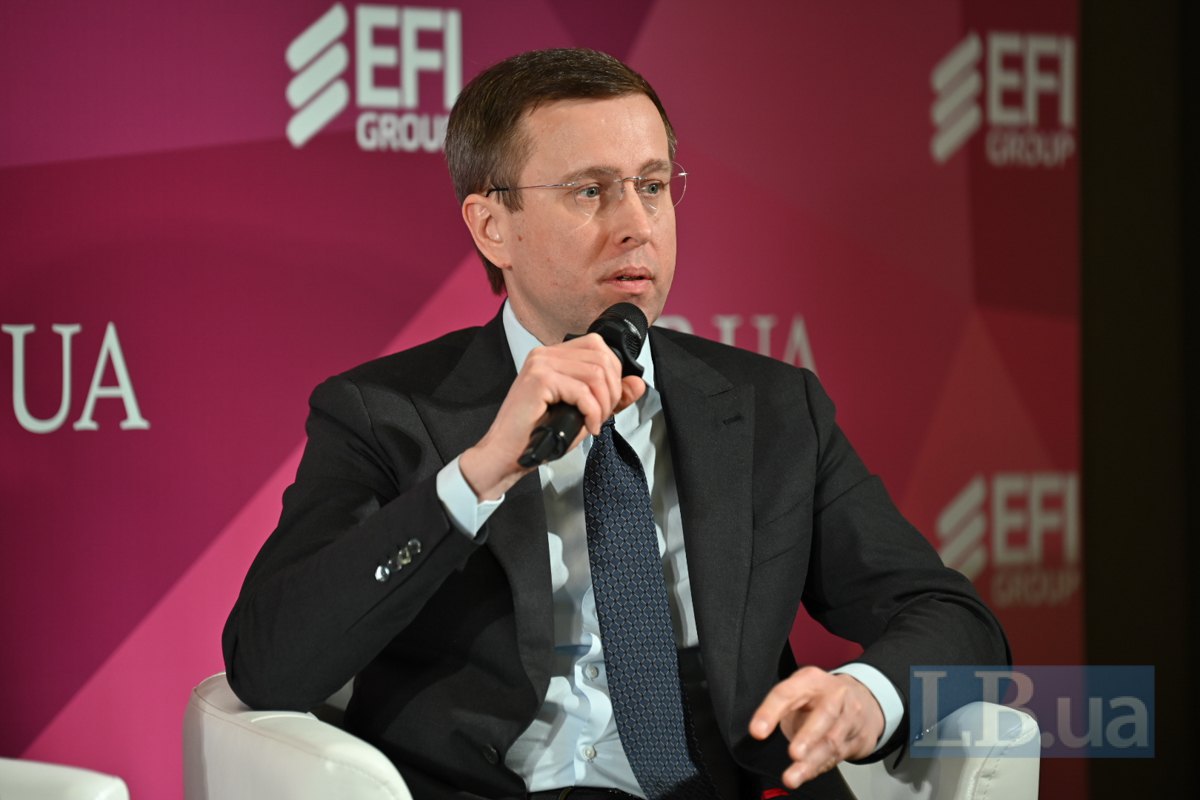
Has output increased? Yes, it has. Output has increased specifically for these flexible, decentralised capacities. On the one hand, there are new facilities that consume more gas. On the other hand, unfortunately, there are also facilities that have been destroyed — and they, too, used to consume large volumes of gas, but their consumption has now fallen for obvious reasons.
Serhiy Kovalenko: I would like to address the question of what should be done about buildings that are currently disconnected. Overall, the core problem there is not electricity, but the lack of heat. When the absence of electricity is added on top of that, the problem multiplies. Therefore, the first and main answer is restoring heat supply. If heat is not restored, it is almost impossible to warm buildings using air conditioners or small electric appliances.
As for the timeframe for restoring heat, I cannot comment. Like you, I rely on publicly available information. As of today, according to what I have read, 636 large residential buildings remain without heating. Once heat is restored, buildings warm up, people start using fewer electrical appliances, there are fewer emergency outages, and electricity supply becomes more stable. There is no alternative. What exactly the city authorities are doing to address this issue, I do not know.
Volodymyr Kudrytskyy: As for heat supply in Troyeshchyna, for years everyone has known that Troyeshchyna, along with several other residential districts, effectively depends on a single centralised source of heat supply — one of Kyiv’s major CHP plants.
It is also well known that Kyiv’s electricity supply depends on several high-voltage substations that transmit power from the grid into the city, three CHP plants — CHP-5, CHP-6 and the Darnytsya CHP — as well as two hydropower facilities: one hydroelectric power plant and one pumped-storage power plant. That is essentially the entire system. And to answer your question as to what has been done in response to this reality — practically nothing. This is a management failure.
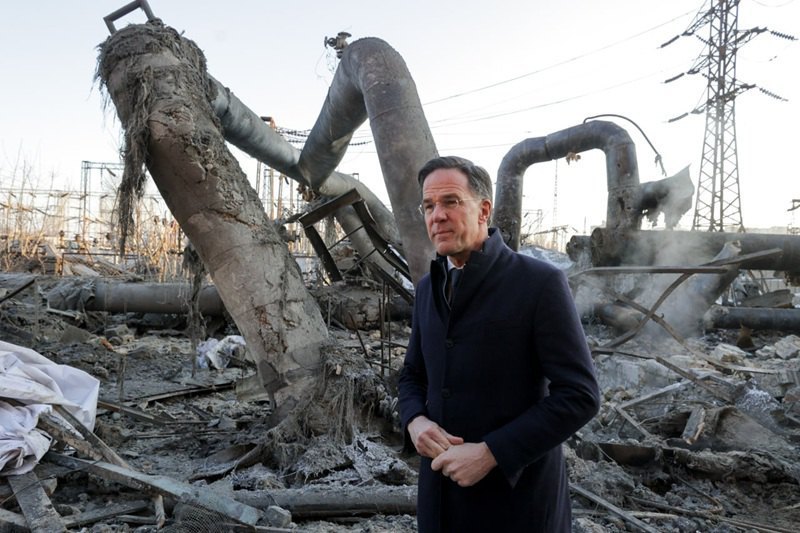
There were 2023, 2024, 2025. This cogeneration, or decentralised generation, which would be sufficient to supply, for example, the Troyeshchyna residential area — which is not as easy to hit as CHP-6 — simply does not exist. That is a fact.
What are the central and city authorities doing now? They are blaming each other. The city authorities say the central government took 8 billion, so nothing could be built. The central government says Kyiv was the worst prepared of all. In reality, though, we do not have a single major city, not even regional centres, that was even 50–60% energy-independent.
We simply do not have sufficient volumes of decentralised generation to ease the situation.
It has only just started to roll out. And once, forgive the expression, the situation became critical, they rushed to help businesses and attract investments…