





“We need at least a week without strikes and above-zero temperatures”
Mr Kharchenko, what is the current state of the energy system? Has the situation worsened after the overnight attack on Saturday, and did the rise in temperature fail to help?
There was another attack, again focused on the Kyiv region, just like the strikes on 9, 13 and 18 January (those were larger waves, while in between something was flying in almost every day anyway). The situation is definitely not improving. But the attack on 13 January was truly catastrophic. For quite a long time, it completely shut down Kyiv’s CHP plants, and as a result the capital currently has no local generation at all. This is a huge problem, because Kyiv’s consumption is enormous, and previously the city covered at least half of its needs with its own generation. These facilities are now so badly damaged that saying they could be brought back online within a few weeks would simply be untrue. Kyiv now has to be supplied entirely from outside. And the high-voltage networks designed for that purpose have also been severely damaged.
That is why we are now seeing outages in Chernihiv as well — this can be described as a secondary effect. Chernihiv suffered because the attacks targeted the Kyiv Region: everything around the perimeter, all facilities close to the Kyiv energy hub, were hit. And it seems that some facility in Chernihiv Region itself was also struck.
Because of one particularly powerful attack — when, as we know from the president’s statement, Ukraine simply did not have anti-ballistic missiles — almost all the ballistic missiles hit their targets, and the system was effectively knocked out. Had that not happened, everything would have been calm and manageable, with predictable and understandable schedules. Now, even a small percentage of incoming strikes creates additional problems, because we simply do not have enough time to recover. At the end of December, such hits would not have been critical, because we still had a margin of resilience. I would not say that this margin has been completely destroyed — some things will be restored — but partly, and very slowly. So the situation in the Kyiv energy hub is extremely difficult.
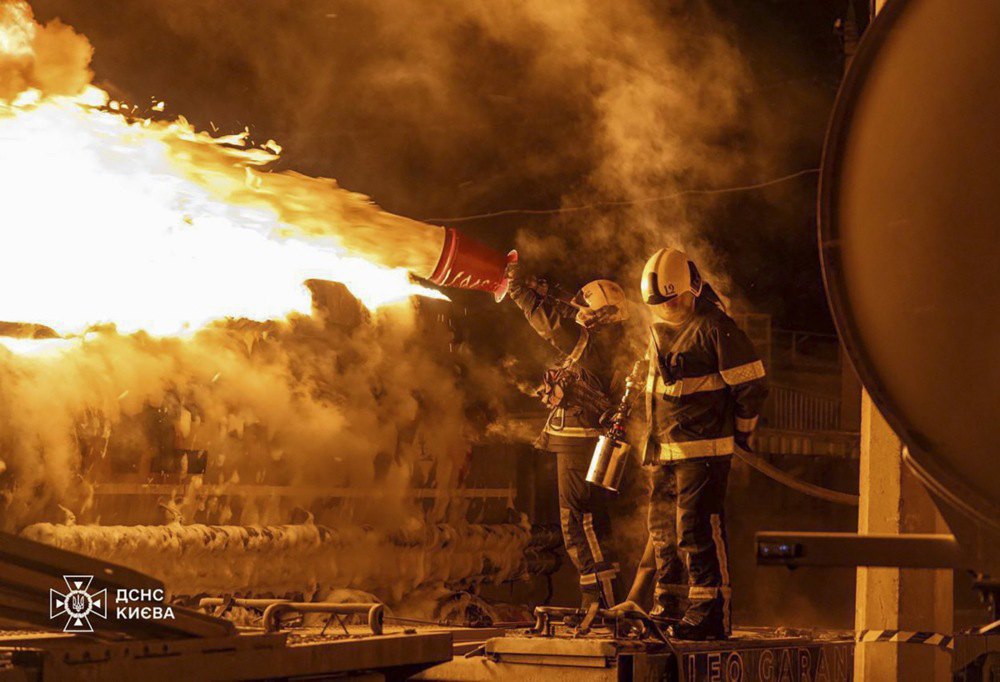
At the same time, the Russians are trying to attack the power output of nuclear power plants and everything connected to it. They have not achieved major success there, but they are using a “death by a thousand cuts” tactic. They cannot destroy anything significant, yet every minor piece of damage still takes two to four days to repair.
Combined with the frost that is still holding, this creates additional strain. When heating comes and goes, people try to rely on electricity as much as possible, which in turn leads to problematic situations.
So what is it that still allows us to have at least some electricity — remote generating units or imports?
Essentially, yes. Nuclear generation is operating, along with what remains of thermal generation, and hydropower plants are also running, though not at full capacity because there is currently not enough water for them. In this kind of weather, the country as a whole would need only about 17.5–18 GW, but we have roughly 11.5 GW and can stretch imports up to about 13 GW.
Kyiv alone, however, needs around 1.9–2 GW during frost, while it has only about 700 MW available. Of those 700 MW, roughly 180 MW is taken by critical infrastructure. On top of that, consumption by outage groups is impossible to predict.
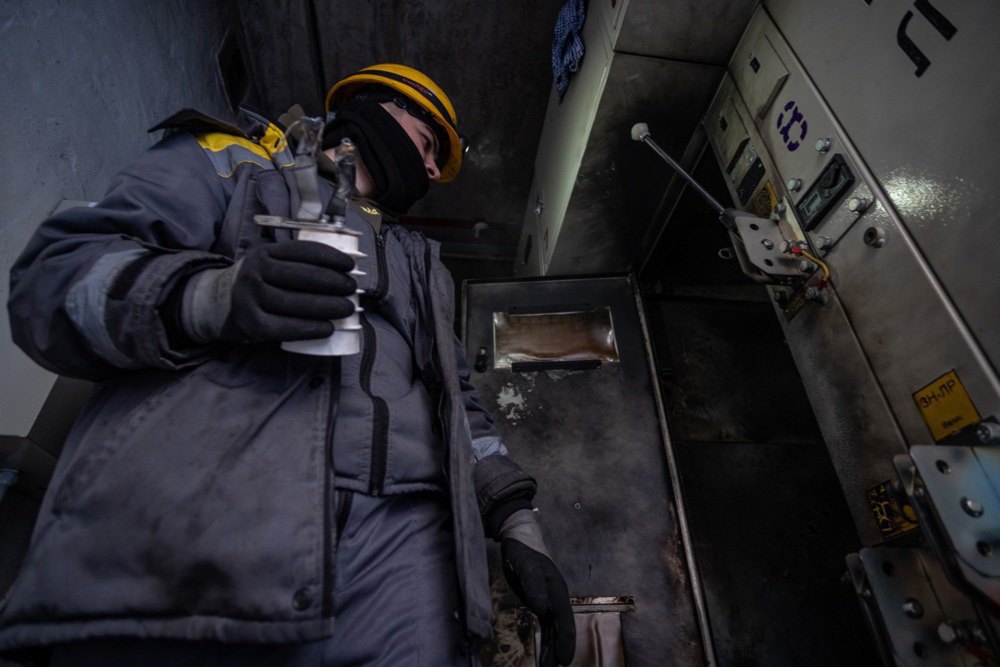
Why do emergency outages keep happening? Take a building: energy workers know that it has always consumed around 100 kW. Now they reconnect it, and it suddenly starts drawing 300 kW. That is deferred demand — people rush to switch everything on at once. Small-scale accidents immediately follow. Everything is turned on, and the transformer automatically disconnects the building, tripping the protection to prevent a larger аварія. Or a cable simply cannot handle the load — it is old, already in poor condition — and it burns out. Until it is repaired, that means more time without electricity.
To improve the situation, I believe we need at least a week without strikes — or for air defence to intercept almost everything. For now, energy workers simply do not have such conditions.
As for the figures, it is interesting from the point of view of recovery capacity. In September 2024, experts said that Ukraine had only 9 GW of the 18 GW it needed at that time. And this year in Davos, the Minister of Finance said that since October 2025, the Russians have knocked out 8.5 GW of our generation capacity. Where did all that come from? Have they managed to restore so much in just one year?
Absolutely, we have restored a great deal. In reality, we entered this season with 17.5 GW operational.
First we need to restore trust, then Western aid
Can our Western partners help us with this in any way? Every day we see news that hundreds of generators are coming to us from EU countries. Do they play a significant role?
Honestly? By the time they arrive, they will no longer be needed. The mechanisms for providing assistance by Europeans are currently too slow and ineffective. New mechanisms need to be developed. Let's say that some generators are sent to Kyiv on an emergency basis and they arrive in two weeks. In two weeks, we will have above-zero temperatures and no one will be working on them. Or we will recover to a state where generators are no longer needed. Of course, they will all go into reserve, and there will be photos, great achievements... and great gratitude to the EU for helping in principle. But the only truly effective way to help now depends on both sides. In my opinion, we need to say clearly: dear European Union, if you want to help the energy sector, help with money. It will be much faster and more effective, and we will buy what we need. A huge amount of scrap metal sent to Ukraine from all over Europe and the US is lying around as scrap metal.
For our part, we need to remove the obstacle that is currently preventing such assistance: the risk of corruption. We need to demonstrate a direct and effective mechanism for transparency and clarity in the process itself, so that funds can be disbursed to us normally.

Is it not enough to remove Halushchenko's team to get truly constructive processes going? Or has it not been completely removed yet?
Let's open up sources that are conservative in their assessments and see how many of his people remain in their positions. We read yesterday's statement by the head of the Verkhovna Rada's energy committee about what happened again between Energoatom, the NEURC and the sale of electricity. Do you think this increases our chances of getting real help, rather than PR and reporting?
Another aspect is that many people reacted to the news by asking: where is the supervisory board? It was announced at Energoatom but has not been appointed. There were statements that we had selected independent members of the supervisory board, certain announcements — and no one has been appointed yet, contracts with members have not been signed. How does this affect the confidence of European partners in providing assistance in the energy sector? And they are well aware of the details of Mindichgate.
Does this mean that the ministry is not doing its job in terms of control, or does Energoatom have a certain autonomy and act as a state within a state?
It is officially subordinate to the Ministry of Economy. Therefore, in this particular aspect, this issue does not concern the Ministry of Energy. Read what MP Yaroslav Zheleznyak wrote and what Andriy Herus, head of the Verkhovna Rada's Energy Committee, said in his public statement regarding the latest antics of Energoatom and the NEURC, where 100% of the appointees were appointed by Halushchenko and his team...
In other words, major purges are still needed, and we are nowhere near seeing them.
In order for us to gain the real trust of our partners, they need to see real action. The process has begun: it must be acknowledged that some deputies have started to resign from the Ministry of Energy, including some odious individuals. But overall, the process is still in the mode of "we promised you, but we are in no hurry to do anything.”
We want to regain the trust of our partners, so we need to intensify this process. We also need to offer our partners an effective mechanism for providing assistance, because currently the only real way to do this is through the Energy Support Fund for Ukraine at the Energy Community Secretariat. All partners contribute money to this fund, but the procedures take about a year — from the moment a Ukrainian company submits an application to the moment a contract is signed with a supplier.
What will happen if we have to wait a year for all the assistance we need today? In other words, Ukrainians will have to sit without electricity for an extra year, but everyone will be sure that the procedure is transparent and that the tender was conducted according to the rules. They have no power cuts and their heating supply is working (albeit poorly across Europe in general, but it is working). We have power outages and problems, so we need to offer a quick and effective mechanism that would ensure the transparency of procurement and equipment distribution procedures and allow our European partners to understand what is happening and how. Such a mechanism existed until September 2024, namely Ukrenergo. That is, until the corporate scandal provoked by the dismissal of Kudrytskyy (head of Ukrenergo in 2020–2024 — Ed.) and the departure of independent members from the Supervisory Board, who claimed political pressure. Before that, Ukrenergo received approximately €1.5 billion in aid, and they are now finishing off the last 200-odd million of that amount (and finishing it off very quickly), and nothing new has come in since then.
What is your impression — do those in power, in the circles on which this depends, understand the situation and what needs to be done?
I have no connection to the government, I do not communicate with them, they are not interested in me...
I have a lot of positive feelings about Denys Shmyhal and his professionalism, but he is probably in a complete time crunch right now, as he took office when everything around him was falling apart. And he needs time for purely bureaucratic processes, at least to appoint deputies and check people out. In any case, the minister needs time for the team to start working effectively, and we are still in a super crisis. I understand that the situation there is very complicated, but we cannot wait — it will not resolve itself. Active action is needed, and one of the most important tasks is to restore the trust of our partners. We cannot do it on our own, we have no money.
It's time to attract investment and bet on gas
Regarding a way out of the situation — right now and in the long term. Let's assume that there will be no more catastrophic shelling in the coming weeks (and there are certain forecasts or insider information that the Russians are not yet capable of very massive attacks). So, in the near future, will they just slowly repair and restore the system?
On the night of 24 January, they were quite capable of launching 300 Shaheds and 20 missiles, which is already quite massive. Another thing is that, compared to 9 or 13 January, the air defence forces performed much better. If they continue to operate in a mode where they have enough resources to effectively repel attacks, this will give us the pause we need to recover.
In the short term, a quiet week will give us schedules in Kyiv and normal heating and water supply. It is difficult to predict what will happen next, but in about a month and a half to two months, these schedules would have shifted to a fairly comfortable mode. That is, to about two queues (simultaneous shutdowns — Ed.), figuratively speaking. And theoretically, we could expect that in April–May or even at the end of March [if we are very lucky], we will already be living quite comfortably. Again, assuming that we repel the attacks as planned and that several missiles do not hit the same spot.
How we will live in July–August depends on how we can restore generation and what new things we can launch. But I think that since the schedule for repairs of nuclear power units is sacred and cannot be changed, July–August may be more difficult. Simply because there will be more consumption and less generation available.
And then — maximum preparation for the next heating season. In particular, increasing the number of gas piston engines, maximising efforts to build everything possible in the quick-install sector (i.e. in months rather than years) — light gas generation — and ensuring its connection and operation. These are the key elements of preparation.
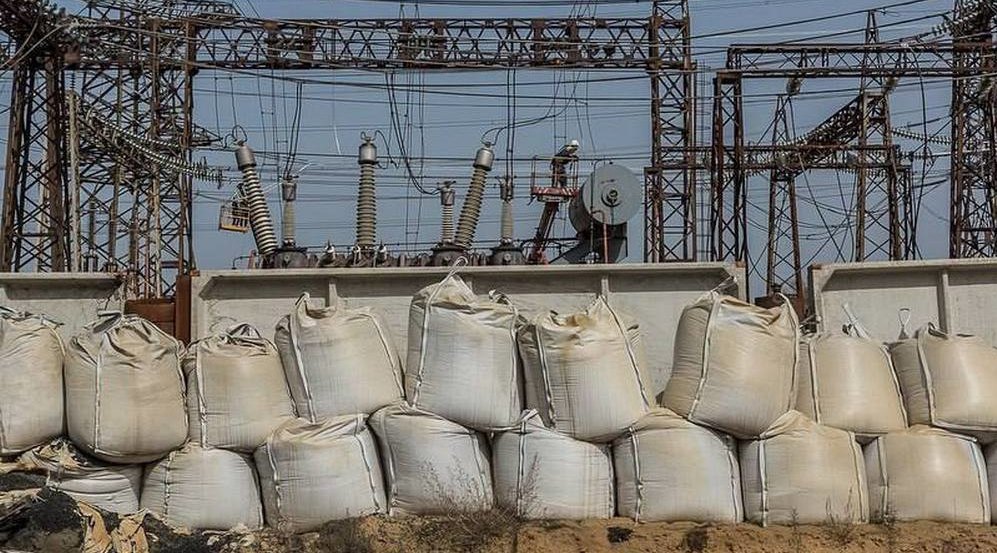
Another horizon is three to five years, and here we need to work as hard as possible right now to attract foreign investors, to find ways to bring private Western capital into the Ukrainian energy sector with the support of European, American and any other international financial institutions. But this issue can only be resolved if we solve the problem of debt in the energy sector. This debt was not created by war, but by administrative decisions, artificial tariffs and everything else that goes with it. So this is a huge challenge, and I cannot predict how effectively Ukraine will be able to respond to it.
Regarding business, it is very interesting that I just saw a post on Facebook by Volodymyr Poperechnyuk, co-founder of Nova Poshta, stating that entrepreneurs' entry into the energy market is restricted by licences and prohibitions, and that if these were abolished, business would quickly improve. Would that be the case?
I wouldn't say that there are any prohibitions and that this is the main problem right now. Many people misunderstand the phrase "technical conditions." The chief engineer of one of the companies once said something that best illustrates the situation: you can come to an agreement with me, but you won't be able to do so with the transformer. If it is not possible to connect a facility without upgrading the network, then it is impossible, and deregulation will not help here, because it is physically impossible. And in our case, this is everywhere now, because the networks are significantly damaged — both high-voltage and distribution networks. And very often, when a person wants to build a power plant and says, "I have the money, I know how to connect it," they are told that the connection will cost $20 million. And the entrepreneur decides that they are being ignored, that they do not want to cooperate. But it really does take $20 million to connect (I am giving a real example, only simplifying the figures). And this is part of the task that the state must perform, because we want to have a new generation.
These 20 million can be included in the tariff of the company that is the distributor in this region, so that it can build the necessary capacity to connect the generation (which itself costs another $200 million). Unfortunately, such problems cannot be solved by regulation — only physically. It is not enough to adopt a document; you need to buy poles, install transformers, and lay wires.
And yet, if business could actively enter the energy sector, what would it be: biogas complexes, cogeneration gas plants?
Both biogas and natural gas. Over the next ten years in Ukraine, any gas-fired power generation will be efficient, cool, work well and pay for itself — it will be a huge success.
In any case, no one will build power plants like the ones that existed before. Modern facilities look different, and everyone understands that building something in Ukraine without protection makes no sense. Therefore, modern complexes of relatively small size but often high power will be built. Because you cannot cover Kyiv with 10 MW gas piston engines.
Kyiv needs at least three large TPPs, in accordance with its topology and power grid planning. This is a historical fact, and we cannot change it — it would cost so much to change it that it would be easier to build a new capital. So, we need three large TPPs and many smaller facilities. They will be different — some 500 MW, some 10 MW — but we need a lot of them, at least 5-6 GW in total, which is somewhere between €7.5–8.5 billion, which somehow needs to be raised over the next few years (up to five). We are targeting a need for €9 billion in power generation construction for the entire country.
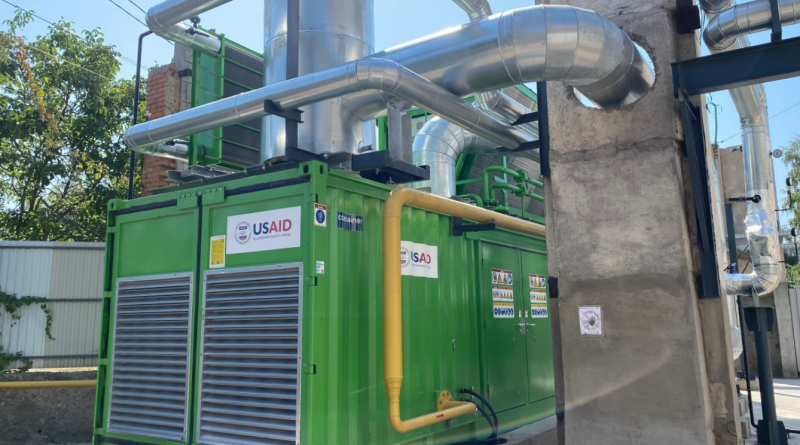
Regarding cogeneration plants. When people began to ask questions about the equipment allocated by partners, which was discussed back in 2024, it turned out that it was often never put into operation. Right now, there is a scandal in Obukhiv (Kyiv region): the local authorities transferred the plant, which had been received from USAID a long time ago, to Slavutych because they could not find a use for it, and the local community is outraged. And allegedly the same thing happened in the capital — they received it and did not use it because of difficulties with projects or money for gas. Is this all true?
It is absolutely real. Indeed, partners distributed equipment randomly, without thinking about whether the community was able to install it or understand how to use it. And often — no, they don't understand and are not capable. And so they provided capacity, which in itself costs about $2.5 million, and installing it costs another $1.5 million. When local authorities don't have money, what do they do? They look for someone to give it to. I know of dozens of such examples in Ukraine. Kyiv, on the contrary, collected everything it could, and Kyiv was given a lot of what no one else wanted. Kyiv just didn't quite manage to get everything up and running in time. A large amount of distributed generation is currently in the start-up phase, with 20–25% already up and running.
And, by the way, thanks to this, the capital is not completely without heating. Six thousand buildings are without heating, but there are only 12,000 buildings in Kyiv. The city is not at critical risk of being left completely without heating. Yes, boiler rooms are sometimes shut down, and technical problems still arise, but overall, everything is working.
I do not believe in the large-scale success of projects that do not rely on private capital. Private capital will do things correctly, quickly and efficiently. And what happens when partners start handing things over from state officials to state officials — we have seen this in the example of some communities in the Kyiv Region, in particular.
What should be the personal survival strategy for Ukrainians in the coming years, in preparation for the next heating season? Creating condominium associations, maximum cooperation, purchasing our own power supplies for each building... Generators, power banks, candles — is this our reality for years to come?
Yes, this is our reality for years to come. Even if we assume that there will be no war by the next heating season, all the risks will remain. All the risks of a broken, seriously damaged system will remain.
And where can we find best practices for cooperation? In Kyiv, there are plenty of very smart, hard-working, competent heads of condominium associations who are now showing what needs to be done with a building to make it as comfortable as possible, even in the most critical situations.
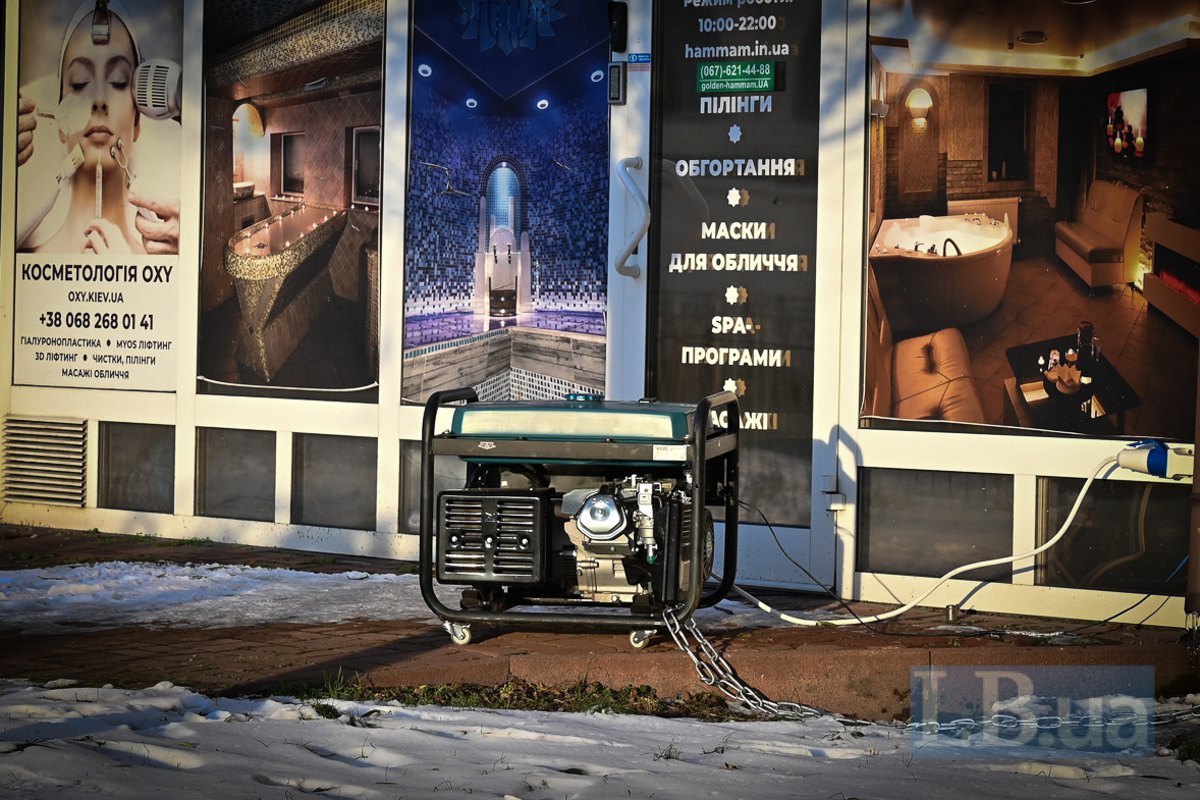
They install battery systems, solar panels, optimise the building's energy consumption, and install backup generators for emergencies. They install adjustable heating circulation pumps and various optimisation devices. There are housing associations that managed not to drain their pipes in an area where everyone else did, because they had new, efficient circulation pumps. They worked, and the water circulated inside the building. Yes, it cooled down gradually, but they held out until the hot water returned to the system. And everything is fine. Draining water is the correct procedure when there is a risk of freezing, but it is stressful for the building and the heating system. Therefore, I recommend spreading the word about the experience of the condominium association and advertising it in every way possible.