






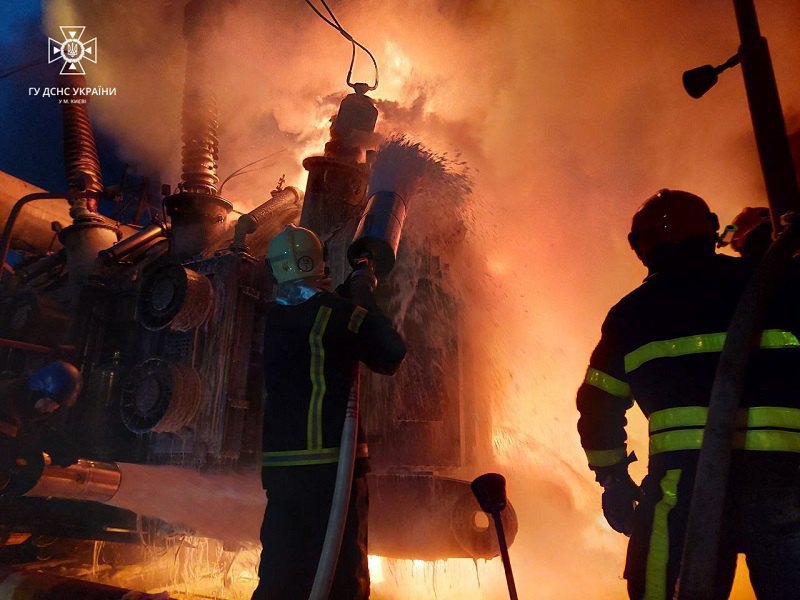
Lots of ballistic strikes, hits on critical substations
Around 2 a.m. on 20 January, Kyiv was rocked by about a dozen powerful explosions. The Russians attacked the capital with ballistic missiles. Later, another wave of strikes occurred, and by dawn the city was also hit by drones.
As a result of the Russian assault, Kyiv experienced disruptions to water and heating supplies, and blackout schedules became even stricter. The main targets were on the left bank of the city.
In total, Russia used 372 air attack weapons in the 20 January strikes on Ukraine. Ballistic missiles primarily targeted Kyiv, and Moscow also launched Kh-101 cruise missiles and one Zircon missile. The anti-ship Zircon was directed at a critical infrastructure facility in Vinnytsia region, according to the Ukrainian Air Forces.
The effectiveness of Ukraine’s air defence reached nearly 92%. Ukraine had just received air defence missiles from Western partners the day before the attack, the president said. This is what prevented the enemy from achieving their goal — plunging Kyiv into darkness and cold. President Volodymyr Zelenskyy noted that the 20 January attack cost Ukraine roughly €80 million — and that’s just the cost of the missiles used by air defences to intercept the strike.
The Russians also targeted key substations responsible for the country’s nuclear safety. These substations manage the distribution of electricity from nuclear power plants. Ukrainian authorities had warned about this potential threat and called on the international community to pressure Russia.
Moscow once again resorted to elements of nuclear terrorism. The power plants themselves were not damaged, but lines and equipment outside the stations were destroyed.
This is far from Russia’s first attack on substations near Ukrainian nuclear plants. Similar strikes have occurred before, and Ukrainian energy specialists know well how to respond in such situations.
According to the IAEA, the Chernobyl Nuclear Power Plant completely lost external power as a result of the 20 January Russian strikes. Connection lines to the power grid were also damaged at other Ukrainian nuclear plants. IAEA experts pledged to monitor developments closely to assess the impact on nuclear safety.
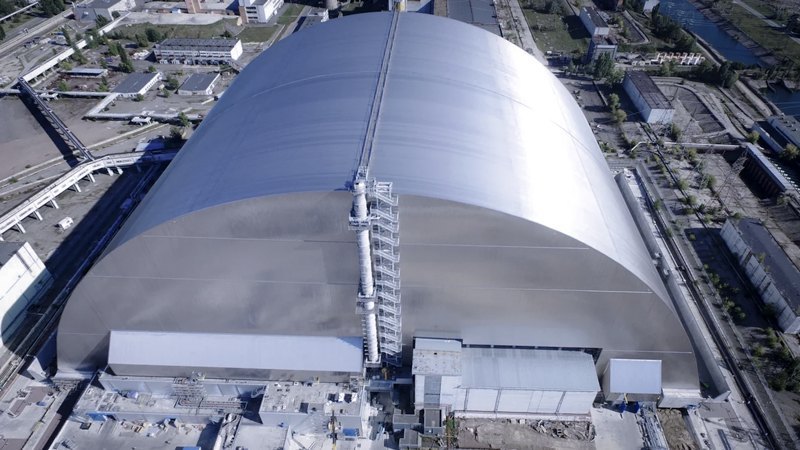
However, international experts once again did not specify who exactly attacked Ukraine’s strategic facilities. The IAEA continues to avoid mentioning Russia in its official communications.
“These strikes by the invaders on substations were the primary cause of reduced electricity supply. On 20 January, most households in Kyiv were without power for 20 hours. Even Ivano-Frankivsk, which usually has relatively stable energy, faced extended blackout schedules,” explains Volodymyr Omelchenko, Director of Energy Programs at the Razumkov Centre.
Ukraine is critically dependent on the stable operation of its three nuclear power plants, which currently generate over 60% of the country’s electricity. Russia fully understands this: by striking substations around the NPPs, Moscow is trying to provoke an even greater electricity deficit.
In other words, in recent days, the Kremlin has been attempting a second phase of terror against Ukraine’s energy system. The first phase targeted other types of generation, including flexible capacity, as well as heat supply to major cities.
Electricity generation at thermal power plants has fallen to a record low. The reason is massive destruction, and it is currently difficult to estimate how long it will take to restore them.
The Ministry of Energy reported that there is no thermal power plant in Ukraine that Russia has not yet attacked. The situation is similar with hydroelectric plants, where the destruction is also extensive.
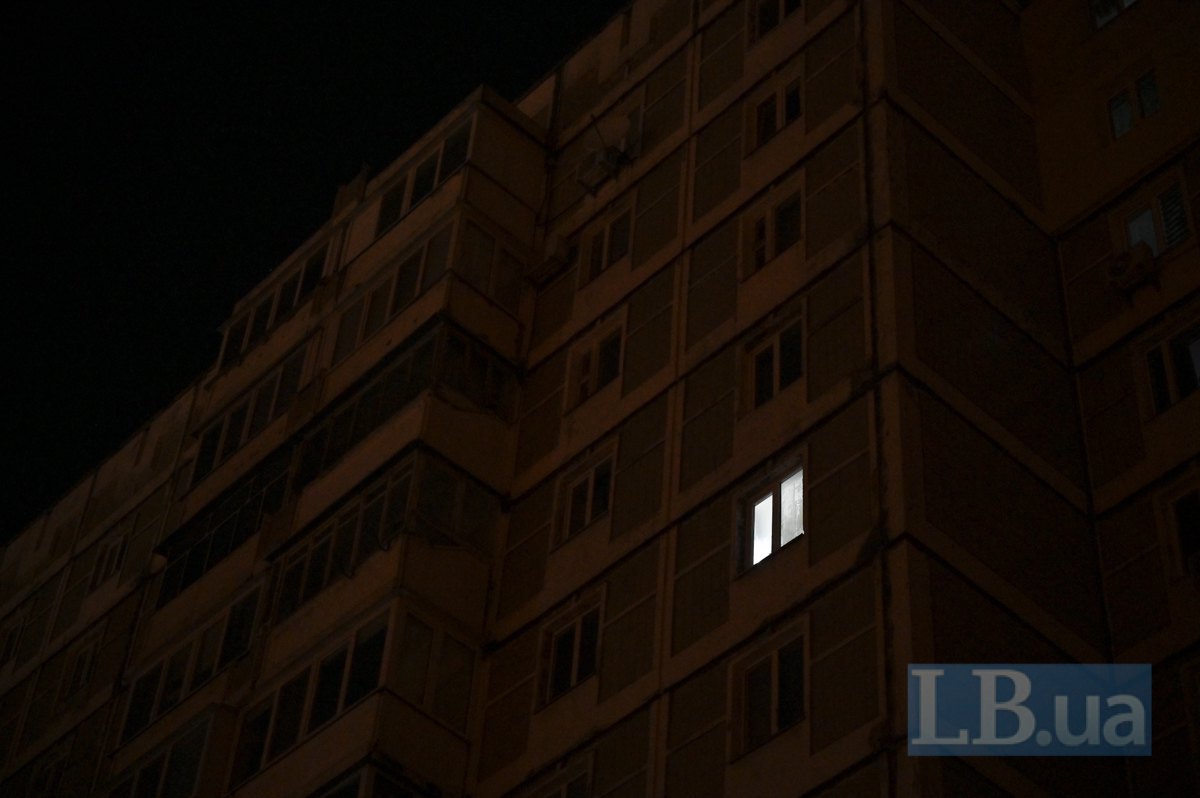
Green energy can’t save the country from blackouts. Wind power helps, but it isn’t very strong, and solar plants are operating at seasonal lows. Generation only rises slightly on sunny days.
New, stricter blackout schedule
Since October, the Russians have destroyed over 8 GW of generation capacity, the Ministry of Economy reported — equivalent to the output of the same number of large nuclear reactors. Restoring these facilities quickly is impossible; it will take many months.
Meanwhile, the government has finally removed artificial barriers that had been limiting full electricity imports from the EU. The National Energy and Utilities Regulatory Commission (NEURC) raised price caps on imported electricity. The government said imports have risen to almost 2 GW, which is a significant relief for the energy system during this acute shortage.
At the same time, electricity prices at Ukraine’s western border have risen by about a third this week.
By mid-January, Ukraine’s electricity deficit had reached 7 GW, President Volodymyr Zelenskyy reported. Importing that much power is impossible. Even new distributed generation isn’t enough — analysts at the Razumkov Centre estimate it at less than 1 GW. That’s why blackout schedules will remain in place until the end of the heating season. The situation will get more difficult further east. It could improve slightly only if temperatures rise — and if new Russian attacks are effectively repelled.
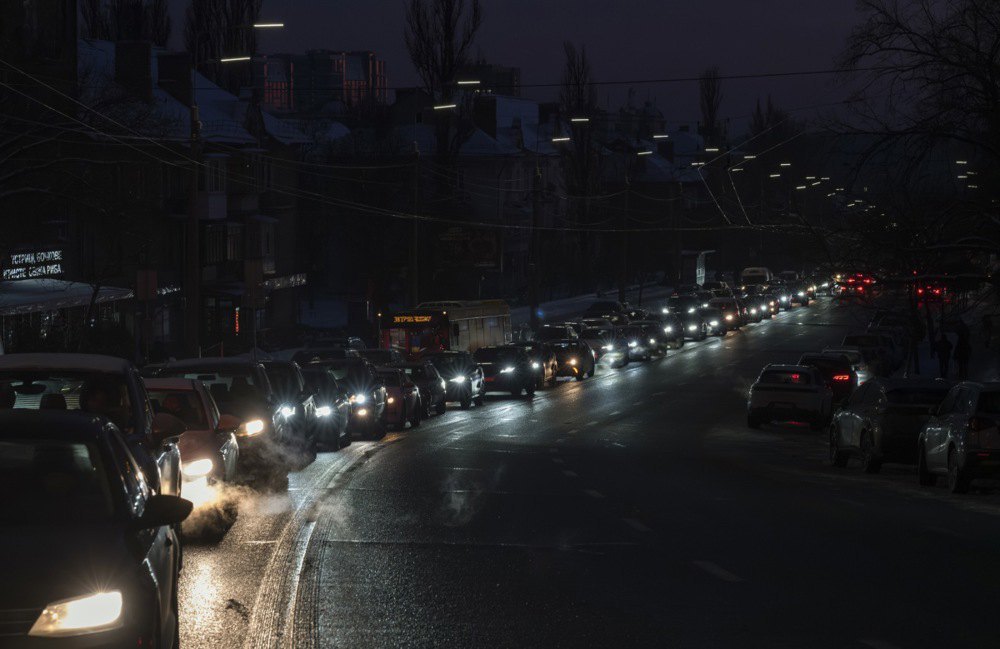
The government is trying to save electricity: local communities have been ordered to limit outdoor lighting, and schools have been sent on holiday. These measures are necessary and fair, but they won’t free up large amounts of power. The energy sector is operating under an emergency regime, and the newly appointed Minister of Energy, Denys Shmyhal, is finalizing his team.
“We seem to have six different government task forces. My question is: what unique powers does each one have? Do they have the right to seize equipment from private companies that are misusing it? Or go into a municipal facility and demand equipment be sent to Kyiv? Neither! In my view, the effectiveness of any task force is measured by its special powers under the law. Without that, all they can really do is improve coordination,” says economist Oleh Pendzyn.
Russian strikes and severe frosts have forced a change in blackout schedules. Now up to five groups of consumers can be switched off at once. For households, this means over 16 hours without power. The energy situation is perhaps the most difficult since the full-scale invasion began, especially in Kyiv and the region, Dnipropetrovsk, Odesa, and frontline areas.
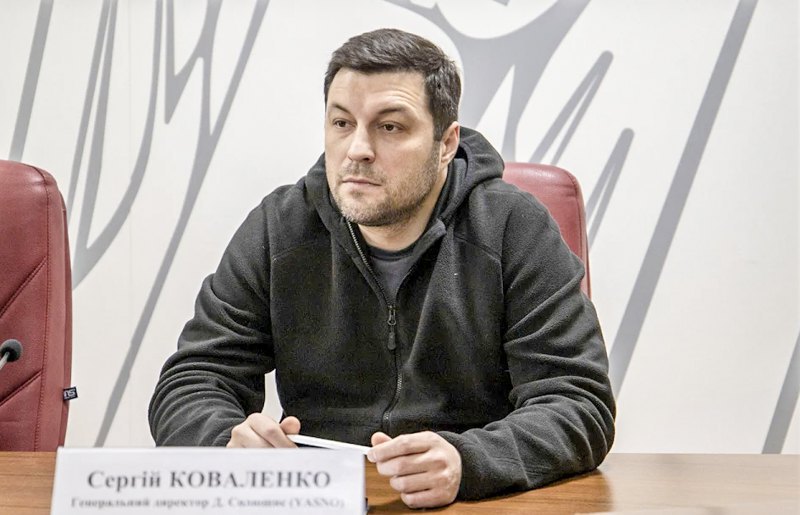
“Will it get better? It’s hard to say. We definitely need to get through these severe frosts — consumption should drop as it warms up. However, the key factor is attacks on the energy system. Those are impossible to predict. We just have to stick together,” says Serhiy Kovalenko, director of the energy company YASNO.
Tetyana Shkuratova heads an apartment association (OSBB) in Kyiv’s Troieshchyna district; her building has 25 floors. The power outages immediately created several problems: elevators, water pumping, and heating for the upper floors. Tetyana explains that she and the residents decided to take action, because during prolonged blackouts and without heat, a high-rise can get cold and pipes can freeze.
The building has already installed batteries for water and heating pumps, and elevators will soon be equipped with backup power. This cost the OSBB 600,000 UAH, but the city has promised to cover half of the expense.
The co-owners are also considering installing solar panels.
“Organizing a big project is always difficult. Many people live in the building, each with their own opinion. But the majority supported installing the batteries. We held meetings and raised the funds. The city offers two types of support: one is a subsidy for battery installation, which depends on the building’s characteristics, like the number of floors. The other is a loan from the Revolving Fund,” says Tetyana Shkuratova.
High-rise buildings could benefit from having multiple power sources, says Stanislav Dontsov, head of the Association of OSBBs and Cooperatives of Kyiv’s Dnipro District. He explains that, for example, solar panels in winter could cover current building consumption — providing four to six hours of backup power for common areas.
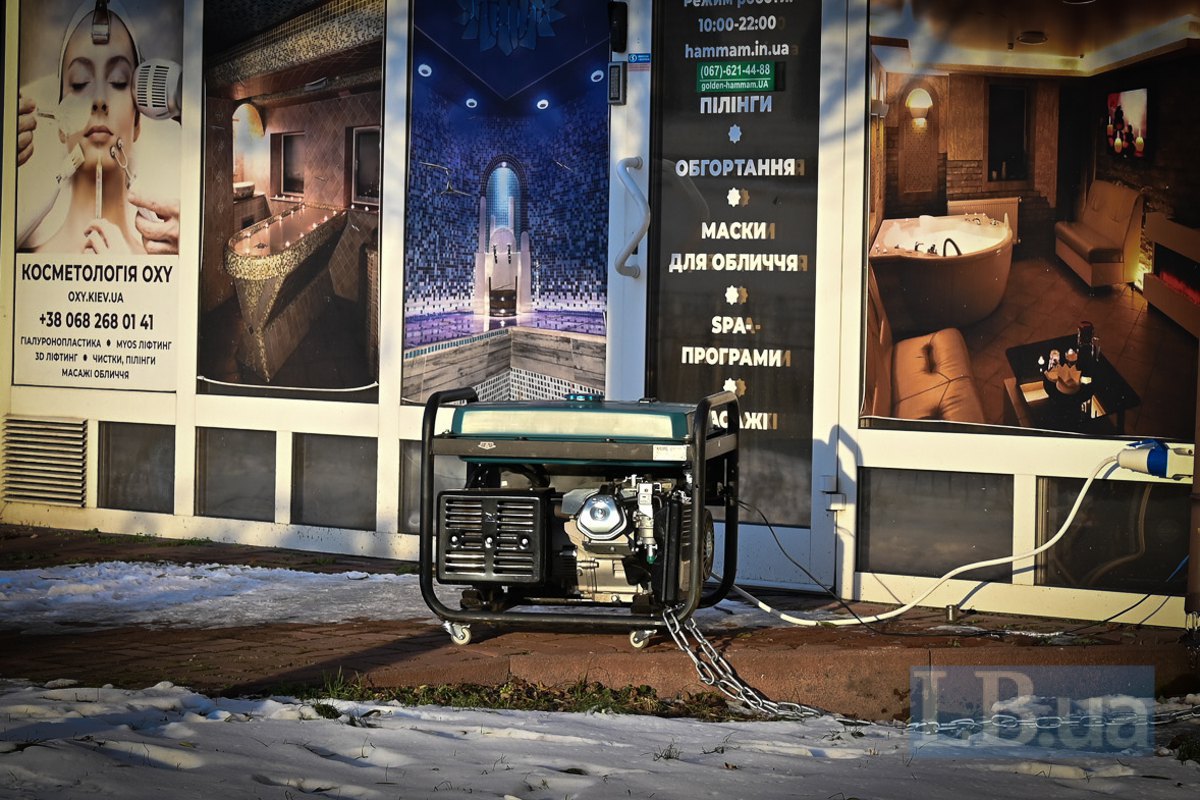
However, in case of emergencies (power outages lasting more than a day), co-owners should also consider a generator.
“Actually, what we have now is an emergency mode that the city of Kyiv has never experienced before. I think that after repair work and normalizing temperatures, we’ll return to the planned electricity schedules. But even under these conditions, apartment associations and cooperatives that installed hybrid inverters have 6–12 hours of backup power,” explains Stanislav Dontsov.
This is compounded by the difficult situation in the power grid and increasingly frequent emergencies. One such case is described by Vitaliy Dekhtyarov, a Kyiv resident. His eight-entrance apartment building remained without power for almost two days.
“In our basement, an emergency occurred. Two high-voltage cables at the building’s input burned out due to overload. It happened in the evening, and at first, residents thought it was another power outage. But the situation turned out to be serious. We used gas to stay warm and heat water. Eventually, the repair team fixed everything, and the building was powered again,” says Vitaliy Dekhtyarov.
The power supply system wasn’t designed for constant outages. Frequent switching on and off wears down equipment. Also, due to Russian strikes, voltage fluctuations can occur in the grid, which consumers need to consider. Additionally, it’s important not to turn on high-power appliances immediately after electricity returns, as this can trigger local failures.
Will there be gas consumption restrictions?
Russia has launched a new information-psychological operation against Ukraine’s energy sector. The Kremlin is widely spreading false reports claiming a total two-day blackout in western Ukraine, says retired SBU Major General Viktor Yahun. These fakes are deliberately styled to resemble official messages from Ukrainian authorities.
Read alsoNo justice in sight: why some Regions face strict schedules and others keep the lights on

“The goal of these injections isn’t electricity itself, but to target the nervous system of society. That’s why every such ‘document’ should be seen not as news, but as a signal of another attempted information attack. The only proper reaction is to calmly check sources and consciously block the spread of fake news. Panic is what the enemy is trying to switch on instead of the lights,” explains Viktor Yahun.
Another Russian fake had to be debunked by Naftogaz. Anonymous Telegram channels spread messages claiming gas supplies would be restricted in the Khmelnytskyy Region. The company confirmed that the state has enough fuel, and no supply schedules exist or are planned.
Meanwhile, over the past week, Russia attacked gas facilities across Ukraine — especially production fields, but also storage infrastructure. Ukraine has ample gas reserves: currently, underground storage holds 11.6 billion cubic metres, a third more than last year. Daily withdrawals for January are relatively low, for several reasons. First, consumption at CHP/thermal power plants has decreased due to destruction and damage. Second, Ukraine continues to successfully import gas from the EU market. Although prices over the past week, for example at the Dutch hub, have risen by approximately 15–20%.