






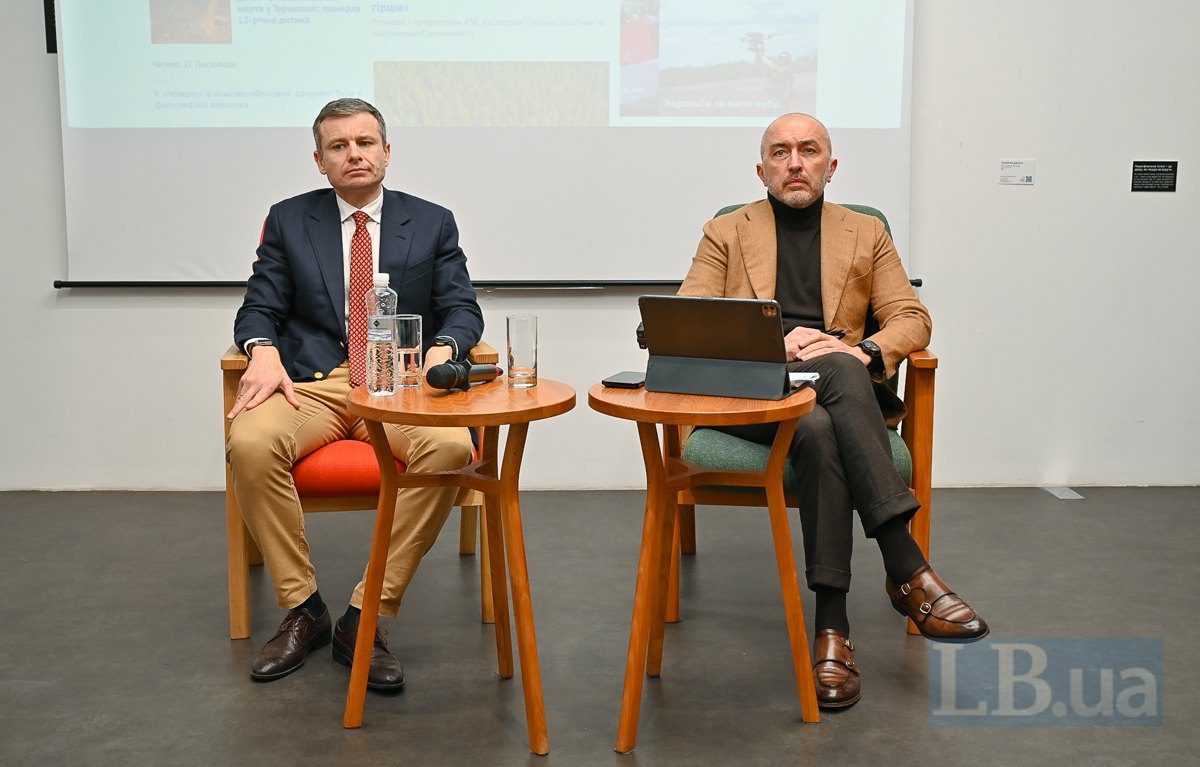
Sonya Koshkina (editor-in-chief of LB.ua): Ukraine and the International Monetary Fund have agreed on a new cooperation programme for the next four years. Despite its relatively modest size — $8.1 billion — the programme will help attract more than $136 billion in external financing from our partners to support the state.
However, there is a risk that this could affect Ukrainians’ wallets, because in order for the country to be able to repay the loans in future, the IMF requires the government to adopt unpopular tax decisions. How did the negotiations proceed, what were their focal points, and what are the risks of tax increases for citizens?
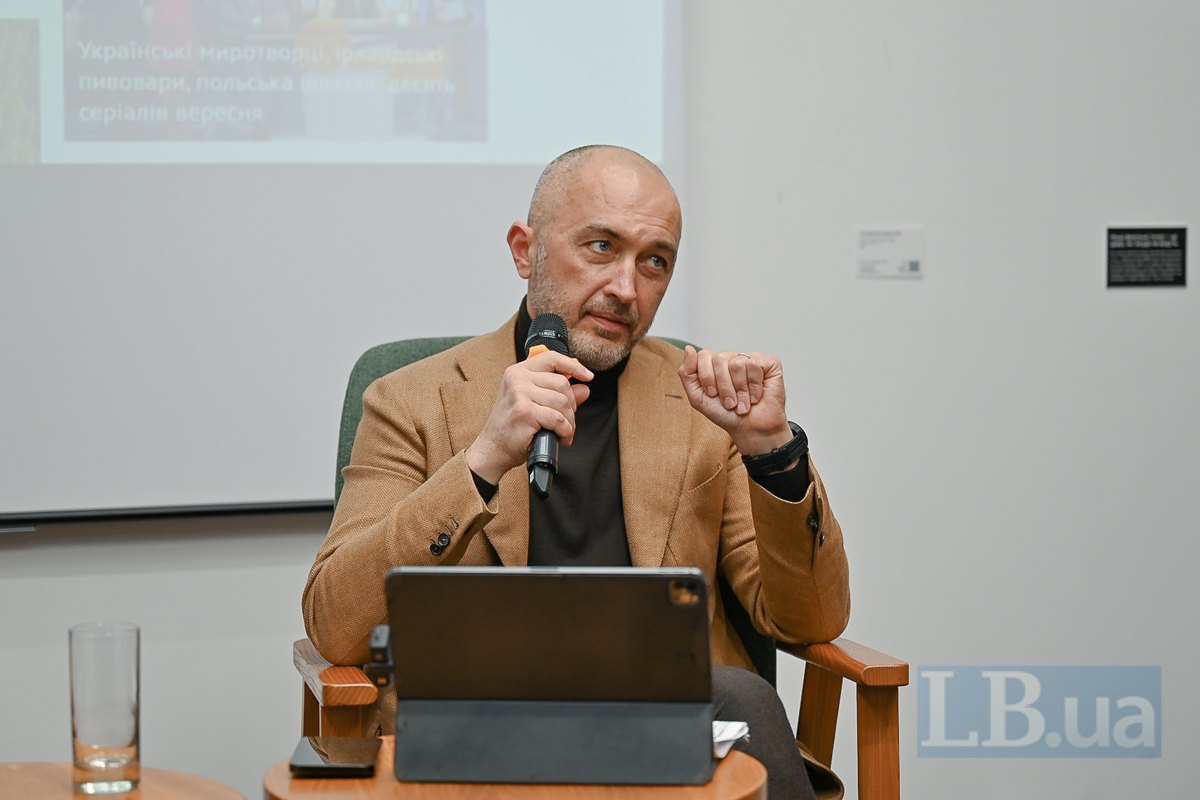
Andriy Pyshnyy: Let me begin with the part that falls within the National Bank’s area of responsibility. I would like to congratulate everyone on the fact that we have reached an agreement with the International Monetary Fund at the staff level. This is a new programme.
Yes, against the backdrop of our need for $136 billion, $8 billion may not seem very impressive, right? But I disagree, because the programme with the International Monetary Fund is, and remains, a kind of keystone on which the entire structure of Ukraine’s international financial assistance rests — a structure through which our partners verify our progress in implementing structural reforms. Structural reforms are a prerequisite for our European integration.
Moreover, let us be honest: the commitments we undertake within the framework of these agreements often become powerful drivers of the structural reforms the country needs. We are all beneficiaries of these changes.
Therefore, it is important to perceive these agreements — difficult as they were to achieve — as a tangible and correct result. When we frame them solely in terms of the negative effect on our wallets, I am sorry, but I must disagree. The absence of this programme would be felt by everyone. Immediately, in fact.
Sonya Koshkina: How would that manifest itself?
Andriy Pyshnyy: The new programme with the International Monetary Fund, like the previous one, contains a section eight in its concept. Serhiy [Marchenko] and I discussed it separately with the IMF team back in October 2022. It defines the purpose of this programme: to ensure macro-financial stability and to ensure Ukraine’s external stability as it fights for victory.
How many times did we return to this thesis, discussing it with our colleagues from the International Monetary Fund and bringing them back to what we considered the truly essential issues. And the previous programme, let us remember, underwent eight successful reviews. Ukraine has never had more than four reviews in peacetime. This is a record.
So, you know, the absence of this programme would seriously undermine our ability to resist. It would destroy the entire structure of international financial assistance. And we urgently need funds for next year.
Serhiy Marchenko: This time it was not easy [in negotiations with the IMF mission]. It is always difficult during missions, but this time it was particularly challenging.
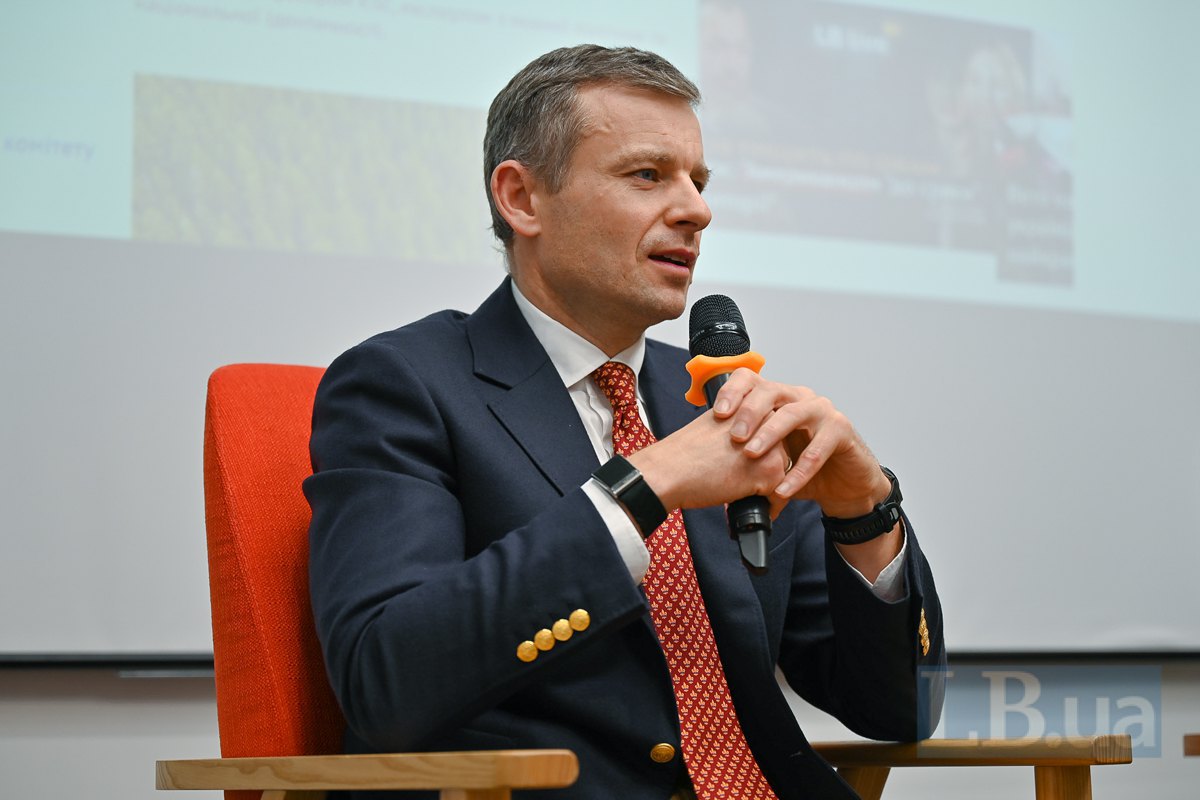
…This is an important intermediate stage that determines many things. The staff-level agreement is important now as a positive signal. It is critically important. More than ever. Ukraine has assumed its share of commitments. And this programme makes it possible to ask clear questions of our partners, who must provide financial commitments to ensure the programme is funded and secured.
It differs from the previous one. The new cooperation programme has shifted its focus and is clearly oriented towards fiscal and monetary policy issues. As, in principle, it should be. That is, most of our discussions concerned issues specific to the National Bank and the Ministry of Finance. This likely shaped its nature and the measures that have been widely reported in the press.
We really need to improve administration and strengthen our ability to collect taxes. Taxes are necessary to replace part of external financing. The government must demonstrate that we are also doing ‘our homework’ in terms of revenue mobilisation. Because if you raise $45 billion a year (and this year it will be over $50 billion), you must show that you are undertaking domestic measures as well. This is a step we had to take. The measures included in the programme are being implemented and, at least from the Ministry of Finance’s perspective, must be ensured.
Sonya Koshkina: Which specific taxes will need to be increased and by how much?
Serhiy Marchenko: First of all, no one intends to raise tax rates. Let us make that clear.
What are we going to do? First, we will adopt bills that have been in parliament for a long time — concerning the taxation of income from digital platforms.
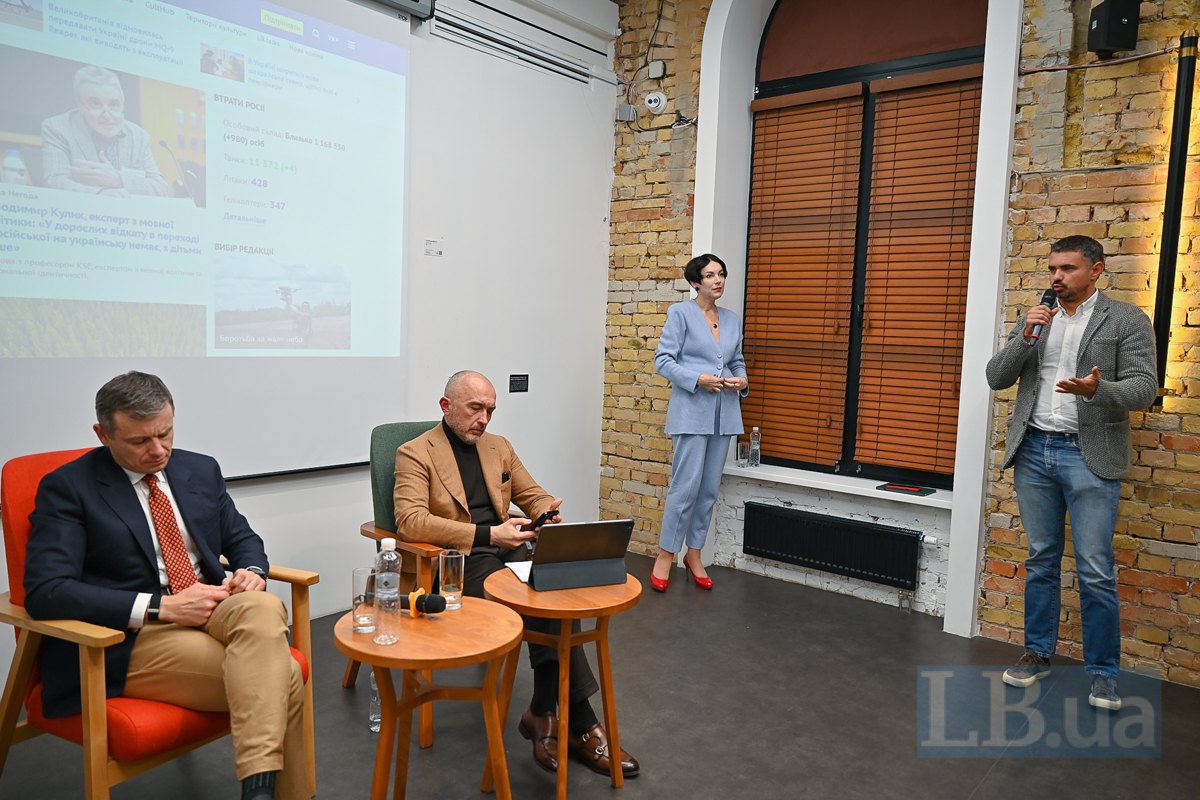
Sonya Koshkina: For example, OLX.
Serhiy Marchenko: This is a bill that has attracted the interest of Glovo and most digital platforms that work with hired employees. It is important to them. There is no debate here. I think the committee and parliament will pass this law.
Next is the issue of taxation on international parcels. We started talking about this two years ago. Some people didn't like it. But it turned out that most of the small parcels imported into Ukraine come from a country that is sometimes unfriendly to Ukraine in a geopolitical sense.
Moreover, most operators who import and sell their products legally have found themselves uncompetitive due to the dominance of imported products in our market. This has a significant impact on Ukraine's balance of payments. The issue of parcel taxation is important and will partially offset the negative trends in the market. Because, I want to note, the negative trade balance this year could reach $45 billion. This should cause us to sober up about how and where we are going.
Sonya Koshkina: What revenues are expected from the implementation of these changes?
Serhiy Marchenko: I don't want to give any estimates today. It all depends on what the final version will look like. Because there are important details.
We will introduce the European taxation practice — at the stage of purchase in a shop, when the individual who makes the purchase pays the tax immediately upon purchase. This is how it works in the European Union. We had to get there anyway, we'll just get there in a year. Not right away on 1 January. We will have time to prepare and readjust.
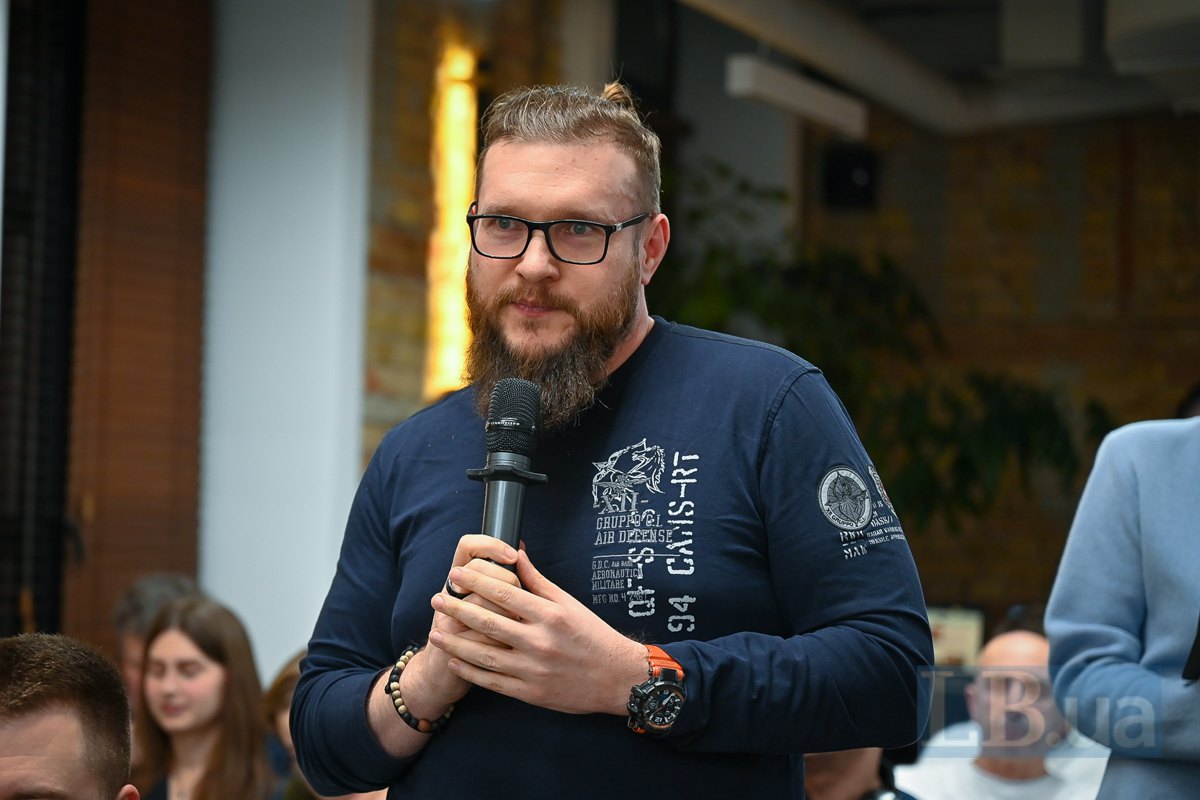
Oleksandr Kopyl (co-founder of the K&K Group consulting agency): According to Bloomberg, one of the IMF's requirements is to reform the simplified taxation system. Specifically, sole proprietors with a turnover of more than UAH 1 million must become VAT payers. Can you confirm or deny this information, as there has been no official source yet? If so, how strict are these requirements, and will there be any gradual implementation, perhaps with certain loopholes?
And a second question. If you fail to attract the figure you mentioned of over $50 billion, can we expect an exchange rate of 50 hryvnya to the dollar?
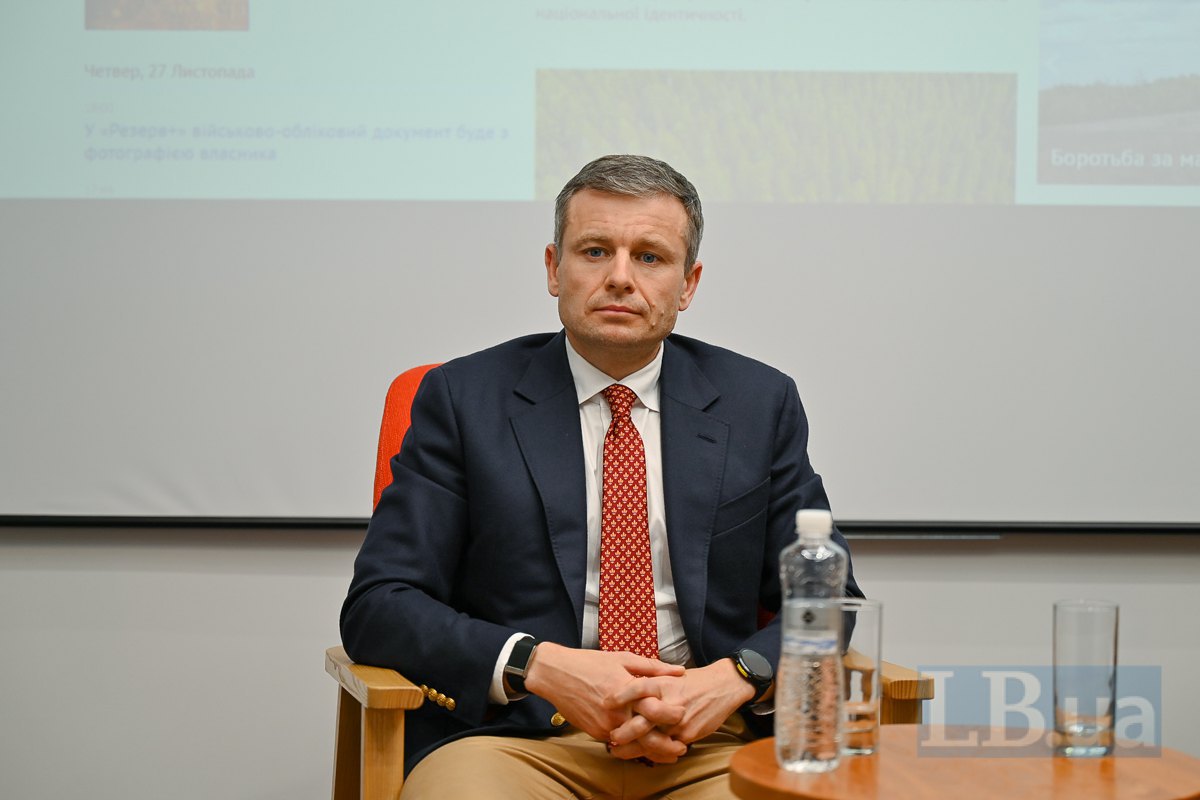
Serhiy Marchenko: The task is to level the playing field for "simplified taxpayers" and VAT-registered businesses, and to set common limits for these groups of taxpayers.
You know that our simplified taxation system is not limited to small businesses providing services, consulting and other activities. It is also a way for large unscrupulous businesses to evade taxes by simply using "simplified taxpayers". Is it possible to avoid changes in the simplified taxation system? No, it is not possible. And the discussion on this [with the IMF] was quite difficult.
There is time to prepare — there will be a transition period until 2027, with maximum clarification of the logic and reasons for this step. I don't think this is a surprise. If you look at the plans that the Ministry of Finance has been preparing for years, they also included this provision.
Such measures are not popular, but they are important. And during this period, we had no room for manoeuvre in negotiations to remove them from the discussion.
Sonya Koshkina: Bloomberg also reported on pressure from the IMF regarding the devaluation of the hryvnya, which the NBU resisted due to inflationary risks and public sentiment. Is that true?
Andriy Pyshnyy: When we communicate with our colleagues from the International Monetary Fund, issues of monetary and exchange rate policy and currency liberalisation are always on the table, and we discuss them in depth.
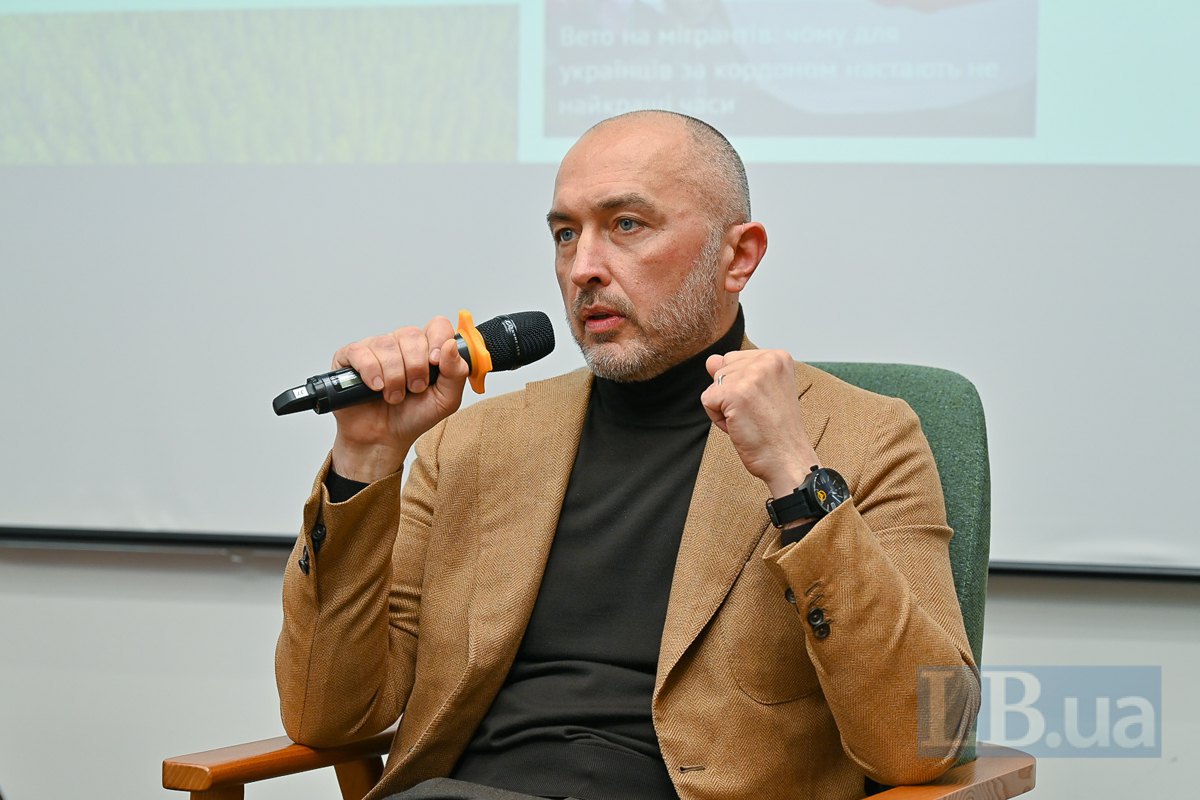
At this point, I would like to remind you that in October 2023, the National Bank switched to a managed flexibility exchange rate regime, and in 2024, it switched to flexible inflation targeting. In this way, we are gradually restoring the market principles of market functioning.
The National Bank does not target the exchange rate. The National Bank has a clear, understandable, legally enshrined mandate to ensure price stability. We clearly declare that, according to the baseline scenario, inflation will slow down to a single-digit figure of 9.2% this year. Next year, it will slow to 6.6%. On the policy horizon, in 2027, it will slow to 5%. These parameters determine the logic of the National Bank and its behaviour on the currency market.
The managed flexibility regime was preceded by a fixed exchange rate, which was introduced in the early hours of the full-scale invasion. Let me remind you that before the full-scale invasion, Ukraine was in a mode of inflation targeting and a floating exchange rate — a huge achievement. At the moment of the full-scale invasion, these things were abandoned as part of a package of anti-crisis measures.
This ‘tourniquet’ was imposed on the economy in order for it to survive. But its prolonged use is dangerous. When we saw that conditions were ripe for stabilisation, we began to gradually remove this ‘tourniquet’ and restore normality. Controlled flexibility is one such element.
We are returning the influence of supply and demand to the market. They are what determine the dynamics of the exchange rate. The volume of transactions without the participation of the National Bank in the market today reaches 60%. On some days, it is even higher. The National Bank only compensates for the structural deficit in the private sector.
Supply and demand are exactly what we are fuelling as much as possible, as well as expanding the parameters of flexibility. Our focus is on the functioning of a market where supply and demand are decisive. The market functions in conditions where the National Bank is simply present when dangerous volatility arises in order to ensure the stability of the currency market, rather than targeting the exchange rate.
These are complex issues for which there is no single answer; to understand them, you need to dig a little deeper. I have given you a brief summary of our communication with the International Monetary Fund over the last three months.
The managed flexibility regime will be deepened. The exchange rate must continue to perform its function of absorbing shocks and ensuring external stability. The National Bank has been and remains strategically focused on ensuring the attractiveness of hryvnya assets. And here, please note: the portfolio of government bonds held by individuals alone reached UAH 61 billion in November 2025. This is 4.8 times more than the total amount at the time of the full-scale invasion. Hryvnya instruments are in demand. Therefore, we will continue to monitor the stability of the currency exchange market without targeting the exchange rate. We are still targeting inflation in a very flexible manner. In fact, it is called flexible inflation targeting, which means that we are aiming to achieve an inflation target of 5% over the policy horizon.
Given that we are currently in a situation of extraordinary uncertainty and war, the horizon for achieving the inflation target has been extended to three years.
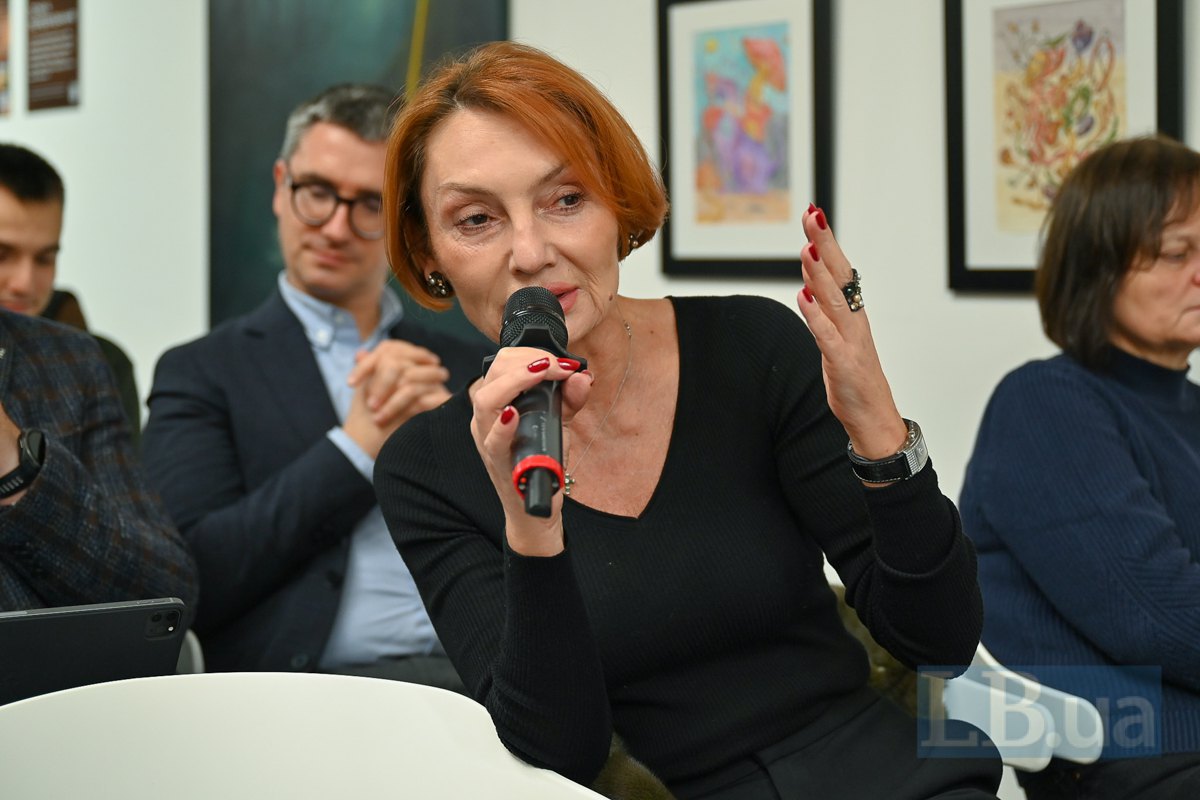
Kateryna Rozhkova (former Deputy Head of the National Bank of Ukraine): You mentioned the ‘tourniquet’ that the National Bank has been trying to remove since 2022, after we switched to flexible exchange rate formation or managed flexibility. But it seems that we have simply raised it a little higher after re-tied the exchange rate. At the moment, it looks like the exchange rate remains the main anchor, not inflation. And it is precisely the exchange rate stability that you are talking about, which, incidentally, is perceived ambiguously by the market, that is the main tool for managing inflation.
Against the backdrop of minus 45 billion, as Serhiy mentioned, there is deep concern that huge exchange rate imbalances are accumulating. And if today you believe that the exchange rate is a shock absorber, then, figuratively speaking, in the near future the market can expect the the tourniquets will be moved even higher.
Andriy Pyshnyy: In fact, we removed this ‘tourniquet’ together. I see managed flexibility as something that restores supply and demand, rather than fixing the exchange rate. You know very well, Kateryna Viktorivna, how managed flexibility works. I think you understand perfectly well what fiscal dominance means. You understand as well as I do that the National Bank has never accepted the exchange rate forecasts included in the state budget as a target and, accordingly, has not based its exchange rate policy on them.
In order for the exchange rate to act as a shock absorber, it is essential to take into account that it must not at any point become a shock generator. And here it is important to clearly identify the entire matrix of shocks.
I said quite deliberately that we are interested in ensuring the attractiveness of hryvnya assets. This is what enables the domestic debt market to function. This is what makes it possible today to keep under control the huge hryvnya mass that was formed by absolutely unprecedented budget expenditures and redistributed through the banking system to accounts — both demand and term accounts.
Today, we are succeeding in this because deposit rates compensate for inflation expectations. And the rates on domestic government bonds (DGBs) make them an attractive instrument.
But where are you right? In that the National Bank must seek the right balance. And this balance is an element of art in monetary policy. When you find a balance in monetary policy, which is determined by the corresponding cost of the resource — the key rate — in exchange rate policy, which is determined by intervention policy, the functioning of the currency market and the liberalisation of existing currency restrictions.
And so we are trying to find a balance in this situation. Keeping in mind that the key mandate of the National Bank is price stability. Understanding that we are in a situation where inflation over four years of major war first rose to 27%, then fell to 5%, then rose to 16%, and is now struggling to return to single digits. Therefore, while balancing and seeking appropriate compromises, we remember that the main function of the National Bank is to ensure price stability. All our policies will continue to be subordinated to this.
We are definitely interested in increasing flexibility. We are definitely interested in making inflation targeting even more flexible and taking into account the external context, rather than sitting in an ivory tower. Instead, we are sitting here in an open auditorium, waiting for candid questions.
Sonya Koshkina: Minister of Economy Serhiy Sobolev mentioned at LB.talks that the IMF was sceptical about subsidising passenger rail transport from the state budget.
Bloomberg also wrote that the Fund allegedly criticised the UZ-3000 initiative. How does the IMF generally react to large-scale social programmes — such as winter support or 40+check-up — given the record deficit? Have you felt pressure in this regard?
Oleksandr Slobozhan (Executive Director of the Association of Ukrainian Cities): I would like to add a question about Ukrzaliznytsya, which we rescue every year. As Minister of Finance, do you think it is right to subsidise Ukrzaliznytsya? Will the Ministry of Finance make proposals to optimise the company's operations in terms of non-core assets? And is it right that Ukrzaliznytsya does not pay taxes to local authorities?
Serhiy Marchenko: We did not have such a discussion [regarding subsidies for passenger transport]. Not once in our communications with the IMF were there any discussions about the "thousand hryvnyas" or about Ukrzaliznytsya. The issue of the unprofitability of most state-owned companies and their maintenance, the imposition of special obligations, was raised, but this is a broader discussion.
Regarding Ukrzaliznytsya, I will answer as follows: starting this year, we are keeping the company afloat directly with subsidies from the state budget. I do not want to go into the details of this complex discussion, which has been going on for the last six months. As far as I can remember, there have been several dozen meetings. And from the format of "give us money because we need to pay salaries," we are coming to the conclusion that some types of Ukrzaliznytsya's so-called business are unprofitable. This raises the question of how the state should respond to this.
Passenger transport is mostly unprofitable, and, as the practice of other countries shows, they have a similar situation. We have gradually come to the conclusion that the state could potentially subsidise Ukrzaliznytsya. Whether this could have been avoided, whether steps could have been taken to balance the financial situation of the railway, I will not comment on, because this is not a matter for a single discussion. There are many aspects to it, and we are resolving them in a working order, including with Ukrzaliznytsya.
Our starting point is that we will help Ukrzaliznytsya to keep operating.
Hlib Vyshlinskyy (Executive Director of the Centre for Economic Strategies): The IMF mission's conclusion is somewhat unusual. It reminds me of a joke from the late Soviet era about two businessmen who agreed to sell each other a wagon of jam — one went to look for a wagon of jam, and the other went to look for money for a wagon of jam.
In other words, our partners went to look for 63 billion to supplement our needs. And we have a "wagon of jam," which worries me the most right now, apart from taxes. What will happen if, for reasons unrelated to the content of the budget, but solely due to the internal political crisis, the budget is not adopted on time this year? How might events unfold with regard to international support and the IMF programme after that?
Serhiy Marchenko: I will answer briefly: nothing will happen.
Sonya Koshkina: I would add that there are indeed rumours among the "servants" that the budget may not be voted on. In other words, the political situation is not the best.
Serhiy Marchenko: I don't want to comment on the political debate. But if there is no budget, there will be no programme with the IMF. Not voting for the budget automatically means that all our efforts and negotiations are worthless. Moreover, one budget will not be enough. The laws I mentioned at the beginning also need to be voted on by the end of January. Therefore, an effective Verkhovna Rada is very much needed. This is now the number one issue.
Andriy Pyshnyy: The programme we created in 2022 is unique in at least two respects. First, it is based on a policy of extraordinary uncertainty. This is a unique situation for the International Monetary Fund. They were forced to change their metrics and policies in order for this programme to happen. The essence of this programme is that extraordinary uncertainty generates a gap. And this gap can be covered by appropriate assurances that must be provided by international partners. This is part of the anecdote you are referring to — "someone went looking for jam".
But in order to be truly successful in this, Ukraine must be effective in fulfilling the commitments it has made. During the three years of this programme, there have been eight reviews, each time we have fulfilled these commitments, and each mission has confirmed this. This allowed the International Monetary Fund to turn to international partners and say: "Ukraine has fulfilled its part of the agreement; under the baseline scenario, the amount of coverage of the relevant financial obligations of the gap is so much."
These are colossal figures. The first programme identified a need for 115 billion under the baseline scenario and 140 billion under the negative scenario. And we were successful for three years because we did our part of the exercise, and then we could calmly, using the political resources and weight of the International Monetary Fund, talk about rolling out financing programmes. And here I want to support Serhiy.
We have conditions that we must fulfil today, and these conditions were the result of very difficult negotiations over the past week. And this programme has been implemented at the staff level. In order for it to be implemented at the Board of Directors level, there are a number of obligations. And the adoption of the state budget is not even an obligation that must be fulfilled within the framework of the programme. It is something we must do as a matter of common sense, in accordance with the Budget Code law. Therefore, this discussion is somewhat pointless if we question the basic, mandatory condition, the existence of which makes it possible, in principle, to look ahead to the 26th year.
Nina Yuzhanina (MP from European Solidarity, Chair of the Verkhovna Rada Committee on Tax and Customs Policy): Dear Minister, dear Head, let's start with the fact that you announced the successful completion of negotiations with the IMF. But none of you, none of the future signatories, have informed us about what has been agreed. And it was only on the IMF website that we were able to read about the commitments that Ukraine will once again undertake.
You have said several times that the previous programme has undergone eight successful reviews. Excuse me, but I know for sure that we are adopting the programme for implementation, but we are backtracking on these laws during their implementation. We have not implemented any structural reforms in recent years. No control, which was required of us, no additional tools, nothing. We start something and then stop.
As for the changes that need to be made to tax laws, we will pass the law on OLX if it is within the limits of what is required of us, and not what you have added. The same goes for parcels. But how could we not defend the simplified taxation system in terms of non-registration as a VAT payer? This is very strange, because we have the biggest problem in the country with VAT administration. It stops activity altogether. We have not learned to work honestly on electronic systems, without interference, without violating the rights of taxpayers.
Where are we dragging in people who are not familiar with such fundamental rules of accounting and, in general, working with such a complex tax as value added tax? I ask you to talk about everything more realistically, because we are living at the expense of our creditors, who do not take into account your behaviour, Ukraine's failure to fulfil its obligations, and continue to help us.
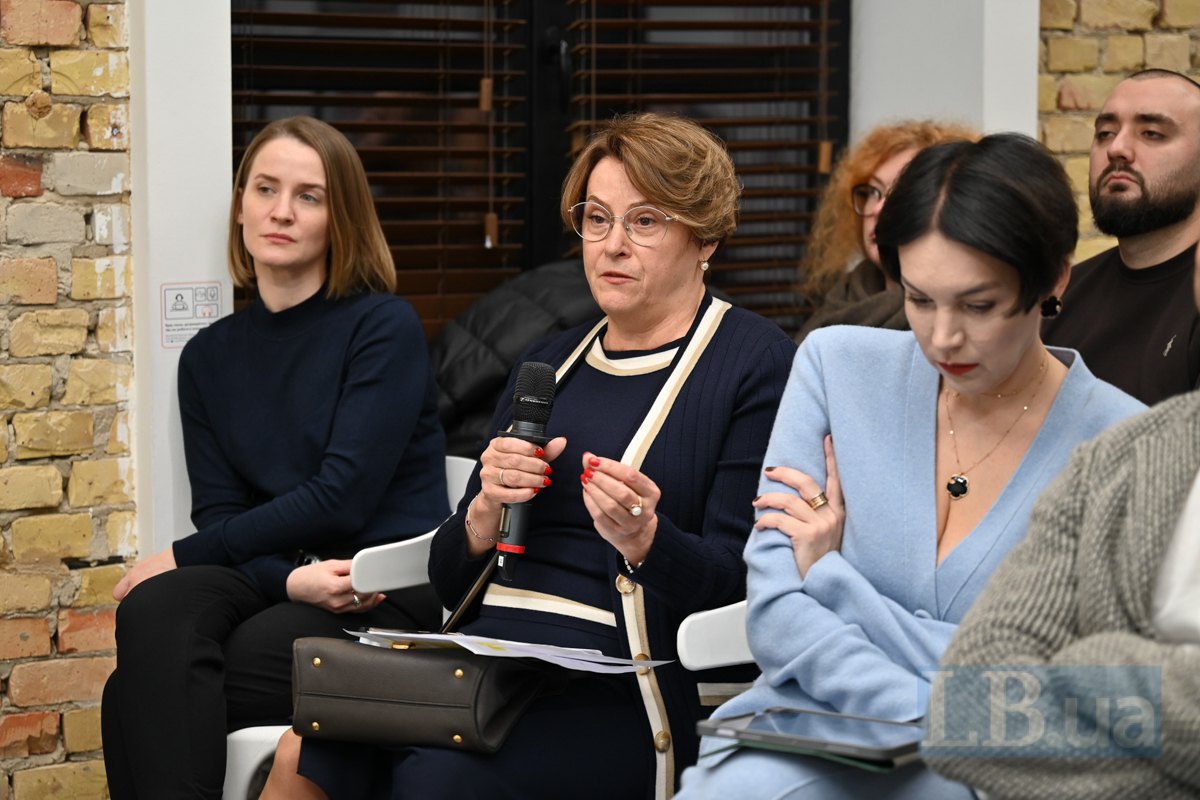
Andriy Pyshnyy: I will not dispute your political statements, which have no substance. You have a goal to express yourself, and you have expressed yourself. I will speak in facts. Whether reforms are being implemented or not is for you to judge. I know exactly the areas where I would like to see more progress and more tangible results. Well, in particular, in the development of capital market infrastructure, strengthening the capacity of the National Securities and Stock Market Commission, and implementing the roadmap that we agreed with the European Bank for Reconstruction and Development.
There is an indicator by which the National Bank measures so-called prudential equivalence, which is the compliance of our regulatory environment with the requirements of the European Union. This is an important indicator that shows the dynamics and progress. Since the intensification of the movement towards the European Union, a very active process has begun in this direction.
At the time of the full-scale invasion, this prudential equivalence index was less than 50%. As of now, it is already 78%. If we adopt certain legislative acts, and I very much hope that you will support them, it will be 80%. And this is a qualitatively different story in terms of interaction with European investment capital.
In particular, in opening up limits for international financial groups to invest even in Ukrainian government debt. This is a completely different attractiveness of assets that are currently operating in the banking sector. This is structural reform.
I would like to see more structural reforms in terms of de-shadowing. Some of them are included in the package of agreements we have reached as a result of this mission. They are certainly not easy. And here I want to call on you: vote, campaign, help to de-shadow the Ukrainian economy, help to fill the Ukrainian budget as much as possible.
As soon as the budget deficit decreases thanks to better fiscal policy, the need for international financial assistance will decrease. And it will be spent not just to cover expenses, but also on recovery and development.
So, we can work better and we must work better. But it is wrong to say that structural reforms are not being implemented, as eight reviews with the International Monetary Fund have not confirmed this.
Andriy Zhurzhiy (founder and CEO of the investment REIT company Inzhur): Ukraine signed a memorandum in Rome on the creation of a new stock exchange. Can you share your expectations and deadlines for when this exchange might start operating? Who will trade on it and what will they trade? And why, in your opinion, should this exchange finally function as a real exchange, unlike those currently operating in Ukraine or those that have been liquidated?
One more question. You talked about the importance of hryvnya assets and the success of raising funds in government bonds, but we all forget about the private sector and private businesses that cannot raise debt through corporate bonds because of tax arbitration.
When issuing bonds, a private company must withhold 23% from individuals and pay it to the budget. The state does not receive taxes and has better conditions compared to business. Do you see this problem and do you plan to do anything about it? At the same time, we are not talking about the absence of taxes on individuals on corporate securities, we are talking about the fact that it would probably be worth returning to taxes on government securities at some point.
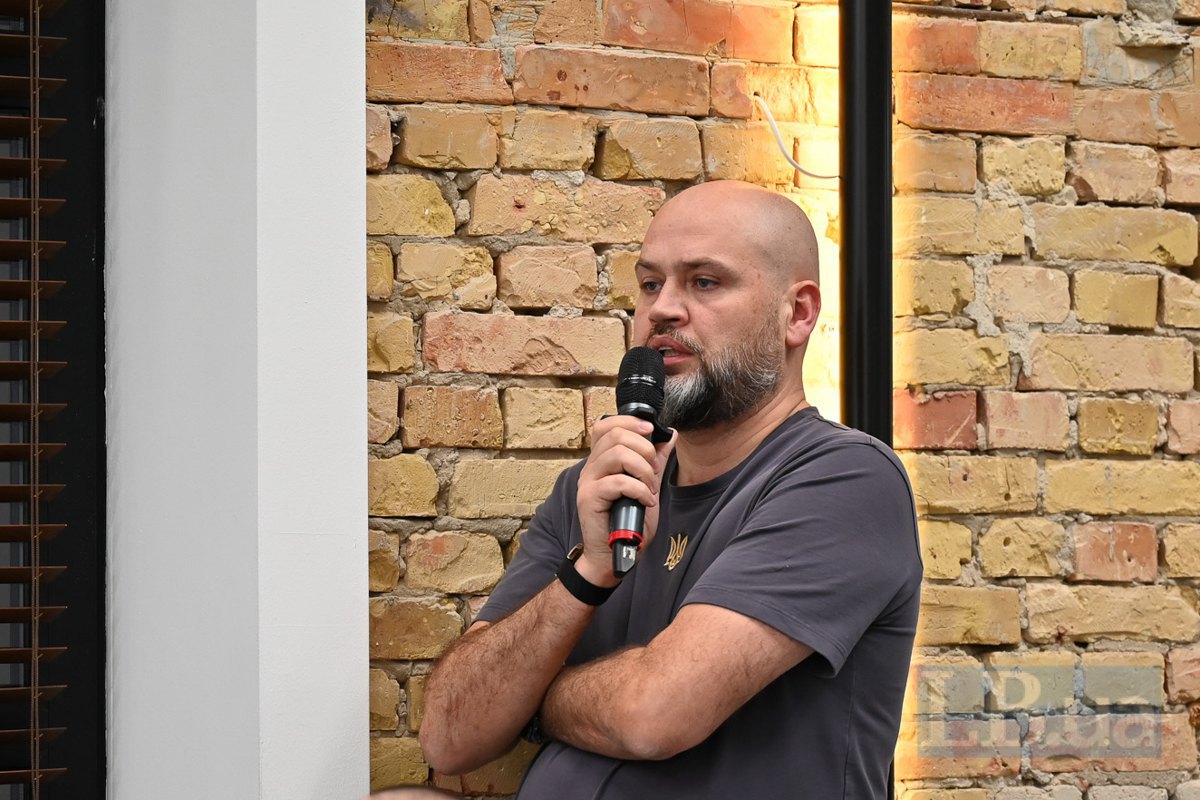
Andriy Pyshnyy: We were indeed among those who initiated a large-scale, in-depth reform aimed at creating capital market infrastructure. And with the memorandum we signed with the European Bank for Reconstruction and Development — signed by the Minister of Finance, the Minister of Economy, representatives of the National Securities and Stock Market Commission, the EBRD and the National Bank — we defined our roadmap. It provides for a whole range of measures. You can follow the dynamics of this process, because this document is public. It fits into the Financial Sector Development Strategy, which we have agreed upon and made public.
Incidentally, this is one of the elements of our policy. We try to make all strategic documents that determine the direction and order of actions public so that they provide you with more information. This information reduces uncertainty and helps you in your planning.
As for what has already been done on the roadmap, the government has made a decision and transferred its stake in the National Depository (NDU) to the NBU. In this way, it has partially eliminated the conflict of interest that existed in the National Securities and Stock Market Commission, which held a controlling stake in the NDU. Procedures are now underway: shareholders' meetings, new statutes. This is not an easy task.
We have found ourselves in what I would call a messy, complex, tedious process of corporate discussions. But we will move forward dynamically. We have a plan A and a plan B to ensure that the roadmap we have set for ourselves moves forward. We are presenting certain initiatives to the government. I see a desire on the part of the government to support this. I also see energy on the part of the prime minister to move in this direction.
At the same time, a working group is working on a new draft law that should regulate the creation of a vertically integrated holding company with the participation of international players, which will allow the exchange that we want to create with the participation of the EBRD and international players in this market have a sufficient level of trust where we want private capital to come from. There are a number of other initiatives. I won't take up your time, it's all on our website.
We communicate every move we make, every decision we take, so that you, as players, can follow what is happening in this regard.
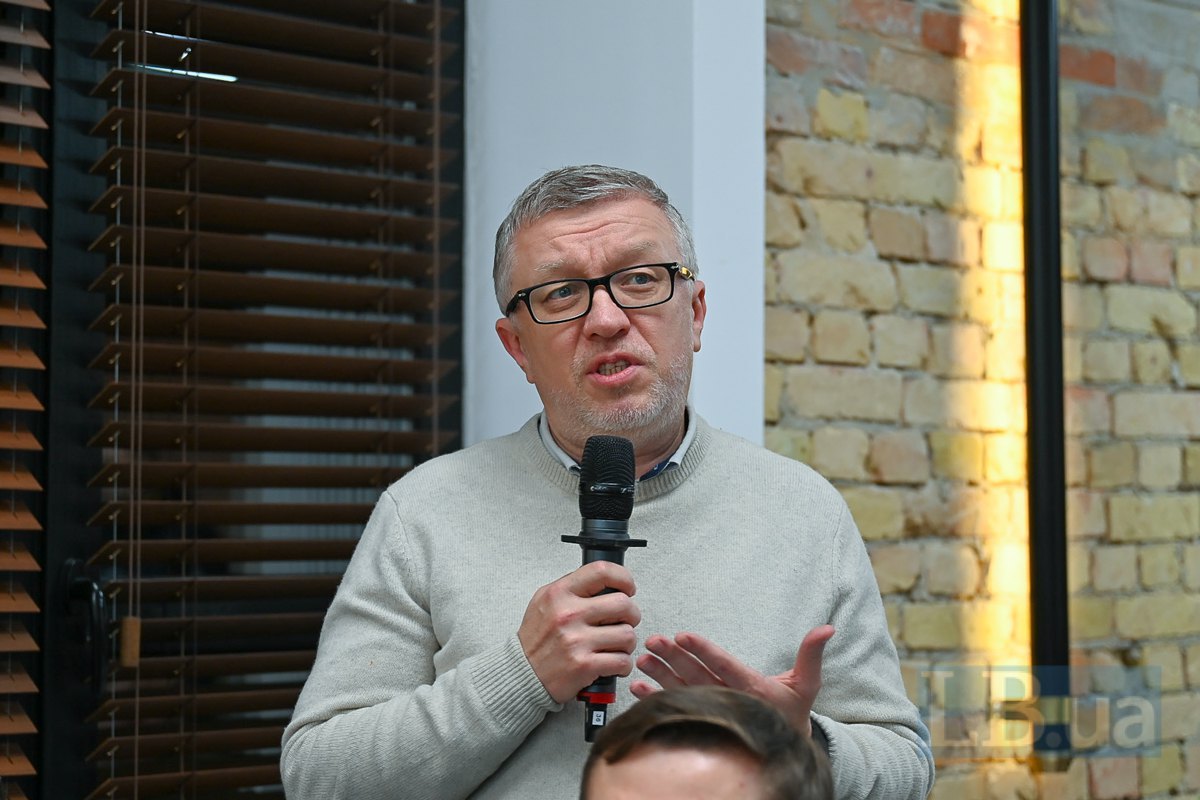
Taras Kozak (President of the Univer Investment Group): We don't need any stock exchange. We have two, and they have nothing to live on. They are wildly unprofitable, have no instruments to trade with, and no capital.
A question for Serhiy Marchenko — about long-term money. There is no long-term money in Ukraine. All the money in Ukrainian banks amounts to 2.9 trillion hryvnya. Of this, 2 trillion hryvnya is demand money, simply balances on cards and in accounts. Only 900 billion hryvnya is money in term deposits. Of this, 200 billion hryvnya is for a term of more than one year. This is all that can be considered long-term money. 4 billion euros. This is peanuts even for our small GDP. It is very little. How can this be stimulated?
History knows two incentives: pension reform, which has been discussed in various offices for 20 years, with everyone seemingly in favour, but not really; and personal accounts that allow people to deposit money for a long term (5+ years) and not touch it thanks to the benefits they receive. And this money works for the Ukrainian economy for a long time. We need to rebuild it, but where will we get the money? We will not rebuild anything with Western loans, because they are loans. We need internal resources, the internal money of our citizens and companies, to turn into this resource.
Andriy Pyshnyy: Please do not reduce everything that needs to be done to develop the capital market infrastructure to the creation of a stock exchange. The exchange is a mandatory element. Please familiarise yourself with the roadmap. If you have any bright ideas about it, be sure to contact us. We are definitely interested in getting the widest possible expertise on this.
But right now, the roadmap includes a whole bunch of stuff. And the stock exchange is just one part of it. Reforming the clearing house and national depository, creating a vertically integrated infrastructure, bringing in expertise, and with it, trust from our markets. Along with this, there are a number of initiatives to create the products themselves, which should fill this infrastructure with action and assets. But that's a separate discussion altogether. It is important that the National Commission, the parliamentary committee, experts, and market representatives are involved here. The National Bank will also have its say.
Serhiy Marchenko: Thank you, Taras, for your analysis and statistical observations. But no long-term money model works in conditions of war, high inflation, uncertainty, an IMF programme, and the attraction of external financing in the amount of $40-50 billion.
We can talk about this for a long time, thinking about what we will do after the war. But this requires macroeconomic stability, with inflation below 5% for 5-10 years. Then we can talk about extended instruments, somehow building the trust of citizens who put their money in deposits. Because, excuse me, a five-year deposit looks quite optimistic right now.
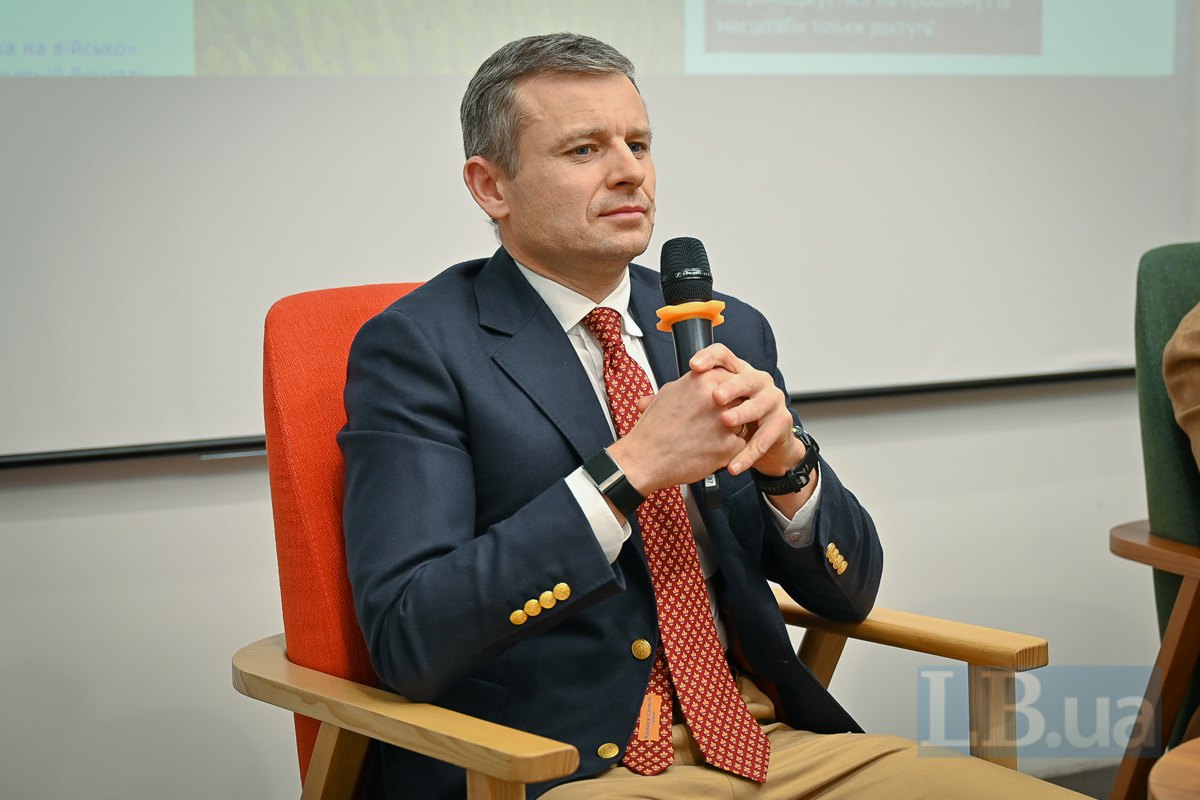
Sonya Koshkina: "We are engaged in difficult discussions with the International Monetary Fund team. We will argue that the expected restructuring of fiscal authorities and measures to combat the shadow economy will make it possible to maintain revenues, which is currently the main task," — your quote, Mr. Serhiy. What specific steps are you referring to in terms of restructuring fiscal authorities?
Serhiy Marchenko: When I said that, I was firmly convinced that by showing that our share of GDP revenues is increasing, and it increases starting in 2023, we will be able to convince the mission team that fiscal measures during the war should perhaps be postponed. Because if we show a trend of growth in the share of GDP revenue, it means that we are doing a good job in terms of mobilising our own revenues. And we have sufficient grounds to show our partners that we also share responsibility with them.
But the situation has changed for us.
Sonya Koshkina: We now have Energoatom. To what extent did the exposure of corruption in the energy sector complicate the negotiations?
It did complicate the negotiations.
Sonya Koshkina: How exactly?
Serhiy Marchenko: This was one of the key issues we started the mission with. And we returned to it and discussed it from time to time.
Sonya Koshkina: We have a shortfall of 12 billion for 2026. What can you say to partners who say, "But you have billions in corruption."
Serhiy Marchenko: Everyone has to solve their own problems. And, unfortunately, we found ourselves in the situation we were in. And we had to solve a very difficult problem with the National Bank, given the situation that existed.
In this particular case, it is very difficult to solve it when the issue of trust is in the air. You can build it up for a long time, we can talk about eight revisions, but the question of trust arose. And the question of trust arose not in relation to specific individuals who are the subject of (non-)public accusations. But in general, in relation to the Ukrainian authorities and the Ukrainian state as represented by these authorities. And we needed to change this perception and get results.
This result is quite difficult because the topic of Energoatom raised many questions that might not have arisen in the course of this discussion. I wish we had not had this crisis. But that did not happen. It is great that we achieved a result. Because the result was not at all obvious at the beginning of this mission.
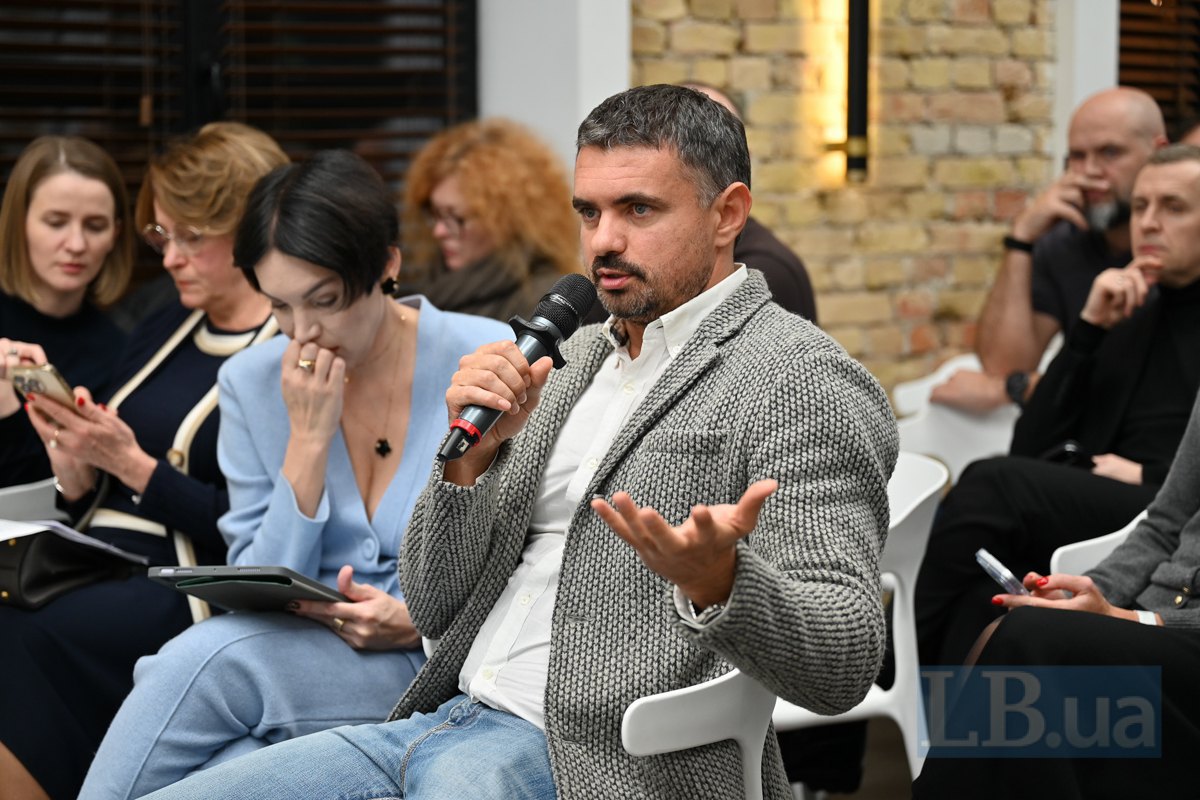
Ihor Liski (Chairman of the Supervisory Board of EFI Group investment company): Of all those in power, I have the fewest questions for these two gentlemen. But I still have three.
The first concerns the transformation of taxation and customs, the move towards transparency and openness, and the absence of corruption, which still appears.
Second, there needs to be clear communication with society: where will we get the money, how do you see this problem being solved, why are changes in taxation necessary, and how is this linked to external financing? So that it doesn't look like someone stole something and you're trying to plug the hole, excuse me.
Thirdly, I understand that this is a difficult issue during wartime, but how can we increase the opportunities for Ukrainian businesses to attract investment, project financing and start new projects.
Serhiy Marchenko: That's a lot of questions. I'll start with the middle one. I think this is what interests everyone the most. The situation with attracting financing for next year is quite complicated. It was complicated even before the mission, three or four months ago. What is the complexity? We do not have enough assurances that we already have as potential financing, namely: Ukraine Facility, ERA Loans balances, a potential DPL programme from the World Bank, and some other possible financial resources that we are attracting, which are enough for a little more than half of the amount needed for next year.
And we have plans and an understanding (which are still being implemented) of how we will attract resources this year to finance the beginning of next year. What we need to do next year to get regular funding so that no Ukrainian has any questions about late payments or salary payments. We never allowed this to happen during the war. And now we have options on how to resolve all this.
But we are counting on decisions from our partners. On big decisions. There is a risk that it may not be a reparation loan, but some kind of interim solution. We are happy with any combination that will ensure regular funding.
Again, I cannot say that we are comfortable and that the situation is quite predictable. But we have a clear plan and understanding of what we are doing. Obtaining a Staff Level Agreement is just a small step, but without it, we could not count on anything more.
There are big plans for next year: a decision by the [IMF] board is needed, a new DPL, which is linked to the adoption of laws, and many laws also need to be voted on in the Ukraine Facility. In other words, these issues should concern not only the Minister of Finance. This is a matter for the authorities as a whole, including the legislative branch.
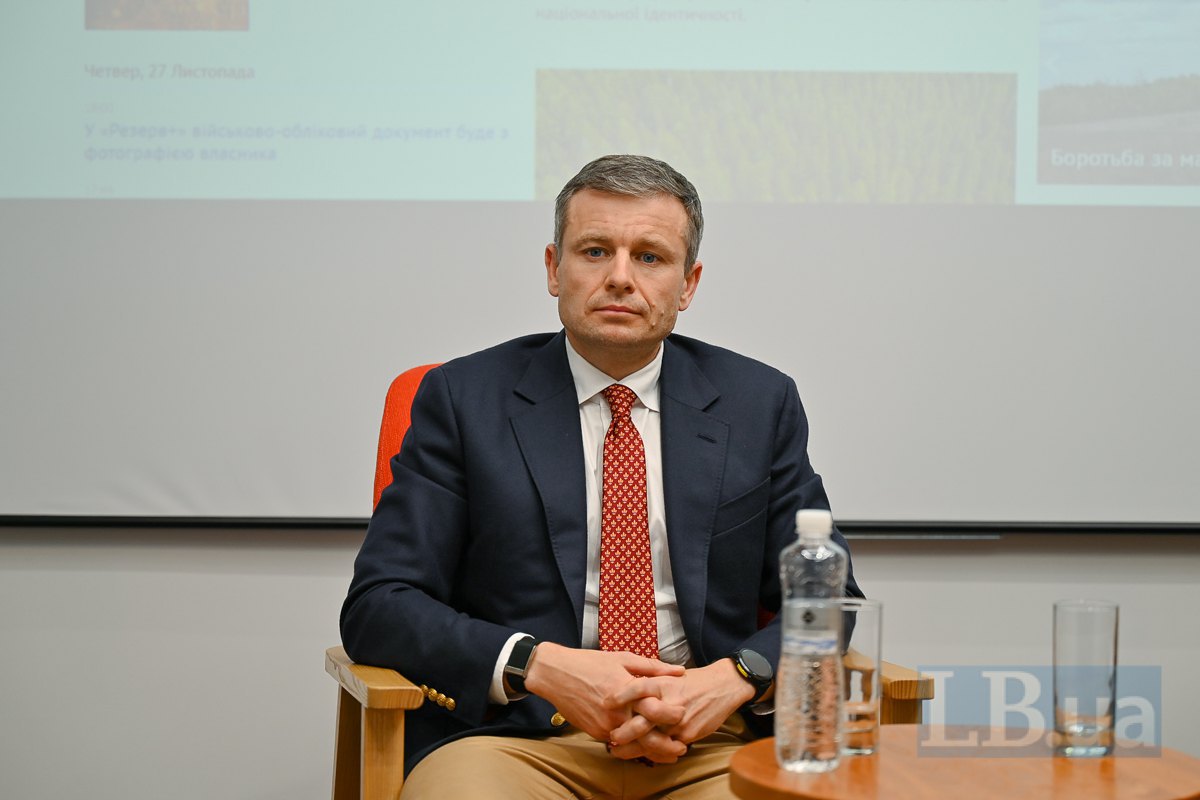
A few words about taxation and customs. We understand everything perfectly well and are ready to do what is necessary — in particular, the steps that are currently outlined in the IMF programme. It contains systemic solutions for the 26th year regarding the work of taxation and customs. We can discuss this separately. I think that when the memorandum is published, you will see many of these steps. They are primarily aimed at eliminating corruption in the tax and customs systems. No one is refusing to do this; measures are in place, and I hope that they will allow us to improve the work of these agencies.
Andriy Pyshnyy: Ihor has actually raised fundamental questions about where to get the money. I will give you a few figures. The banking system currently generates a third of all taxes collected for the state budget. At the same time, its share in gross domestic product is 2%. We see a certain asymmetry.
The banking system is the only one that currently pays a permanently increased income tax rate of 25% and the only one that, for the third time — I say the third time because I believe that parliament will support this decision — will pay 50% income tax. Is this situation normal? No.
When extraordinary taxation was first applied, we were assured that it would be an exceptional measure. When it is being applied for the third time, it is evidence that we have a certain asymmetry and need to develop other areas and industries.
Where to get the money? One of the areas we have been working very hard on is the restoration of lending. And I can say that there are good results: the net loan portfolio of legal entities in hryvnia is growing by more than 30% year-on-year. Lending rates are at pre-crisis levels. NPL (non-performing loans — S.K.) is at a historic ten-year low.
Moreover, we are closely monitoring the mood we see in the banking system: the appetite for lending is growing. For the first time, the balance of responses from credit inspectors in terms of how they see the further development of the credit market is the best in history. This is good news for business. Now, in my opinion, a good business plan can even announce a small tender in terms of a credit offer.
Speaking about business in general, I would like to congratulate you, Ihor, on the agreement you signed with the IFC (NovaSklo, part of Ihor Liski's EFI Group investment group, signed a cooperation agreement with the International Finance Corporation (IFC) to build a float glass production plant. — S.K.). Let's be honest, would you have signed this agreement if macro-financial stability and policy predictability had not been ensured, at least at the level of public financial management? And this is despite the fact that the budget deficit is 25%.
We understand that it is the war that generates risks: risks of losing territory, production capacity, people. And as long as the war continues, we must take the maximum possible advantage of this situation. Here, I absolutely do not accept the situation where parliament does not vote on laws that could bring us billions of euros. I do not understand this. I cannot comprehend how this is possible. When we have the appropriate source, a fixed commitment, and the groundwork, all we need is political consolidation. What is stopping us? There is a plan, and behind it is every bill that makes it possible to obtain funding. Let's all do our jobs.
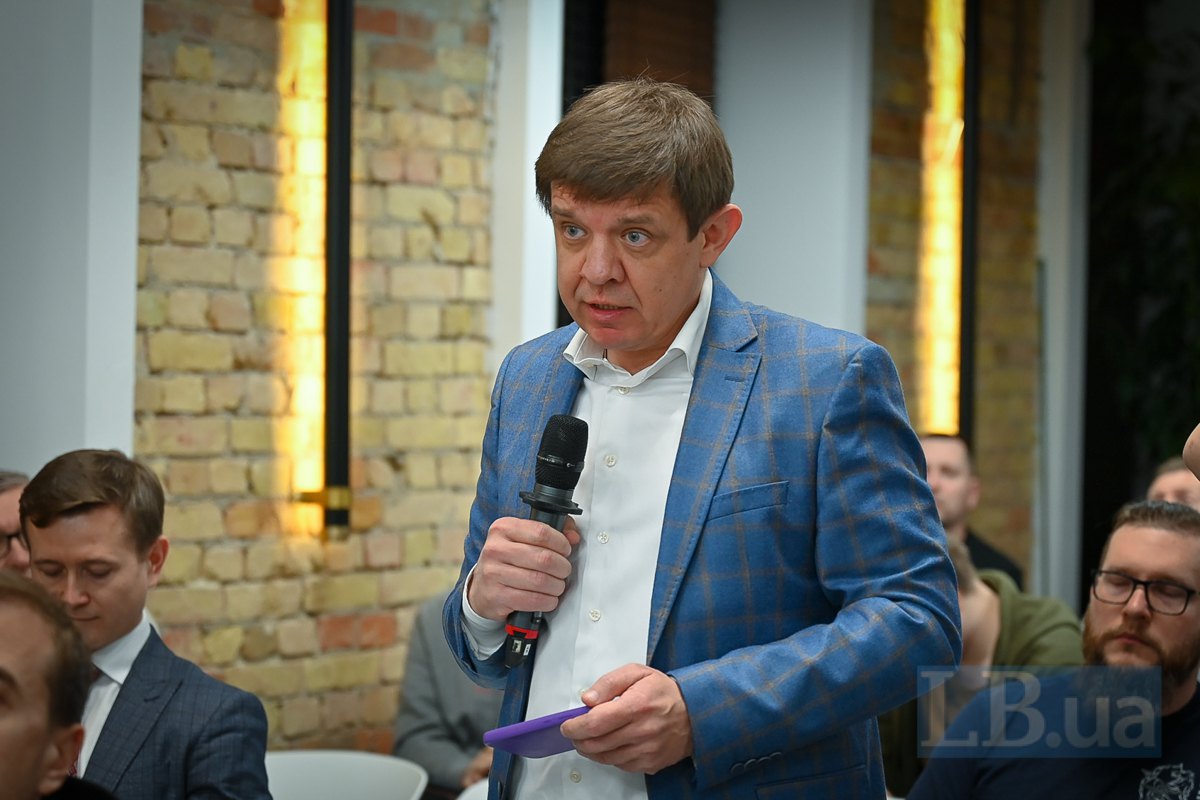
Yuriy Khomenko (International Transfer Pricing): According to the National Bank's digests, state-owned banks account for over 60% of the population's funds. Is anything happening with the denationalisation of the banking sector?
Andriy Pyshnyy: According to the law, the first stage of preparing for the privatisation of a state-owned bank begins with the government's decision to do so based on the conclusion of the Financial Stability Council. The Council has provided its conclusion, and the government has decided to start the process and search for an advisor for Sens and Ukrgas banks. Further steps are also up to the government. We will provide maximum assistance on our part.
Dmytro Serebryanskyy (acting rector of the State Tax University): Is the Ministry of Finance considering the possibility of increasing the value-added tax rate as an additional channel for fiscal devaluation and helping the National Bank to devalue the national currency?
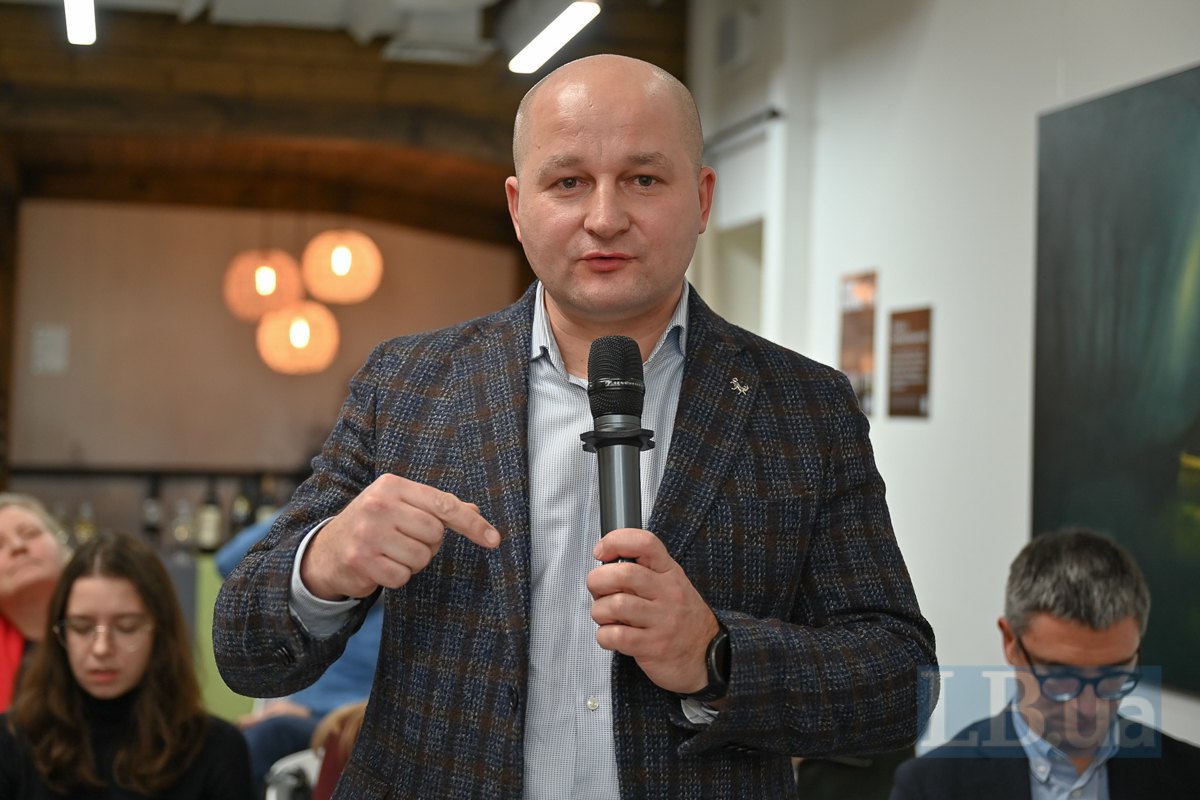
I would like to note that the initiative to increase value added tax in the British Parliament was put forward by Finance Minister Rachel Reeves. The second example is that VAT will be increased by 2% from 1 January in Russia. This is the answer to the question of how and who should act.
We have this option, but we are avoiding it for now. I hope that in the course of the discussion, the budget will not be unbalanced and we will not have to increase VAT. But if we are forced to accept unjustified and unagreed expenditures, the issue of VAT will automatically arise. This was stated in both the previous memorandum and this one. In other words, any unjustified increase in expenditures will automatically lead to an increase in VAT.
To be clear: any political pressure on the fiscal authorities will have consequences. Of course, we could refuse to do this, but then other systemic risks would arise.
Sonya Koshkina: How has the decision to allow men aged 18-22 to travel abroad (not) affected or will affect the economy and the labour market?
I am used to basing my opinions on research or, at the very least, analysis. Economic issues fall within the remit of the Ministry of Economy. If you want me to answer this question professionally, rather than simply as someone who has an opinion, then I would probably refrain from answering it.
Sonya Koshkina: If Ukraine partially opens up arms exports, what potential revenues could this bring?
Estimates vary depending on the Armed Forces' need for these weapons. But these issues are being actively discussed, and there is a fairly high probability that this decision will be made. According to our calculations, arms exports could bring in an additional UAH 100 billion — this is the opportunity that arises when opening up under the conditions that were discussed at the time.
Sonya Koshkina: The prospect of using frozen Russian assets is once again on hold due to Belgium's position, which requires collective risk sharing. Is there any progress in these negotiations?
Andriy Pyshnyy: I will not make any statements about whether the situation is on hold or not. The process is ongoing. We see that this process has political energy at the level of the European Union leadership. Discussions are ongoing.
The next stage, when a decision on the reparations loan can be expected, with the frozen assets as the source, is 18-19 December.
We expect this because the programme we have agreed with the International Monetary Fund at the staff level is an impetus to accelerate and find the result that everyone is waiting for, and we expect the result to be that the reparations loan will take place. In addition, the reparations loan itself is the source of the volume of needs that were identified in our interaction with the IMF.
Sonya Koshkina: At the end of the year, it became clear that the forecasts of the government, the NBU and international organisations regarding real GDP growth did not come true. Apart from the constant attacks on the energy sector, what do you think is the main reason for this?
And the second question is about your pessimistic and optimistic scenarios for the development of your sector. Please.
Serhiy Marchenko: According to estimates by the Ministry of Economy, GDP growth will be 2.7% by the end of the year. The programme forecasts growth of 2.2–2.4% for next year. In other words, we are forecasting roughly the same conditions for the economy this year and next.
Andriy Pyshnyy: We do not have an optimistic or pessimistic forecast. We have a baseline forecast. The baseline forecast on which the National Bank bases its vision for this year and the next two years is still conservative. We expect economic growth of 1.9% this year.
We have revised our forecast downwards. We have revised it downwards because the Ukrainian economy is being negatively affected by the energy deficit and shelling. We have also revised our economic growth forecast for next year, but only slightly — by 0.3 percentage points — to 2%. Further acceleration will follow.
Of course, there are positive factors. These are when security risks decrease accordingly. From our point of view, they will stimulate economic development. They will remove restrictions in the Ukrainian economy. One of them is migration. Last year, net migration was 500,000, and this year and next, we expect about 200,000, while at the beginning of the year, we predicted that a positive migration flow would begin in 2026. All of this is, in one way or another, a consequence of the war. Therefore, we are making a cautious forecast that takes into account the balance of the relevant risks that we currently see.
As for inflation, I have already announced: 9.2% by the end of this year, 6.6% next year, and 5% at the end of 2027. The discount rate is currently 15.5%. We expect that if everything goes as we predict and inflation remains on a downward trend, we will be able to begin the process of easing monetary policy in January. But we will be very vigilant, because there are still many pro-inflationary factors.
Let me remind you that the main and fundamental mandate of the National Bank is price stability, and we will strictly adhere to this legally defined mandate.
In our opinion, lending will continue to grow. We see positive assessments. We also see positive business assessments. We have learned to work even in the most difficult conditions. It is an absolutely incredible adaptability.
Sonya Koshkina: You are quite optimistic. Do you think the war will end next year?
Andriy Pyshnyy: The National Bank does not make any assumptions on this matter. And this is actually a conscious part of our policy. Of course, we discuss it internally, but we stopped communicating the course and duration of the war to the outside world more than a year and a half ago. This is because we found ourselves in a situation several times where this was the main topic of discussion.
Our current position is that we must ensure the implementation of our mandate for price stability, financial stability and support for the Ukrainian economy in the event of either the first or second scenario, under any circumstances.
Serhiy Marchenko: I deliberately disclosed the figures: GDP growth is forecast at 2.4% — this is the forecast on which we based our budget. The deflator is 12.3%. The government forecasts the consumer price index at 9.9%. The average annual salary is 30,000 hryvnya, and the minimum wage is 8,600 hryvnya. Exports will grow by 5.9%, and imports by 7.6%. This is the baseline scenario on which the budget was prepared.