





Most service personnel at the first post-war elections will vote at regular polling stations at their place of residence, rather than at special ones.
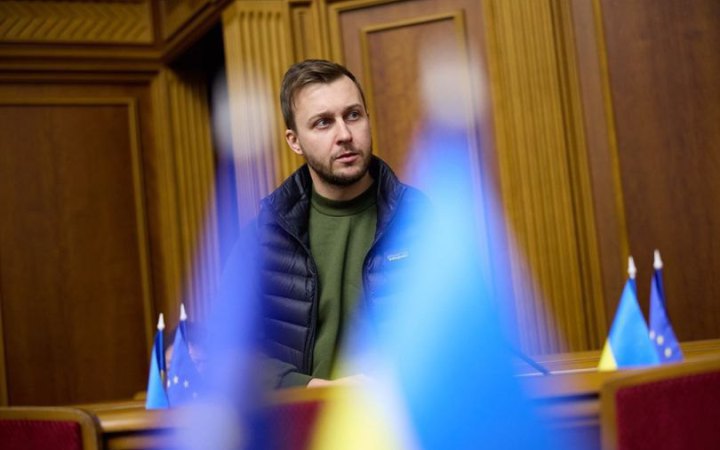
This was stated in an interview with LB.ua by Roman Lozynskyi, an MP from the Holos faction, First Deputy Chair of the Verkhovna Rada Committee on the Organisation of State Power and Local Self-Government, and a serviceman in the Armed Forces of Ukraine.
“When we talk about potential elections (Ed.: after martial law is lifted) and service personnel voting in them, nine out of ten service personnel will vote at regular polling stations,” Lozynskyi noted.
He explained that these service personnel will go to the same polling stations as other citizens:
“Where parents will go with their children, showing them how to put the ballot in, where everyone who lives in this constituency will go, in cities, villages and settlements.”
At the same time, the MP acknowledged that some service personnel will vote on election day at the place where they are carrying out their tasks. He stressed that this refers to a model scenario that is currently difficult to imagine — one in which there are no active hostilities, shelling, ballistic missiles or drones, and the front line does not change.
Lozynskyi explained that Ukrainian units will be stationed along a fixed border with the enemy — and not only border guards. According to him, there will be garrisons, platoon and company strongpoints, and observation posts that will become more permanent than today’s field positions. The reason, he said, is that even a notional peacetime does not guarantee the absence of provocations from Russia, if it continues to exist.
The MP gave the example of a hypothetical Kostiantynivka, where, due to mines, unexploded ordnance and the absence of civilians, there will be no regular polling stations, but there will be service personnel who will not be able to travel for half a day to Pavlohrad, Kramatorsk or Sloviansk. Therefore, special polling stations will be set up there.
“To ignore them and say: ‘Sorry, you won’t vote. Sorry. Thank you for your service, you’re great, glory to Ukraine, but get on with your job and come to the elections next time’? That’s wrong,” the MP stressed.
He added that special polling stations are not a novelty: they already operated during the war at the 2019 presidential and parliamentary elections, whereas at the 2020 local elections they were not used because voting was tied to territory.