





The United States did not take part for the first time in the annual NATO military exercise “Northern Viking” near Iceland, which has been held for several decades, Politico writes.
During this year’s exercise, Alliance forces practised tracking Russian submarines. The manoeuvres involved German reconnaissance aircraft, Canadian warships and Belgian fighter jets.
At the same time, US ships and aircraft did not join the exercise on this occasion. According to the publication, this was a notable sign of the US President Donald Trump administration distancing itself from NATO.
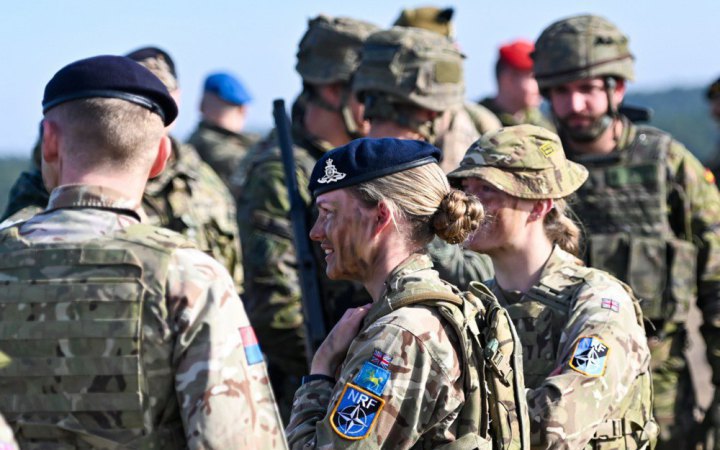
Alliance forces under the command of a French commander sought to demonstrate that European countries and Canada are capable of providing the region’s defence on their own.
“We see Europe and Canada stepping up their efforts. We see it literally here, in Iceland,” said Jonas Allansson, head of the Defence Directorate at Iceland’s Ministry of Foreign Affairs.
At the same time, the US has not disappeared from the region entirely. US Navy construction brigades continue to build facilities in the military zone at Keflavik Airport, and the American side also helped with planning the exercise.
Iceland lies close to the route by which Russian nuclear submarines can leave bases on the Kola Peninsula for the Atlantic Ocean. This is a strategic stretch between Greenland, Iceland and the United Kingdom.
NATO considers the region important for controlling Russian submarines’ access to the Atlantic.
“For NATO and for Russia, this really is a dividing line. If the Russians manage to control access through this gap and get their submarines to the other side, they will have complete freedom of action in the Atlantic,” a senior Alliance official noted.
During the exercise, a German reconnaissance aircraft maintained contact with an international flotilla off the coast of Iceland, mapped the seabed and relayed intelligence. One of the tasks was to test how quickly and effectively NATO forces can share information in challenging Arctic conditions.
The US stepping back from an active role in NATO comes amid rising tensions in relations with Russia.
The situation in the Arctic also escalated after Trump last year threatened to buy or seize Greenland—an autonomous territory of Denmark, which is a NATO member. This caused concern among US allies.
At the same time, Washington has repeatedly raised the possibility of reducing the US military presence in Europe.
Against this backdrop, joint exercises by European allies and Canada are taking on added significance. Particularly telling is the fact that this time the US did not play a leading role in them.