





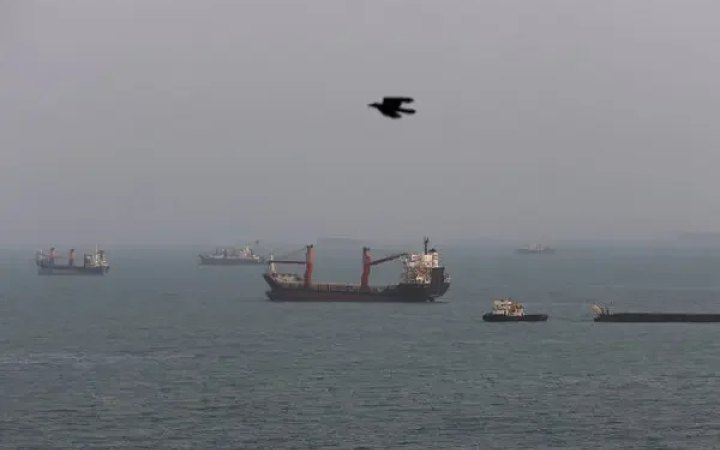
On 15 September, only four vessels passed through the Strait of Hormuz. This is far below the average over the past 10 days — around 18 vessels a day.
Radio Liberty reports this, citing shipping data.
Two vessels entered the strait and two left it. None of them, however, was a supertanker carrying crude oil or a tanker transporting liquefied natural gas.
At the same time, the actual number of vessels may be higher, as some travel with tracking transponders switched off.
Three of the four recorded vessels used the so-called Iranian route — the northern corridor through waters controlled by Iran. Tehran is trying to entrench it as the official route for passage through the strait. One other vessel travelled via an unidentified “shadow” route.
Commercial shipping through the Strait of Hormuz has fallen sharply since the start of the US and Israeli war against Iran in February. Iran is seeking to tighten control over navigation in the strait and is carrying out attacks on commercial vessels.
Meanwhile, the US is enforcing a naval blockade to prevent ships from entering Iranian ports, and is also attacking vessels linked to Iran.
Before the conflict began, roughly a fifth of global oil and liquefied natural gas supplies passed through the Strait of Hormuz. Around 125 large commercial vessels used this route each day.
Meanwhile, 22 vessels passed through the Bab el-Mandeb Strait on 15 September. The day before, there were 24.
This waterway is an important route between the Red Sea, the Suez Canal, the Gulf of Aden and the Indian Ocean. The decline in shipping there comes amid concern over the recent advance of Iran-backed Yemeni Houthis near the strait.
- Over the past few weeks, the US has quietly organised a corridor through the Strait of Hormuz, through which millions of barrels of oil are transported each day. Shipping security is provided by US Air Force fighter jets, which protect vessels from Iranian cruise missiles and drones.
- According to a statement by Trump, the US has completely cleared the international waters of the Strait of Hormuz of naval mines, which were either removed or neutralised. However, partner countries assess that US forces may already have carried out substantial mine-clearing work, but it is unlikely they managed to clear the strait completely.