





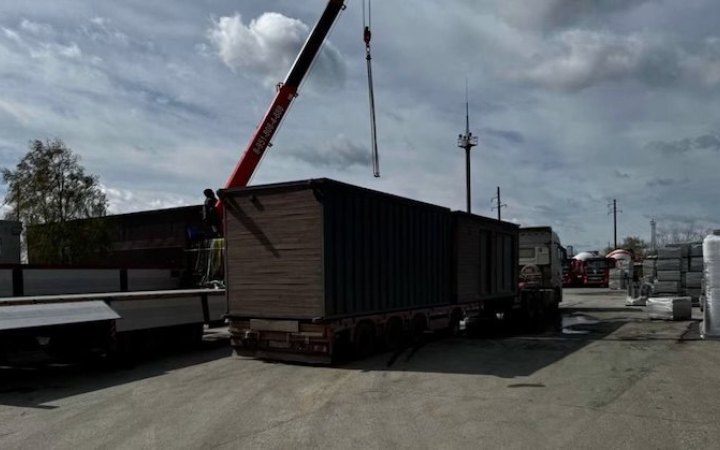
The Moscow City Court has released four long-haul lorry drivers from custody in the case concerning the SBU operation ‘Spiderweb’.
The men were accused of conspiring with the Ukrainian security service and transporting Ukrainian drones that later attacked Russian military airfields, Radio Liberty reports.
As a result, the court found the evidence of the drivers’ involvement to be insufficient.
As reported, the four individuals faced charges of illegally transporting explosives and committing a terrorist attack. At the end of June last year, they left Chelyabinsk with a cargo described as prefabricated frame houses. In early July, the drivers were near military airfields in the Ivanovo, Murmansk, Irkutsk, Ryazan and Amur regions. At that moment, the security services remotely launched UAVs hidden in the cargo, which destroyed 41 aircraft from Russia’s strategic aviation.
The lorry drivers did not plead guilty. They said they were carrying out a routine haul and did not know about the concealed drones. When the drones began flying out of the trailers, the drivers themselves called the police and tried to shoot them down.
Russia’s Investigative Committee completed its inquiry and sent the materials to the Prosecutor General’s Office along with a request to extend the detention. However, the First Deputy Prosecutor General did not approve the indictment due to a lack of direct evidence and returned the case for further investigation. The court rejected the investigators’ request and released the men from custody.
Operation "Spiderweb": What We Know
- On 1 June, Ukraine carried out a special operation to strike the enemy’s strategic aviation, which the enemy had used to attack Ukrainians. Drones simultaneously hit 41 aircraft at four airfields: "Olenya", "Dyagilevo", "Ivanovo" and "Belaya".
- The attack was prepared and carried out by the SBU. It was led by the then head of the Security Service, Vasyl Maliuk. Preparations for the special operation lasted a year and a half and were kept secret.
- First, FPV drones were transported into Russia, and then modular houses with a hinged roof. In Russia, the drones were hidden inside the houses placed on lorries. At the required time, the roofs of the houses were opened and the drones flew out.
- Among the aircraft hit were the A-50 airborne early warning aircraft, as well as Tu-95, Tu-22, Tu-160, An-12 and Il-78. Some aircraft were completely destroyed, while others will require lengthy repairs. The estimated cost of the damage for the occupiers is $7bn.
- Sources in the SBU said that the people who took part in this historic special operation have long since been in Ukraine.