





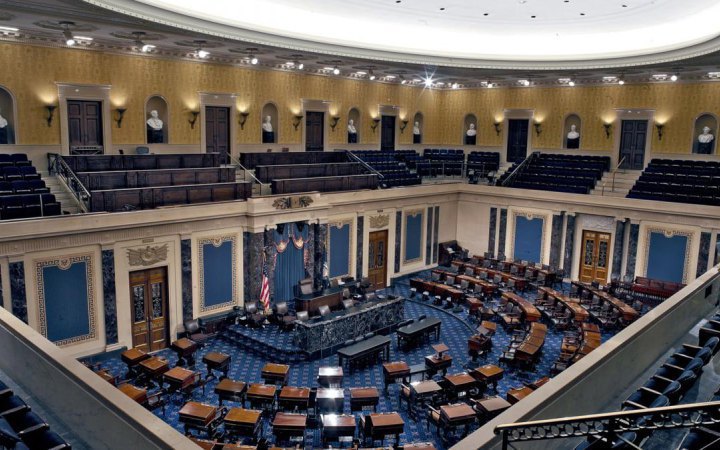
A group of senators from the Democratic and Republican parties has criticised President Donald Trump’s decision to receive one million tonnes of Russian diesel and ease oil sanctions against the aggressor. On 11 October, they issued a statement demanding an immediate change of course, The Wall Street Journal reports.
The group includes Republican senators Susan Collins (Maine), Lisa Murkowski (Alaska), John Curtis (Utah) and Thom Tillis (North Carolina), as well as Democratic senators Jeanne Shaheen (New Hampshire), Ron Wyden (Oregon) and Richard Blumenthal (Connecticut). They said the Trump administration did not consult Congress and did not provide the justification required under a 2022 law banning imports of Russian energy products into the United States.
The United States “must not throw Putin a financial lifeline while Russia continues to kill Ukrainian civilians. The administration must change course immediately,” the statement said.
Context
Trump announced the unexpected deal with the Russians to supply Russian diesel against the backdrop of an approaching election and an energy crisis that began after the start of a US-Israeli military operation against Iran. In response to the attacks, Iran not only blocked the Strait of Hormuz, through which a significant share of oil and petroleum-product shipments pass, but also struck refineries in Middle Eastern countries. It was after this — not after Ukrainian strikes on oil infrastructure that began two years earlier — that a global energy-market crisis and a sharp rise in prices took hold.
The Ukrainian president called the deal a weak decision by a strong partner. Ukraine has repeatedly stressed its readiness to halt strikes on Russian refineries in exchange for an end to attacks on its own energy sector. However, Russia, which has been carrying out massive attacks on energy facilities in Ukraine since 30 September, has no intention of stopping.
Yesterday, Trump said that Kyiv and Moscow had supposedly agreed to an energy ceasefire. He made a similar claim in September, but the Russian forces did not stop their strikes then. Nor have they stopped now: Russians struck Kharkiv’s CHP-5 on 11 October, after Trump had already made his statement about a “ceasefire”.