





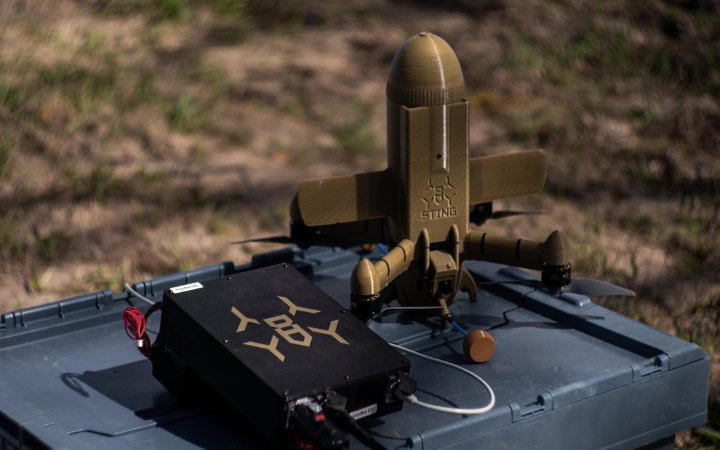
Over the course of a year, Ukrainian troops used Sting anti-air interceptor drones to destroy more than 15,500 Russian unmanned aircraft of the Shahed, Geran and Gerbera types. This was reported by the interceptor manufacturer, the Ukrainian miltech company Wild Hornets.
According to the developers, these figures reflect the results of Sting’s use by units of Ukraine’s Defence Forces from October 2025 to September 2026. The manufacturer claims that for the twelfth month in a row, Sting has ranked first among the most effective interceptors against Shaheds, Gerans and Gerberas.
In particular, in September 2026 alone, Ukrainian troops, according to confirmed data, shot down around 1,600 Russian unmanned aircraft of the Shahed, Geran and Gerbera types using Sting.
The company notes that of the 15,500 drones destroyed, more than 10,000 were Shahed and Geran strike drones. Ukrainian developers estimate the average cost of one such drone at roughly $70,000. Accordingly, the total value of the destroyed strike drones could exceed $700 million.
One factor behind the system’s effectiveness, the company says, is the ability to operate it remotely. According to the developers, pilots in three of the four most successful units by number of Shaheds destroyed control Sting interceptors remotely using the Hornet Vision Ctrl system.
At the same time, Wild Hornets are conducting combat trials of a specialised high-speed interceptor, the Sting S. According to the developers, it is already being used to engage Russian small-sized jet-powered Geran-5 drones. The company expects that once the Sting S moves into mass production, Ukraine’s air defence forces will be able to counter Russian jet-powered aerial targets more effectively.
Ukraine is currently seeking ways to counter jet-powered drones at various levels. At the end of August, Defence Minister Yevhenii Khmara said there are already four potential interceptors that can shoot down Russian jet-powered Shaheds.
For his part, Brave1 CEO Andrii Hrytseniuk said that to counter Russian jet-powered UAVs, the cluster is working in four areas:
-
turbojet interceptors with an engine like that of a cruise missile;
-
impeller-driven electric interceptors — around eight times cheaper (the engine costs $500–1,000 versus $5,000–8,000 for a turbojet);
-
ultra-fast electric racing quadcopters capable of accelerating to more than 450 km/h;
-
means of downing Shaheds on head-on courses, which six companies are working on.