





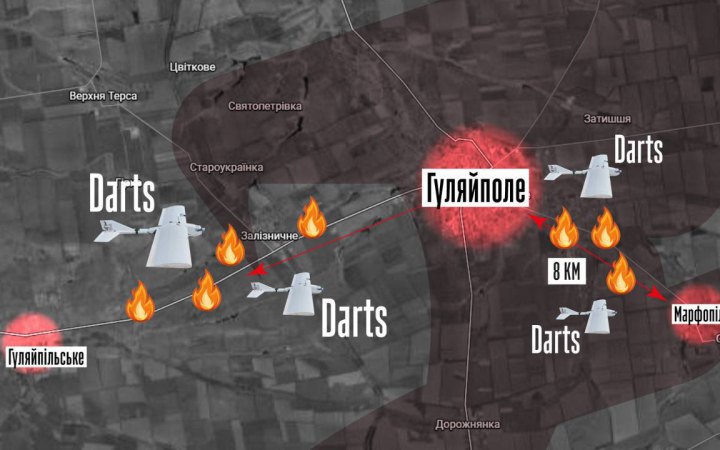
Russian forces are using occupied Hulyaypole in Zaporizhzhya Region as a logistics hub to prepare further offensive operations in southern Ukraine. This was reported by the 7th Corps of the Air Assault Forces of the Armed Forces of Ukraine.
According to Ukrainian intelligence, the Russians are using industrial sites, hangars and the basements of high-rise buildings in the city to amass personnel and equipment, set up command posts and create shelters for drone operators.
Huliaipole is of strategic importance because it is located near the junction of Zaporizhzhya, Donetsk and Dnipropetrovsk Regions. Roads run through the city that the enemy can use to move reinforcements in several directions.
The military add that previously Hulyaypole was an important strongpoint of Ukraine’s defence for almost four years. Now Russian forces are trying to use the transport network and urban development to advance their offensive. According to Ukrainian intelligence assessments, the Russian army aims to create conditions for an advance towards Zaporizhzhya and to blockade the Regional centre.
One of the main tasks for Ukrainian forces is to disrupt the supply routes of the Russian grouping in Hulyaypole.
According to the 7th Air Assault Corps, the main supply route runs through Marfopil. The distance from the settlement to Hulyaypole is less than 10 kilometres, and to Ukrainian positions — less than 20 kilometres. As a result, fuel transport, equipment and reinforcements can come under strikes from artillery and attack drones.
Defence Forces units are using Darts medium-range drones to complicate the supply of Russian troops and the preparation of new assaults.
Ukrainian forces are also striking infrastructure the enemy uses to move troops and cargo. A series of air strikes on bridges near Polohy significantly complicated the logistics of the Russian grouping and limited its ability to redeploy equipment and reinforcements.
Because supply routes have been disrupted, the occupiers are increasingly using motorcycles instead of heavy vehicles. Such groups, the corps notes, are more vulnerable to Ukrainian firepower.
According to the 7th Air Assault Corps, on the Hulyaypole axis the engagement zone of unmanned systems and artillery extends to 20 kilometres. Within this zone, Ukrainian forces are trying to limit the enemy’s ability to bring forces and equipment closer to the front line.
A separate task is to identify and destroy Russian UAV operators, whom the Russians conceal in industrial buildings and the basements of Hulyaypole.
At the same time, Russian forces continue their infiltration tactics: small infantry groups try to slip through Ukrainian defensive positions. In such cases, Ukrainian infantry engage them in close combat and halt any further advance.
The 7th Corps stresses that disrupting logistics, targeting drone operators, destroying equipment and assault groups are all part of the Defence Forces’ systematic effort to wear down the Russian grouping on this axis.