





At present, the aggressor has the resources to continue the offensive, but turning tactical advances into a large-scale operational success remains a difficult task for it. Three main factors point to this.
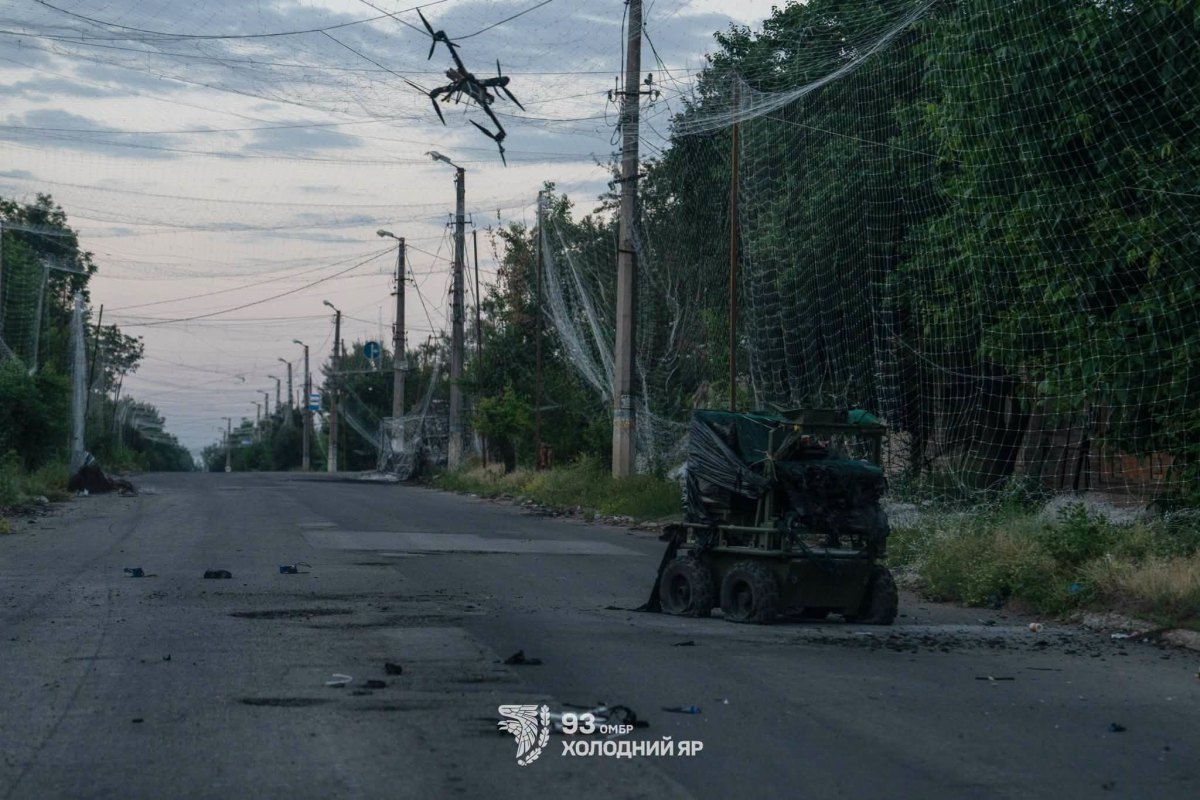
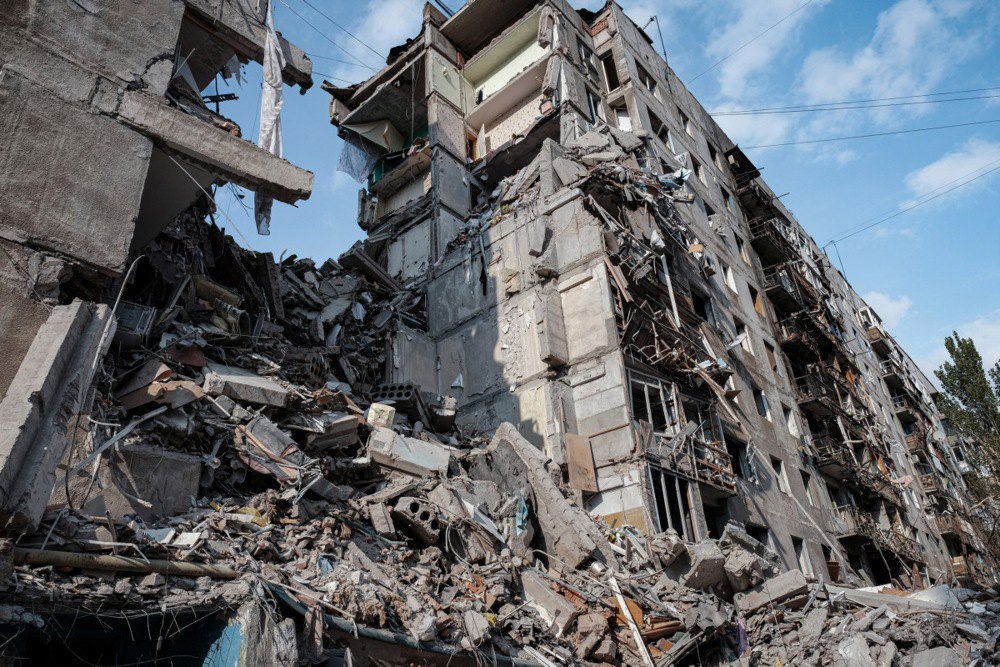
First, the enemy command continues to concentrate its efforts mainly on the southern flank of the Sloviansk–Kramatorsk agglomeration. In the Dobropillia area the occupiers are trying to expand the zone of penetration, create a threat to the Defence Forces’ logistics routes and shape conditions for further advance on Kramatorsk. On the Kostiantynivka axis, the enemy is seeking to entrench itself in the urban built-up area and expand its zone of control. At the same time, the infiltration of individual assault groups into the city does not mean control has been established over it or that there is readiness for a further offensive. The enemy is present in only 38% of the urban built-up area, which does not mean control has been established over Kostiantynivka, and their advance in the Dobropillia area is accompanied by intense fighting.
Second, the enemy’s troops are forced to spend resources maintaining the tempo of the offensive simultaneously on several axes. This limits the ability to employ a single powerful strike grouping, because all the armies of the three previously formed groupings are compelled to operate on different directions. It is especially important that the Ukrainian “Vivaldi” operation on the Lyman axis has created an additional problem for the Russian command on the northern flank.
Moscow is forced to take into account the risk of further Ukrainian counter-attacks, restore lost positions and respond to threats to its own lines of communication. Accordingly, part of its forces and assets has to be used not to develop the offensive, but to stabilise the front.
Third, a tactical penetration does not guarantee an operational breakthrough. To build on success, the enemy needs to concentrate a sufficient number of combat-capable infantry, armoured vehicles, artillery, engineer units and air-defence assets, as well as ensure uninterrupted supplies of ammunition and fuel.
Even if the occupiers manage to break through a particular section of the defence, further advance will depend on their ability to commit fresh forces, widen the breach and prevent it from being isolated by Ukrainian counter-attacks. And that is precisely what they lack: fresh forces.
As always, there are three scenarios:
• realistic: continued attritional fighting with gradual Russian advances in certain sectors, without a rapid collapse of Ukrainian defences.
• negative for Ukraine: a local breakthrough followed by an expansion of the Russian bridgehead, if the Ukrainian command does not have sufficient reserves to seal the gap in time.
• favourable for Ukraine: further attrition of Russian strike groupings and the disruption of their plans through counter-attacks, logistics disruption and the need to redeploy forces between axes.
The greatest danger lies not so much in a single deep breakthrough as in a simultaneous deterioration in several sectors. If the Ukrainian command is forced to move reserves sequentially from one direction to another, the aggressor will gain the opportunity to exploit the weakening of neighbouring sectors.
Russia has the potential to continue the offensive, but its ability to turn local advances into an operational breakthrough depends on maintaining tempo, having fresh reserves and being able to neutralise Ukrainian counter-attacks. That is why the situation near Dobropillia and Kostiantynivka remains dangerous, but it is premature to speak of an inevitable breakthrough.
Something should also be said about the “Vivaldi” operation, whose impact extends far beyond the immediate fighting on the Lyman axis. Its main operational effect is to complicate the enemy’s plans to envelop the Sloviansk–Kramatorsk agglomeration from the north. The total stated area of control restored by the Defence Forces has reached 277 km², and the number of liberated settlements stands at 16.
Синьо-жовті прапори здійняли у звільнених н. п. Липове, Зелена Долина й Колодязі! Ще три населені пункти повністю деокуповано під час четвертого сезону операції «Вівальді» Третього армійського корпусу. На досягнутому не зупиняємося. Боротьба триває! https://t.co/aYrLKkOokN
— Третій армійський корпус (@ab3army) October 15, 2026
Russia’s strategy regarding Sloviansk and Kramatorsk envisages more than a frontal assault. One possible way to achieve its objective is to envelop the agglomeration from several directions, gradually cutting supply routes and the withdrawal routes of Ukrainian forces. In other words, once again the enemy is using its favourite operational method—only this time the scale is not a single settlement but an entire agglomeration, and among the executors are troops from seven armies.
The northern flank of this concept is linked to the Lyman area, the Siverskyi Donets and further advance towards Sloviansk—i.e. forming the northern arm of the envelopment. Success in this sector could create a threat to Ukrainian lines of communication and complicate the defence of the entire agglomeration.
The southern flank is linked to pressure through Kostiantynivka, Dobropillia and adjacent areas. If the enemy’s forces were successful on both flanks, its command could create the threat of an operational encirclement of Ukrainian forces in the Sloviansk and Kramatorsk area. That is why stabilising the northern flank is of strategic importance.
What Has Operation “Vivaldi” Changed?
Three main consequences can be identified:
1. The operation has complicated the implementation of Russia’s northern envelopment plan: Ukrainian counter-attacks have forced the enemy’s troops to respond to the threat of losing positions and are preventing the steady development of the offensive in the Lyman area. The Defence Forces are advancing towards the Zherebets River to the north-east of Lyman. The Defence Forces’ actions on this flank complicate the implementation of the enemy’s broader concept of enveloping the “belt of fortresses”.
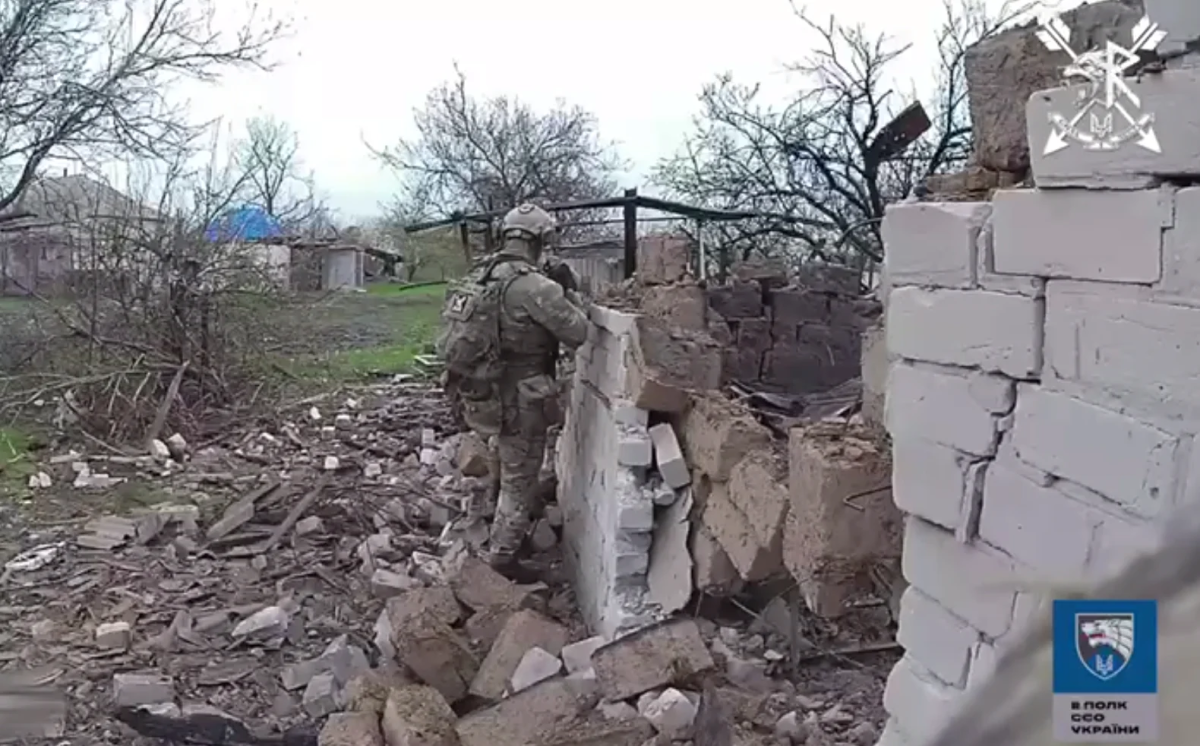
2. The operation has forced the command of the enemy’s “West” force grouping to pay more attention to protecting its southern flank, and the enemy command in the theatre of operations to the northern flank of the entire grouping formed for the operation: the enemy command has to take into account the risk that further Ukrainian advances will threaten its forward units, supply routes and positions used to prepare offensive actions. This may require redeploying troops, strengthening defences and adjusting offensive plans. However, it is important to distinguish between a confirmed result and a potential effect: open-source data indicate that the Russian command is responding to Ukrainian actions, but do not make it possible to determine precisely how many reserves have already been redeployed and which specific offensive operations have had to be postponed as a result.
3. The operation has created an opportunity to reduce pressure on Sloviansk from the northern direction: if Ukrainian forces can hold the captured positions, consolidate on them and prevent new enemy breakthroughs, it will be harder for the enemy to use Lyman as a springboard for further advance. This could force the Russian command to rely mainly on advances from the south and south-west, where Ukrainian defences are also creating significant difficulties. At the same time, concentrating Russian efforts on another sector will not necessarily mean a reduction in the overall intensity of the offensive. On the contrary, the enemy may try to compensate for setbacks on one axis by increasing pressure on another.
Can “Vivaldi” Disrupt Russia’s Offensive Against the Agglomeration?
The operation has already created the preconditions for complicating the aggressor’s plans, but its long-term effect will depend on whether the Defence Forces can turn tactical results into a lasting change in the operational situation.
To do this, it is necessary to:
• hold the liberated territories and prevent the enemy from restoring lost positions;
• ensure supplies to Ukrainian units on the achieved lines;
• prevent the enemy from using neighbouring sectors to outflank Ukrainian forces;
• preserve combat-capable reserves to repel a possible counterstrike.
It is also important that liberating territory in itself does not eliminate the Russian threat. The enemy may regroup, switch to defence on certain lines, or try to resume the offensive after replenishing its forces.
Thus, “Vivaldi” is of great importance because it complicates the enemy’s attempt to envelop the Sloviansk–Kramatorsk agglomeration from the north. The operation may force the enemy command to change priorities and redeploy forces. However, its main result will be measured not by the area of liberated territory, but by how long Ukraine can maintain the initiative and prevent the Russian offensive from being renewed.
The resilience of Ukrainian defences will be determined by a combination of three factors: the availability of combat-capable reserves, the ability to hold logistics routes, and the quality of defensive lines. None of them can fully compensate for the failure of another. Even well-prepared fortifications do not guarantee success if units lack manpower and ammunition. Likewise, having reserves will not ensure a resilient defence if the enemy can bypass fortified positions and cut supply routes.
First Factor: Reserves and Their Combat Capability
This is one of the most important factors. The Ukrainian command has to contain Russian attacks simultaneously on the Lyman, Sloviansk, Kostiantynivka and Dobropillia axes. Accordingly, the need for reserves arises not in one place, but across different sections of the front.
The problem is that reserves are needed not only to seal breaches in the defence. They must also provide relief for units that have lost combat effectiveness, reinforce threatened sectors and conduct counter-attacks. If reserves are used mainly for urgent responses to Russian breakthroughs, the Ukrainian command’s ability to influence the situation proactively diminishes.
To assess the availability of such reserves within the Defence Forces, data are needed on numbers, manning levels, losses, training standards and readiness. All of this is a closely guarded secret.
Therefore, it is more accurate to speak in terms of risks: the more directions simultaneously require urgent reinforcement, the harder it will be to commit reserves in time without weakening other sectors.
Second Factor: Logistics and Keeping Supply Routes Open
The defence of Sloviansk and Kramatorsk depends not only on the situation directly on the approaches to the cities. Of great importance are the routes used to deliver ammunition, fuel and food, evacuate the wounded and move reserves.
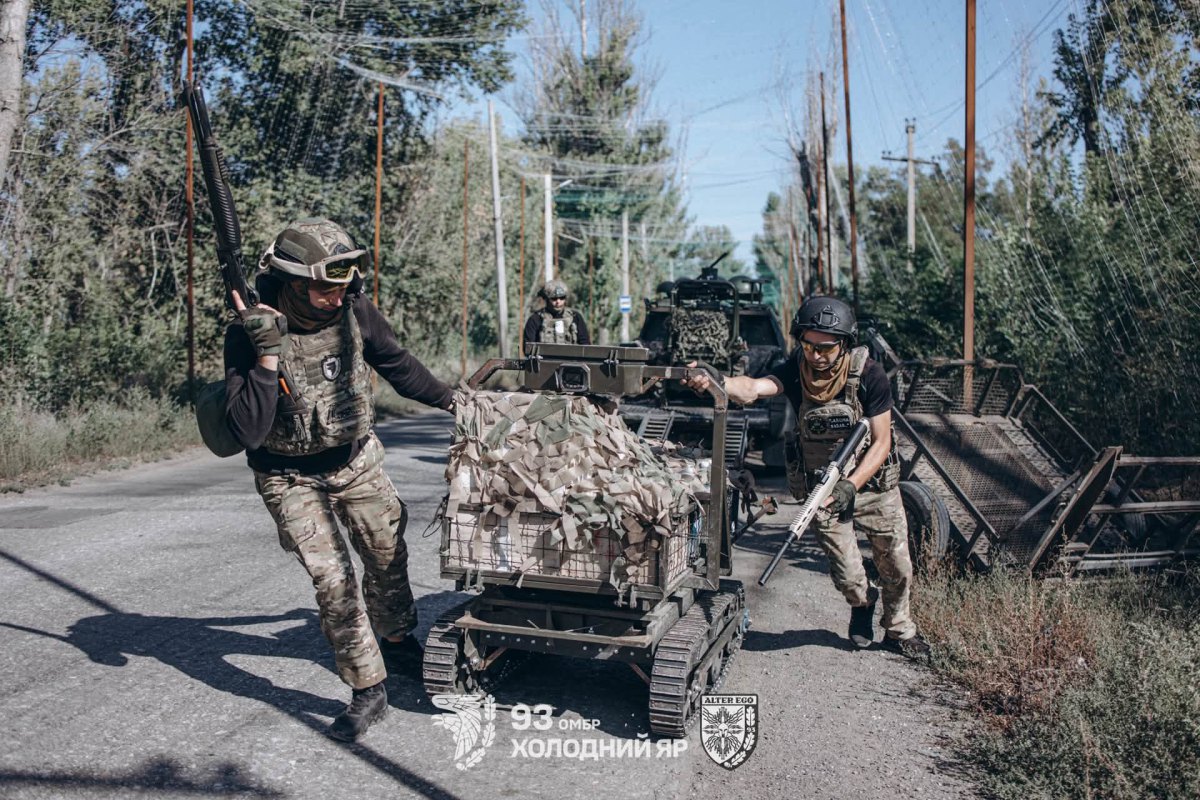
If the enemy can create a threat to the main transport arteries, Ukrainian forces will have to spend more resources to accomplish the same defensive tasks. At the same time, to disrupt logistics the enemy does not necessarily have to physically cut a road. It is enough to create conditions in which using it becomes dangerous or significantly restricted due to artillery strikes, drones and other means of attack. That is why the resilience of the defence will also depend on protecting logistics, dispersing stockpiles, having alternative routes and the ability to rapidly restore damaged infrastructure.
Third Factor: The Quality of Field Engineering and Fortification
Engineering obstacles remain a critically important element of defence, especially on the approaches to large cities. However, their effectiveness should be assessed not by the number of trenches or concrete structures, but by how well they are integrated into a single defensive system.
Such a system must provide:
• protection of personnel from artillery fire and air strikes;
• prepared fallback lines and positions;
• the ability to manoeuvre between defensive lines;
• coordination between units, artillery, reconnaissance and unmanned systems;
• keeping supply and evacuation routes open.
Дороги біля міста Добропілля буквально вкриті спаленою технікою. Під час евакуації броньовик кілька разів атакували російські дрони, бійцям вдалося вернутись неушкодженими. https://t.co/2gVGrdSGqu
— Армія Медіа (@army_tv_ua) October 14, 2026
It is especially important that field engineering does not turn into the creation of isolated strongpoints. If the enemy can bypass such positions, disrupt their supply or cut them off from neighbouring units, even well-fortified lines can lose their effectiveness.
However, the mere presence of engineering structures does not guarantee a resilient defence. They can significantly slow an advance and increase the enemy’s losses, but their effectiveness depends on coordination with mobile reserves, reconnaissance and the fire-strike system.
Fourth Factor: Russian Tactics and Adaptation to the Defence Forces’ Tactics
Russian troops continue to use a combination of small assault groups, infiltration, drone strikes and artillery fire. Such tactics can create constant pressure even without a large-scale breakthrough. The enemy forces Ukrainian units to spend resources on detecting and destroying small groups, securing flanks and protecting logistics.
For the defence of the agglomeration, this means the need to preserve not only forward positions, but also the ability to respond quickly to changes in the situation.
An additional factor is deteriorating weather conditions. The autumn–winter period can complicate the movement of equipment and supplies, while also affecting observation, concealment and the use of drones. This factor does not automatically create an advantage for either side: its impact depends on specific conditions and how the troops adapt.
Fifth Factor: The Defence Forces’ Ability to Maintain the Integrity of the Defence
This is perhaps the most important overarching indicator. The Sloviansk–Kramatorsk agglomeration is not merely a collection of cities and defensive structures. It is a system of interconnected positions, logistics routes and the military groupings that hold them.
If Ukrainian forces maintain coordination across all defence sectors, are able to reinforce threatened areas in time and prevent disruption of key lines of communication, the defence can remain resilient even under significant Russian pressure. If, however, local crises arise simultaneously on several axes and there are insufficient reserves to overcome them, the threat will be a gradual loss of the defence’s integrity.
It is in such a scenario that local Russian advances could turn into a much more serious operational problem.