





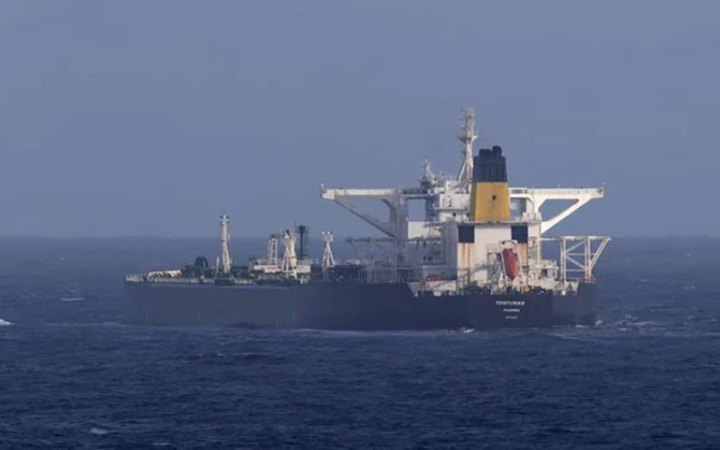
The United States is considering easing restrictions on “shadow fleet” tankers linked to Russia and Iran. This would involve potentially allowing vessels on the blacklist to be sold to legitimate operators and lifting restrictions so they can operate without sanctions-related bans.
The Financial Times reports, citing sources.
A Treasury Department official said the Office of Foreign Assets Control could consider allowing shadow fleet vessels to be sold to “legitimate buyers” and permitting them to operate on the global market “on a case-by-case basis”.
This is another attempt by Donald Trump’s administration to bring down fuel prices ahead of the midterm vote that will determine control of Congress. Polls show that elevated inflation, driven by the war in Iran, has turned many voters against Trump’s Republican Party.
This week, US Energy Secretary Chris Wright joined the World Petroleum Congress in Riyadh via video link. He said the shortage of tankers is a critical “bottleneck” that is driving up the cost of maritime transport in global markets.
According to people present at the event, he also noted that lifting sanctions on vessels could ease the situation to some extent.
A Treasury Department spokesperson said: “If bona fide buyers express interest in purchasing vessels from the ‘shadow fleet’ with a view to refurbishing them for lawful use in global commercial shipping, OFAC (Office of Foreign Assets Control – the Office of Foreign Assets Control) may consider authorising such transactions and lifting sanctions on these vessels – on a case-by-case basis.”
“Such sanctions relief would not benefit the ‘shadow fleet’; on the contrary, it would remove these vessels from it for use in lawful global trade,” he added, noting that before lifting sanctions on any entity, OFAC “conducts thorough due diligence”.
Jeremy Paner, a partner at Washington law firm Hughes Hubbard, noted: “By facilitating the purchase of sanctioned tankers from the ‘shadow fleet’, the administration can avoid the negative perception that would arise if it issued new licences linked to Russia.”
“The administration is doing everything it can to achieve lower fuel prices ahead of the elections, even if these measures have only a marginal effect,” stressed Bob McNally, a former energy adviser to George W. Bush and president of Rapidan Energy.
Reuters previously reported that the Trump administration may allow ‘legal’ oil to be transported on vessels that were previously sanctioned. This refers to oil or petroleum products that Washington has not sanctioned, rather than Russian or Iranian oil that is subject to restrictive measures.
- Europe and a bipartisan group of US officials are criticising the sharp shift in US policy towards greater accommodation of Moscow. Efforts are being made to unblock sovereign assets and, most likely, Ukraine’s access to Starlink satellites — which play a critical role in the country’s defence in the war against Russia — has been restricted.
- Last week, Trump said he would temporarily lift sanctions on Russian diesel fuel.
- Trump says the US needed diesel from Russia out of concern for ordinary Americans. However, the real reason may lie in the business interests of his close circle. Read more in LB.ua’s piece “Diesel Instead of Principles: Why Trump Made Concessions to Putin and What Lukoil’s Assets Have to Do with It”.