





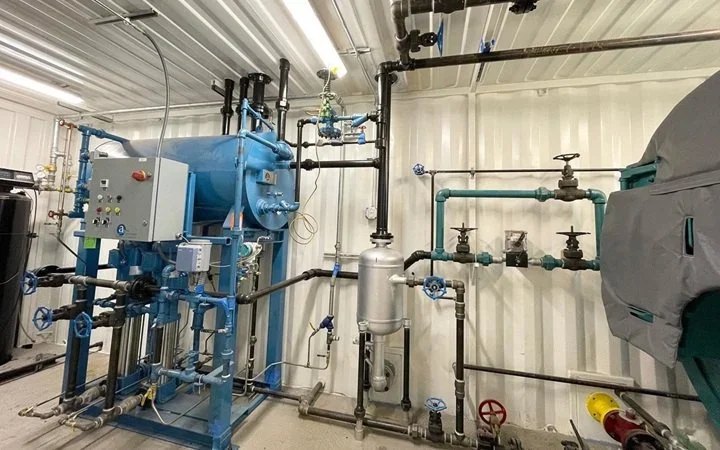
In Kyiv, work to strengthen energy resilience ahead of winter is continuing, but some of the planned facilities will not be completed by the end of 2026. Of the 2,100 MW of backup heat generation envisaged by the resilience plan, work has begun at facilities with a combined capacity of 1,600 MW.
This is stated in an article by Lesia Padalka, “Kyiv Is 80% Ready for Winter. Where the Truth and the Lies Are in the Authorities’ Statements About Implementing the Capital’s Resilience Plan”, which cites data from the resilience plan.
According to the piece, around 350 MW of capacity—including two Agency facilities and one municipal facility in Teremky—are at the preparation stage. They are not expected to be completed this year. Active construction work is under way at other facilities with a combined capacity of 1,250 MW.
There have also been delays in installing cogeneration equipment. Back in 2024, the city authorities reported plans to connect 60 MW of cogeneration to ensure uninterrupted operation of heat supply stations. In autumn 2025, these capacities were promised to be launched by the end of the year, but in January 2026 the equipment had still not been put into operation. Only in summer 2026 did Kyiv City State Administration deputy head Petro Panteleiev report that it had been installed.
By the end of 2026, Kyiv plans to bring the total capacity of cogeneration equipment at heat supply facilities to 200 MW. At the same time, in August the completion level for this item of the resilience plan stood at 68%.
A separate problem remains the backup power supply for water supply and wastewater systems.
The first stage envisaged the purchase of nine diesel power stations with a total capacity of 13 MW. They are to ensure uninterrupted operation of wastewater reception and treatment facilities, as well as part of the water supply infrastructure. In September, the completion level of this stage was estimated at 95%.
The second stage provides for the installation of a further 27 diesel power stations with a total capacity of 25.8 MW. It is intended to provide backup power for water supply systems, but as of the time the piece was prepared its implementation had only just begun. In particular, in September Kyivvodokanal announced a procurement for reconstruction services for nine facilities with the introduction of backup power sources, with work on them planned to be completed in 2027.
Full energy independence for the water utility’s facilities is envisaged by the third stage, which is planned to be completed by the end of 2027. Its completion level in September was only 10%.
The implementation of the resilience plan was also affected by the budget crisis. In September, the State Treasury Service suspended payments for expenditures from the third basket, which includes spending other than military needs, salaries and social payments. At the same time, payments for implementing Kyiv’s resilience plan began to be unblocked about three weeks after the restrictions began.
Delays in implementing infrastructure projects arose even before the budget crisis, in particular due to the prolonged approval of the capital’s resilience plan and the untimely introduction of backup capacity.