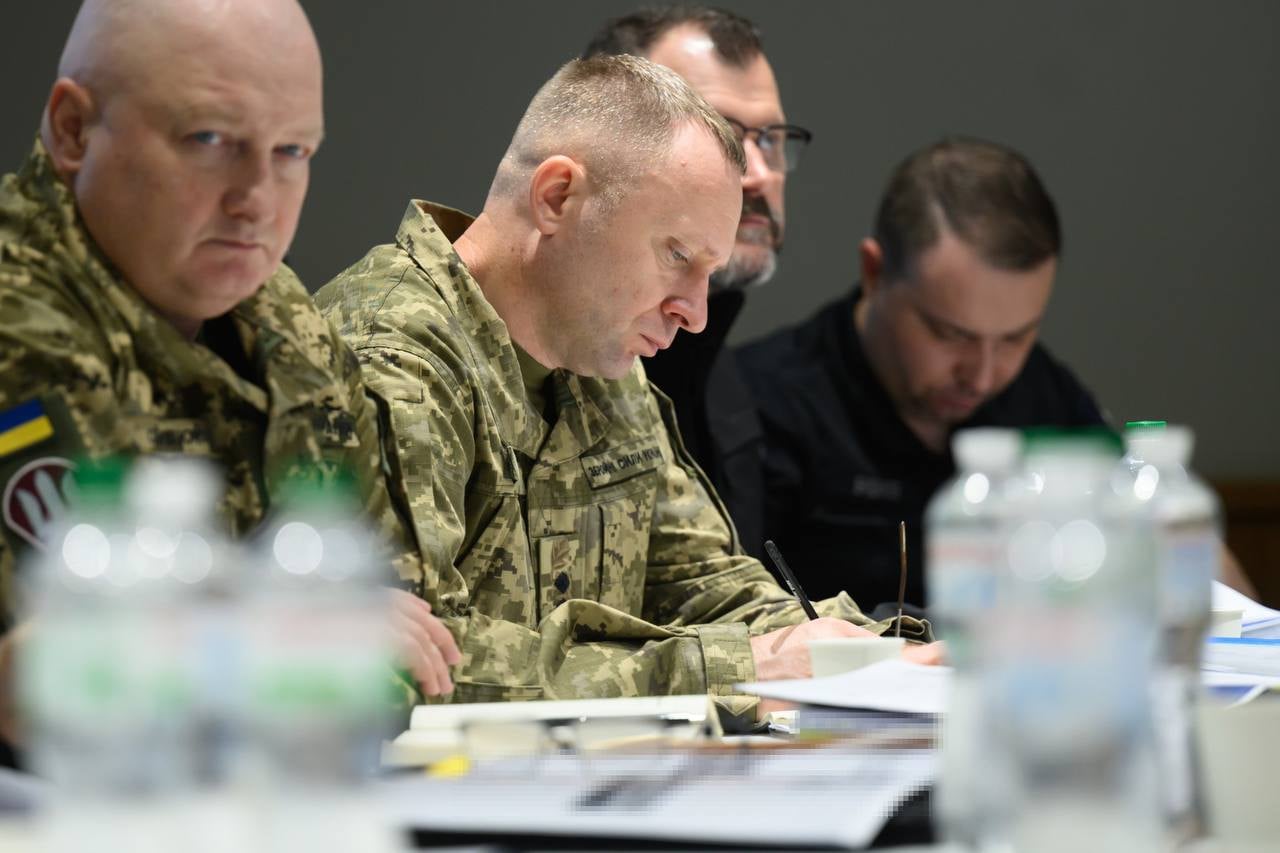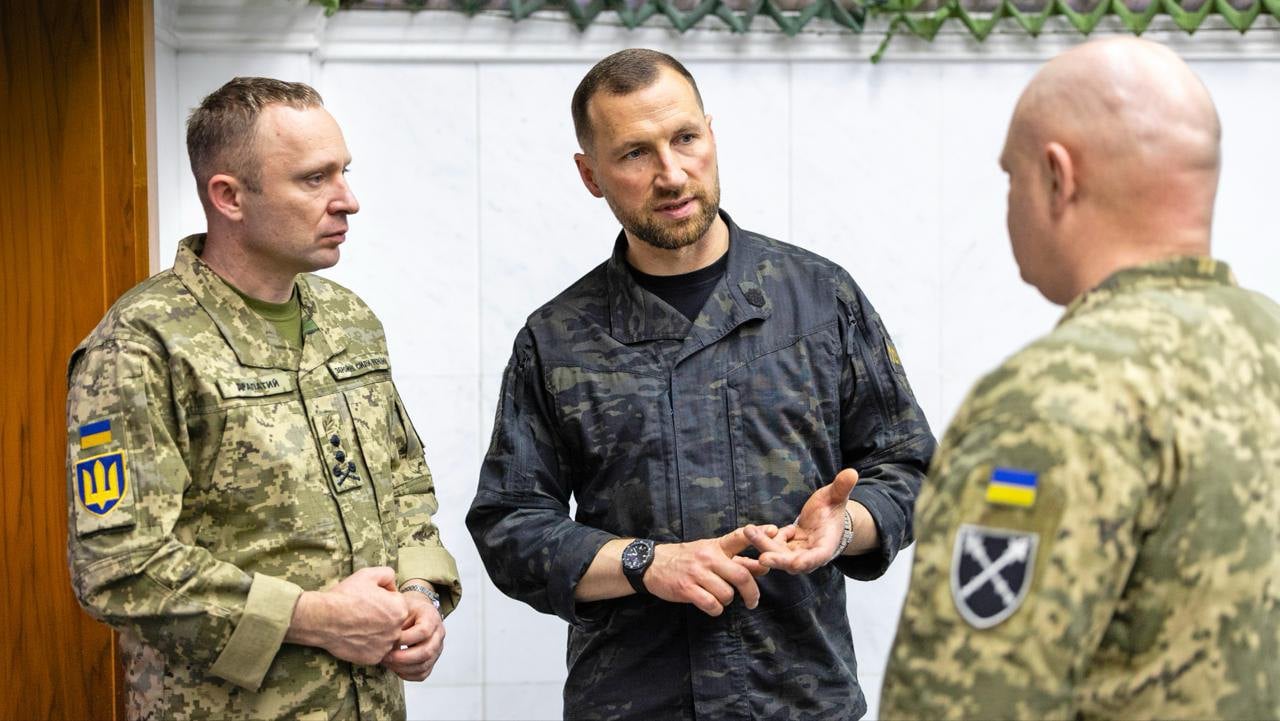
The Commander-in-Chief is responsible not merely for ensuring that the right people work in headquarters or that the organisational structure matches a particular model. His task is to ensure that this system delivers results on the battlefield.
I consider the approach whereby combat experience effectively becomes a universal criterion of professional suitability for a General Staff officer to be misguided. Combat experience is an undeniable advantage for many posts. It makes it possible to better understand the realities of the front, the constraints on units, the psychology of personnel and the consequences of staff decisions. However, combat experience in itself does not make someone a competent strategist, planner, analyst or resource-support specialist.
The General Staff performs a wide range of functions. These include strategic planning for the employment of the Armed Forces, planning the defence of the state, mobilisation work, organising troop training, capability development, coordination, standardisation, analysis and forecasting the nature of future military operations.
For some of these tasks, direct combat experience is not a mandatory condition of professional suitability. Instead, critically important factors may include specialised education, experience of operational planning, knowledge of military logistics, analytical abilities, an understanding of defence planning or experience of managing complex systems. Proficiency in several foreign languages, after all.

For example, a specialist who has spent many years working on planning mobilisation deployment, organising logistics, developing command-and-control systems or ensuring cyber security may be far more useful in the relevant staff post than an officer with extensive combat experience but without the necessary specialisation.
There is another problem too: institutional memory.
The General Staff should not have to start work from scratch every time the leadership changes. Its effectiveness depends on preserving professional knowledge, experience from previous operations, an understanding of procedures, continuity in planning and the ability to learn from its own mistakes, identify and avoid the mistakes of predecessors.
If the personnel review in the General Staff turns into a mass squeezing-out of officers who do not have direct combat experience but do possess the necessary competencies, this could lead to the destruction of institutional memory. Along with people, the system risks losing established planning mechanisms, professional expertise and continuity of decisions. This is especially dangerous during a major war, when there is practically no time to restore such competencies.
That is why I would separate two questions: whether the General Staff needs to be renewed and whether combat experience should be made a universal criterion for personnel selection. To the first, the answer is yes. To the second, no.
Personnel decisions should be made on the basis of professional competence, suitability for a specific post, performance, the ability to work in a team and an understanding of modern warfare.
The General Staff should not be a club of combat veterans, but a professional military command body in which combat experience is combined with strategic thinking, specialised knowledge and institutional memory.
Read alsoAbout the “war plan”
If, however, the main argument for the personnel review becomes merely the slogan about the need for combat experience, this really does create the risk of a populist approach to a complex management problem.
As for restoring a clear division of responsibility between the General Staff and the Joint Forces Command, this fully corresponds to the logic of professional military command and control and to approaches used in NATO.
The fundamental problem is not that the General Staff is involved in managing the war at all. By definition, it must provide strategic planning for the employment of the Armed Forces.
The problem arises when the strategic command body begins to concentrate operational functions excessively within itself, effectively taking over the management of combat operations in different sectors of the front.

Under such a model, the General Staff risks simultaneously being responsible for strategic planning, army development, forming reserves, mobilisation, interaction with other components of the defence forces and day-to-day management of combat operations. As a result, strategic tasks compete for the leadership’s attention with current operational problems.
At the same time, the Joint Forces Command should focus on operational command of groupings of troops, coordinating actions at the front and carrying out assigned tasks. Such a division makes it possible to define responsibility more clearly: who plans, who organises the employment of troops, who commands operations, who provides resources and who assesses results.
It is important, however, not to oversimplify the concept of NATO standards. In different Alliance countries, command structures differ, and the specific division of powers depends on national legislation and operational tasks. This is not about mechanically copying someone else’s organisational scheme, but about applying the basic principle of unity of command, a clear delineation of responsibility and matching authority to assigned tasks.
If General Drapatyi is indeed restoring such a model, that is the right direction. But its effectiveness will depend on whether the Joint Forces Command has sufficient authority, a well-trained staff, the necessary command-and-control means and clearly regulated relations with the General Staff.
Transforming the command system and redistributing functions alone is not enough.