





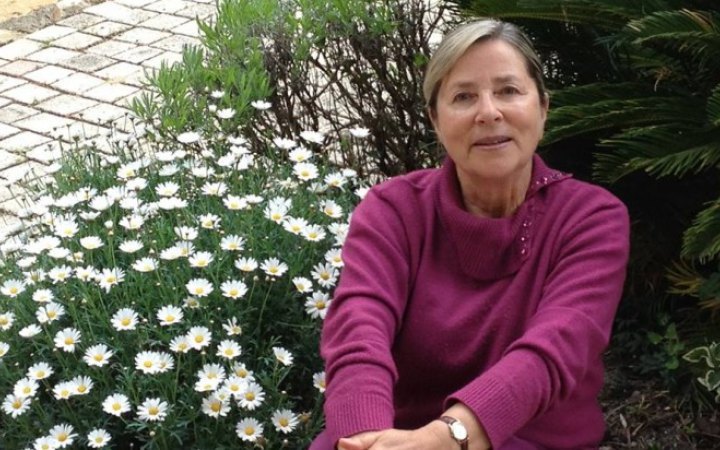
Mrs Cler, your words in one interview really struck me. You said that until the age of 13 you did not know that a state called the USSR existed. Was it simply that your parents shielded you from political information, or was that French upbringing more generally?
I was born in 1944. There was no television. Newspapers and radio were the only sources of information. In my social circle, in my family, a well-brought-up child was not allowed to read newspapers. Children were protected from any information that might contain violent or immoral content.
But I know that my grandfather, until his death in 1954, received news from the main national daily newspapers. He was outraged by the Communist Party’s participation in the government at the time, and he was pleased when, in May 1947, communist ministers were excluded from it — right in the midst of the Cold War. My grandfather was painfully struck by the fact that the Communist Party, whose collusion with Moscow he condemned, enjoyed great electoral success. In fact, it was the leading party in France from 1945 to 1958.
Your grandfather was outraged by the French attachment to communist ideology. Did you try to understand why that was the case — if not at 13, then later?
We did not talk about the past. But my family is unusual. My grandmother and grandfather were Ukrainian exiles who arrived from Poland in France in 1923. They did not tell me about the tragedy of their lives: the defeat by the Red Army suffered by Petliura’s forces, in which my grandfather served; the pain of losing everything — family, home, social standing…
In my book I described how, as a child, I intuitively understood what Ukraine meant to my grandmother and grandfather. My mother, who was born in 1921 in a refugee camp in Poland, did not want to upset her children with tragic memories that had caused her so much suffering in childhood. My grandmother and grandfather often hosted Ukrainian refugees who recalled their past, and it was always accompanied by tears and sorrow. For my mother, integration into French society was the main goal. We, her children, were her future.
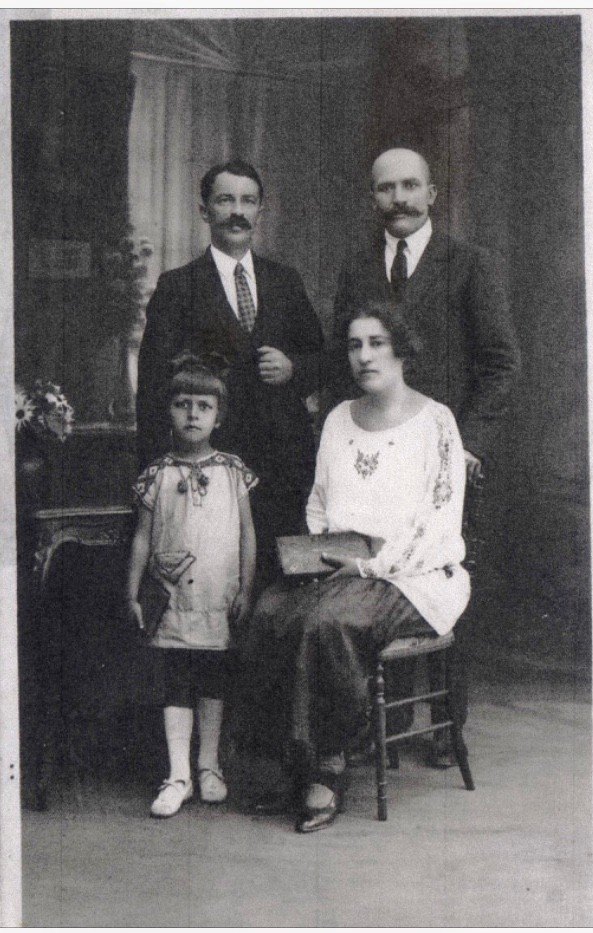
But you did learn about your Ukrainian roots. How old were you then?
Even as a child, I knew my grandfather and grandmother spoke French with an accent. They cooked and ate dishes that were not served in the homes of my classmates. Borscht and cutlets, varenyky and pancakes, Easter bread, kutia, kissel… My grandfather and grandmother kept old envelopes in a cupboard with foreign stamps I did not understand — they were letters from Ukraine. And they sang songs that made us cry.
Were the songs in Ukrainian?
Yes. I heard the Ukrainian language once a year, when my sisters and I went to my grandmother’s for the school holidays in Lorraine. So I heard the language, but not conversations about Ukraine. The subject was taboo, and at the same time it became a source of my fantasies and the pain of a child who carried the burden of her loved ones’ suffering.
My classmates lived differently. They had large extended families — uncles, aunts, cousins. Some of their relatives came from other regions of France, where there were family seats — houses filled with family relics. I had nothing like that. Instead, perhaps, I had something more precious — my secret, which I carried within me, and which I set about deciphering decades later.
And who was your father — what can you tell us about him?
That is a painful question. In my family many things were kept silent, and not only for political reasons. My father was born out of wedlock, which in his time was seen as a disgrace. He himself told me this shortly before his death in 2003.
So if on my mother’s side I at least had Ukraine, as well as a grandfather and grandmother, then on my father’s side there was nothing at all — no grandparents, no photographs. And, most importantly, no stories. It was as if my father came from nowhere. When I think about my father’s story, which I told in the novel “Silence in the Forest”, I feel anger: why was I not told about it? Why was I deceived?
My sister and I searched for our paternal grandfather for ten years. We had three leads — the name of the village in Gascony where he lived, his name, and his profession. And then the day came when a woman who had known him called me and described my grandfather: “Tall and upright in a black jacket, he would cross the square on his way to the town hall, where his office was. Sometimes in a hat, sometimes in a beret, his white moustache gleamed in the sun. But in his hands there was always a black umbrella.”
That is how she remembered my grandfather. And that was the confirmation of his existence that I received. And then I learned that I am the great-great-granddaughter of Jean-Victor, a blacksmith, and Marie-Justine Arnaudin, who married in 1836. I am telling you this and imagining that I am constructing the past I was deprived of, bringing to life people I did not know. And today it seems to me as though I helped them to exist.
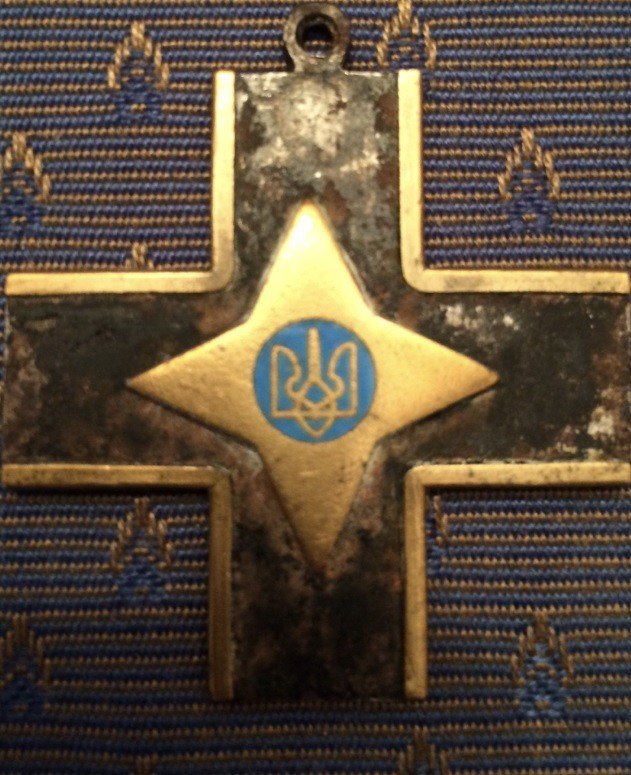
Your mother, in essence, did not know Ukraine. But her early years — in your words — passed to the accompaniment of sad memories of her parents’ land. Did she try to visit her homeland?
Yes. In 1987 she decided to go to Soviet Ukraine. During a performance at the Kyiv Opera, she began speaking Ukrainian to Ukrainian audience members. At that very moment her guide rudely interrupted her in French: “Be quiet! We know who you are!”.
And what did that mean?
Clearly, it meant the guide was “not ordinary” — or rather, not a guide at all, but a representative of the security services. It could also have meant that our family was never taken out of their sight. My mother answered him with great dignity: “You will do nothing to me. I am French and the wife of an officer.” Because my father — who married my mother in 1942 — really was an officer in the French army. So he greeted my grandfather Zinovii, also a serviceman, as is customary in the army, and called him “commander”.
After that trip to Ukraine, my mother left me a strange injunction: “Don’t go to Ukraine. There is no one there. Everyone is dead.” And after her own death in 1996, my father asked me to look at my mother’s “Ukrainian papers”. I began studying them and found the Franco-Ukrainian magazine “Obmin”, the “Franco-Ukrainian Bulletin”. I found issues of the newspaper “Ukrainske Slovo”, which I still subscribe to. I found the “Bulletin of the League of Ukrainian Military Veterans” in English, published in Toronto. In that Canadian magazine I saw the obituary for my grandmother and grandfather.
In this way I understood that my mother maintained ties with the Ukrainian diaspora, with Ukrainian associations. And that is a side of my mother’s life I learned about only after her death. I keep all these publications and documents to this day. As well as postcards depicting Petliura, Konovalets, Shevchenko and others...
When your mother said there was no one left alive in Ukraine, was that literal or figurative? Perhaps the failed trip in 1987 weighed on her?
I do not know. Shortly before her death my mother left me her diary, or rather her recollections about the children of emigrants. In the family we called it “Lidia’s book”. The manuscript is only 70 pages, but at the time I could not read it — it was too difficult. So I kept it with the other papers out of a sense of filial loyalty. And when I myself set off on a journey through the territory of the former USSR, I went to Russia, deliberately avoiding Kyiv.
In other words, you carried out your mother’s injunction. But what happened next?
In 2011 I wrote to the archive in Vinnytsia to find the birth certificates of my grandmother and grandfather. But unfortunately the certificate was not found. Still, I continued my search and gathered information bit by bit. One very elderly lady who had known my grandfather and grandmother in France said of my grandmother: “She was a very elegant lady. She had taste. From the bare minimum of things she made something beautiful.”
My grandmother was born in 1898 in the settlement of Sytkivtsi in Vinnytsia region. She came from a noble family. In the settlement there is still a street where her family’s house once stood. And my grandmother studied at the Institute for Noble Maidens in Kyiv, where she learned French. She carried herself with dignity in any circumstances, had a noble bearing, and never went out in public looking “unkempt”.
I also learned about my grandfather — he died in 1955 and was buried in the town of Lunéville with a small pouch of Ukrainian soil. And shortly before his death he turned towards spirituality and was ordained a deacon of the Ukrainian Autocephalous Orthodox Church. And he served as a deacon…
When the Second World War began and the Nazis occupied France, my grandfather buried weapons and documents that testified to his military past. He was glad that his family received French citizenship in 1939. But what he and his relatives had to live through left a mark forever: in my grandfather and grandmother’s home it was not permitted to throw away even the smallest piece of bread.
Collective memory works in interesting ways. In Ukraine we believe that thrift and a particular reverence for bread, as well as the habit of keeping food supplies, are shaped by the Holodomor. But your ancestors avoided that tragedy…
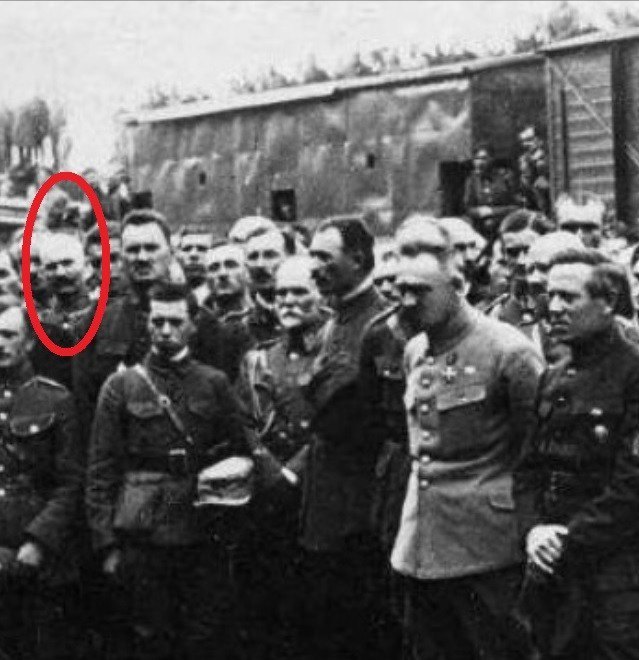
But they did not avoid another one. My grandfather, an officer in Petliura’s army, fought a century ago against Bolshevism for Ukraine’s independence. When in 2013–2014 I first learned about the Maidan and then about the Russo-Ukrainian war, it stunned me, because history was turning onto a new loop. The struggle for Ukraine was beginning again, as if those hundred years had never passed.
Your research into your family roots is reflected in your book “Five Marigolds for My Stranger”. And the stranger is the image of someone you do not know, and who does not know you. Let’s talk about the extent to which Ukraine is changing (or not) its status as a stranger for Europe, and for France in particular. Have we stopped being an invisible nation?
I will start by saying that the “stranger” in my book is a specific person: Kostiantyn, my grandfather’s younger brother. He went missing during the terror of 1937, and I learned of his existence thanks to an archival document — a certificate of rehabilitation.
But your phrase about an invisible Ukraine deeply moved me. Allow me to quote a letter from my great-uncle Ivan Dobrovolskyi. In 1924 he sought refuge in France, like his sister and brother-in-law — that is, my grandmother and grandfather. Settling in Paris, Ivan quickly took on various civic and religious responsibilities in the diaspora. Appointed secretary of the Union of Associations of Ukrainian Emigrants, he wrote a “Letter to the League of Nations”, dated 27 November 1926. The letter was signed by 11 people, including himself. Here is an excerpt:
“For five years now Ukraine has been groaning under the yoke of Soviet Russia, while the lawful national government of the Ukrainian Republic remains in exile […]. In many countries where Ukrainian exiles have sought refuge, their dignity is constantly insulted by the refusal to recognise their nationality. In the documents issued to them they are called ‘Russians’, ‘Poles’, ‘Russian refugees’, ‘Russians of Ukrainian origin’, or their nationality is declared ‘undefined’, but they are never called ‘Ukrainians’.
And this ignorance, described by my great-uncle, lasted a long time. In my childhood, few people knew anything about Ukraine. But you ask me whether Ukraine has stopped being invisible in Europe, and in France in particular. Of course it has. However, it took time to achieve this. On 24 February 2022, Ukraine burst onto our screens, into our newspapers, our conversations and our hearts. It is now part of our news, and its culture is becoming increasingly known thanks to numerous literary and cinematic events.
Sadly, there is still confusion about Ukrainian writers who are identified as “Russian” — for example, Gogol. Until recently, Ukrainian literature was associated with “Marusia” by Marko Vovchok, because the author of the novella is well known in France. Meanwhile, few French people knew that Russia had stolen part of Ukraine’s cultural capital. But when the war began, quite a lot of material about Ukraine started to appear — and continues to appear. The French no longer confuse Ukraine and Russia.
Today, the number of French-language publishers producing translations of Ukrainian works is beginning to grow. European publishers’ associations have supported the Ukrainian book industry, which suffered after the destruction of printing houses and warehouses. European funds have been allocated for Ukrainian school textbooks. The French, as before, feel deep compassion for the Ukrainian people. Ukraine is discussed daily in France, despite the fact that the news is dominated by the war in the Middle East and the grotesque antics of Trump and Putin.
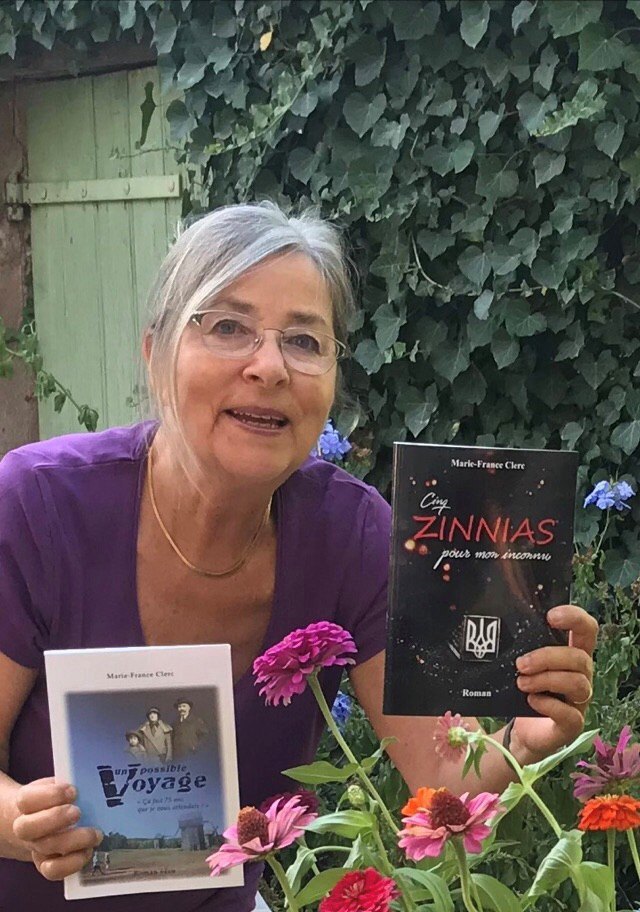
How do you introduce the French public to the Ukraine you yourself have discovered? Is it exclusively through private meetings, or also through conferences and presentations?
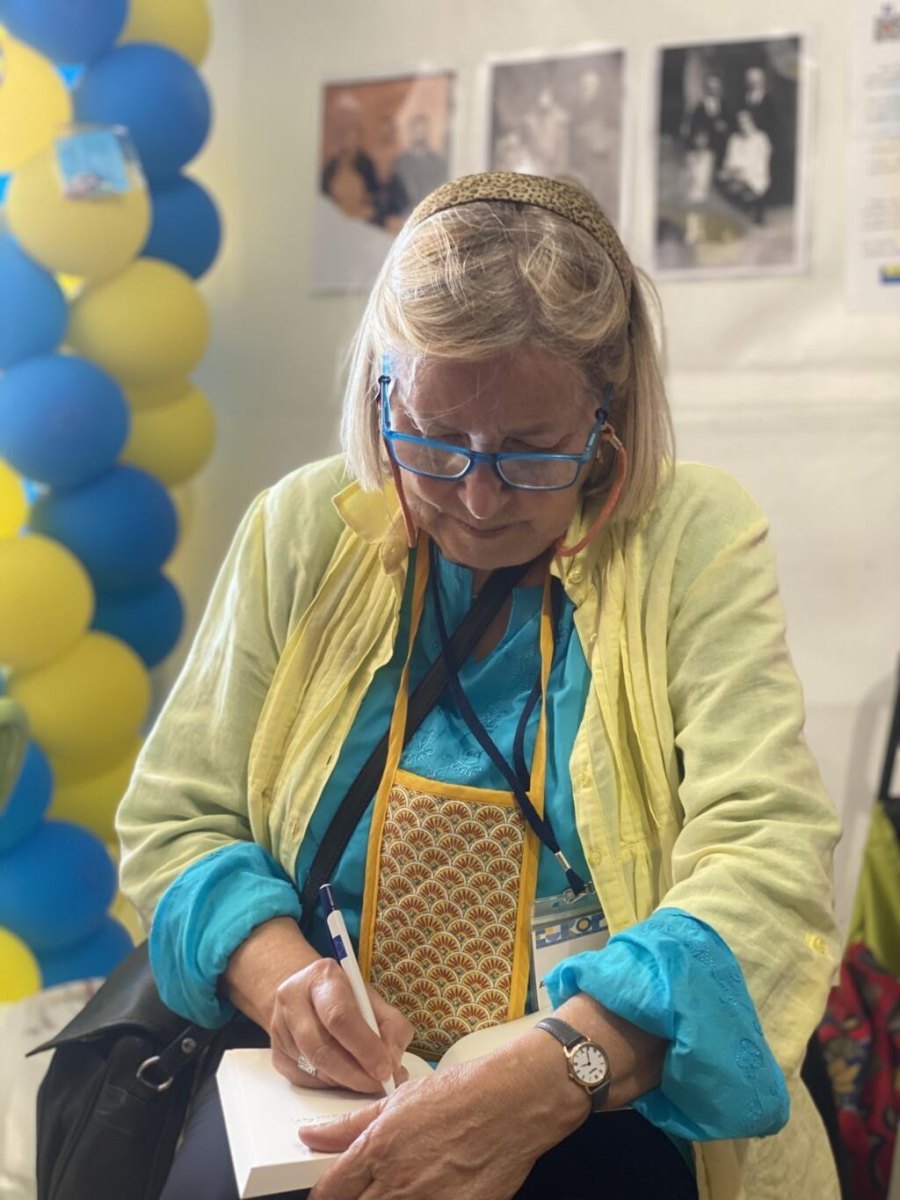
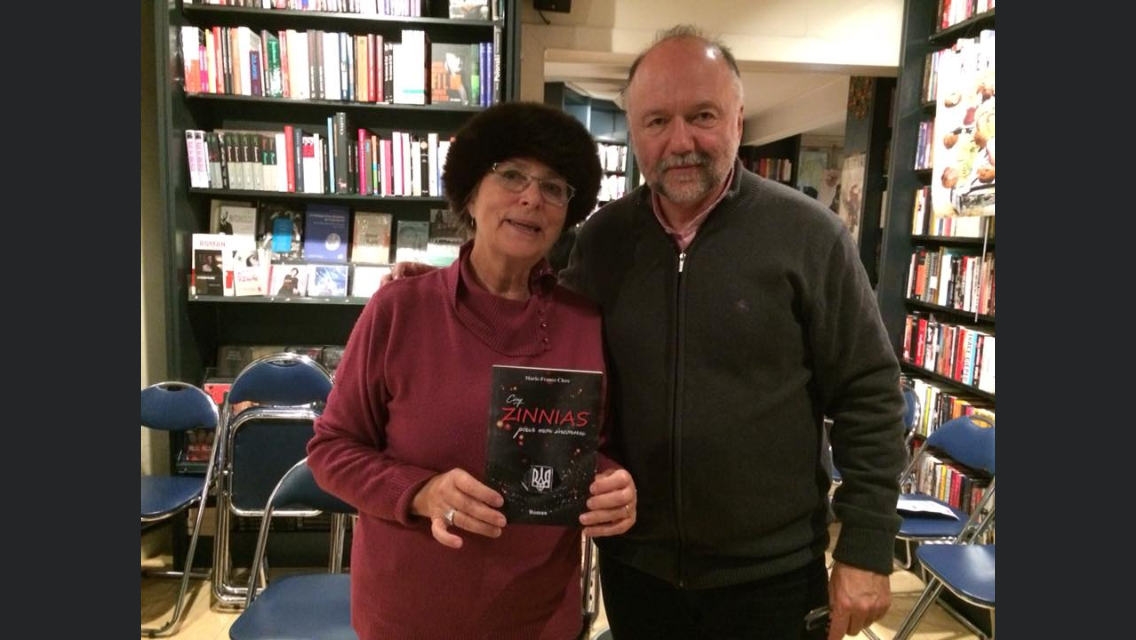
Since the publication of “Five Marigolds” in 2016, and then “A Possible Journey” in 2019, I have held a series of presentations of my books in media libraries, public libraries, Franco-Ukrainian associations, at the Cultural Centre of the Embassy of Ukraine in Paris, and on various radio stations.
I have also spoken in churches in Lyon and at St Volodymyr’s Cathedral in Paris. And several times — at INALCO (the National Institute of Oriental Languages and Civilisations). I discovered classical and contemporary Ukrainian literature, take part in conferences, and meet prominent Ukrainian figures. Finally, I contributed to the publication of two anthologies of Ukrainian poetry. During presentations and my lectures, visitors ask me questions about Ukraine.
What kind of questions?
Of course, they ask me about my Ukrainian family. They ask whether I am more Ukrainian or more French — that is the question I will explore in my next book. A significant number of readers tell me they discovered Ukraine thanks to my books. They knew nothing about the Holodomor, Stalinist terror, and the bans imposed on the Ukrainian language even in tsarist times.
Most are moved by the four waves of Ukrainian emigration: after the Bolshevik revolution, the Second World War, after Independence in 1991, and the current wave linked to the Russo-Ukrainian war. I also try to correct some misconceptions — that “Nazis” and “Banderites” live in Ukraine and persecute the Russian language. By the way, I am sometimes asked whether you can be Ukrainian if you speak Russian. People are also interested in how the fight against corruption is progressing. In general, the French are interested in strengthening the rule of law in Ukraine and its integration into Europe.
In the context of Western perceptions of Ukraine, people often talk about the fatigue our war seems to cause — both among European governments and in European societies. Do the French feel this fatigue?
European leaders have clearly understood that supporting Ukraine is important for defending Europe’s freedom. I am convinced that the entire population of France will continue to support Ukraine in its just war against the aggressor. This support is further strengthened by the outrage people feel at Trump’s betrayal. And, most importantly, the French have also understood that Europe is vulnerable, and that Ukrainian fighters are shedding their blood for Ukraine’s freedom, but also for Europe’s freedom.
People are beginning to recognise the destructive infection Russia is spreading, which is eating away at our society — they are informed, in particular, about Russia’s interference in the 2017 presidential election. And now it is the turn of Raphaël Glucksmann and Gabriel Attal (candidates for President of France; Glucksmann represents the centre-left, Attal the Macron party “Renaissance” — Ed.) to become targets of Russia’s disinformation campaign. Understanding that we, too, are in Moscow’s sights should strengthen our support for Ukraine.
Since you have mentioned the elections that will take place in 2027, we are also concerned about the possible victory of the pro-Russian populist Marine Le Pen. What do you think about her success and her threats to stop any assistance to Ukraine?
I also have concerns about these elections. But I do not think a victory for the populist Le Pen is inevitable. The overwhelming majority of the French population supports Ukraine. Look at what is happening in the United States: although their president shamelessly manipulates Ukraine, most of the population continues to support Ukraine, as polls show.
Recent events in France — I mean the riots disguised as protests — are likely also inspired by Moscow. The most painful thing is that they boost Marine Le Pen…
I am shocked by them. At the same time, I believe that something good can arise from this truly unbearable evil — I mean an awakening of awareness among all honest citizens who respect the rule of law in our country. And yes, I share your assumptions, as well as the analysis made by Senator Claude Malhuret. He said that this violence in the streets is pushing more and more French people into the arms of Le Pen’s political force, which presents itself as the party of order. Such provocations must be countered as quickly and decisively as possible. Because, as Malhuret emphasises, in 2027 the “engineers of chaos” will drive France into panic, and then it will be too late to do anything.
Returning to Ukraine. Are you going to write a book about the current war? For example, drawing on the testimonies of Ukrainians who are refugees in France? What might the concluding paragraphs of such a book be? What message would they convey to the world?
A very interesting question! I am currently writing a new book about Ukraine. Since 2014 I have been recording some of my conversations on social media with my Ukrainian friends. But since meeting the writer Yevheniia Kononenko, day by day I have been documenting the events that prompted her, together with her daughter, to seek refuge in France. We have had long conversations about Ukraine’s past and the history of our families. Until now I had not had such weighty testimony about the era in which my ancestors lived.
Zhenia gradually immersed me in the Ukraine it once was. But we also lived in the present, reading about resistance to the Russian invasion, the twists and turns of the fighting, the hesitations of Western countries that were slow to understand that supporting Ukraine means saving peace in Europe… In silence we mourn together the dead, the abducted Ukrainian children, the destruction of cultural heritage, the relentless air-raid alerts and the horrific devastation…
And yet, to what extent are you an optimist about Ukraine’s future and Europe’s future?
I do not separate one from the other. Supporting Ukraine, helping it in the war, means strengthening Europe and its values: democracy, the rule of law, separation of powers, freedom of information, respect for human rights… In short, the very European values in whose name Ukraine has been fighting since 24 February 2022. Strengthening Ukraine means strengthening the European democratic model and showing the world that the hegemony of dictators is not inevitable.